
'Déjà Vu' (1985): A Gothic Love Story Lost in Time
Jaclyn Smith, Nigel Terry, and a reincarnation romance that brought an unlikely combination of Gothic mystery, Hollywood glamour, and Cannon Films ambition to the screen.


A Love Story That Refuses to Stay in the Past
Their passion crosses the boundaries of time.
That was the promise behind Déjà Vu, a 1985 supernatural romance that attempted to combine Gothic mystery, reincarnation, and an old-fashioned love story. It was an intriguing proposition, particularly for a decade that had already given audiences romantic fantasies like Somewhere in Time (1980) and supernatural mysteries such as The Reincarnation of Peter Proud (1975).
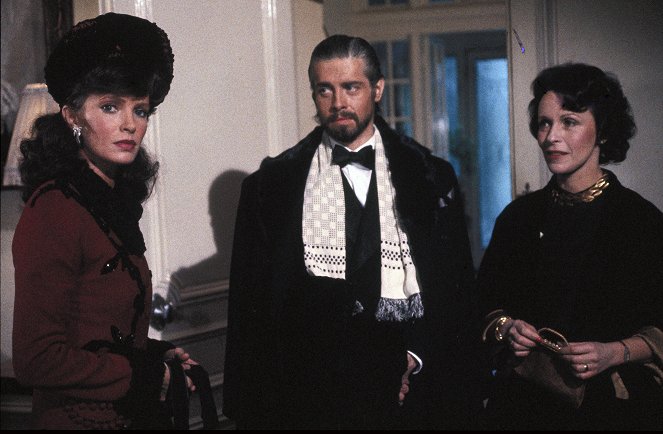
Directed by acclaimed cinematographer Anthony B. Richmond, the film starred Jaclyn Smith and Nigel Terry as a contemporary couple who begin discovering an unsettling connection to two lovers from another era. Their apparent counterparts were a celebrated ballerina and her choreographer, whose romance ended in tragedy when they died in a fire decades earlier.
The film’s premise suggested a story about destiny, memory, and the possibility that love might survive even death.
It also represented an unusual career opportunity for Smith. Best known for her television stardom on Charlie’s Angels, she rarely received theatrical leading roles. Here, she played two characters separated by time, opposite Terry, who likewise portrayed both a modern writer and his historical counterpart.
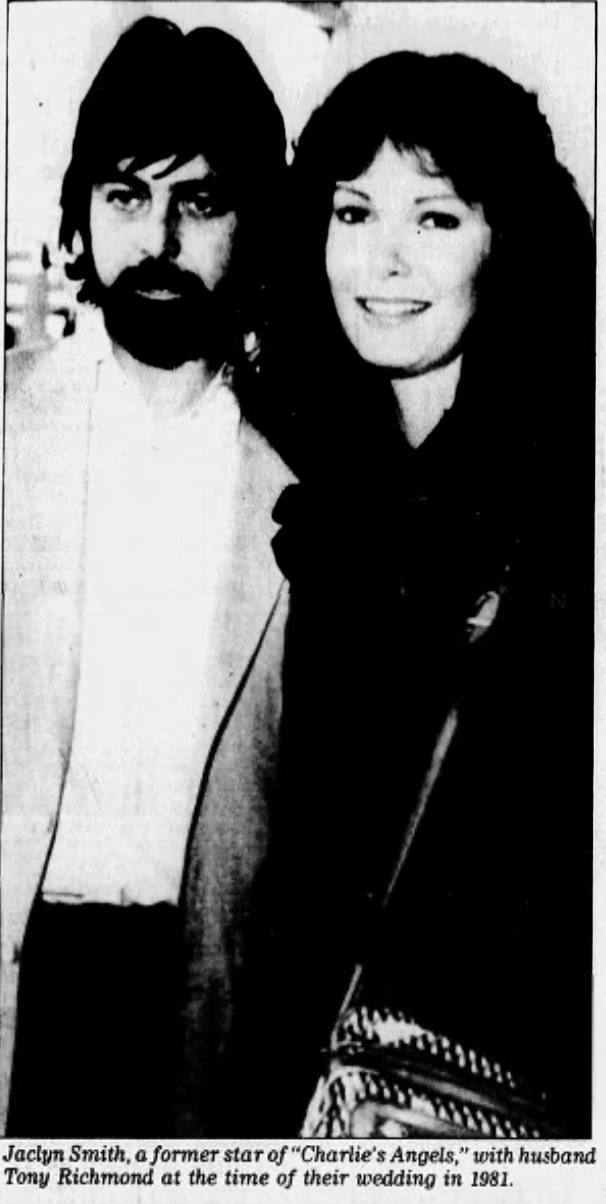
There was another interesting personal connection. Richmond was Smith’s husband at the time, and Déjà Vu represented his first and only theatrical feature as a director.
For Richmond, this wasn’t simply another assignment. It was a project that had occupied five years of his life.
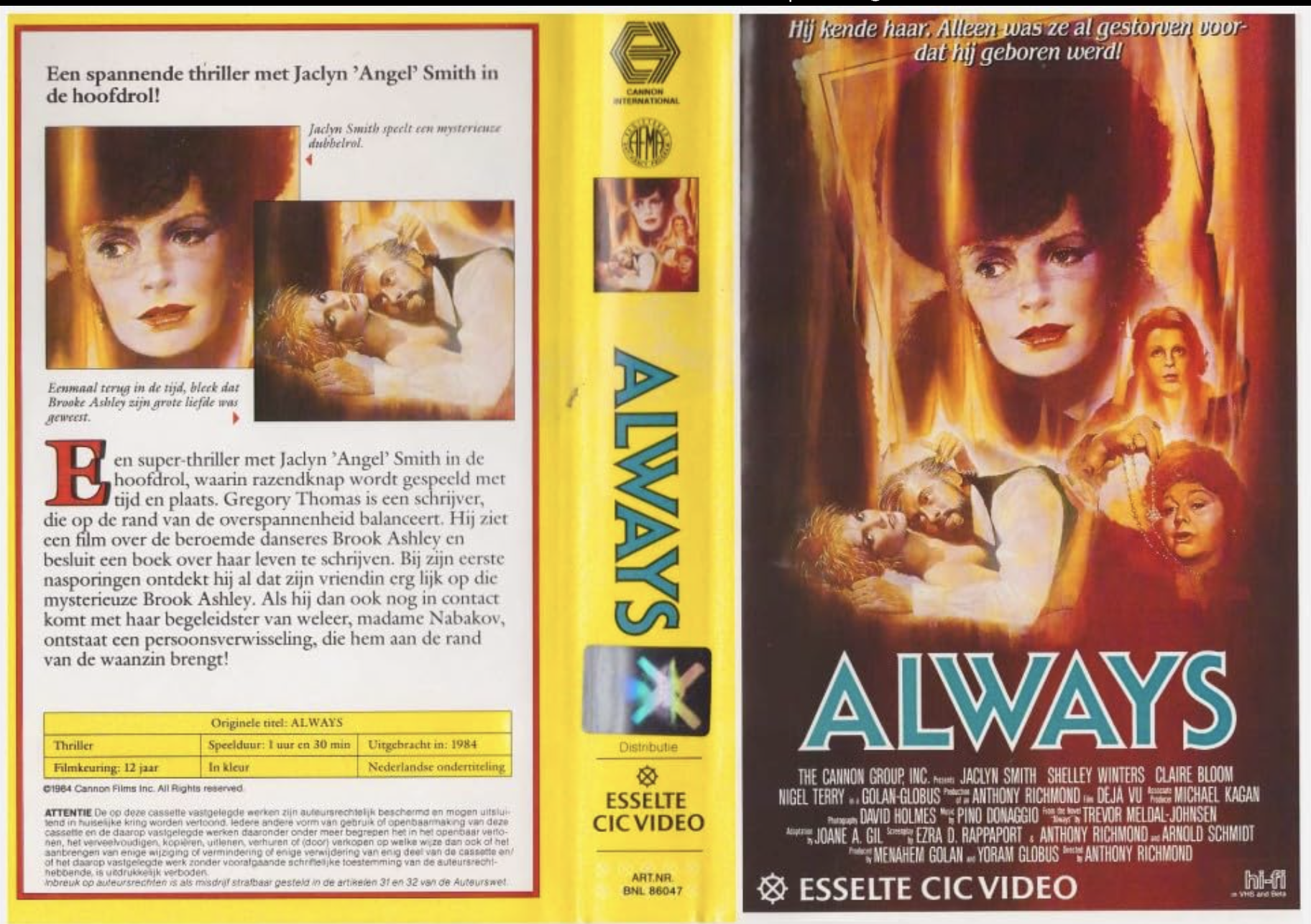
From Always to Déjà Vu
The film began with a different name.
Déjà Vu was adapted from Trevor Meldal-Johnsen’s 1978 novel Always. The screenplay was credited to Richmond, Ezra D. Rappaport, and Arnold Schmidt, with the adaptation bringing the novel’s reincarnation romance to the screen.
The original title survived into the production process, and the picture was initially filmed as Always.
That changed when another filmmaker came along with an interest in the same title.
In an interview with Roderick Mann for the Los Angeles Times on September 2, 1984, Smith explained the situation.
“Originally, it was called ‘Always,’ and that’s the title I love. But now it seems Steven Spielberg has registered that title for a remake he’s doing of ‘A Guy Named Joe’ (the 1944 movie starring Spencer Tracy and Irene Dunne). So we’ve had to change ours to ‘Deja Vu.’ And I’m a bit worried it won’t be understood everywhere, even though it was a hit song by Dionne Warwick.”
Spielberg’s project eventually became Always (1989), starring Richard Dreyfuss, Holly Hunter, and John Goodman.
The title change gave Richmond’s film a name that was arguably more appropriate for its subject, even if Smith preferred the original.
There was something particularly appropriate about a movie concerned with the repetition of lives and experiences having to reinvent its own identity before reaching audiences.
Richmond had an impressive background in cinematography. His credits included several collaborations with director Nicolas Roeg, among them Don’t Look Now (1973), The Man Who Fell to Earth (1976), and Bad Timing (1980).
These weren’t exactly conventional Hollywood assignments. Roeg’s films were known for their unusual visual compositions, fragmented storytelling, and psychological atmosphere.
Richmond brought that experience to his directorial debut. After years of photographing other filmmakers’ visions, he finally had an opportunity to tell a story of his own.
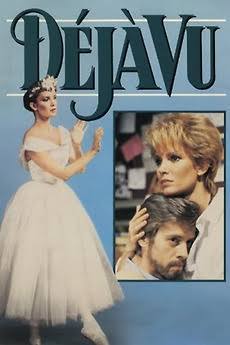
Jaclyn Smith and a Very Personal Production
Produced by Menahem Golan and Yoram Globus under the Cannon Films banner, Déjà Vu was an unusual addition to the company’s mid-1980s output.
Cannon had become increasingly associated with action pictures, international co-productions, and larger-than-life entertainment. But the company’s catalogue was considerably more eclectic than its reputation sometimes suggests.
A supernatural romance featuring a former Charlie’s Angels star, a British character actor, and an accomplished cinematographer making his directorial debut certainly qualified as something different.
The production was an international undertaking, with filming taking place primarily in London and Paris. The Theatre Royal Drury Lane was among the locations used, providing an appropriate theatrical backdrop for a story involving ballet, performance, and the lingering shadows of the past.
Smith played Brooke Ashley, the ballerina from the earlier era, and Maggie, her contemporary counterpart. Nigel Terry played Michael Richardson, the choreographer, and Greg, the modern-day writer who begins uncovering their connection.
The supporting cast included Shelley Winters as Olga Nabokova, a psychic who helps unravel the mystery, and Claire Bloom as the ballerina’s mother.
The film also benefited from the involvement of Italian composer Pino Donaggio, whose credits included several memorable scores for Brian De Palma, including Dressed to Kill (1980) and Body Double (1984).
Production designer Tony Woollard helped establish the film’s period atmosphere, while Richmond’s experience behind the camera gave the picture an appropriately polished visual foundation.
For Smith, however, the production was about more than playing two characters.
She and Richmond had met while working on Nightkill (1980), another film featuring Smith. She remembered being familiar with Richmond’s cinematography through his work with Nicolas Roeg and admired how beautifully his films were photographed.
Their professional relationship eventually became personal, and Déjà Vu became a project in which their lives and careers intersected.
Smith told Roderick Mann that the production was considerably more demanding for her husband than it was for her.
“The movie was much harder for Tony than it was for me… It was his first film as a director and all-important to him. He was consumed by it. It was understandable; he’d put five years of his life into getting it on the screen.”
Five years is a substantial investment for any movie, particularly one that ultimately became a relatively obscure entry in its studio’s catalogue.
Smith also offered a concise description of what Richmond was trying to accomplish.
She called it “a Gothic love story with supernatural undertones.”
That’s a much better description of the film’s ambitions than simply calling it a reincarnation thriller.
Jaclyn Smith Between Hollywood and Home
The timing of Déjà Vu also offers an interesting glimpse into Smith’s life during the middle of the 1980s.
Although Charlie’s Angels had ended its original run in 1981, Smith remained one of television’s most recognizable stars. She was also trying to establish herself as a theatrical actress while developing a fashion business and raising a family.
In September 1985, Louise Continelli’s profile of Smith in Buffalo Magazine, under the Style:Fashion banner, mentioned the actress’s new movie alongside her growing business interests.
Her clothing line for Kmart was aimed at working mothers, a market Smith understood particularly well.
She was balancing several different professional identities: television celebrity, film actress, fashion entrepreneur, and mother.
It was an ambitious balancing act, and Smith was quite candid about her priorities.
In the 1984 Los Angeles Times interview, she explained:
“I’m not like that. I’m not casual about anything in my life and while I’m working I give everything I’ve got, but then I have to have time away for myself and my child.”
That statement adds some context to her involvement in Déjà Vu. She wasn’t simply appearing in another movie because the opportunity came along. The production was tied to her personal life, her husband’s ambitions, and her own efforts to build a career beyond television.
It was also one of her relatively rare opportunities to carry a theatrical film.
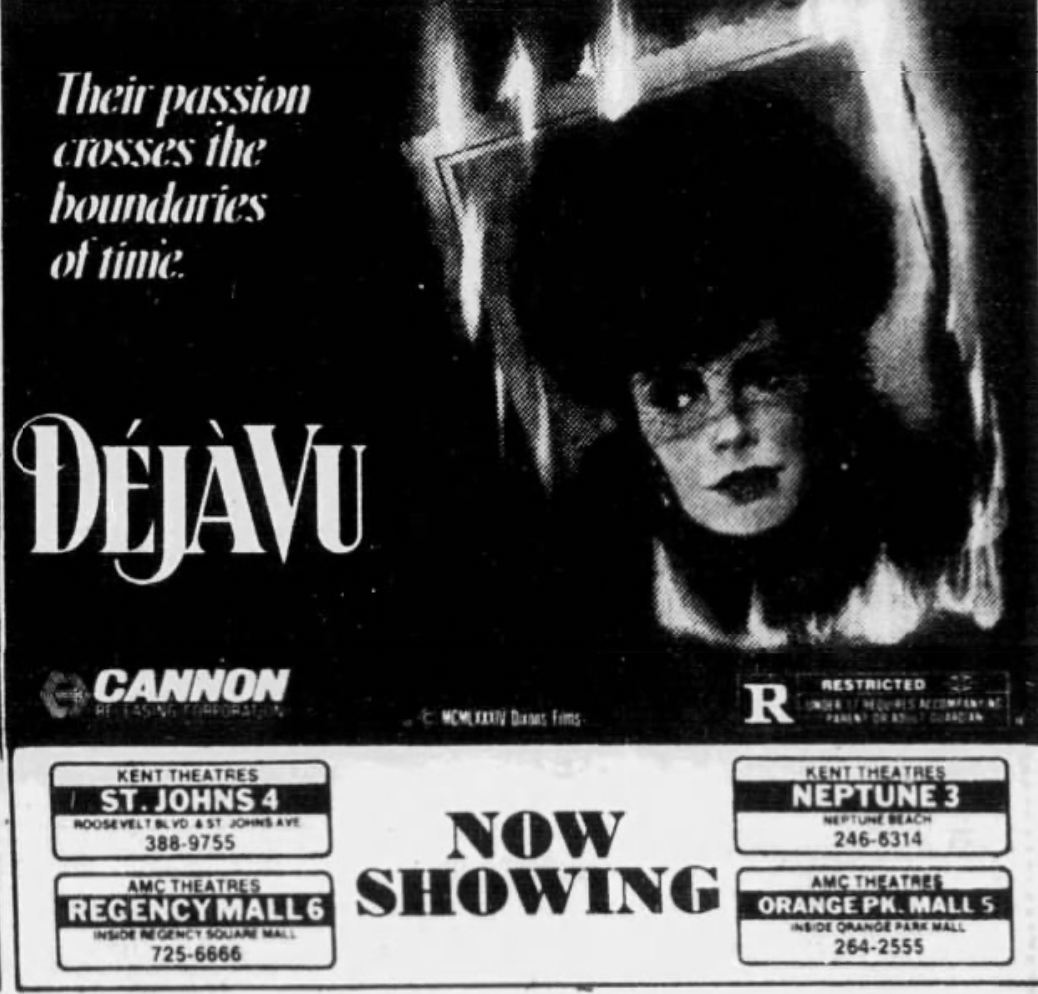
A Quiet Arrival and a Lukewarm Reception
Déjà Vu reached American theaters in 1985 through Cannon, with its British release following on June 12.
Unlike some of the company’s more aggressively marketed productions, it didn’t make much of a theatrical splash. Its release was limited, and the picture quickly disappeared from the general conversation about 1980s cinema.
The critical response was largely underwhelming.
The film had some obvious assets. Its period settings, elegant production design, and atmospheric photography suggested a more ambitious production than its modest reputation might indicate.
But the storytelling proved less successful.
The reincarnation mystery takes considerable time to develop, and the narrative occasionally struggles to establish its own rules. What should be an increasingly unsettling romantic mystery sometimes feels like a collection of disconnected scenes searching for a stronger dramatic purpose.
The performances also received mixed reactions.
Smith was an appealing presence, but the screenplay doesn’t always give her characters enough emotional depth. Terry receives much of the narrative attention as the man investigating the strange connections between the past and present.
Winters, meanwhile, makes quite an impression as the psychic Olga Nabokova. Her performance is certainly memorable, although her exaggerated Russian accent can become a distraction.
Claire Bloom fares better, bringing an appropriately unsettling quality to her supporting role.
The film’s most effective moments come when it embraces its Gothic sensibilities. There are stretches in which the combination of Donaggio’s score, the period imagery, and the suggestion of an unresolved tragedy creates exactly the atmosphere Richmond was pursuing.
Unfortunately, atmosphere can only carry a movie so far.
In 2017, Olive Films brought Déjà Vu back into circulation with a Blu-ray release. The occasion provided an opportunity for a new generation of genre enthusiasts to discover the picture.
Nicholas Bell reviewed the release for IONCINEMA, describing it as a mid-1980s oddity with a certain elegance despite its considerable shortcomings. He also noted the film’s unusual position in Smith’s theatrical career and Richmond’s singular directorial effort.
It was hardly a rediscovered masterpiece, but it was an interesting piece of cinematic archaeology.
A Forgotten Cannon Romance
Today, Déjà Vu occupies a curious little corner of 1980s movie history.
It isn’t one of Cannon’s celebrated successes, nor does it have the cult following enjoyed by some of the company’s more eccentric productions. It is more of a footnote, an unusual experiment that brought together an accomplished cinematographer, a television superstar, and a supporting cast with considerable experience.
Its greatest historical interest may be the circumstances surrounding its production.
For Richmond, it represented the culmination of five years of effort and an opportunity to move from cinematography into directing. He never made another theatrical feature.
For Smith, it was a rare big-screen leading role during a period when she was juggling several different careers and responsibilities. Her association with Charlie’s Angels would always remain central to her public image, but Déjà Vu offered something considerably different from the glamorous television persona audiences knew.
And for Cannon, it was another reminder that the company wasn’t exclusively interested in explosions, martial arts, and action heroes.
Sometimes it wanted to make a Gothic romance.
The movie never quite realizes its ambitions. The story is uneven, the pacing occasionally sluggish, and some of its supernatural revelations are more confusing than mysterious. But there is something appealing about its earnestness. This was a film that wanted to believe in love beyond the boundaries of time, even if its own journey to the screen was considerably more complicated.
Smith called it a Gothic love story with supernatural undertones.
That’s still the best way to approach it.
Déjà Vu may have been lost in time, but for anyone interested in the stranger corners of 1980s cinema, it’s worth another look.
Jaclyn Smith stars in Déjà Vu (1985), a supernatural romance directed by cinematographer Anthony B. Richmond. Discover the story behind this forgotten Cannon film.
Tags:
Movies of the 80s
Déjà Vu
Jaclyn Smith
Cannon Films
1980s Movies
Supernatural Romance
Forgotten Movies
Nigel Terry
Pino Donaggio
Movie History
About the Creator
Movies of the 80s
We love the 1980s. Everything on this page is all about movies of the 1980s. Starting in 1980 and working our way the decade, we are preserving the stories and movies of the greatest decade, the 80s. https://www.youtube.com/@Moviesofthe80s
Enjoyed the story? Support the Creator.
Subscribe for free to receive all their stories in your feed.
Comments
There are no comments for this story
Be the first to respond and start the conversation.