
Did You Ever Hear...?
Exploring the campfire stories living inside the worlds we love.

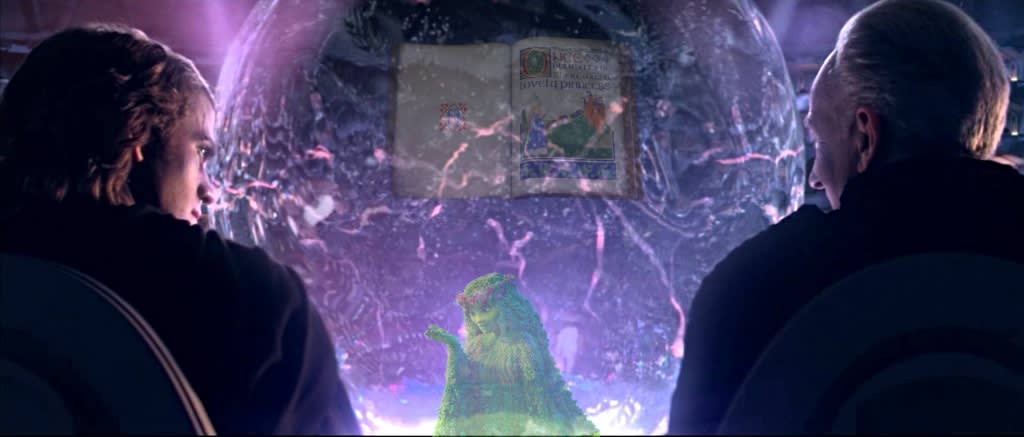
Did you ever hear the tragedy of Darth Plagueis the Wise? How about the Tale of the Three Brothers? Perhaps the myth of Te Fiti rings a bell? Or maybe you have heard the song of Beren and Lúthien sung into the night sky? Chances are, you have heard at least one of them. What is certain, however, is that you have never heard it alone. Even when by yourself, you have always heard these stories in the company of the characters they were being told to — the same characters, whose own myths you were watching unfold. And thus, the line between fiction, reality, myth and history begins to blur.
This is the strange magic of stories within stories. They are bridges. Between the characters, us, the storyteller, and what the story is really trying to say. And this? Well, this is but a little exploration of it. A look into six very different moments when a fictional world paused, gathered around its own imaginary campfire, and let its characters engage in the oldest human ritual there is. Someone begins a story. Someone else listens. And, suddenly, for better or worse, the dark around us feels full of meaning. Let’s take a little journey into myths within myths.
1. The Tragedy of Darth Plagueis the Wise as Told by Sheev Palpatine — Myth as Temptation
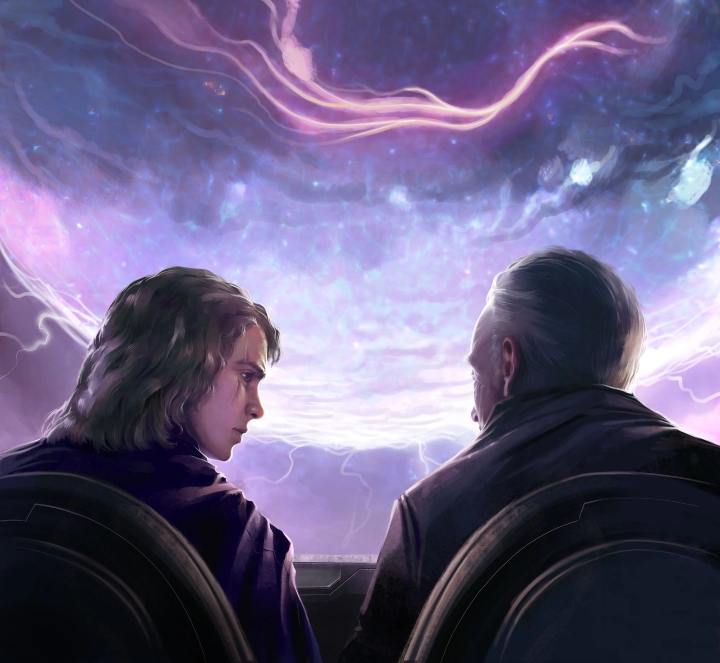
The story told within: Star Wars: Episode III — Revenge of the Sith
Kicking things off with a story whose setup could not be more classical as far as the act of storytelling goes. There is the older, seemingly wiser figure in Palpatine. There is the frightened younger figure in Anakin, looking for guidance. There is the atmospheric, almost intimate setting. Much like a cosmic campfire, in fact. And then, there is the story that feels as old as time itself — a story about fighting the inevitable, as Palpatine shares with Anakin:
"Darth Plagueis was a Dark Lord of the Sith, so powerful and so wise he could use the Force to influence the midichlorians to create life… He had such a knowledge of the dark side that he could even keep the ones he cared about from dying. He became so powerful… the only thing he was afraid of was losing his power, which eventually, of course, he did. Unfortunately, he taught his apprentice everything he knew, then his apprentice killed him in his sleep. Ironic. He could save others from death, but not himself."
I remember seeing this exchange for the first time in cinemas as a kid back in ’05 and being a bit miffed. Like, from a kid’s perspective, it pretty much played like a throwaway exchange — just Palpatine spinning another little layer to his web. Before the obvious crescendos and fights, before the inevitable fall of Anakin I already knew had to happen. And yet the tension here was still, well, palpable. It felt like one of the most important scenes in the film, despite me not quite being able to pinpoint why at the time. So, I suppose I was in a position not entirely unlike Anakin’s — being affected by the story before I fully understood how.
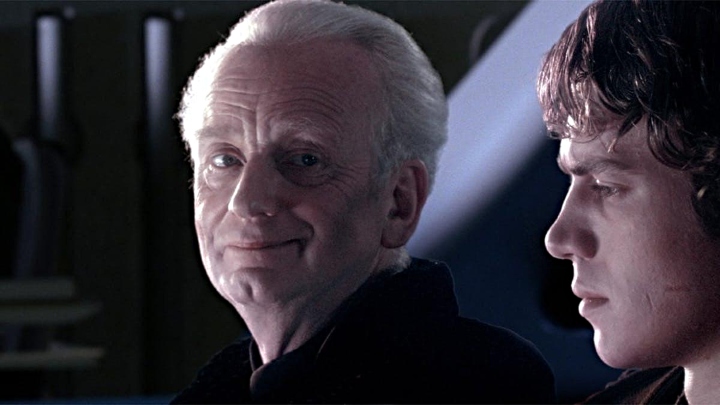
That, however, is because Palpatine — and by extension Lucas — understood the power of myth. Not just its power to comfort. Not just its power to inspire virtue, clarity or courage. He understood its darker power: the power to tempt, to reframe fear, to make manipulation feel like revelation. Moreover, Palpatine understood that this was the most powerful weapon in his arsenal. And, well, that is telling.
Think about it, good ol’ Sheev had power on almost every level imaginable. The power of the dark side. The power to manipulate Jar-Jar — err, I mean, political power. Patience. The guy was playing 4D chess with the entire galaxy and winning. But for all of that, he still had to win the most crucial battle of his whole scheme. One that nobody but him even knew was being fought for well over a decade now — the invisible battle over the Chosen One’s soul. Over Anakin.
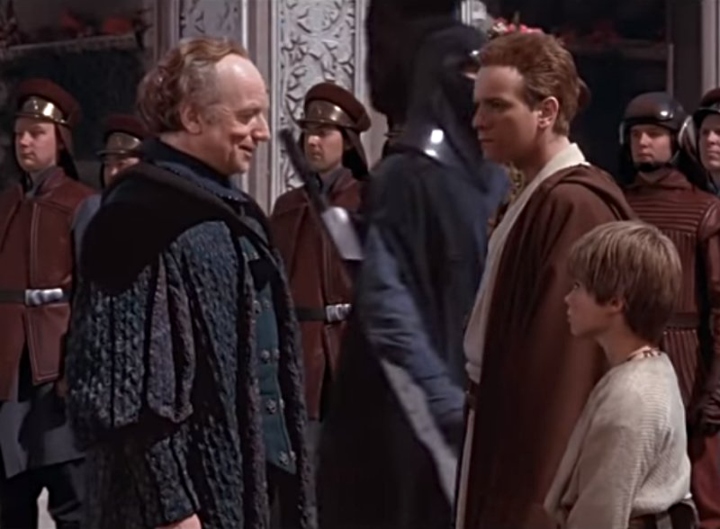
He needed Anakin on his side. But he could not simply debate Anakin into joining him. He had to reach the place where Anakin was most afraid and most vulnerable. So, he gave him a story.
“Did you ever hear the tragedy of Darth Plagueis the Wise?”
That sentence works like a spell because, despite the sinister sense that it might have an uncomfortably close connection to the film’s events, it sounds ancient before we even know what it means. It has the rhythm of forbidden folklore. It is not “let me explain some Sith history.” It is not “here is a political argument against the Jedi.” It is a tragedy. A legend. A story the Jedi would not tell him.
And, well, that makes it rather perfectly diabolical. Mainly because the moral of the story could, in another mouth, be almost virtuous: you cannot control the uncontrollable. Imagine Qui-Gon telling that same tale to young Anakin under the Tatooine night sky in Episode I. Same tale. Very different focus. But since Palpatine has such a good sense of where Anakin’s head is at here, he knows Anakin will not hear the warning in the tale. He will hear only the solution to the impossible problem his heart is searching for: the power to save the one he loves. The power to save Padmé.
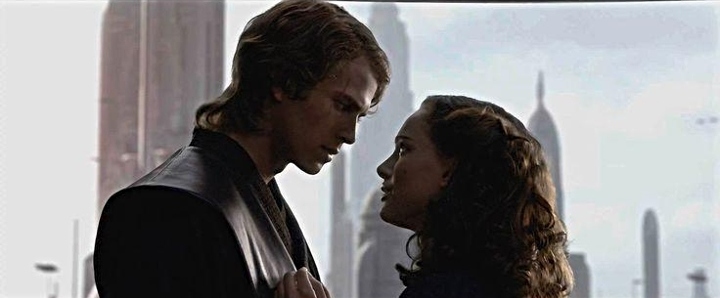
So, simply put, what Palpatine does here is take one of humanity’s oldest and most beautiful rituals — telling stories to make sense of fear, death and longing — and turns it into a trap disguised as a moral lesson. This is where myth becomes dangerous. Not because the story itself is false or negative, necessarily, but because its hidden parts can be true enough to enter through the wound. This is myth as temptation.
This is also why the tragedy of Darth Plagueis is such a revealing place to begin. It shows that the meaning of a myth does not live only in the tale itself. It also lives in the person telling it, the person hearing it, the moment in which it is told, and the wound through which it might enter. So, with that, let us leave the opera house behind and see what changes when myth is no longer used to exploit a wound, but to make sense of one.
2. The Tale of the Three Brothers as Read by Hermione Granger — Myth as Acceptance
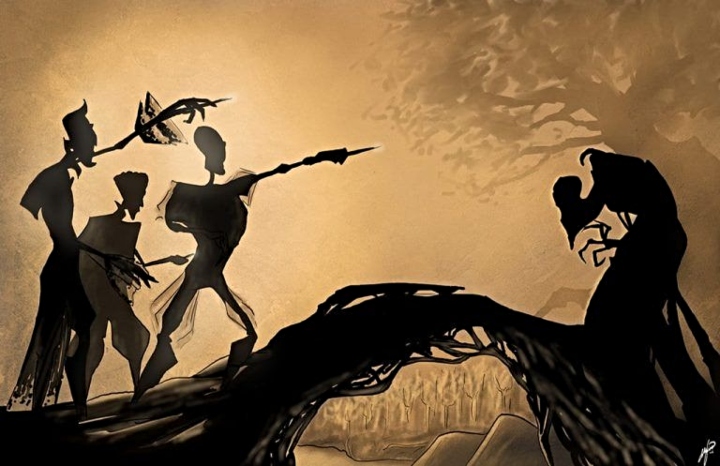
The story told within: Harry Potter and the Deathly Hallows – Part 1
On the surface, The Tale of the Three Brothers from Deathly Hallows is strikingly similar to the tragedy of Darth Plagueis in almost every way. Both are stories about death, the temptation to escape it, and the price of trying. And yet, the context, who is speaking, and why could not be more different. Here, there is no carefully staged seduction. There is simply search. Harry, Hermione and Ron are at Xenophilius Lovegood’s house, looking for answers and on the run, as Hermione reads the tale:
"There were once three brothers who were traveling along a lonely, winding road at twilight (or midnight, depending, who the storyteller is). In time, the brothers reached a river too treacherous to pass. But being learned in the magical arts, the three brothers simply waved their wands and made a bridge. Before they could cross, however, they found their path blocked by a hooded figure. It was Death, and he felt cheated. Cheated because travelers would normally drown in the river. But Death was cunning. He pretended to congratulate the three brothers on their magic, and said that each had earned a prize for having been clever enough to evade him.
The oldest asked for a wand more powerful than any in existence. So Death fashioned him one from an elder tree that stood nearby. The second brother decided he wanted to humiliate Death even further, and asked for the power to recall loved ones from the grave. So Death plucked a stone from the river and offered it to him. Finally, Death turned to the third brother. A humble man, he asked for something that would allow him to go forth from that place without being followed by Death. And so it was that Death reluctantly handed over his own Cloak of Invisibility.
The first brother traveled to a distant village, where, with the Elder Wand in hand he killed a wizard with whom he had once quarreled. Drunk with the power that the Elder Wand had given him, he bragged of his invincibility. But that night, another Wizard stole the wand, and slit the brother's throat for good measure. And so Death took the first brother for his own. The second brother journeyed to his home where he took the stone and turned it thrice in hand. To his delight, the girl he'd once hoped to marry before her untimely death appeared before him. Yet, soon she turned sad and cold for she did not belong in the mortal world. Driven mad with hopeless longing, the second brother killed himself so as to join her. And so Death took the second brother.
As for the third brother, Death searched for many years but was never able to find him. Only when he attained a great age did the youngest brother shed the Cloak of Invisibility and give it to his son. He then greeted Death as an old friend and went with him gladly, departing this life as equals."
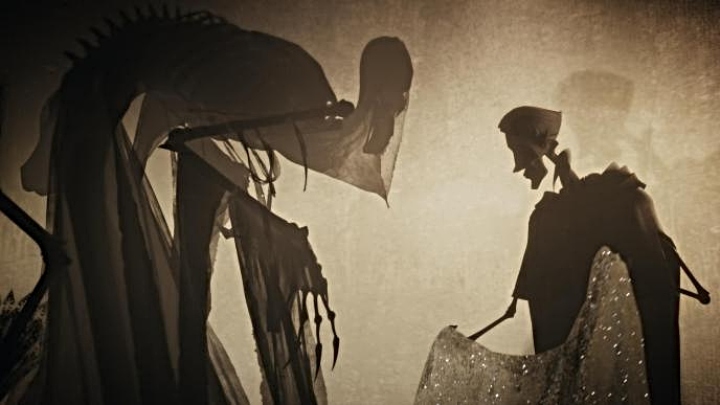
So yes, the resemblance with the previous tale is there. But the crucial difference is the one who speaks. Hermione is not trying to persuade anybody, and unlike Palpatine, she is not weaponising the story. She is simply reading it, carefully and sincerely, because it may hold something they need. In fact, everyone in the room is trying to do the same thing: understand it, and perhaps find some meaning or direction in the middle of an almost impossible situation.
In other words, Palpatine tells a story because he already knows what he wants Anakin to hear. Hermione reads a story because none of them fully know yet what they are supposed to understand. And that matters.

What also matters is the situation in which all of this takes place. Harry, Hermione and Ron are hunted. They need practical answers. They need safety, movement, decisions. They do not exactly have the luxury of sitting around for a nice literary discussion. And yet, they stop to listen to a fairy tale — one Dumbledore himself had deliberately left to Hermione in his will. So, even when everything should be urgent and practical, the most important answer may still come from an old story.
A notion the film understands beautifully. A scene that could have been a quick throwaway piece of exposition instead becomes this absolutely ingenious yet simple shadow-theatre animation. At this moment, the main world of Harry Potter falls away, and we enter a simpler, darker, older visual language: paper, shadow, three brothers, three objects, three choices. And, much like with Anakin in the previous example, one impossible question.
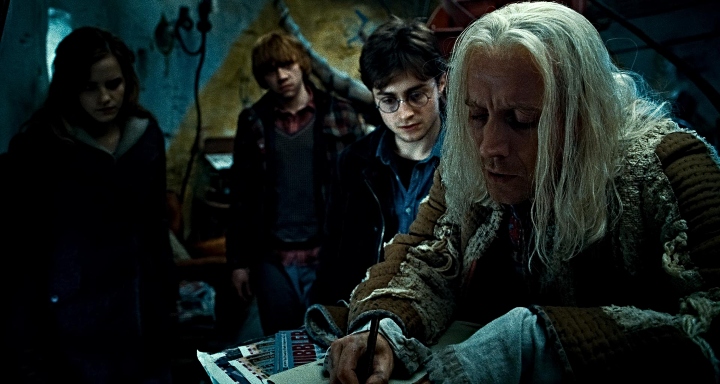
However, unlike with Anakin, the results here are not destructive. When Palpatine’s story narrows Anakin’s world until all he can see is the possibility of saving Padmé, The Tale of the Three Brothers widens Harry’s understanding until he can see that mastery over death may not mean control over it at all. It may mean knowing when to let go. It is pretty much the moral skeleton key to the ending of the entire franchise.
It is also what makes this scene such a beautiful companion to that opera scene in Revenge of the Sith. Both are old stories about impossible power, reaching frightened people who are searching for answers. But one is whispered by a Sith Lord into a wound. The other is read from a children’s book by a friend. And sometimes, that makes all the difference.
With that, let’s now move from a children’s book in the wizarding world to a grandmother’s story by the ocean.
3. The Myth of Te Fiti as Carried by Gramma Tala — Myth as Inheritance

The story told within: Moana
Myth is obviously not only about the end. It is equally powerful when it seeks to reach back to the beginning — to the myth of Te Fiti. As told by Gramma Tala to her granddaughter Moana:
"In the beginning, there was only ocean until the mother island emerged: Te Fiti. Her heart held the greatest power ever known. It could create life itself. And Te Fiti shared it with the world. But in time, some begin to seek Te Fiti's heart. They believed that they could possess it, the great power of creation would be theirs. And one day, the most daring of them all voyaged across the vast ocean to take it. He was a Demigod of the wind and sea. He was a warrior. A trickster. A shapeshifter who could change form with the power of his magical fish hook. And his name was Maui. But without her heart, Te Fiti began to crumble, giving birth to a terrible darkness. Maui tried to escape, but was confronted by another who sought the heart: Te Kā, a demon of earth and fire. Maui was struck from the sky, never to be seen again. And his magical fish hook and the heart of Te Fiti, were lost to the sea.
Where even now, 1000 years later, Te Kā and the demons of the deep still hunt for the heart, hiding in the darkness that will continue to spread, chasing away our fish. But one day, the heart will be found by someone who would journey beyond the reef, find Maui, deliver him across the great ocean to restore Te Fiti's heart and save us all."
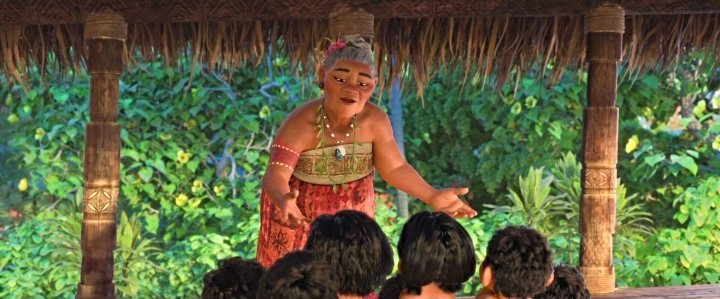
Again, like the best myths tend to be, it is almost childishly simple. Something sacred was taken. The world was wounded. Darkness entered. One day, what was stolen must be restored. That alone would already make it a strong myth inside the story. But what makes Moana fascinating is that the myth does not stay only on that cosmic level.
As is later revealed in the film, Moana’s people have forgotten something about themselves. They were voyagers. And crucially, Tala uses that myth to tell Moana why they stopped. They stopped because, after Maui stole the heart of Te Fiti, the ocean became dangerous. What had once connected them to the wider world became something to fear. These people were not always meant to stay inside the reef. They crossed the ocean. They found islands. They were guided by stars, wind, water and memory. Then fear, danger and time made the world smaller.
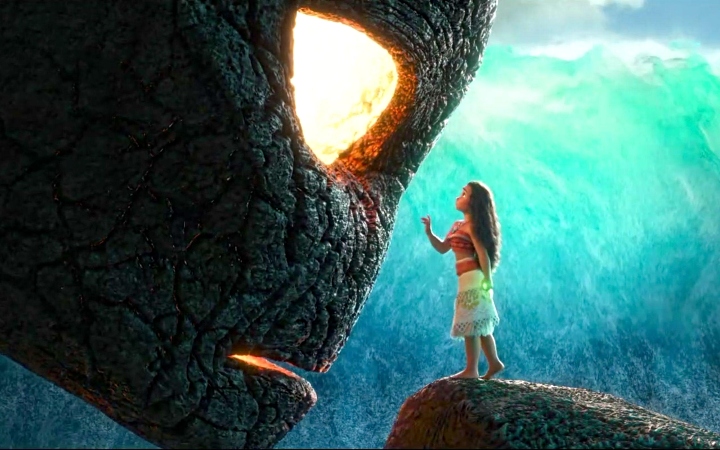
That, in turn, makes Tala, as a storyteller, another very different example from the previous two. Palpatine uses myth to enter Anakin’s fear. Hermione reads myth because the story may contain an answer they need. Tala carries myth because it helps preserve what lies dormant in her culture — the kind of quiet act through which cultures have survived across generations.
Indeed, people’s identity often survives not because institutions preserve it, but because someone at home remembers. Often, in fact, despite the institutions. A story told so that a child born into the smaller world still grows up knowing that the world was not always supposed to be this small.
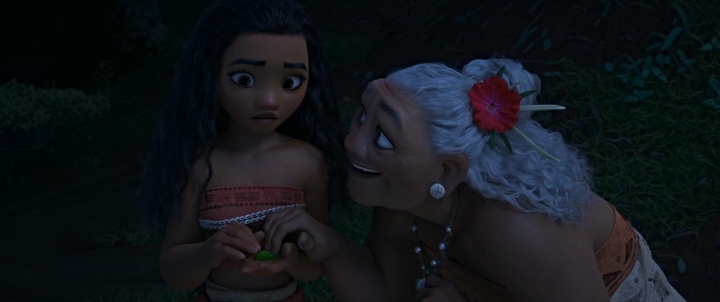
That is what Tala gives Moana. Not nostalgia, but scale. The myth of Te Fiti does not pull Moana away from herself. It returns her to her cultural identity. It tells her that the feeling she has always had — the pull toward the ocean, the sense that the reef is not the edge of the world — is not childish disobedience. It is the old story trying to continue through her. This is myth as inheritance. About restoration. About liberation.
The world is wounded, yes. Their island is in danger, yes. But the old story does not say only that something terrible happened. It says that what was lost can be returned. And that hope is not vague. It is practical. It sends Moana beyond the reef and is the missing piece between the island she knows and the ocean that keeps calling her. The myth becomes movement.
Now, though, let’s slow things down a bit.
4. The Song of Beren and Lúthien as Sung by Aragorn — Myth as Longing
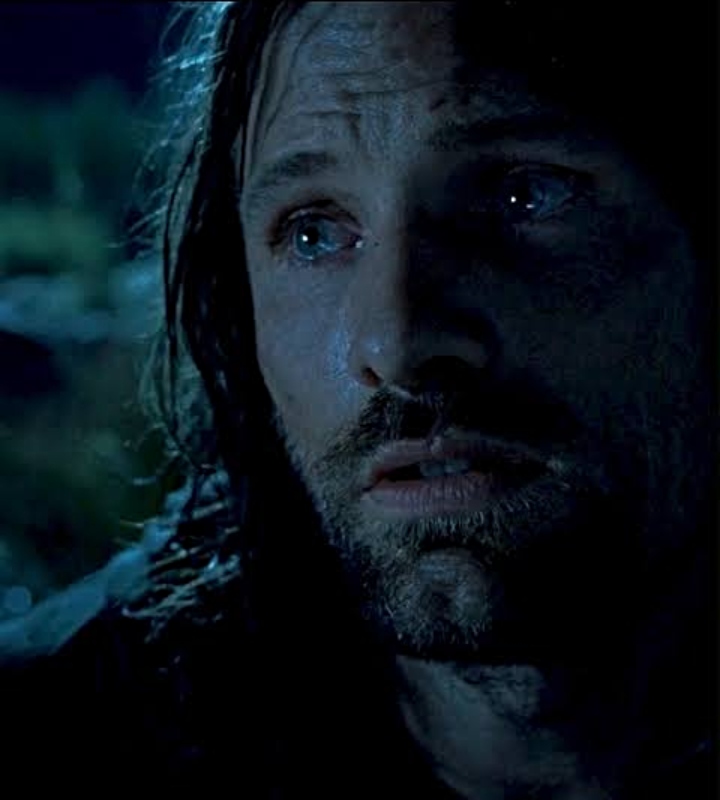
The story told within: The Lord of the Rings: The Fellowship of the Ring
If Moana showed us myth as memory carried across generations, the lay of Beren and Lúthien from The Fellowship of the Ring gives us myth in an even more ancient form — myth as a feeling carried through the ages. And here, it arrives on a quiet night in the middle of a long and arduous road, as Aragorn stands watch over the others and softly sings a small fragment of the tale. Singing in Sindarin, it roughly translates into English, as so:
"Tinúviel the elven-fair,
Immortal maiden elven-wise,
About him cast her shadowy hair
And arms like silver glimmering."
Yes, simply four lines from a story vastly larger than the part Aragorn actually sings. But even within them, one word already tells us much of what matters here: immortal. Lúthien — Tinúviel, as Beren calls her — is an immortal elf-maiden. Beren is a mortal man. They belong to different worlds, different fates, almost different orders of being. Their love is, thus, not merely difficult in the normal, practical sense. It is cosmically mismatched. Time itself stands between them.
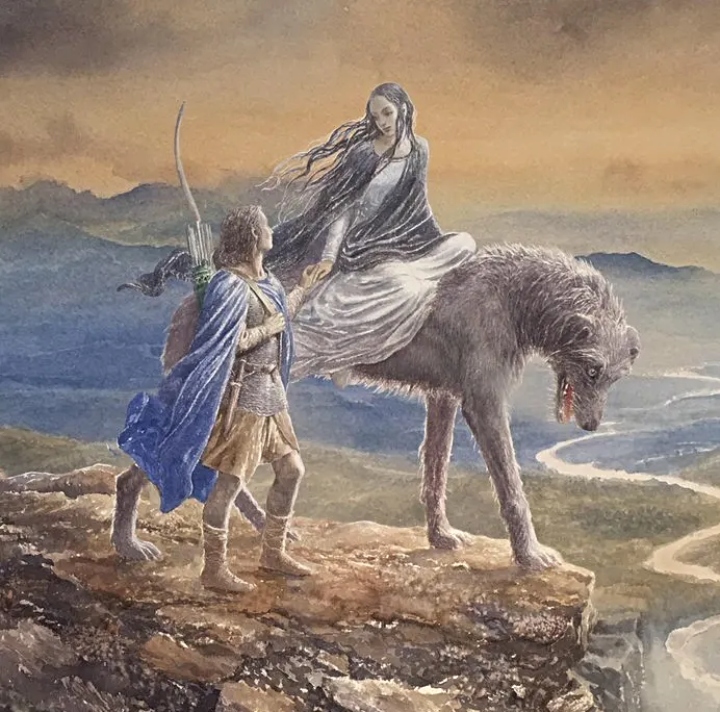
And yet, beneath all that mythic distance is a feeling that is remarkably ordinary. Sometimes the person you long for might as well be living on the other side of a world you cannot cross. And for Aragorn, none of this is particularly abstract. His own love for Arwen echoes Beren and Lúthien — a mortal man and an immortal elf-woman, with mortality, time and choice hanging over them.
And there we have another example that differs from all the previous ones. Palpatine weaponises myth. Hermione reads myth in search of meaning. Tala carries myth because her people have forgotten who they are. Aragorn sings myth because an old story gives voice to something that echoes through his own life — and through countless lives before his.
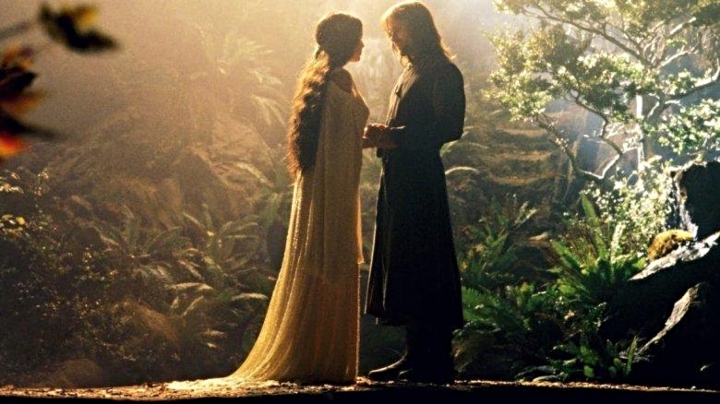
The tale quietly gives Aragorn and Arwen’s relationship an ancient pattern before we even fully understand it. It tells us that their love is not some side romance attached to the main quest. It belongs to the deep structure of Middle-earth. Their story is another turn of an old melody, whatever its outcome might be this time.
So, Aragorn can place something deeply personal inside a story far older and larger than himself. And in doing so, he reminds us that people in this fictional world need their old stories for much the same reason we do: not only to remember what happened, not only to seek answers, but sometimes, simply to carry what plain speech cannot. History becomes music. Longing passes from one voice to another. This is myth as longing. Myth at its simplest. At its purest.
And then along comes a story rather less interested in treating myth with reverence.
5. The Tale of a Princess Locked in a Tower as Torn Apart by Shrek — Myth as Deconstruction
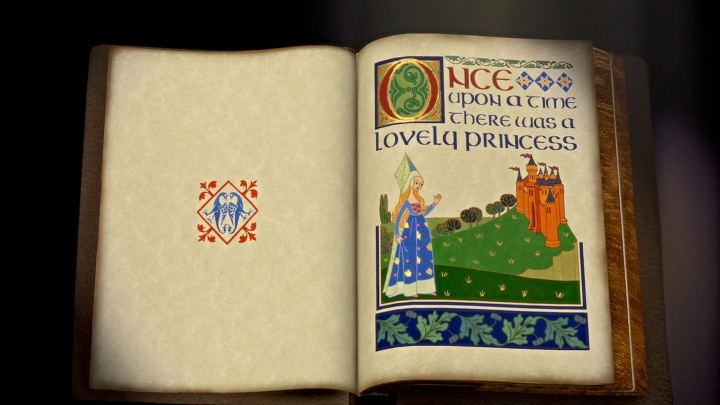
The story told within: Shrek
So, now we have covered heavy subjects, hopeful myths, and stories carried through fear, memory, longing and love. Which means it might just be the right time to throw Shrek at it. A story that seemingly tears apart everything we have discussed before. This is myth as deconstruction. However, deconstruction does not necessarily mean destruction. In this case, quite the opposite. And, to explore this, Shrek begins with the most classic tale of them all:
"Once upon a time there was a lovely princess. But she had an enchantment upon her of a fearful sort which could only be broken by love's first kiss. She was locked away in a castle guarded by a terrible fire-breathing dragon. Many brave knights had attempted to free her from this dreadful prison; but none prevailed. She waited in the dragon's keep in the highest room of the tallest tower. For her true love and true love's first kiss. Like that's ever gonna happen. What a load of-- (toilet flushes)."
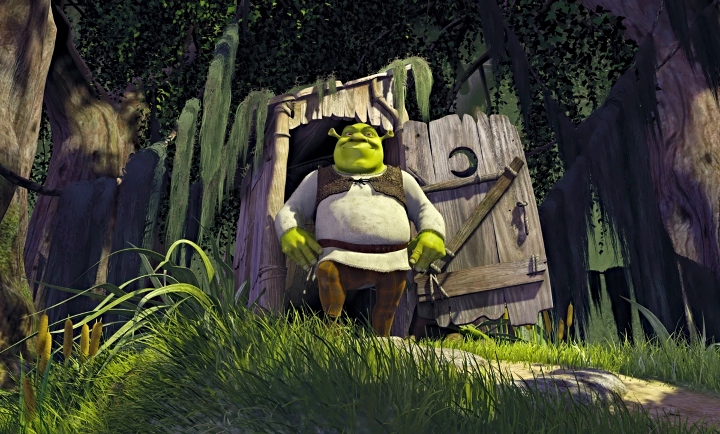
There it is. The fairy tale in almost laboratory-pure form. A princess. A curse. A dragon. A tower. A brave knight. True love’s first kiss. Every piece exactly where centuries of storytelling have taught us to expect it. And then Shrek tears out the page and uses it as toilet paper.
Not subtle, exactly, but a perfect way to open nonetheless. Because what the film is announcing here, from the very beginning, is that it is going to treat the old fairy tale with absolutely no automatic reverence. It is going to drag it through the swamp. It is going to burp at it, mock it, kick mud on it, and laugh at how ridiculous some of its assumptions have become. But crucially, it is not here to only only make fun of the classic fairy tale. Instead, the film seems to ask a better question: what if the shallow version of the fairy tale is indeed a bit stupid, but the thing underneath it is still true?
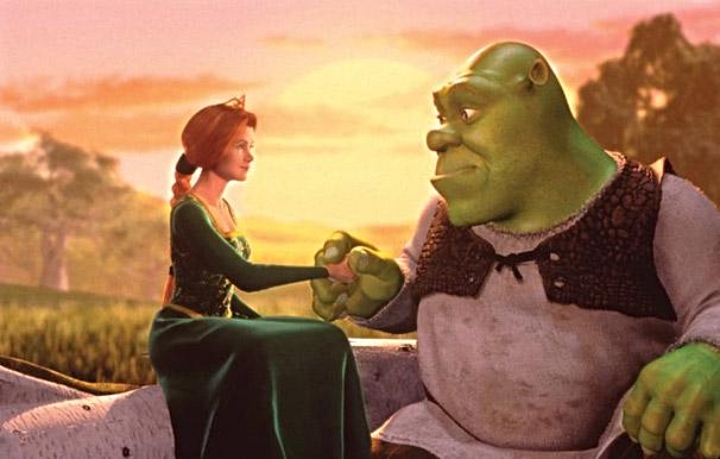
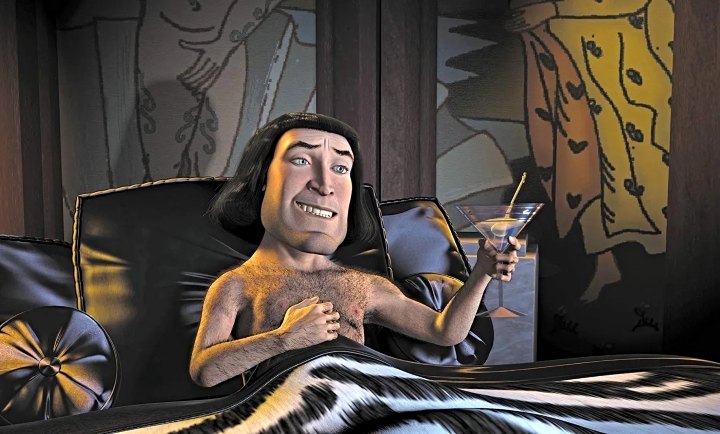
A notion that is shown to us in how the opening tale turns out wrong in almost every superficial way. The rescuer is not a handsome prince but an ogre trying to get his swamp back. The “prince” figure, Lord Farquaad, on the other hand, is the most obviously fake version of nobility imaginable.
"Some of you will die, but that is a sacrifice I'm willing to make."
Lord Farquaad
He wants the princess not because he loves her, but because she completes the image of the kingdom he wants to build around himself. He treats the fairy tale as a checklist. Princess, castle, crown, legitimacy. He knows the shape of the story, but none of its heart.
Shrek, meanwhile, is the one who should not belong in the tale at all. In the shallow version, the ogre is the monster. The thing to fear. The ugly creature at the edge of the map. But, of course, the film slowly reveals that he is not outside the fairy tale because he has no heart. He is outside it because he has already been told what role he is supposed to play, and he has learned to protect himself by pretending that role does not hurt him.
Fiona, on the other hand, is not simply the prize at the end of the quest. She is not just waiting to be rescued and handed over like a reward. She has agency. She has anger, humour, skills, secrets. And yet, she is also trapped not only in the tower, but inside the fairy tale itself. She thinks true love’s kiss will break the curse by making her “beautiful” in the way the storybook has taught her beauty should look. Princess-shaped. So, in a sense, her arc is essentially about breaking free of the tired fairy tale.
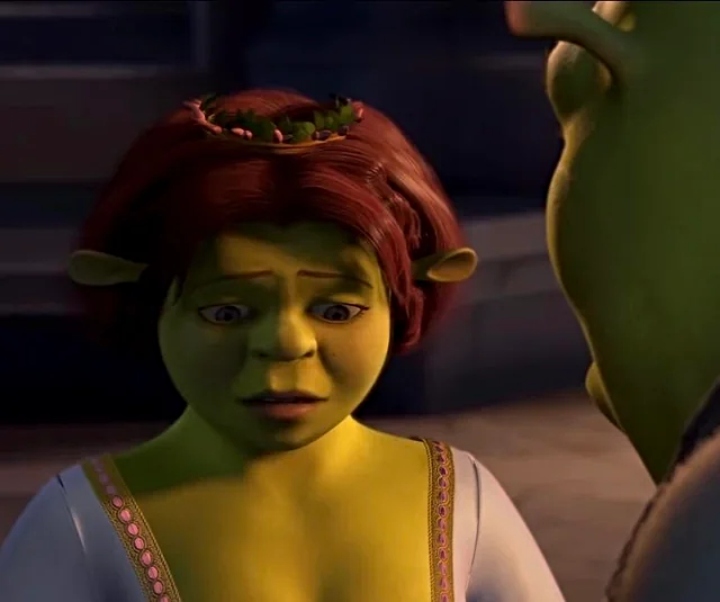
And, well, that is pretty much what Shrek as a film does in general. It strips away the pretty surface and asks what those things actually mean. What if the monster is the one who loves honestly? What if the princess does not need to become the acceptable version of herself? What if the sidekick is not just comic noise, but the one who keeps pushing the closed-off hero back toward connection? What if the dragon is not merely an obstacle, but another lonely creature capable of love?
Indeed, love in Shrek does not obey the elegant visual logic of old fairy tales. It is weird, mismatched, loud, inconvenient and impossible to explain. And yet, it is real.
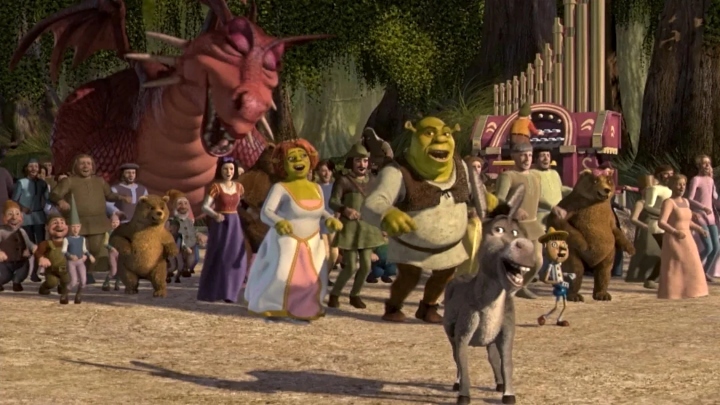
Thus, by the time we reach true love’s kiss, Shrek has not destroyed the fairy tale. It has cleaned it by making it filthy first. The kiss still matters. The transformation still happens. The curse is still broken. But the meaning has changed. Ogre or human, Fiona simply becomes herself. The happy ending is not a restoration of the expected image, but a rejection of it.
In other words, Shrek understands that myth and fairy tale can, over time, become whitewashed, stale and shallow. Or perhaps, more accurately, they can be interpreted in shallow ways by people who are shallow, greedy or obsessed with appearances. Yet, it also understands that the old stories still have power once their real core is remembered. You just have to peel them back sometimes, layer by layer. Like an onion.
Of course, sometimes, peeling back the story does not reveal something comforting at all. Sometimes, it reveals a warning.
6. The Bandit in Burma as Told by Alfred Pennyworth — Myth as Warning
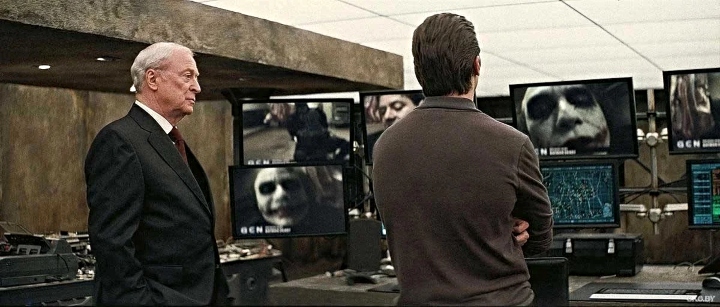
The story told within: The Dark Knight
Speaking of getting to the core of things, finally, there is Alfred. There are no gods or elves here. No magical objects or island goddesses. No prophecies or ogres. Nolan’s Gotham is obviously a bit closer to reality in this sense. And yet, when Bruce cannot understand the Joker, Alfred reaches for the oldest tool available. He tells him a story:
ALFRED: A long time ago, I was in Burma… and my friends and I were working for the local government. They were trying to buy the loyalty of tribal leaders… by bribing them with precious stones… but their caravans were being raided in a forest north of Rangoon by a bandit. So we went looking for the stones. But in six months, we never met anyone who traded with him. One day, I saw a child playing with a ruby… the size of a tangerine. The bandit had been throwing them away.
BRUCE: So why steal them?
ALFRED: Because he thought it was good sport. Because some men aren’t looking for anything logical, like money. They can’t be bought, bullied, reasoned or negotiated with. Some men just wanna watch the world burn.
When Bruce later asks if they ever caught the bandit, Alfred says yes. How? They burned down the forest where he was hiding.
So, bringing it back to the context of the film, what is the point Alfred is trying to make with this story? Well, up to this point in The Dark Knight, the Joker has been ahead of everyone. The mob and the criminals do not understand him. The police do not understand him. Nor does Gotham, or Bruce himself for that matter. What does he want? What is the practical objective here? What is the deal he can be offered? What is the pressure point? In other words, everyone has so far kept trying to place him inside normal categories, and he has gleefully kept slipping out of them.
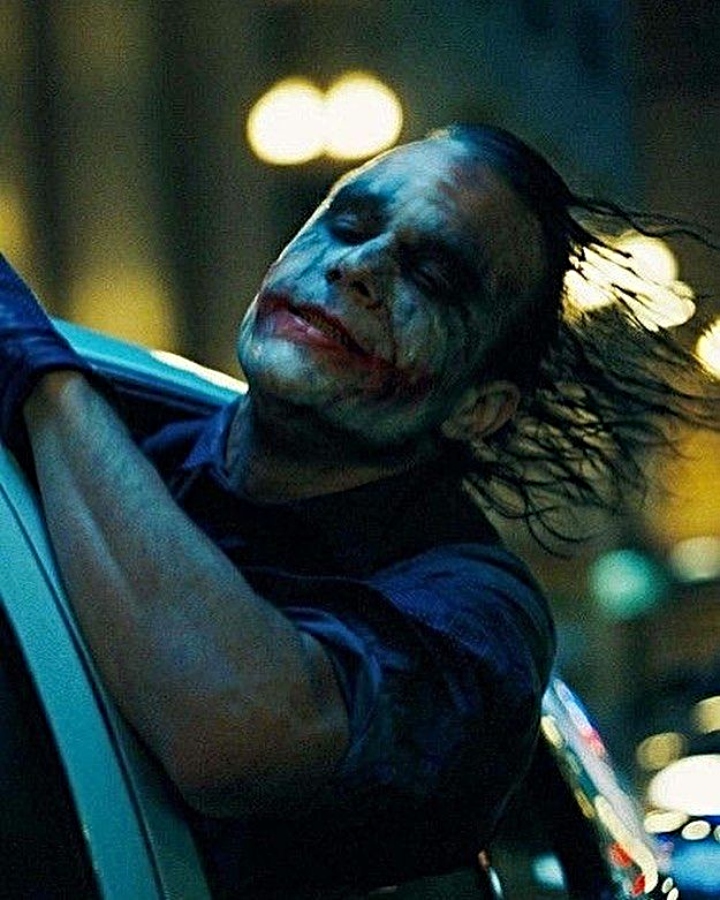
Alfred is the first one who sees it. Bruce is trying to solve the Joker like a detective. Alfred answers like a storyteller. Indeed, while the bandit in Burma is clearly an actual story that happened in-universe, the way Alfred tells it gives it the feeling of a parable. And, well, that is where the story, in its own more down-to-earth way, becomes mythic.
The story helps Bruce see the core of it: the Joker is not simply another criminal with a strange costume and better theatrics. He is trying to prove something. Something bigger, darker and more mythic than ordinary crime. He is trying to reveal what he believes lies underneath Gotham’s — and, by extension, humanity’s — moral surface. Chaos. Emptiness. Fear.
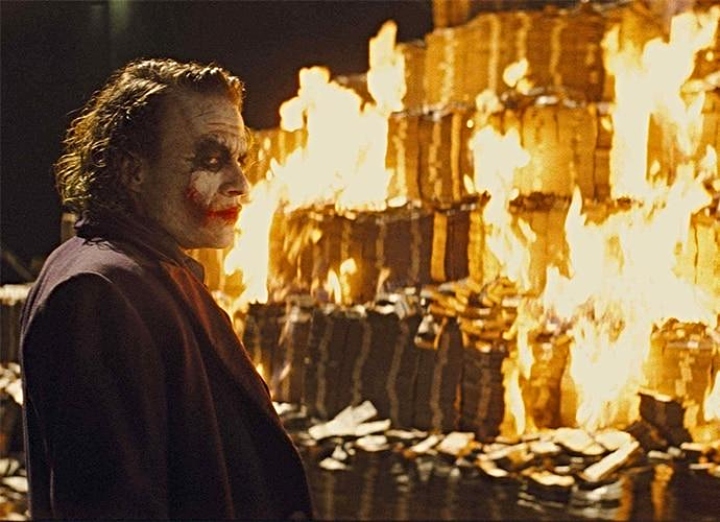
So, in a way, the Joker is actually the only person in Gotham who really does look like a guy with a plan. Granted, not a practical plan, but a mythic one. He wants to turn Gotham into a story about itself. One where people’s sense of morality and rules is just a facade waiting to crumble once enough pressure is applied.
That is why Alfred’s story is so effective. He is telling Bruce that the Joker’s danger is not merely practical. It is symbolic. The Joker says: everything burns because nothing actually has any real value behind the facade. Batman therefore has to say: there are things of value worth protecting from the flames. And maybe even a morality strong enough to survive the flames. A battle between two mythic claims about humanity. Or as the Joker would put it: "You complete me."
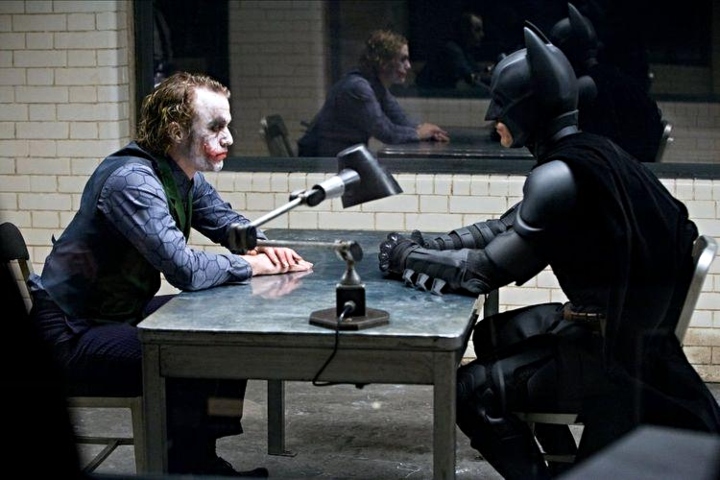
And how does Bruce/Batman have a shot at winning this battle? Well, Alfred’s story seems to help him there too. To truly fight the Joker, he first has to meet him on that same mythic battlefield the Joker has occupied all along. For that to happen, however, Bruce first needs to burn down the forest of noise and assumed motivations around him. To stop assuming that because the Joker plays with money, the mob, control and power, those are the things he ultimately values. They are the trees. Not the bandit.
This is myth as warning. A warning not just against underestimating your enemy, but against failing to understand who or what they truly are.
And, circling back to the beginning of this piece, this is also what makes Alfred a rather fascinating mirror image of Palpatine as a storyteller. Each is an older figure telling a story about darkness to somebody younger, lost and looking for answers. Each reaches for myth, or something very close to it, to bridge that gap. Yet, their purpose is almost the exact opposite. Palpatine uses myth to thicken the fog. Alfred holds it up like a lantern.
Meeting at the Campfire

We come to witness the stories about these characters, only to find them doing the same — inheriting stories, finding solace or clarity in them, reshaping them, weaponising them, misunderstanding them, passing them on or even living them. The shapes they can take and the places they can lead are endless.
However, for all the wildly different things these stories within stories can say and do, they all carry one simple constant. One that has held true throughout pretty much all of human history: the campfire is where we meet — where all of it meets.
Postscript I Couldn't Resist: The Mythic Tuna Sandwich
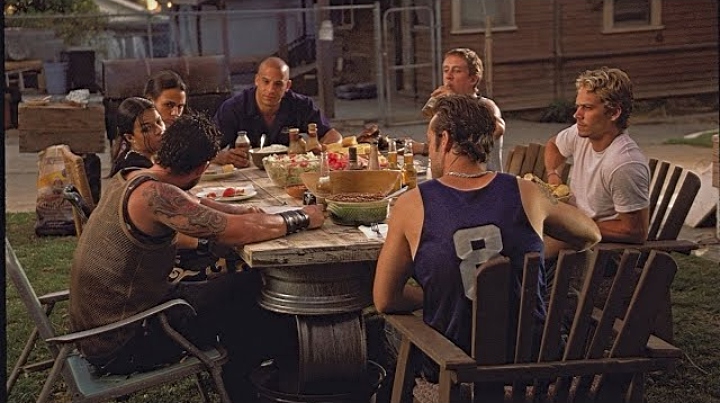
When I decided to write this article, I only had a precious few examples in mind. However, as I dove into it, I quickly found myself needing to stop before the article ballooned into something completely unmanageable (like adding a completely unnecessary postscript I suppose). Because the moment you start looking for myth in pop culture, yeah, you pretty much find it everywhere.
Hell, even something like Fast & Furious of all things has a mythic presence to it at this point. A gigantic franchise that did not begin with obvious mythological bones at all, but somehow became mythic by treating its own past like sacred history. Family barbecues. Old cars. Crosses. Impossible returns. Dead friends who are never quite gone. A street-racing past that eventually feels less like continuity and more like legend.
In other words, not a myth that began with gods, prophecies or ancient songs, but with tuna sandwiches, three Civics, DVD players and a chosen family gathering over a backyard barbecue. Myth evolving before our very eyes.
About the Creator
Art-Peeter Roosve
So, to put it simply (and slightly cheesily) I'm fascinated with life. And, well, writing about films, TV shows, video games, music, travelling, philosophy and Formula 1 among other is a fun way to explore it.
Enjoyed the story? Support the Creator.
Subscribe for free to receive all their stories in your feed. You could also become a paid subscriber, letting them know you appreciate their work.
Comments
There are no comments for this story
Be the first to respond and start the conversation.