


American actor Rock Hudson was one of the most popular stars of his time with a film career spanning over three decades. The actor was a prominent figure in the Golden Age of Hollywood. Even though he was discreet about his sexual orientation, he was known to be gay. In 1984, Hudson was diagnosed with AIDS, and he passed away in 1985 at the age of 59.
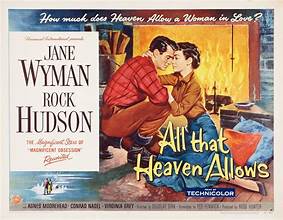
Director Douglas Sirk directed the 1955 American melodrama “All That Heaven Allows." The film was adapted from a story by Edna L. Lee and Harry Lee. It starred Rock Hudson and Jane Wyman.
The storyline revolves around the social complications that arise in a small New England town following the romance between a well-to-do widow, Cary Scott (Jane Wyman), and a younger, poorer man, Ron Kirby (Rock Hudson), much younger than her.
Director George Stevens directed the 1956 American epic drama film "Giant." It was adapted from the 1952 novel of the same name by Edna Ferber. The film starred Elizabeth Taylor, Rock Hudson, and James Dean. This was the last of Dean’s three films as a leading actor since he was killed in a car crash before the film was released. (pictured above)
The storyline revolves around Leslie Lynnton (Elizabeth Taylor), a socialite who falls into a whirlwind romance with Jordan "Bick" Benedict Jr. (Rock Hudson). After getting married, the two return to Bick’s Texas ranch, and Leslie gets to meet some interesting people, among them Luz Benedict, Bick’s resentful sister, and his ranch hand Jett Rink (James Dean).
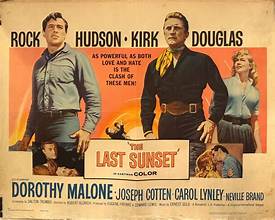
Director Robert Aldrich directed the 1961 American Western “The Last Sunset." The film starred Rock Hudson, Kirk Douglas, and Dorothy Malone. It was adapted from the 1957 novel “Sundown at Crazy Horse” by Howard Rigsby.
The storyline revolves around Brendan O’Malley (Kirk Douglas), a fugitive on the run who makes his way across the border to the farm of his ex-girlfriend, Bette (Dorothy Mallone). He is hired to help with a cattle drive to Texas. After tracking him down, Sheriff Dana Stribling (Rock Hudson) joins the cattle drive to keep an eye on him.
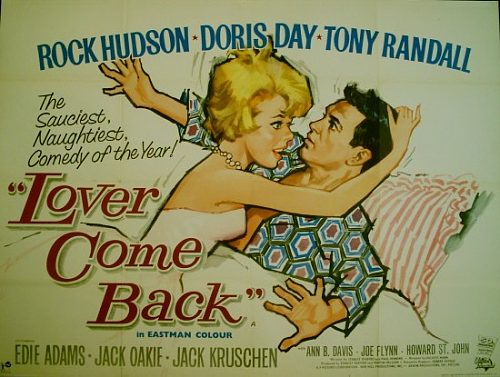
Director Delbert Mann directed the 1961 American romantic comedy “Lover Come Back." The film starred Doris Day, Rock Hudson, Tony Randall, Ann B. Davis, and others.
The storyline revolves around advertising agent Jerry Webster (Rock Hudson) who promises a campaign for a nonexistent product. His boss Peter 'Pete' Ramsey (Tony Randall), knowing none of this, advertises the product. Webster must come up with a real product. Meanwhile, a rival executive, Carol Templeton (Doris Day), tries to steal Webster’s new client away, but she mistakes Webster for the product's creator, resulting in pure mayhem and eventually romance.
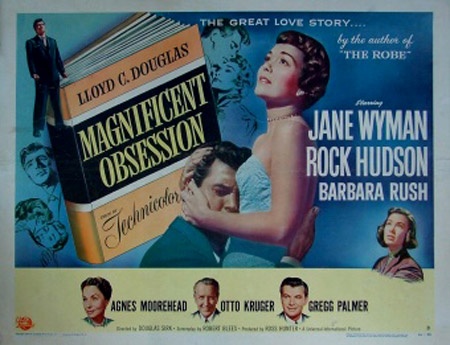
Director Douglas Sirk directed the 1954 American melodrama “Magnificent Obsession." The film starred Jane Wyman, Rock Hudson, and Barbara Rush. It was the remake of the 1935 film starring Irene Dunne and Robert Taylor. Both films were adapted from the 1929 novel of the same name by Lloyd C. Douglas.
The storyline revolves around a spoiled playboy, Robert Merrick (Rock Hudson), who is severely injured in a boating accident. A resuscitator is used to save his life, but at the same time across the lake, the generous physician, Dr. Phillips, whose resuscitator it is, suffers a heart attack and dies. Finding out about Phillip’s death and feeling guilty, Merrick studies to become a surgeon and also falls in love with the doctor’s widow, Helen (Jane Wymann).
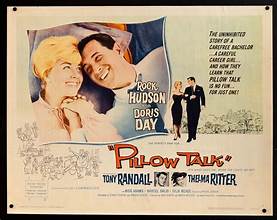
Director Michael Gordon directed the 1959 American romantic comedy “Pillow Talk." The film starred Rock Hudson, Doris Day, Tony Randall, Thelma Ritter, and others.
The storyline revolves around interior decorator Jan Morrow (Doris Day), who shares a phone line with a womanizing songwriter, Brad Allen (Rock Hudson), who constantly ties up the line talking to his girlfriends. During a night out, Allen recognizes Morrow's voice coming from the table next to him, and when he sees the other end of his party line, he puts on a fake accent and introduces himself as a Texas rancher visiting New York City. The scheme seems to work until their mutual friend Jonathan Forbes (Tony Randall) finds out about it and exposes Brad.
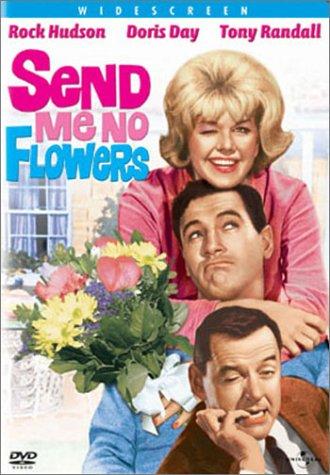
Director Norman Jewison directed the 1964 American romantic comedy “Send Me No Flowers." It was based on a play of the same name by Norman Barasch and Carroll Moore. The film starred Rock Hudson, Doris Day, and Tony Randall. It was the third and final pairing of Hudson, Day, and Randall.
The storyline revolves around middle-aged hypochondriac George Kimball, who overhears his doctor discussing another patient’s failing heart and, despite getting a clean bill of health, believes he’s the one dying. Unable to confide in his wife Judy (Doris Day), he tells the news to his friend and neighbor Arnold (Tony Randall), who agrees to help him find another man for his wife to marry once he is gone.
About the Creator
Rasma Raisters
My passions are writing and creating poetry. I write for several sites online and have four themed blogs on Wordpress. Please follow me on Twitter.
Enjoyed the story? Support the Creator.
Subscribe for free to receive all their stories in your feed. You could also become a paid subscriber, letting them know you appreciate their work.
Comments
There are no comments for this story
Be the first to respond and start the conversation.