
Curse of the Mediocre Return:
Why The Mummy’s Huge Gamble Led Nowhere
The Mummy reserves a very special place in film history. It may not be in the same company as such classics as Dracula or Frankenstein, but you don’t have to be a fan of the horror genre to know that that it holds its weight in making most lists of the best horror movies of all time. There is no denying it, it is an absolute cult classic.
What a lot of people might not know, is that outside the box office feature film, the original 1932 Mummy by the acclaimed German cinematographer Karl Freund was very much a cultural, and dare I say global phenomenon. One cannot simply have a conversation about the decade of human history that was the 1930’s, cannot have a conversation about film studies, without referring to this motion picture. After all, a franchise doesn’t create for more than fifteen adaptation without a sizable following.
One of the reasons that the original Mummy was so successful, and perhaps the main reason that it secured its place in history is due to the fact that the 1932 film made by Freund was largely in response to the global trend that was sweeping all the world at that time which is commonly referred to Egyptomania. As the people, the human lot have always seemed to be drawn to Egypt and it’s rich history, but that during this particular epoch of human history there was a renewed interest in, and even an obsession with Egyptology, especially in Western civilization
This is by no means the only variable factoring into why The Mummy is so very important to us through the lens of film studies. It was at the same time as, The Mummy, was released that humankind was first introduced to what was then referred to as, ‘talkies.’ In short, talkies were the name given to the first films with synchronized recorded audio and dialogue. So, not only was The Mummy a very central player in a cultural phenomenon at that time, but it was one of the first defining examples of a, ‘talkie,’ at that time, especially in the horror genre.
Moreover, The Mummy, from 1932 succeeded in creating for the blueprint or formula for every Mummy movie adaptation that followed it. Sure, there are critics that love to have heated debates arguing that the colossal success of, The Mummy, movies from the early 1990’s to mid 2000’s featuring Brendan Fraser illustrate how it was an overall better movie than it’s original predecessor. That is a valid point. There are plenty of notable people who share that opinion, and there are plenty of articles on the topic. Be that as it may, you cannot deny that the original movie set the stage for, and created the very original recipe for the following movies success.
And fans of the genre know this equation like students of math know their pythagorean theorem. When a horror buff goes into any of the mummy movies, they expect a love movie at its core. After all, both love and obsession are deeply rooted in the genres DNA. Following Joseph Campbell’s, The Hero’s Journey, for the most part, fans of the franchise typically expect a movie that gives us a prologue into how there is some ancient forbidden love that results in the mummification of the lovers. Similarly, we expect there to be a team of archeologists looking for some long lost treasure, which ultimately leads to the discovery of the cursed sarcophagus. Said discovery leads to the awakening of the mummy, and the mummy usually spends the rest of the film pursuing who he believes to be his reincarnated lover. Whether it’s the original, or the Branden Fraser adaptations, this is typically the pattern we see. That is, unless you are talking about The Mummy Versus Frankenstein, The Mummy Resurrection, or some of the other one’s that we dare not talk about.
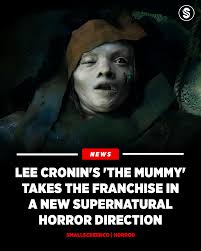
What the movie community is all a buzz about is that of Lee Cronin’s recent adaptation of The Mummy. Even more specifically, this very niche community is talking about the the monumental risk that Cronin and company took in resurrecting this cult classic, what with the movie having just been released to stream on major platforms on May 19th, 2026.
Arguably the most noticeable gamble that Cronin made was the very decision to make a remake of the original film. There is no denying that it is a kind of crap shoot whenever someone decides to attempt direct a adaptation of a film of the likes of, The Mummy. The odds are already sort of stacked against your favor. You are starting with a kind of disadvantage. Many people are of the opinion that the remake is never as good as the original, and they feel the original should be left well alone, because a remake is just going to taint its legacy. But Cronin was ambitious. That wasn’t even the biggest risk that he took on this film. What we seen upon watching this movie is that Cronin decided to roll the dice on a very high risk decision by completely going against the established formula of what we should expect from a mummy movie. That’s right, Cronin went against the status quo, and gave us his own creative version of the film. The result? Well, that’s debatable, but I’ll let you be the one to decide.
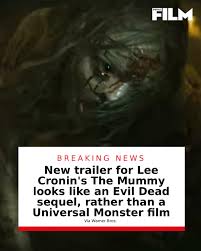
Before I go any further in this review, I have to start by giving credit to where credit is due. The one thing I can applaud Cronin and his team for is for having the gall to take the massive risk of revisioning this classic film. It takes some serious cojones to attempt to take a classic film, tamper with it, and creatively make it your own. It is refreshing to see an artist taking this risk. I firmly believe a lot of artists are afraid of taking that risk, seeking comfort rather in pursuing a recycled and overused model hoping that the template is just kind of handed to them. We can observe a problem in the film industry that they have become predictable, and with us left already knowing what to expect, we already know what to expect from the movies we see. So often we are given the thirteenth installment of a franchise or the fourth remake of a movie, and everything seems to be a watered down copy of something else, that it really is nice to see a movie that acknowledges. I liked the fact that it didn’t feel like I was watching any Mummy movie that I hadn’t seen before, and was actually a little surprised by what transpired on the screen before me. The movie does have that going for it, but I still don’t think it was to the results that Cronin was hoping for.
That being said, there is so much that can be said about this movie. Normally, I liked to be surprised. Normally. I have a serious bone to pick with this bone, in that in reimagining the mummy, Cronin took that concept and completely redid it from the bottom up by demonizing the movie.
In Cronin’s adaptation, he introduces us to the Nasmaranian. Essentially, they are these mummified demon’s. According to the movie, the Nasmaranian were the devil of Egyptian times. The Nasmaranian were like a cancer or a plague that ravished whole villages, and who were bent on tearing families apart. What we learn from the movie as the plot progresses is that these Nasmarania’s were such a problem to the people of Egypt that, that they eventually task a family with the task of binding and confining these tricky devils.
Personally, I was really rather upset with this development. Yes, I enjoy the horror genre, but I usually try to shy away from demon movies. There just not my cup of tea. I find it really disappointing that Cronin took, The Mummy, and tried to turn it into something like The Exorcist. If I would have known that before I watched the movie, I probably wouldn’t have watched it in the first. Really, I feel tricked into watching something that I find distasteful, and inaccrochable.
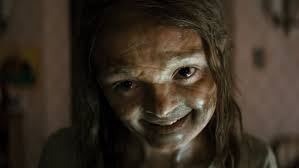
Not only that, but something has to be said about the plot of this movie. They took a movie that is typically about forbidden love and cursed treasure, and instead created for a narrative, that in a word, could best be described as disturbing. That was the general feeling I felt when watching this movie. Again, I may be biased because I don’t like these kind of movies, but that is authentically what I felt. I mean there are parts of this movie that would make Linda Blaire herself blush. To begin with, the movie starts off with an eight-eight-year-old little girl being kidnapped. Now there are a lot of things about this movie, but the most disconcerting is how they go about turning her into a demonized mummy. Spoiler alert: you come to find out at the end of the movie that the people responsible for kidnapping the little girl basically performed some kind of ritualistic backwards exorcism on the poor child. That’s right, they take the kidnapped girl and hung her upside down in front of one of these Nasmaranian mummies, and have it regurgitate the evil spirit into her mouth. If you don’t like the idea of demon children licking their siblings toes, or little girls calling their teachers rat-faced-c-words, or the notion of demonic children asking their older brother if they want to help their sister get undressed, then this movie really isn’t for you.
The other problem that I have with this movie I admit some might have actually liked about the film. In my opinion, this two plus hour film was excruciatingly slow-paced. I honestly felt like I was forcing myself to watch this film, and that was just on the merit that I give a Mummy adaptation the respect that it deserves. Deep down, I think that Cronin did this purposefully, and with good intentions. It is my hope that what he was trying to accomplish was to emulate the atmosphere of the original film, and how the 1932 film is notoriously known for the way that the tension of the film slowly built up as the movie progressed, and it is for this reason that I think that there will be some people who will watch this adaptation and actually like the is aspect of the movie. But humor is my defense mechanism, and I kept thinking to myself, Get on with it, as the movie rolled on. But to play the devil’s advocate, I don’t think I will be the only person that feels this. I consider the reactions of other people when I judge what I think about a movie, and the people that I was watching the movie kept saying things like, “This is really slow,” “Is the whole like this,” and, “Really, do you think we should watch something else.” For two hours, the movie is just kind of all over the place, and the whole time, you’re just waiting to find out what happened to the little girl, and most of the action that you’re left waiting for doses’t happen until the last thirty minutes of the movie.
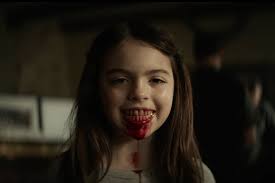
One last thing that I feel should be said about this movie in that it is extremely, and I mean extremely farfetched, and with large gaping plot fouls. I actually lost count of how many times the people around me watching this movie said, “Okay now, that’s just really farfetched.”I understand that it’s a movie, and as such it isn’t going to be realistic, but what family on God’s green earth is going to keep a demon locked up in their basement? Would that family really consciously choose to use little innocent child to perform their backwards exorcisms, because their bodies last the longest? The whole movie is farfetched really. I mean, there is the matter of how they find this poor little mummified girl. As luck would have it, the valley where the people tasked with confining the mummy floods, so they decide to fly it out of Egypt. Not only that, but the plane just so happens to crash, and despite the crash, the sarcophagus remains in-tact without a scratch. Or then there is the fact that when they find the girl, she looks like an undead corpse, she can’t handle sudden movements, or loud noises, and she’s practically catatonic making random noises, but the Egyptian doctors like, yeah, despite all that, the best medicine is to take her home with you. Then there is the matter of how the family chooses to attend to this girl. Their daughter is demonstrating demonic behavior, she’s climbing on walls, and eating insects, demonstrating harmful behavior to herself and others, they accidentally peal off like a third of the flesh on her leg, and they absolutely refuse to take her to a doctor, or have her placed or anything like. The movie suggests that its because they feel guilty for letting her get kidnapped, but it is all so very unlikely.
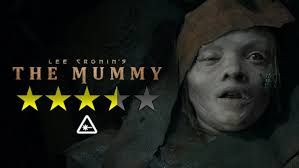
Overall, the consensus when it comes to how people feel about this movie is heavily divided. The main problem that people list when it comes to the movie is that it leans ways to heavily in body-horror, and exorcism tropes, which I not only touched on, but firmly agree with. It is worth noting that while it got a 43 percent Tomatometer rating on Rotten Tomatoes, it also received a 70-something percent audience approval rating. I personally agree with the rating given by Rotten Tomatoes, which is a first for me. In conclusion, I was disappointed in the film, and it left a foul taste in my mouth. It is my opinion that Lee Cronin’s gamble didn’t pay off, and I think that fact is reflected in the fact that while the film had a modest budget, it didn’t do nearly as good as any of it’s predecessors in the box office. This is not a movie that I would recommend to a friend, a family member, or even someone I don’t like.
Written by Aaron M. Weis
About the Creator
Aaron M. Weis
Creator of Continuity Writing: a spiritual, steady‑stream consciousness style shaped by daily journaling, inner expansion, and the belief that awareness is our greatest responsibility.
Enjoyed the story? Support the Creator.
Subscribe for free to receive all their stories in your feed.
Comments