
Crimson Moon Review: A Janky $20 Co-Op Soulslike With Plenty of Potential
Crimson Moon offers fun co-op combat and impressive build variety, but frustrating camera issues, awkward UX choices, and inconsistent gameplay make it difficult to fully recommend at launch.

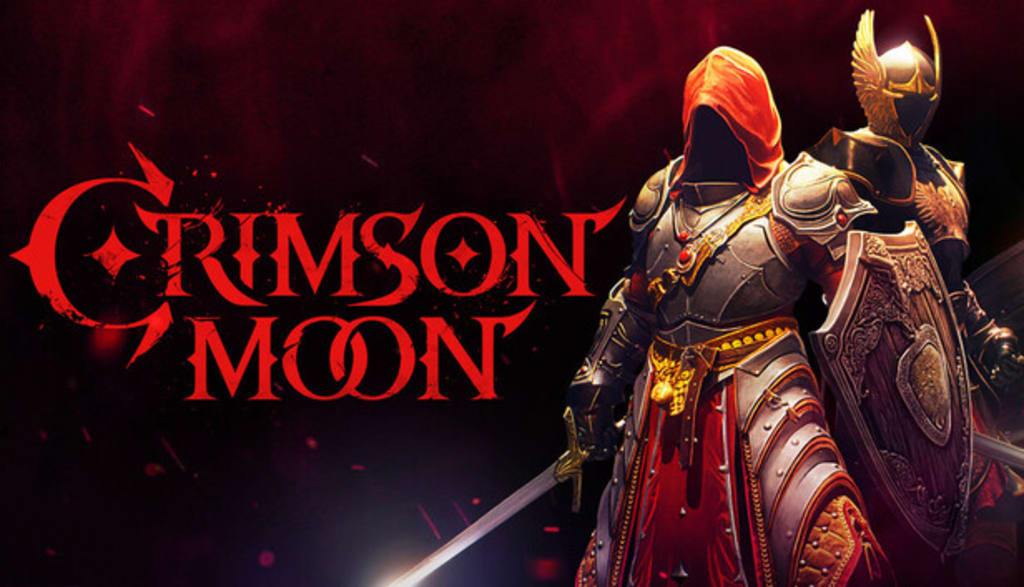
Crimson Moon has the ingredients of a surprisingly entertaining co-op Soulslike. There are different builds to experiment with, bosses to fight, loot to collect, and a roguelike-style progression loop designed to keep players jumping into new runs.
Unfortunately, it also arrives with enough rough edges to make the experience difficult to recommend without some major qualifications.
After roughly 10 hours spent playing both solo and co-op, experimenting with different builds and fighting multiple bosses, the overall impression is somewhere around a 3 out of 5.
Crimson Moon is not completely broken, and there is definitely fun to be found here. The bigger problem is that almost every enjoyable part of the game seems to be accompanied by an unnecessarily frustrating design decision.
Crimson Moon Has a Familiar Soulslike Gameplay Loop
A run begins at the hub, where players choose their difficulty and select a destination from the available zones.
Before heading out, players can prepare their loadout, upgrade equipment and spend resources. Missions then revolve around relatively straightforward objectives such as defeating enemies, collecting relics and completing bounties.
The combat itself will immediately feel familiar to Soulslike fans.
Players have access to light attacks, heavy attacks, dodge attacks, jumping attacks, backstabs, parries, ripostes and special abilities.
There is also an Angel form that can provide another powerful option during combat, particularly during boss encounters.
On paper, Crimson Moon has most of the ingredients needed for a satisfying action RPG.
In practice, however, the combat frequently becomes a fight against the game itself.
The Camera Is One of Crimson Moon's Biggest Problems
Camera problems are hardly unusual in Soulslike games, especially when fighting large enemies.
Crimson Moon takes that frustration considerably further.
Large boss encounters can become chaotic because the camera struggles to keep the action clearly visible. Fighting a dragon is a particularly noticeable example.
Locking onto the enemy does not necessarily solve the problem. The camera can shift into uncomfortable positions while the player is attempting to track the boss, making certain attacks frustrating to land.
That becomes an even bigger problem when using abilities that require accurate positioning.
For a combat-focused game, having to constantly fight the camera creates unnecessary frustration.
Combat Can Feel Inconsistent
The camera is not the only thing making battles feel rough.
There are moments when attacks appear to connect but enemies seemingly take no damage. Special attacks can also feel inconsistent, with similar hits producing noticeably different results.
Even more frustrating, being interrupted during certain special moves can still consume the mana required for the attack.
That means players can spend their resource without receiving the benefit of the ability they attempted to use.
It is one of several small problems that individually might be tolerable but become much harder to ignore when they repeatedly appear during a run.
Crimson Moon Has Some Strange UX Decisions
Some of Crimson Moon's most frustrating problems are not connected to combat at all.
They are simple quality-of-life features that players would normally expect from a modern action game.
Consumable pickups are one example.
If the player's mana is already full, a mana pickup cannot simply be collected and automatically converted into useful resources. Instead, the player may need to use an existing potion before being able to collect another one.
Gold and other consumables also need to be manually collected.
These decisions make looting more cumbersome than it needs to be.
There is also no proper button remapping option, including for mouse-and-keyboard controls. Considering how important personalized controls can be in an action-heavy game, the lack of customization feels particularly strange.
The Loadout System Can Be Frustrating
Before beginning a run, players can configure different pieces of equipment and create builds around elemental effects such as fire, poison, frost, physical damage and more.
The problem comes once the run has started.
Players cannot freely modify their equipment during an active run.
That creates some strange situations.
Imagine spending currency on a powerful piece of equipment between missions, only to discover that you cannot actually equip your new item until the current run ends.
It feels unnecessarily restrictive.
Storage also creates problems.
Loot discovered during missions can either be used during the current run or placed into reserved storage so it can potentially be brought back to the hub.
However, once an item occupies one of those reserved slots, it cannot simply be removed to make room for something better discovered later.
Again, it is not a game-breaking issue, but it adds friction to a system that should encourage players to get excited about finding new equipment.
Loot Rules Are Not Always Clearly Explained
Another confusing element involves equipment perks.
Some items appear with multiple perks during a run, making them look like meaningful permanent upgrades. However, certain versions seem to exist only for that particular run.
After returning to the hub, the same item may not retain everything players expected.
The game does not always clearly communicate why one piece of loot behaves differently from another.
That can make progression confusing because players are left trying to determine which upgrades are permanent and which are temporary.
A better explanation of the loot system would make the experience much easier to understand.
Gold Progression Feels Too Expensive
Upgrading equipment can also become expensive very quickly.
An item may begin with a relatively low upgrade cost, but moving into higher rarity levels causes prices to increase dramatically.
The problem is that mission rewards do not always feel generous enough to support those costs.
Defeating an elite enemy, for example, can reward an amount of gold that feels tiny compared with what is required for meaningful upgrades.
This makes the progression economy feel overly restrictive.
For a roguelike experience that encourages repeated runs and experimentation, players should ideally feel excited about improving multiple builds.
Instead, the economy can make experimentation feel expensive.
Build Variety Is One of Crimson Moon's Strongest Features
Despite all of these criticisms, Crimson Moon does have an important strength: build diversity.
Players have plenty of opportunities to combine equipment effects and elemental bonuses.
Fire-focused setups are particularly entertaining.
A player can create a build based around applying burn stacks or instead concentrate on increasing direct fire damage.
There are also options involving poison, frost, bleeding, defensive bonuses and other effects.
This gives players room to experiment and discover combinations that match their preferred playstyle.
It is easily one of the game's most interesting systems.
If Crimson Moon receives continued balancing and quality-of-life improvements, this build system could become one of the main reasons players keep returning.
Co-Op Makes Crimson Moon More Enjoyable
Crimson Moon also benefits enormously from playing with friends.
The game can certainly be played solo, but the co-op format appears to be where its strengths become more obvious.
Part of that comes from the simple fact that chaotic games are usually more entertaining when experienced with other people.
Even some of Crimson Moon's jank can become amusing when a group of friends is laughing about strange animations, unpredictable combat moments or bizarre camera behavior together.
That does not excuse the technical problems, but it does make them easier to tolerate.
Players specifically searching for an inexpensive co-op Soulslike may therefore get considerably more enjoyment from Crimson Moon than someone planning to play entirely alone.
The $20 Price Makes a Big Difference
Perhaps the biggest factor working in Crimson Moon's favor is its $20 price point.
At $40 or $50, the game's current collection of rough edges would make it extremely difficult to recommend.
At $20, the situation becomes more complicated.
There is enough combat variety, loot progression, build experimentation and co-op entertainment to potentially justify the purchase for the right audience.
The lower price does not erase the problems, but it makes them considerably easier to accept.
Players who already enjoy imperfect but entertaining co-op action games may find something worthwhile here.
Those expecting a polished Soulslike experience should probably approach with considerably more caution.
Is Crimson Moon Worth Playing?
Crimson Moon is a difficult game to judge because its strongest ideas are buried underneath so many frustrating design decisions.
The combat has potential. Build customization is genuinely interesting. Co-op can be entertaining, and the $20 asking price makes experimentation relatively accessible.
But the poor camera, inconsistent hit detection, restrictive loadout system, confusing loot rules, expensive progression and missing quality-of-life features prevent the game from reaching its potential.
Right now, Crimson Moon feels like the type of game that could have benefited enormously from an Early Access period.
There is clearly something enjoyable underneath the rough exterior, but the launch version still feels unfinished in several important areas.
For dedicated co-op Soulslike fans with a high tolerance for jank, Crimson Moon may still deliver some enjoyable nights with friends.
For everyone else, it may be worth seeing how the game improves before jumping in.
About the Creator
parwinder singh
🎬 Movie & Entertainment Writer sharing reviews, ending explanations, story breakdowns, plot twists and hidden details from Bollywood, Hollywood, South Indian cinema, Korean dramas and OTT releases.
Enjoyed the story? Support the Creator.
Subscribe for free to receive all their stories in your feed.
Comments
There are no comments for this story
Be the first to respond and start the conversation.