
City Heat (1984): When Hollywood Bet Everything on Clint Eastwood and Burt Reynolds
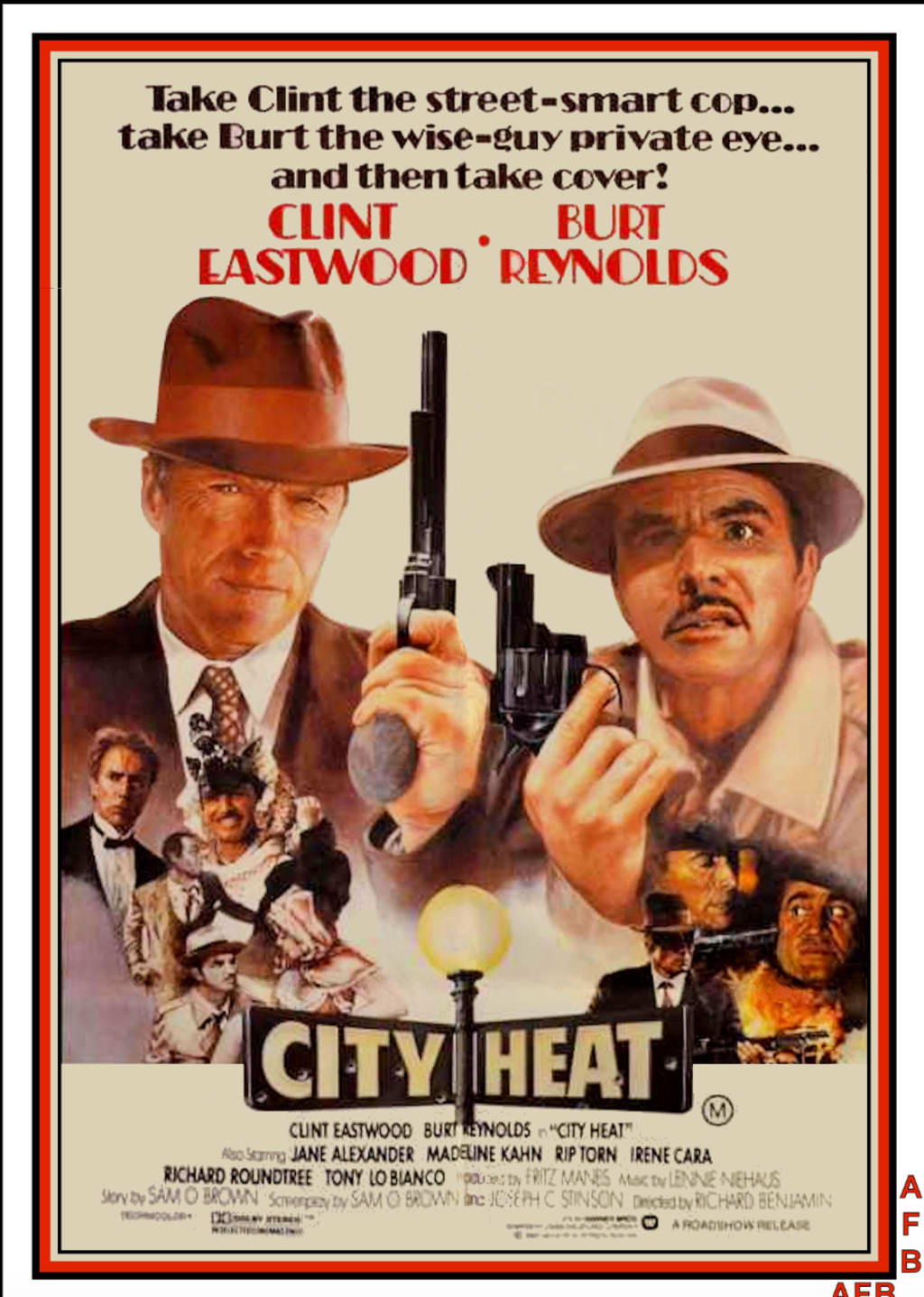
City Heat was thought to be a sure thing at the box office. It ended up proving that there is no such thing as a sure thing in Hollywood.

There really is no such thing as a sure thing—not in life, and certainly not in Hollywood.
Unfortunately, convincing movie executives of that reality has always been nearly impossible. Every generation of studio bosses believes they’ve discovered an infinite money machine. If one actor becomes a reliable box office draw, they assume audiences will show up forever. If two superstars join forces, then surely lightning can’t help but strike.
History has repeatedly shown otherwise.
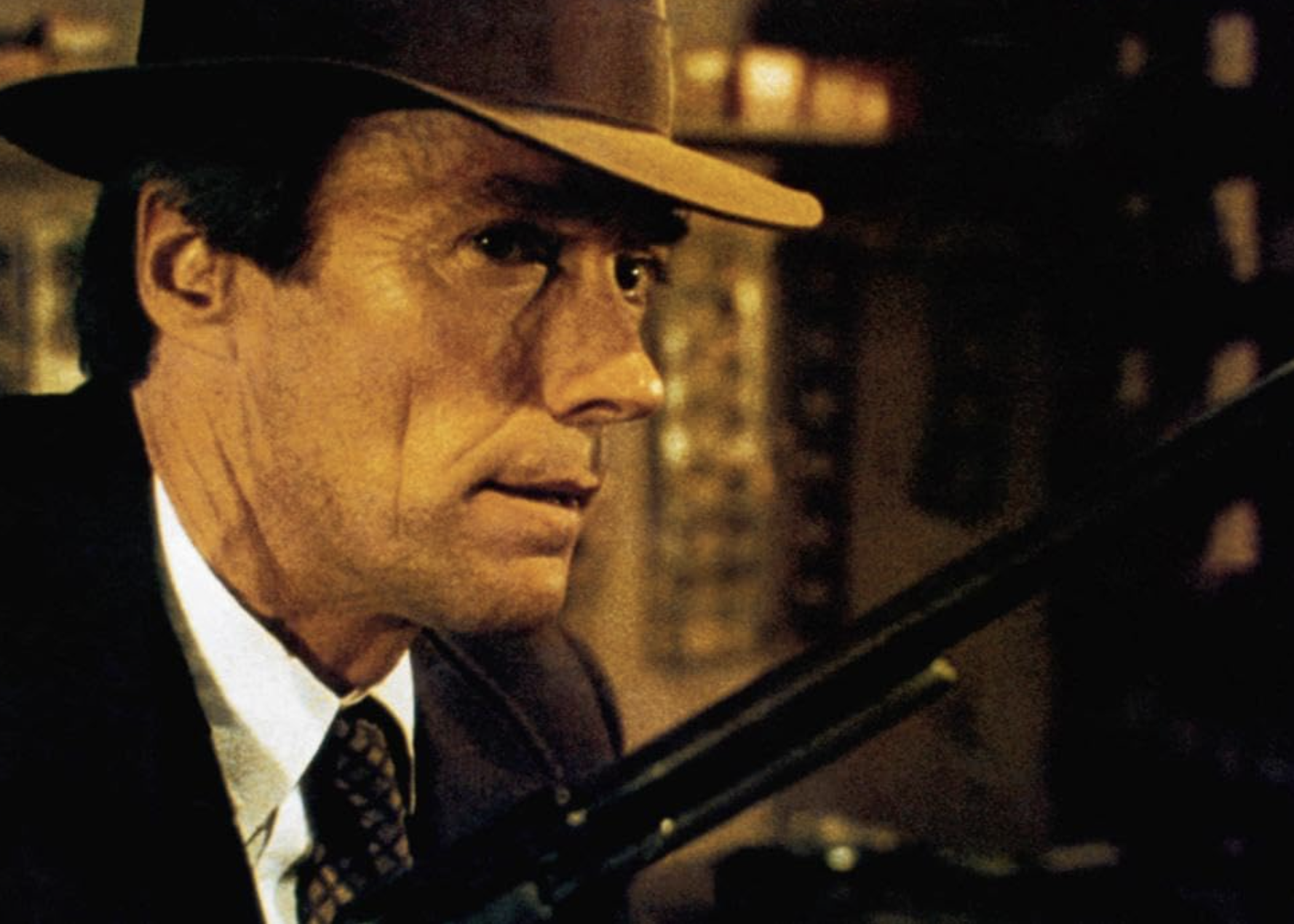
During the early 1980s, Warner Bros. believed it possessed Hollywood’s closest thing to a guaranteed hit in Clint Eastwood. He had spent more than a decade delivering dependable box office successes, whether as Dirty Harry, the mysterious Man With No Name, or in a string of action thrillers and westerns. Eastwood had become the rare actor who seemed almost incapable of missing.
Almost.
Even Clint Eastwood Wasn’t Flop-Proof
There were warning signs.
In 1982, Eastwood starred in Honkytonk Man, a deeply personal Depression-era drama that remains one of the most underrated films of his career. Critics admired it far more than audiences, who largely stayed away. Produced for only about $2 million, the film grossed roughly $4 million domestically. It wasn’t a financial disaster, but it demonstrated an important lesson: even Clint Eastwood couldn’t guarantee a hit.
Burt Reynolds had already learned that lesson the hard way.
Only a few years earlier, Reynolds had been Hollywood’s biggest box office attraction. Hits like Smokey and the Bandit, The Cannonball Run, and Hooper made him one of the industry’s most bankable stars.
Then the momentum vanished.
Outside of the Smokey and the Bandit and Cannonball Run franchises, Reynolds’ early-1980s output struggled badly. His remake of The Man Who Loved Women became so desperate for attention that Reynolds even recorded a promotional 1-900 phone message pleading with fans to see the movie. The gimmick couldn’t save it.
Yet Hollywood remained convinced that somewhere there was still a foolproof formula.
If One Superstar Works, Why Not Two?
The obvious solution seemed almost too perfect.
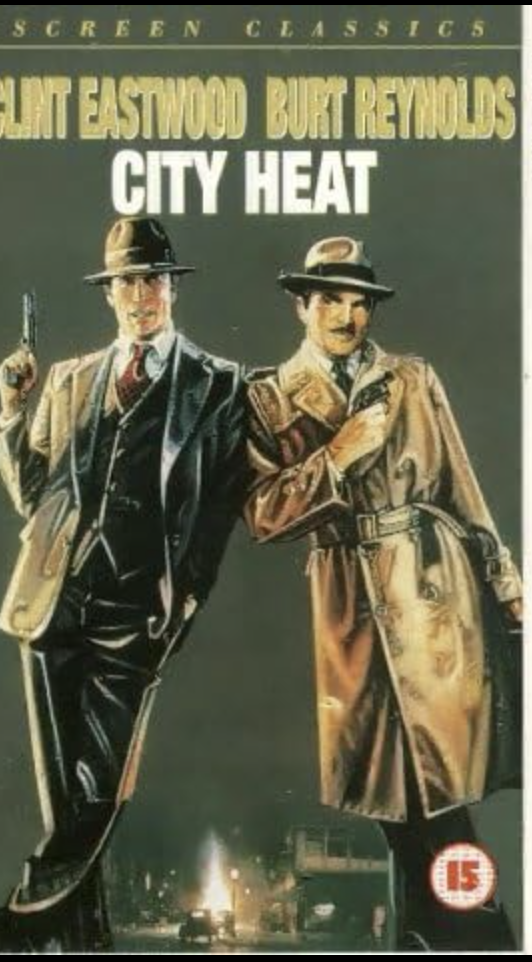
Pair Clint Eastwood with Burt Reynolds.
The two actors had been friends for years, famously sharing the experience of being fired by Universal Studios on the very same day early in their careers. They had discussed working together before, but the right project never materialized.
Then Blake Edwards entered the picture.
Edwards had written a screenplay years earlier while living in Switzerland called Kansas City Jazz. His wife, Julie Andrews, considered it one of his finest scripts and encouraged him to direct it. Warner Bros. quickly transformed the project into a major production after Eastwood and Reynolds agreed to star.
Retitled City Heat, the film became one of the studio’s biggest bets of 1984.
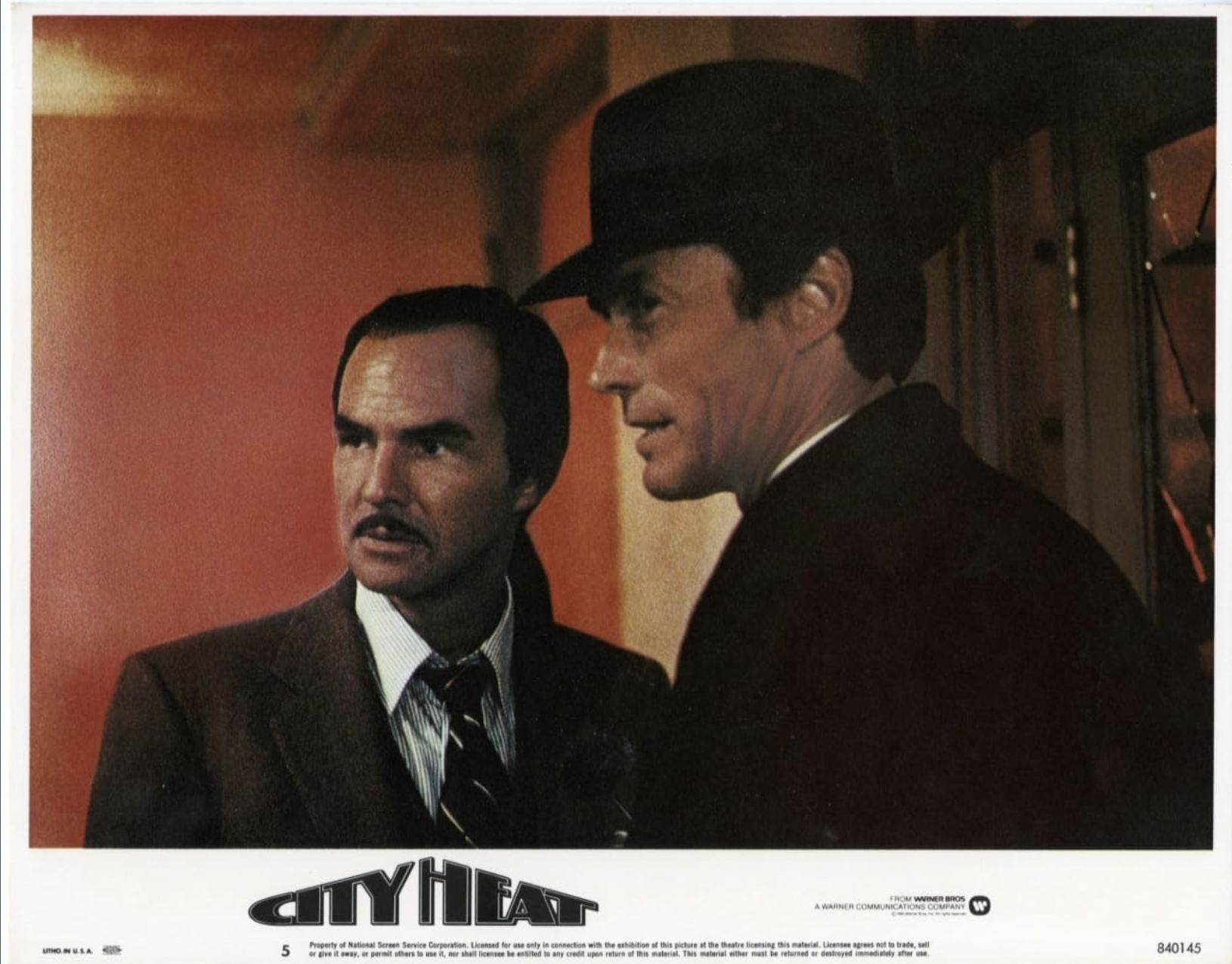
Set in a stylized 1933 Kansas City, the film follows tough police lieutenant Speer (Eastwood) and wisecracking private investigator Mike Murphy (Reynolds), former partners forced to reunite after a murder involving stolen mob ledgers. Jane Alexander, Madeline Kahn, Rip Torn, Richard Roundtree, Irene Cara, and Tony Lo Bianco rounded out an impressive supporting cast.
On paper, it sounded like a can’t-miss combination of gangster action and buddy comedy.
Reality proved far more complicated.
Everything That Could Go Wrong Did
Creative problems surfaced almost immediately.
Eastwood and Blake Edwards reportedly clashed over the direction of the film and the interpretation of Eastwood’s character. Edwards ultimately departed the production before filming was completed, later using the pseudonym Sam O. Brown in the credits. Screenwriter Joseph C. Stinson extensively rewrote the screenplay before actor-turned-director Richard Benjamin stepped in to finish the picture.
Then came an even bigger setback.
On the very first day of filming, Burt Reynolds suffered one of the most significant injuries of his career. During a fight scene, he was accidentally struck in the face with a metal chair, fracturing his jaw.
The consequences lingered long after production wrapped.
Reynolds lost nearly 30 pounds, endured constant pain, and developed a dependence on pain medication that he later admitted affected his life for years. His dramatically thinner appearance fueled ugly tabloid speculation about his health, while Reynolds himself later described the injury as one of the darkest periods of his career.
Behind the scenes, he sensed something else was wrong.
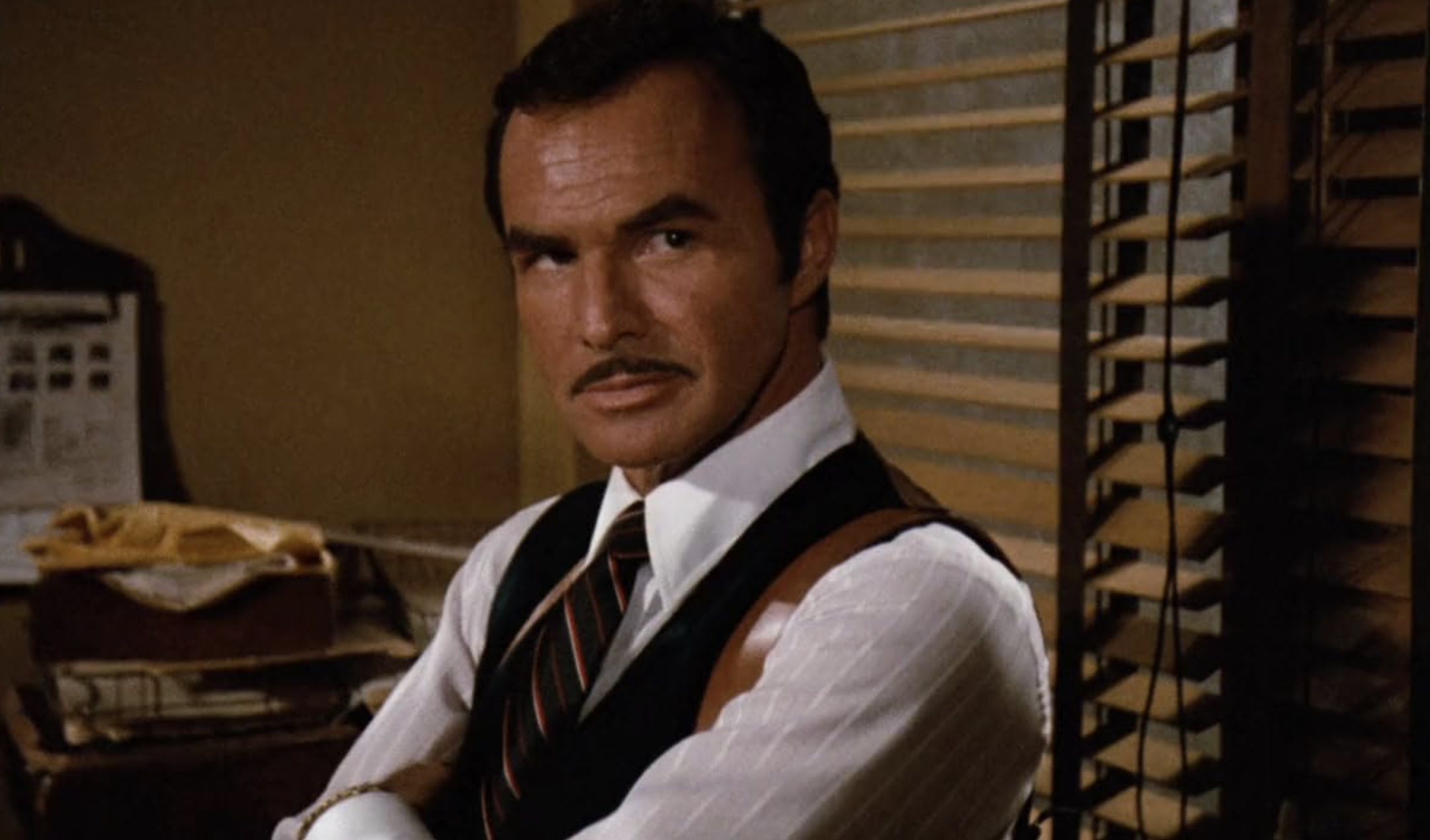
By the second week of filming, Reynolds believed the movie simply wasn’t working. His relaxed comedic style clashed with Eastwood’s straight-faced intensity, creating a partnership that never found the chemistry audiences expected.
Eddie Murphy Changed the Conversation
When City Heat opened in December 1984, Warner Bros. expected audiences to flock to the pairing of two Hollywood legends.
Instead, moviegoers chose someone else.
Released with a production budget of approximately $25 million, City Heat opened in third place and eventually earned about $38 million domestically. While respectable on paper, the film failed to generate the profits expected from two of the industry’s biggest stars.
Making matters worse, the same holiday season belonged to Eddie Murphy.
Beverly Hills Cop exploded into a cultural phenomenon, becoming one of the biggest hits of the decade and effectively announcing that Hollywood had a new king of the box office.
The changing of the guard couldn’t have been more symbolic.
Critics Didn’t Hold Back
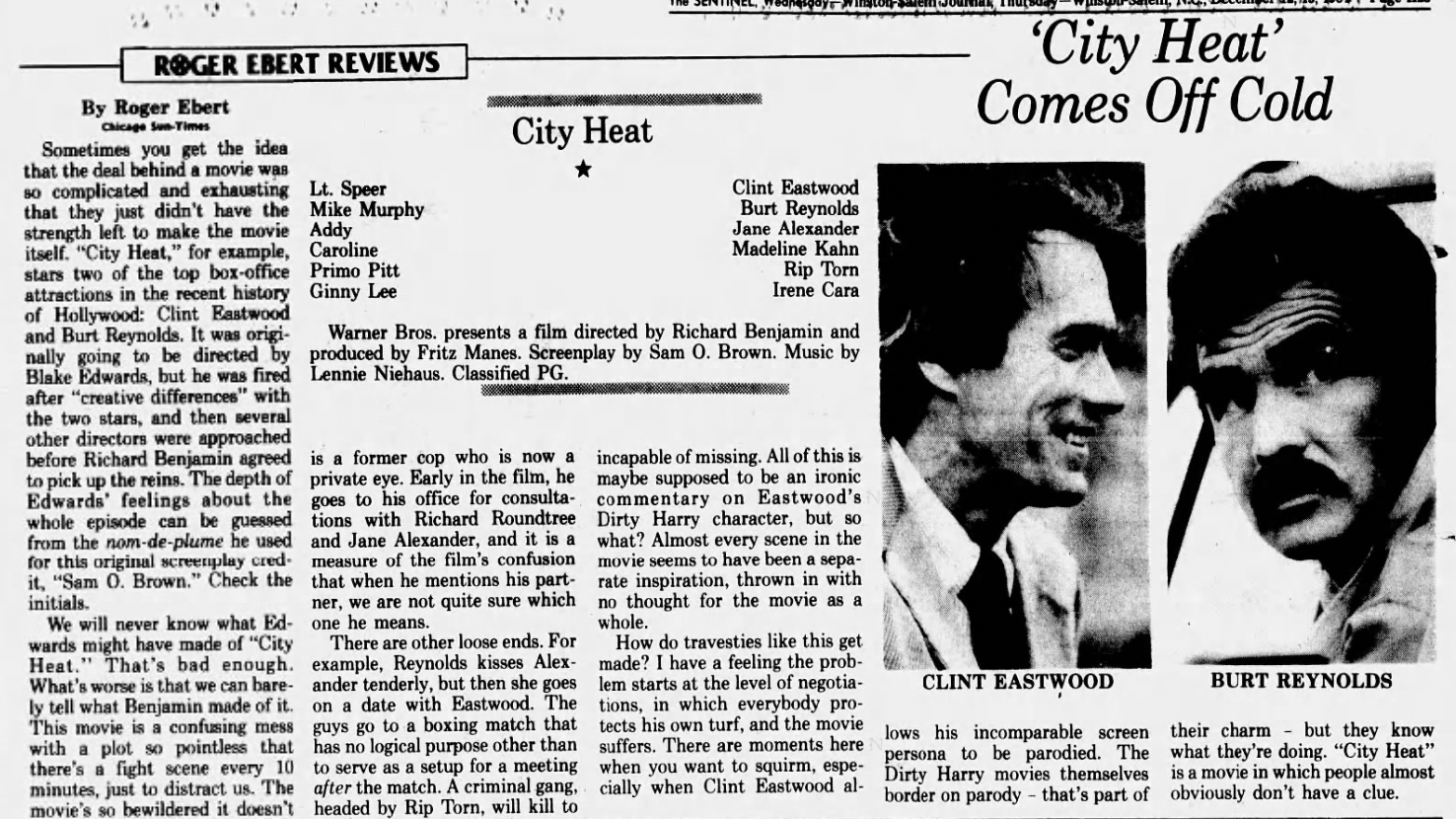
The reviews were brutal.
Today, City Heat holds a 22% critics’ score on Rotten Tomatoes, reflecting the widespread disappointment that greeted its release.
Roger Ebert famously called it “a complete, shocking mess.”
Gene Siskel gave it zero stars, arguing that it failed as both a comedy and an action film. Janet Maslin of The New York Times found some enjoyment in watching Eastwood and Reynolds together, but even she acknowledged that the screenplay squandered a once-in-a-lifetime pairing.
Reynolds even received a Razzie nomination, an almost unimaginable development for the man who had recently been the world’s biggest box office attraction.
A Fascinating Failure
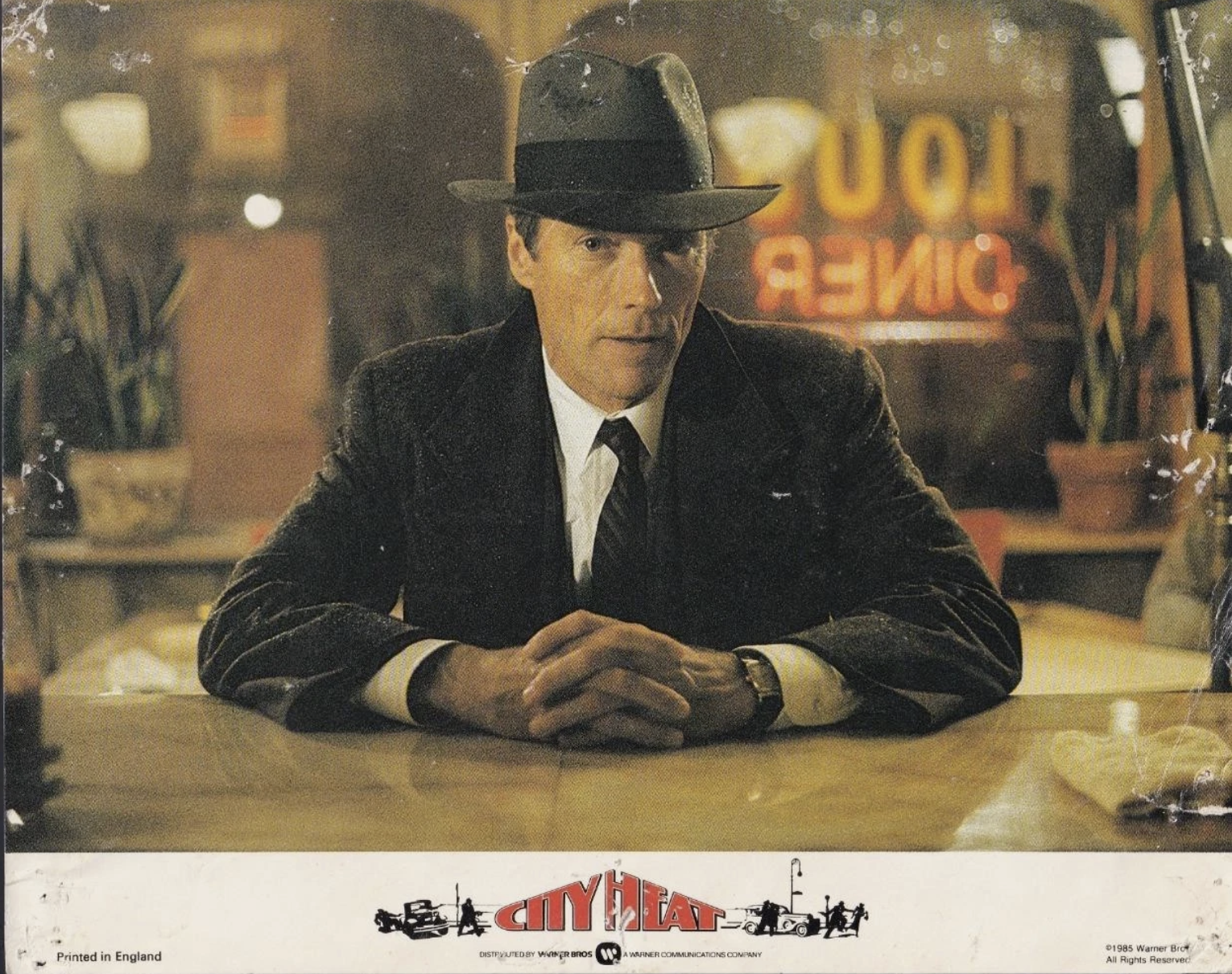
Time has transformed City Heat into something more interesting than it was upon release.
It’s no longer viewed as a disastrous blockbuster but as a fascinating “what if?” from the 1980s—a film featuring two of the era’s biggest stars that somehow never found its rhythm.
Reynolds later admitted he regretted the project, believing the weak script ensured he and Eastwood would never work together again. He was right.
Eastwood rebounded quickly, entering perhaps the strongest directing phase of his remarkable career. Reynolds, meanwhile, never fully regained the extraordinary commercial momentum he had enjoyed during the late 1970s.
Today, City Heat remains an entertaining curiosity more than a forgotten classic. Its stylish period production, accomplished supporting cast, and the novelty of seeing Eastwood and Reynolds share the screen still offer reasons to revisit it.
But its greatest legacy may be the lesson it taught Hollywood.
No matter how powerful the stars, how famous the director, or how confident the studio executives, there has never been—and probably never will be—a guaranteed hit.
Sometimes even two legends aren’t enough.

About the Creator
Movies of the 80s
We love the 1980s. Everything on this page is all about movies of the 1980s. Starting in 1980 and working our way the decade, we are preserving the stories and movies of the greatest decade, the 80s. https://www.youtube.com/@Moviesofthe80s
Enjoyed the story? Support the Creator.
Subscribe for free to receive all their stories in your feed.
Comments
There are no comments for this story
Be the first to respond and start the conversation.