
'Caboblanco' (1980): Charles Bronson’s Forgotten Adventure
A would-be Casablanca tribute that got lost somewhere between development, the editing room, and the Peruvian coast

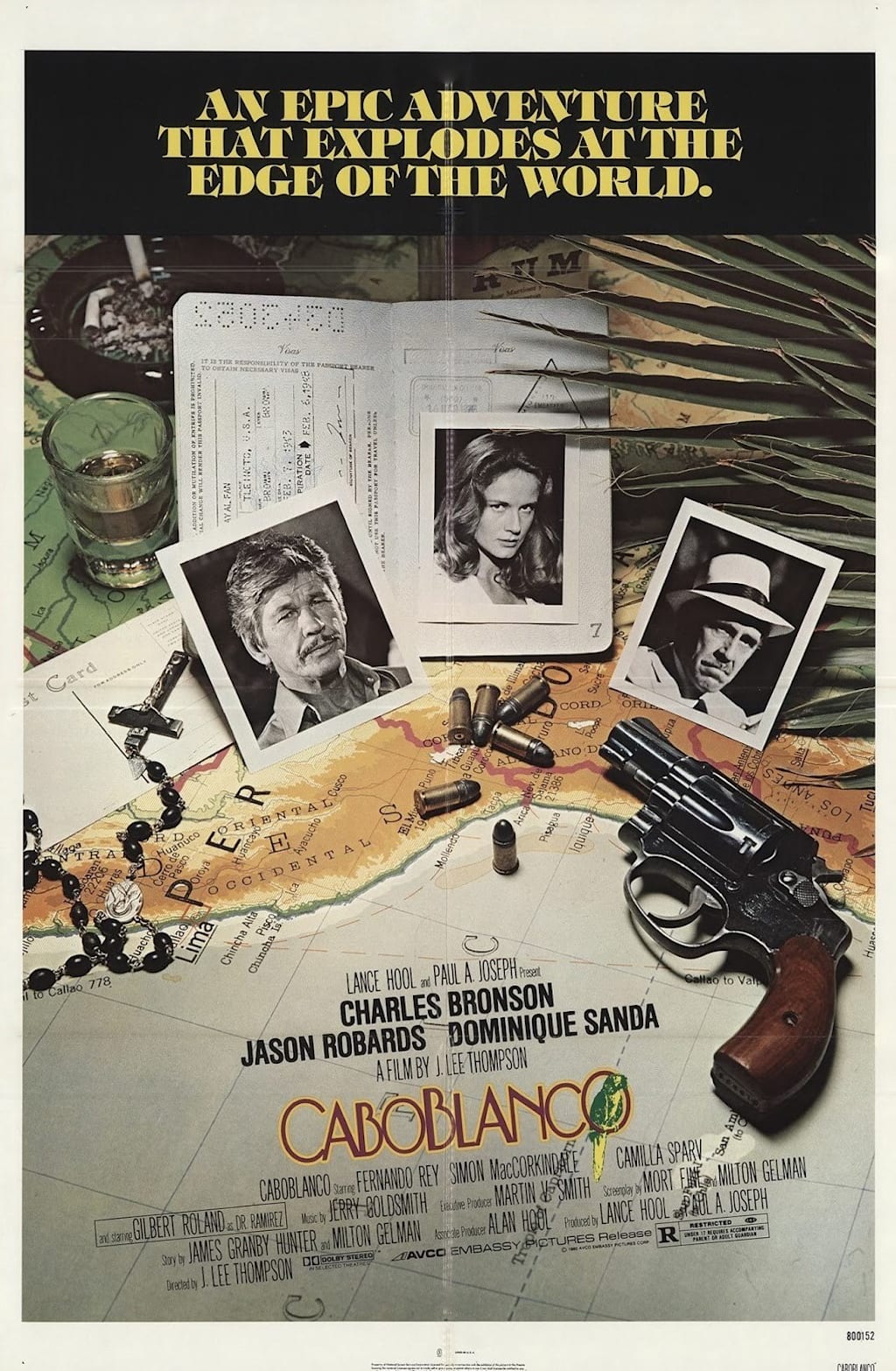
In 1980, Charles Bronson tried something a little different.
By this point, Bronson had become one of the most recognizable tough guys in American movies. He was the man you called when a film needed a taciturn hero, a loaded gun, and someone who could make violence look like a perfectly reasonable solution to almost any problem.
Then came Caboblanco.
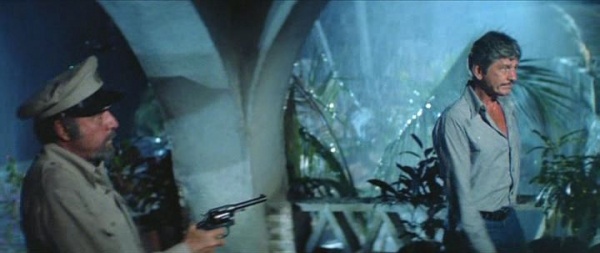
Directed by J. Lee Thompson and starring Bronson alongside Dominique Sanda, Jason Robards, and Fernando Rey, Caboblanco was an exotic adventure steeped in romance, mystery, buried treasure, and Nazi fugitives. It was also a movie that seemed to have no idea exactly what it wanted to be.
And that may be its most interesting quality.
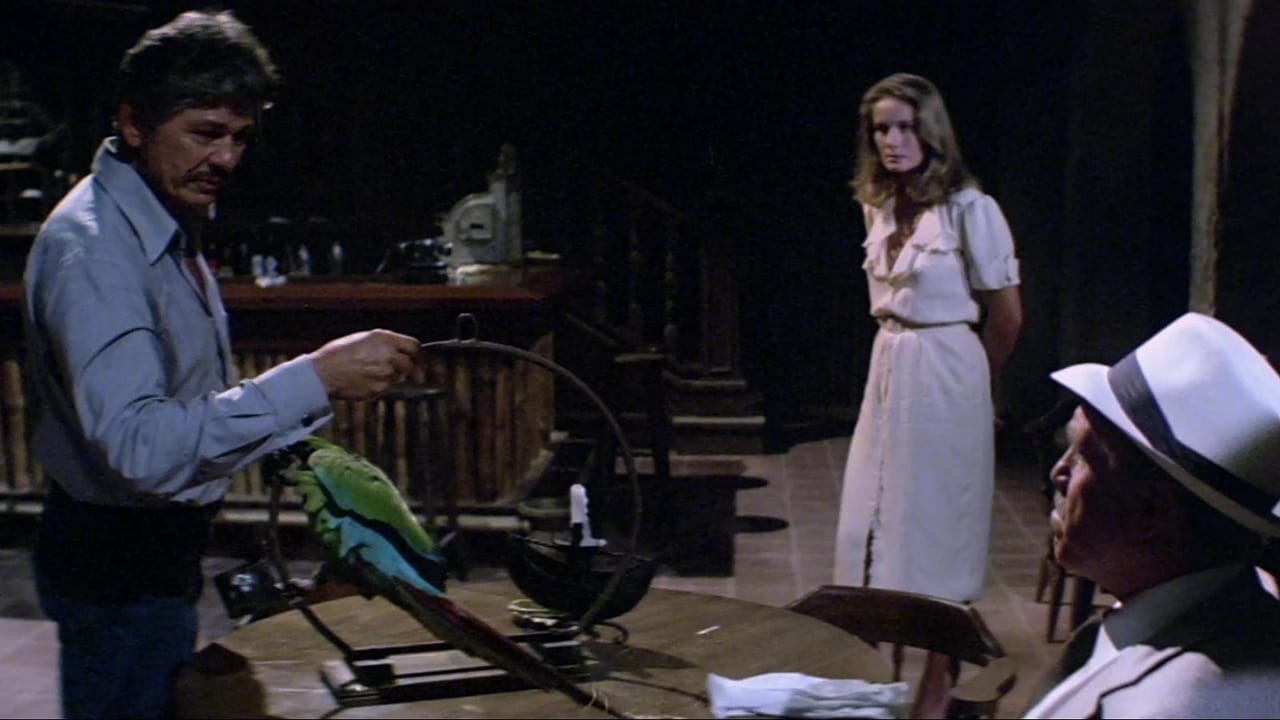
It’s Not Casablanca. Really.
It doesn’t take much imagination to see why Caboblanco has spent decades being compared to Casablanca.
There’s an isolated coastal community. There are refugees and criminals. There is a mysterious former Nazi. There is romance, political intrigue, and a dangerous secret involving treasure.
Only this time, we’re not in North Africa.
We’re in a fictional Peruvian village called Cabo Blanco.
The filmmakers were quick to distance themselves from the Casablanca comparisons, insisting that the movie was intended to stand on its own rather than serve as a remake or direct tribute. Still, the similarities were difficult to ignore.
The project began as an ambitious independent production designed to recapture some of the atmosphere of old-school adventure movies. Producers Lance Hool and Paul Joseph wanted something exotic and romantic, but they also wanted a story with enough mystery and action to sell to international audiences.
The basic premise was inspired by a real-life story involving a Nazi who supposedly disappeared after sinking a ship carrying treasure. One version of the story even suggested that the missing Nazi might have been Martin Bormann, Hitler’s former deputy.
Whether that story was fact, rumor, or Hollywood embellishment almost doesn’t matter.
It was exactly the kind of story Hollywood loved.
Morton S. Fine and Milton S. Gelman handled the screenplay, working from a story credited to Víctor Andrés Catena and Jaime Comas Gil. What emerged was a strange mixture of treasure hunting, political intrigue, romance, and postwar mystery.
And then there was Charles Bronson.
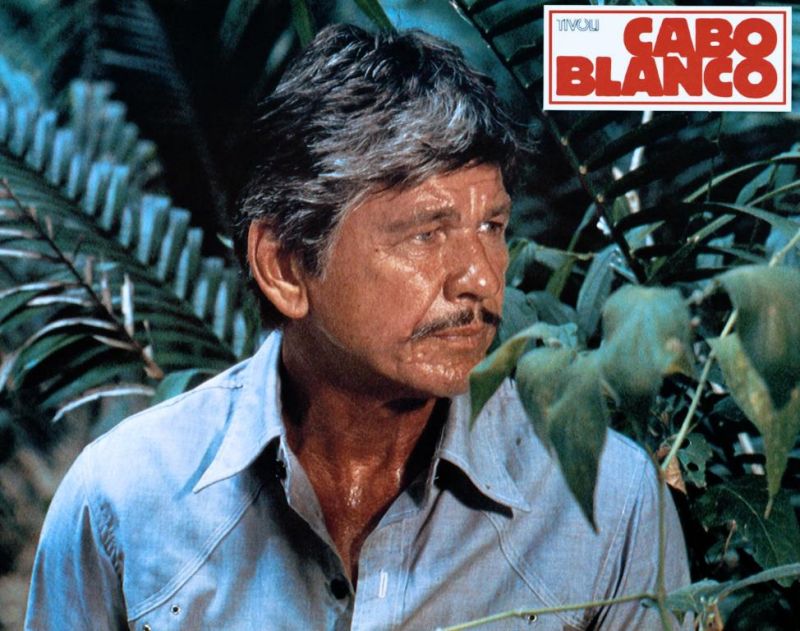
Bronson Goes Exotic
Caboblanco marked the third collaboration between Bronson and director J. Lee Thompson, following The Valachi Papers and The Mechanic.
But this wasn’t exactly another Bronson revenge movie.
Bronson was reportedly attracted to the project precisely because it didn’t rely on the kind of heavy violence that had become his trademark. He saw something closer to the exotic adventure movies he had enjoyed as a kid.
For Bronson, this was a chance to step outside the grimy urban landscapes and brutal revenge stories that had defined much of his career.
Unfortunately, getting the movie to the screen proved considerably more difficult than getting Bronson into a tropical shirt.
The screenplay went through numerous rewrites. At one point, an early version reportedly involved a giant squid.
Yes. A giant squid.
That particular idea apparently didn’t survive, but the movie’s troubled development continued. The budget eventually climbed toward $10 million, an enormous amount for an independent production at the time. Bronson himself reportedly received more than $1 million, while private financing and international presales helped keep the increasingly expensive production moving.
Eventually, the cameras rolled.
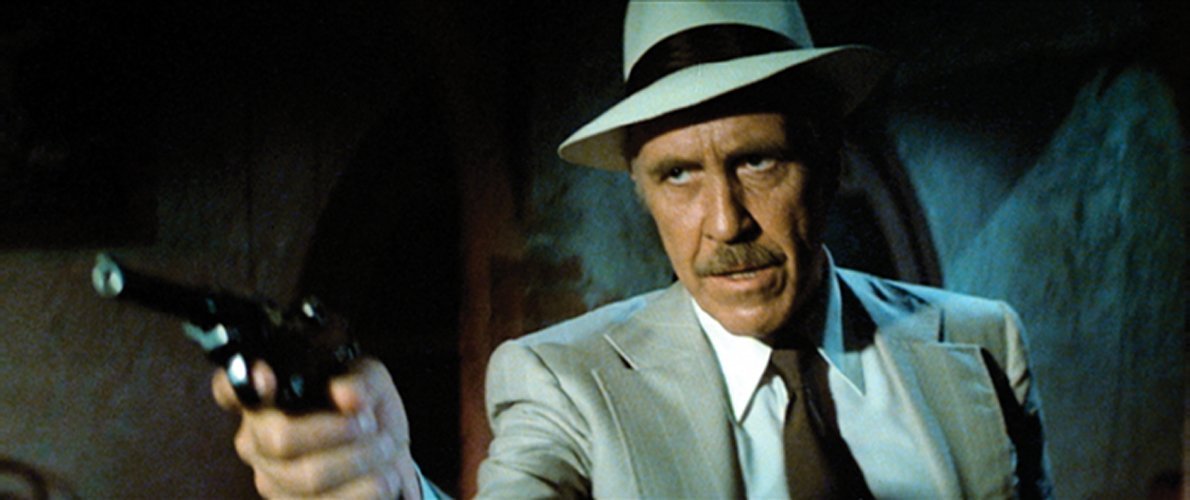
Welcome to Cabo Blanco
Production began in early 1979 and spent roughly three months filming in and around Barra de Navidad in Jalisco, Mexico.
The Mexican coastal village became the fictional Cabo Blanco, and the production made extensive use of the local environment. Villagers were recruited as extras, while even the Mexican Navy reportedly became part of the production.
On screen, the location is easily one of the film’s greatest assets.
Cinematographer Alex Phillips Jr. captured the humid, sun-drenched atmosphere beautifully, while production designer José Rodríguez Granada helped transform the Mexican coastline into the kind of vaguely European, vaguely South American, completely cinematic world the story required.
Then there was Jerry Goldsmith.
Goldsmith’s score is arguably the movie’s secret weapon. Filled with Latin influences, romantic passages, suspense, and sweeping adventure motifs, the music gives Caboblanco a sense of importance that the screenplay occasionally struggles to provide.
There are moments when the score seems to be telling us that we’re watching a grand adventure.
The movie itself isn’t always so sure.
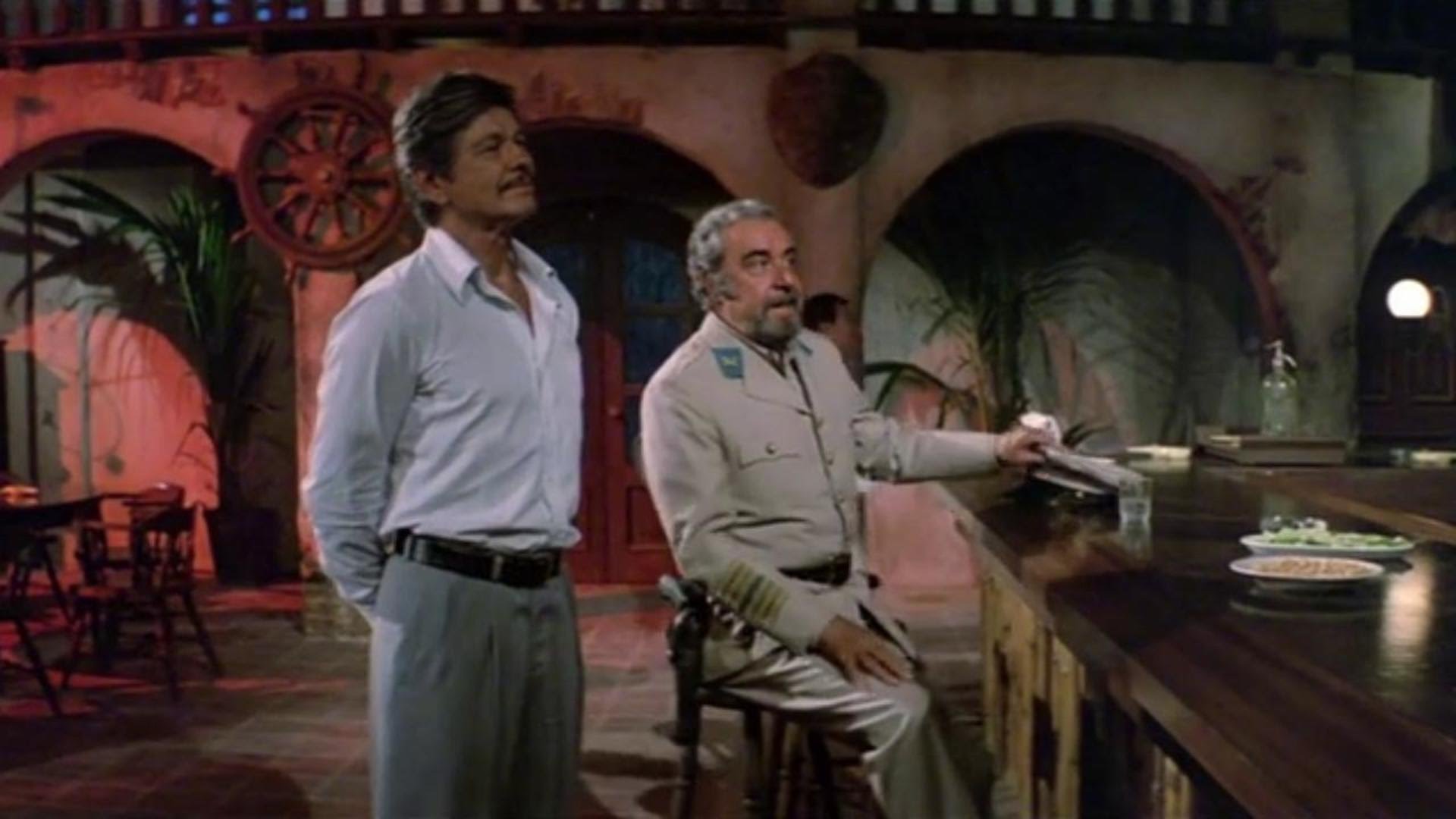
The Movie That Got Cut Apart
Perhaps the biggest tragedy of Caboblanco happened after filming was finished.
An approximately two-hour international version was assembled, containing considerably more action and additional material. But when the film was prepared for the American market, Thompson drastically reduced the running time.
Depending on the source, the American version runs somewhere between 87 and 96 minutes.
That’s a brutal haircut.
The cuts were so extensive that actor Clifton James was effectively removed from the movie altogether, despite retaining his credit.
And the longer international version?
It’s apparently lost.
That makes Caboblanco one of those fascinating examples of a movie that may not actually exist anymore in the form its filmmakers originally intended.
What audiences eventually saw was the compromised version.
And critics noticed.
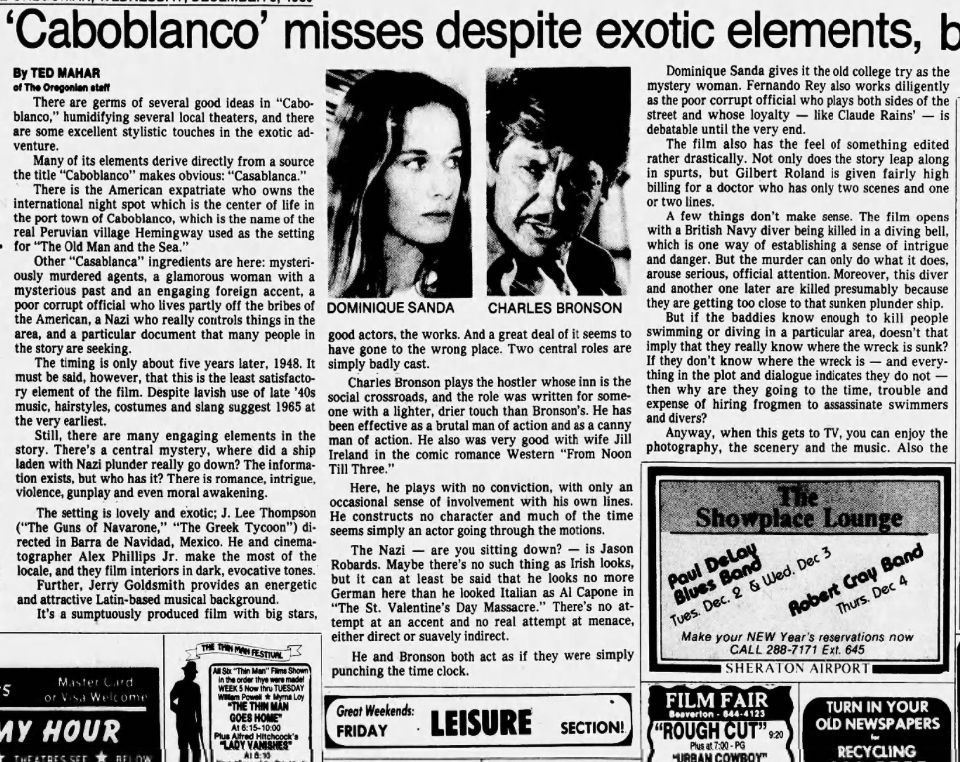
A Critical Beatdown
When Caboblanco finally arrived in American theaters, the response was not exactly enthusiastic.
Major studios, including Fox, had reportedly passed on the movie before Avco Embassy Pictures eventually picked it up. Although it had already premiered in several international territories in 1980, the American release was delayed until early 1981.
By then, whatever momentum the production had generated was largely gone.
Critics were merciless.
The movie was dismissed as an “appalling rehash” and a “witless spoof,” while Halliwell’s Film Guide essentially treated it like an unfinished project that somehow escaped the editing room.
The biggest complaint was that Caboblanco was simply too talky and muddled. It wanted to be a romantic adventure, a wartime thriller, a treasure hunt, and a Casablanca-style morality play all at once.
It never quite managed to become any of them.
The locations were beautiful. Bronson remained watchable. Jason Robards brought some real weight to his role as the Nazi Beckdorff, and Fernando Rey was perfectly cast as the corrupt local police official.
But the movie around them never quite came together.
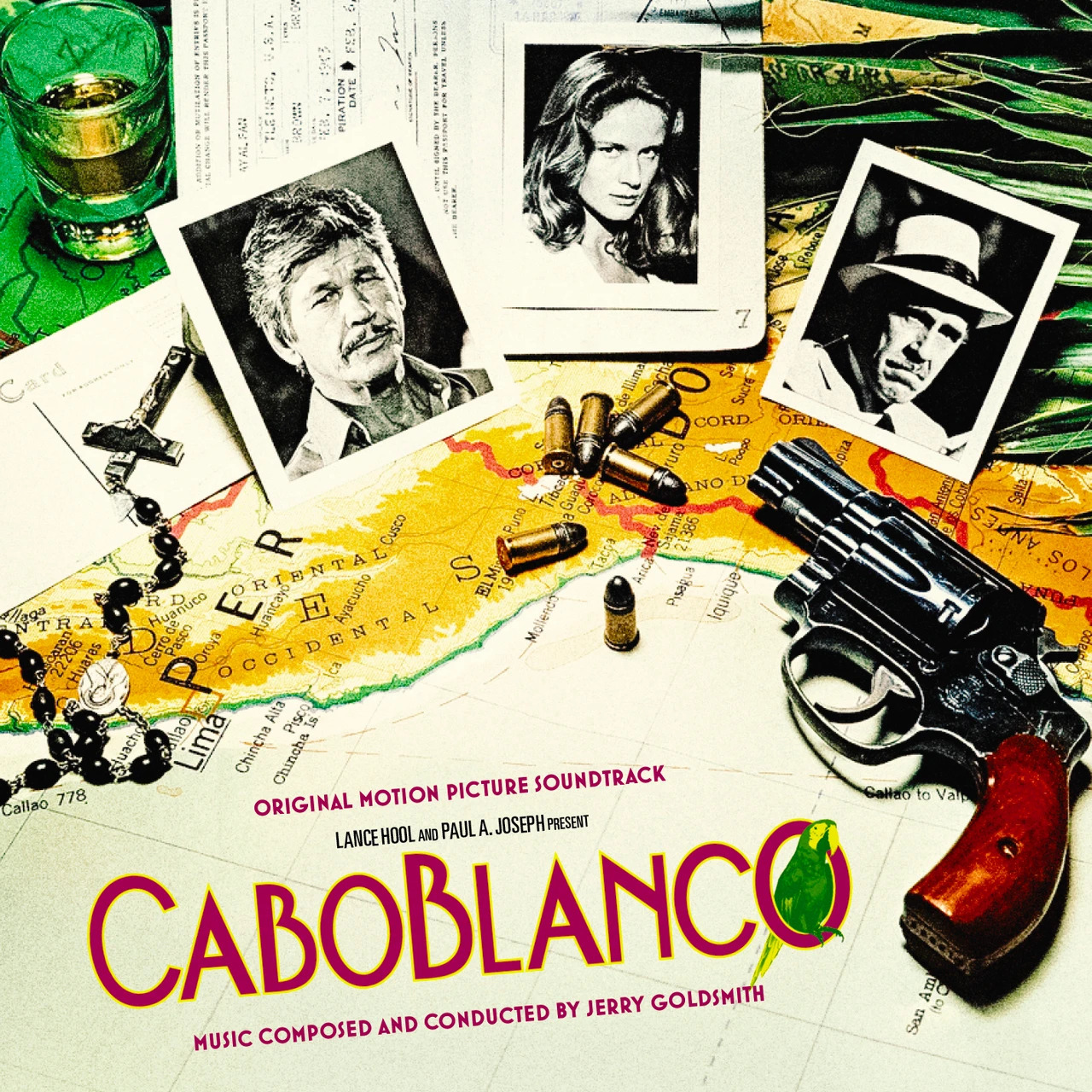
The Goldsmith Factor
There is one element of Caboblanco that almost everyone seems to agree deserves more attention.
Jerry Goldsmith’s music.
Goldsmith was one of the great film composers of the era, and his work here gives the movie an atmosphere it desperately needs. The score understands the romance, danger, mystery, and exoticism of the story even when the screenplay seems to be wandering around looking for them.
It’s the kind of score that makes you wish the movie were better.
And that’s really the story of Caboblanco in miniature.
There are pieces of a terrific adventure movie scattered everywhere.
They just don’t fit together.
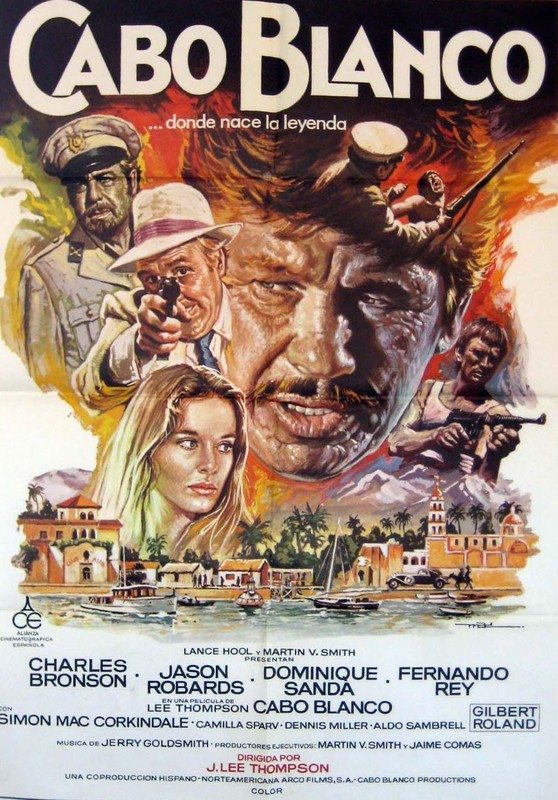
A Forgotten Bronson Curiosity
Time has been somewhat kinder to Caboblanco than the critics were.
It has never become a lost masterpiece, and most modern audience ratings remain decidedly middle-of-the-road. But Bronson fans have continued to discover it, particularly those interested in seeing the actor outside his familiar action/revenge territory.
And that’s where the movie becomes genuinely interesting.
Bronson isn’t playing the usual unstoppable killing machine. He’s inhabiting a romantic adventure story with an exotic setting, surrounded by actors like Robards and Rey.
It may not work particularly well, but watching Bronson attempt something different is fascinating.
The movie’s troubled history only adds another layer. The lost longer cut, the rewrites, the escalating budget, the international financing, the studio hesitation, and the brutal American recut all contribute to the feeling that we’re watching the surviving remains of a much larger movie.
Kino Lorber’s 2016 Blu-ray release, which included commentary and interviews with producer Lance Hool, at least helped preserve what remains.
And perhaps that’s enough.
A Movie Lost Somewhere Along the Way
Caboblanco was a bold swing.
An independent production spent nearly $10 million trying to resurrect the kind of exotic adventure Hollywood had once produced with considerably larger studios and considerably bigger stars. It gave Charles Bronson an opportunity to step outside his comfort zone. It brought together J. Lee Thompson, Jason Robards, Fernando Rey, and Jerry Goldsmith. It filmed against gorgeous Mexican locations and attempted to build an entire world around a story of Nazis, treasure, romance, and mystery.
Somewhere along the way, however, the movie got lost.
Maybe it was lost in the rewrites.
Maybe it was lost when the budget ballooned.
Maybe it was lost in the editing room when an entire international version was carved down for American audiences.
Or maybe it was simply a case of trying to recapture the magic of movies that were impossible to replicate in the first place.
Whatever happened, Caboblanco survives as one of the more curious footnotes in Charles Bronson’s career. It isn’t a forgotten masterpiece. It isn’t the Casablanca successor its marketing sometimes hinted at. But it is something arguably more interesting for a Movies of the 80s fan: a genuine cinematic oddity, ambitious enough to fail spectacularly and just strange enough to remain worth remembering.
And somewhere out there, hopefully, that missing two-hour cut is still waiting to wash ashore.
About the Creator
Movies of the 80s
We love the 1980s. Everything on this page is all about movies of the 1980s. Starting in 1980 and working our way the decade, we are preserving the stories and movies of the greatest decade, the 80s. https://www.youtube.com/@Moviesofthe80s
Enjoyed the story? Support the Creator.
Subscribe for free to receive all their stories in your feed.
Comments
There are no comments for this story
Be the first to respond and start the conversation.