
Breakin’ 2: Electric Boogaloo: The Sequel That Became a Punchline
How Cannon Films tried to turn a fleeting dance craze into a franchise—and accidentally gave pop culture one of its most enduring jokes.

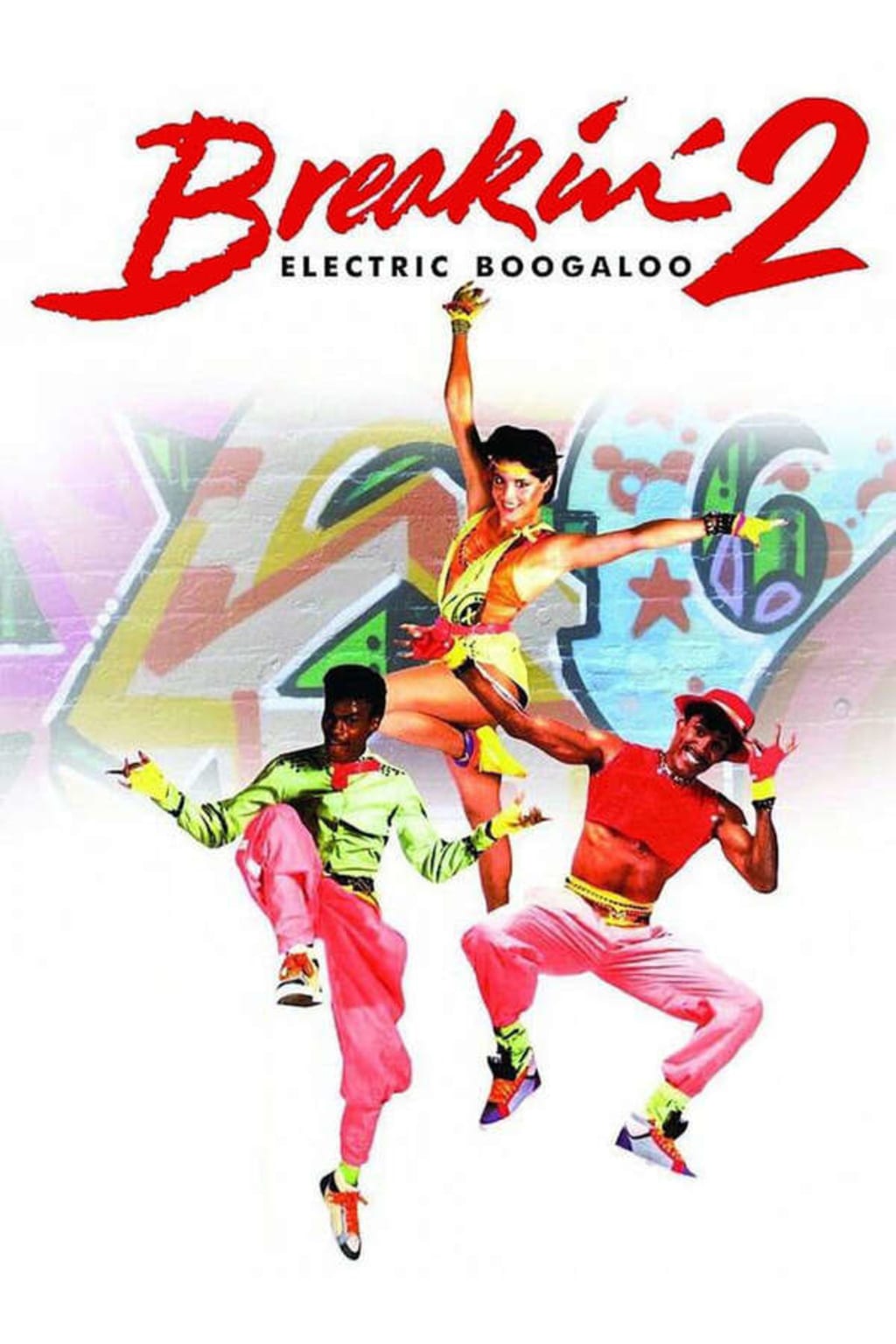
When Cannon Smelled a Hit
There are few movie titles that have escaped the boundaries of their own film quite like Breakin’ 2: Electric Boogaloo.
Today, “Electric Boogaloo” has become shorthand for the sequel nobody asked for. Add it to almost anything and the joke is immediately understood. A second Top Gun? Top Gun 2: Electric Boogaloo. Another political scandal? Scandal 2: Electric Boogaloo. The title has become a meme, a punchline and, eventually, a language of its own.
But in 1984, there was nothing ironic about it.
Cannon Films had a hit on its hands.
Menahem Golan and Yoram Globus had built their business around recognizing a trend, moving quickly and getting a movie into theaters before the audience moved on. The original Breakin’ had been exactly the kind of opportunity Cannon loved. Made for relatively little money, it rode the enormous popularity of breakdancing and turned a modest investment into a domestic box-office success.
So naturally, there was only one thing to do.
Make another one.
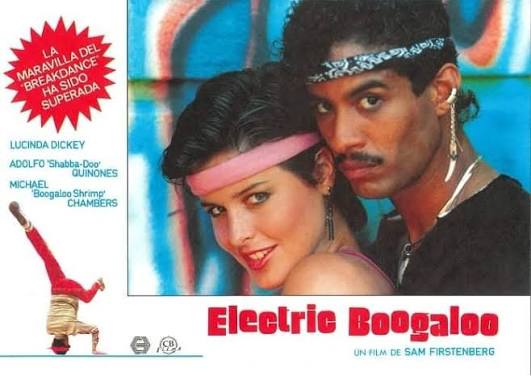
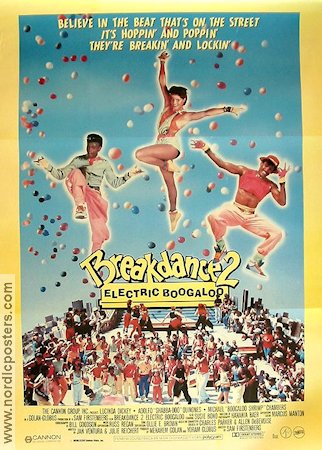
Directed by Sam Firstenberg, Breakin’ 2: Electric Boogaloo brought back Lucinda Dickey as Kelly, better known as Special K, along with Adolfo “Shabba-Doo” Quiñones as Ozone and Michael “Boogaloo Shrimp” Chambers as Turbo.
The timing was everything.
Breakdancing was still hot. Hip-hop culture was exploding into the mainstream. Hollywood was scrambling to figure out what to do with it.
Cannon wasn’t interested in figuring it out.
Cannon wanted to cash in.
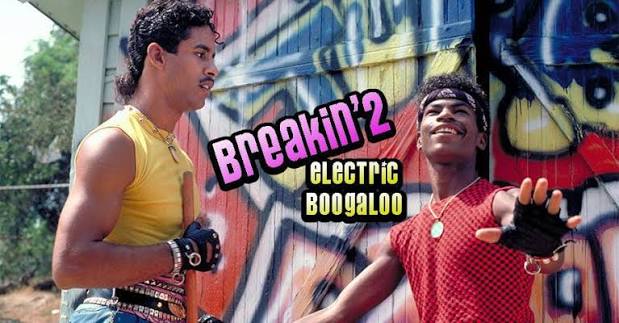
A Sequel Built on Momentum
The original Breakin’ had arrived at exactly the right moment.
The sequel arrived almost immediately afterward.
That was both its greatest advantage and its biggest problem.
Cannon knew the dance craze wouldn’t last forever, and the studio was competing with films such as Beat Street, which was chasing much of the same audience. There was no time to sit around developing a complicated story.
The story they settled on was simple enough.
Kelly, Ozone and Turbo become involved in a fight to save a community center in East Los Angeles from a greedy developer. The center represents a place where young people can gather, dance and express themselves, giving the movie a conveniently wholesome heart beneath all the neon and breakbeats.
It is essentially Romeo and Juliet with breakdancing.
And that’s really all it needs to be.
The plot exists primarily to get the characters from one dance sequence to the next.
That isn’t necessarily an insult. Breakin’ 2 understands what its audience came to see. It isn’t pretending to be a serious drama about urban redevelopment. It is a musical dressed up as a movie about a community crisis.
The dancing is the point.
Everything else is connective tissue.
Cannon Goes Bigger
The budget was still modest—around $3 million—but Breakin’ 2 looks like Cannon was determined to make the sequel feel bigger than the original.
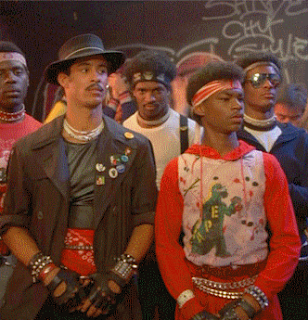
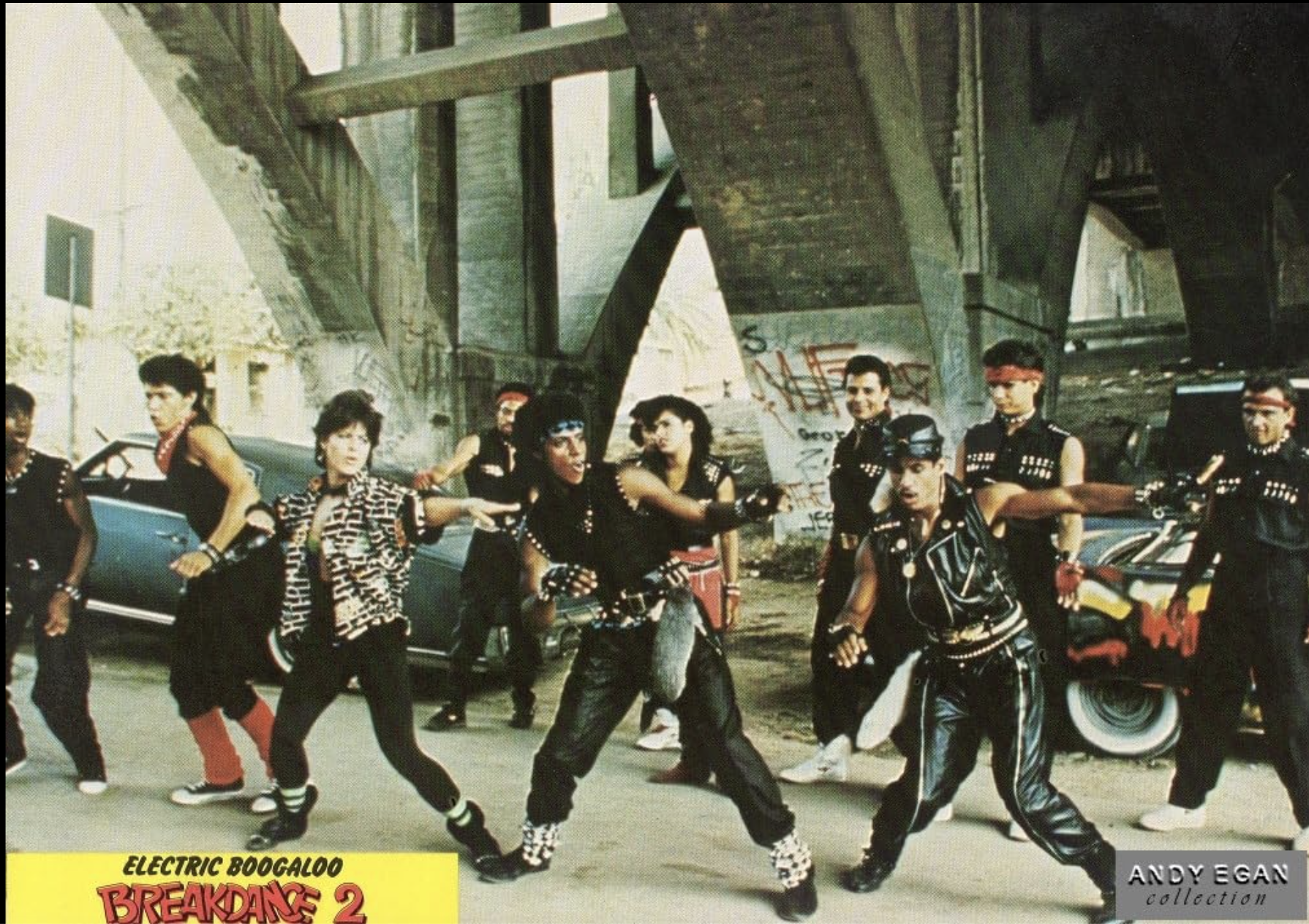
Production began in Los Angeles in the summer of 1984, with Firstenberg taking over directing duties. The filmmakers embraced the real neighborhoods of East Los Angeles and Boyle Heights, shooting at locations including Hollenbeck Park and Los Angeles City Hall.
That sense of place gives the movie something that many of its imitators lack.
It feels like a movie made around a real subculture rather than a Hollywood approximation of one.
The cast was also filled out with actual dancers and performers, while the film featured a young Ice-T and an appearance by Martika. The result is messy, colorful and occasionally ridiculous, but it also has the unmistakable feeling of people having an enormous amount of fun.
Then there is Turbo.
And the movie’s most famous dance sequence.
For the climactic showcase, Turbo appears to defy gravity while dancing on a rotating floor. The sequence is exactly the kind of wonderfully excessive stunt that makes an otherwise disposable movie worth remembering.
The production reportedly borrowed a rotating set from A Nightmare on Elm Street, and Firstenberg turns it into a showcase for Chambers’ extraordinary physical abilities.
It is completely unnecessary.
It is also magnificent.
That pretty much sums up Breakin’ 2.
Racing the Calendar
Behind the scenes, however, the production was moving at a frantic pace.
Cannon wanted the movie in theaters while the breakdancing phenomenon was still hot. The filmmakers had to shoot, edit and finish the picture quickly enough to hit a holiday release date.
TriStar had a hole in its Christmas schedule following the problems surrounding Supergirl, and Breakin’ 2 was pushed into that opening.
The movie premiered in New York on December 19, 1984, before expanding nationwide only days later.
It was the perfect Cannon Films strategy: see an opportunity, make the movie and get it into theaters before anyone has time to ask whether the trend has already passed.
The problem was that, by Christmas 1984, the cultural landscape was already beginning to change.
The Critics Weren’t Dancing
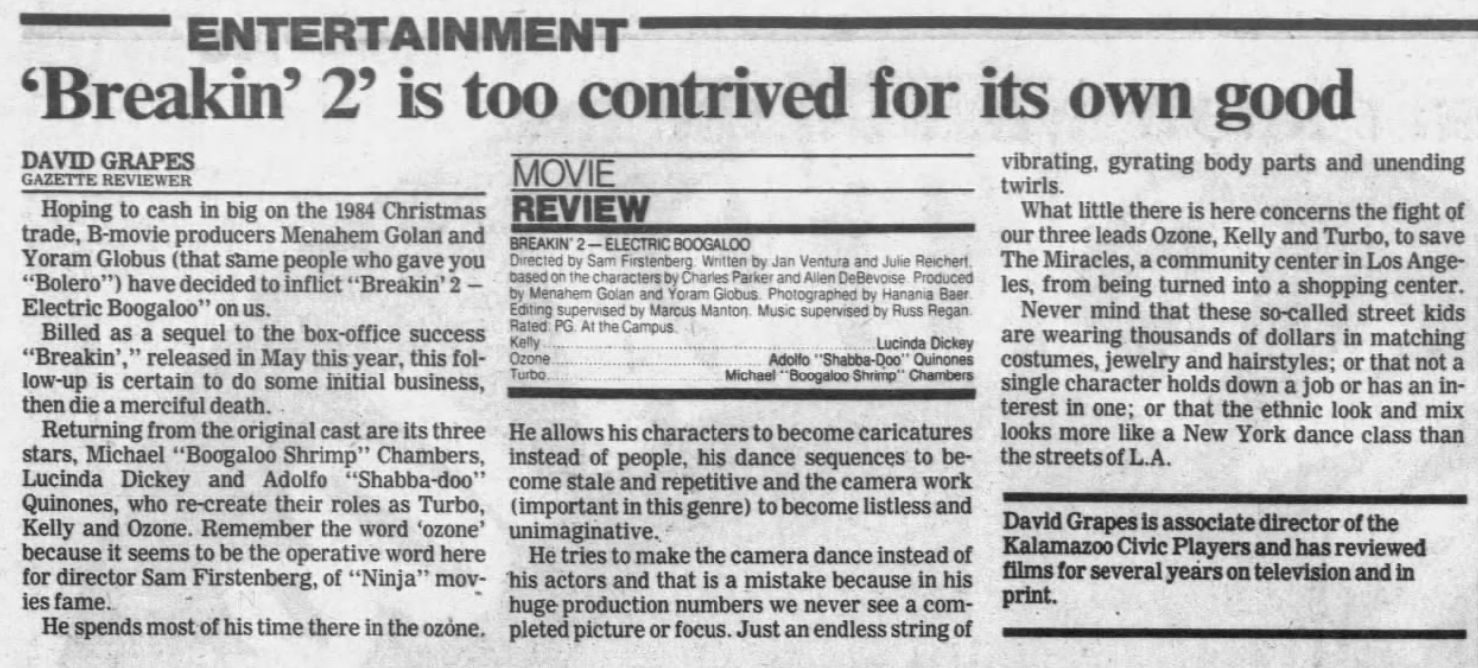
Critics were not particularly impressed.
The screenplay was simplistic. The acting was uneven. The story was thin. And for reviewers looking for traditional dramatic structure, the movie offered very little to grab onto.
Janet Maslin of The New York Times was among those who found the nonstop dancing more exhausting than exhilarating.
But there was at least one major critic willing to embrace what the movie was trying to do.
Roger Ebert gave Breakin’ 2 three stars.
That wasn’t because he suddenly considered the film a sophisticated piece of filmmaking. He simply recognized something its detractors often missed: the movie was having fun.
Its plot was silly. Its ambitions were modest. Its entire existence was built around a cultural fad.
But there was an undeniable enthusiasm to it.
Breakin’ 2 wasn’t embarrassed to be exactly what it was.
That counts for something.
The Sequel That Became Bigger Than the Movie
Financially, Breakin’ 2 couldn’t match its predecessor.
It earned roughly $15 million domestically, less than half of what the original had made. But considering its tiny budget, that still represented a respectable return.
And then something strange happened.
The movie disappeared.
The joke didn’t.
Over the years, Electric Boogaloo gradually escaped from the title and became part of the cultural vocabulary. It transformed into a kind of universal sequel suffix, something that could be attached to virtually anything for comedic effect.
The irony is that the filmmakers never intended the title to be funny.
They weren’t making a joke about unnecessary sequels.
They were trying to sell one.
The phrase eventually became so recognizable that many people who have never watched Breakin’ 2 know exactly what “Electric Boogaloo” means.
That is an unusual kind of immortality.
More Than a Punchline
It would be easy to dismiss Breakin’ 2: Electric Boogaloo as one of those wonderfully bad movies that survived because the title became a meme.
That would sell the movie short.
Yes, it is cheesy. Yes, the story is barely there. Yes, Cannon’s entire reason for making it was essentially to squeeze another few dollars out of a cultural phenomenon before it disappeared.
But there is something genuinely charming underneath all that commercial calculation.
The dancers are good.
The locations are real.
The movie captures a particular moment in Los Angeles when breakdancing, hip-hop, street fashion and youth culture were colliding with mainstream entertainment. It may have been made to exploit that moment, but it also inadvertently preserved it.
And that’s what makes Breakin’ 2 more interesting today than it probably had any right to be.
It is a time capsule of a culture Hollywood was desperately trying to understand.
Cannon saw a fad.
The filmmakers saw a movie.
The dancers saw a chance to put their culture on a screen that millions of people could see.
And audiences got a movie that was rushed, commercial, ridiculous and completely sincere.
Maybe that’s why it has lasted.
The joke is the title.
The real charm is everything underneath it.
Breakin’ 2: Electric Boogaloo may have been made to capitalize on a cultural moment before it disappeared. Instead, it became one of the strangest surviving artifacts of that moment—and somehow, nearly four decades later, it’s still dancing.
About the Creator
Movies of the 80s
We love the 1980s. Everything on this page is all about movies of the 1980s. Starting in 1980 and working our way the decade, we are preserving the stories and movies of the greatest decade, the 80s. https://www.youtube.com/@Moviesofthe80s
Enjoyed the story? Support the Creator.
Subscribe for free to receive all their stories in your feed.
Comments
There are no comments for this story
Be the first to respond and start the conversation.