
Black Bag (2025)
Stylish substance and side characters


I didn’t know if I would enjoy this film. But then thankfully I brought along my imaginary 1940s screenwriter persona to tell me how good it was.
“Think Hitchcock. Think noir,” she whispered in my ear.
And with that, I relaxed into a stylish spy-thriller that at one time would have had Cary Grant and an ice-cold blonde. But now had an ensemble diverse cast, all embroiled in the search for a “McGuffin”.
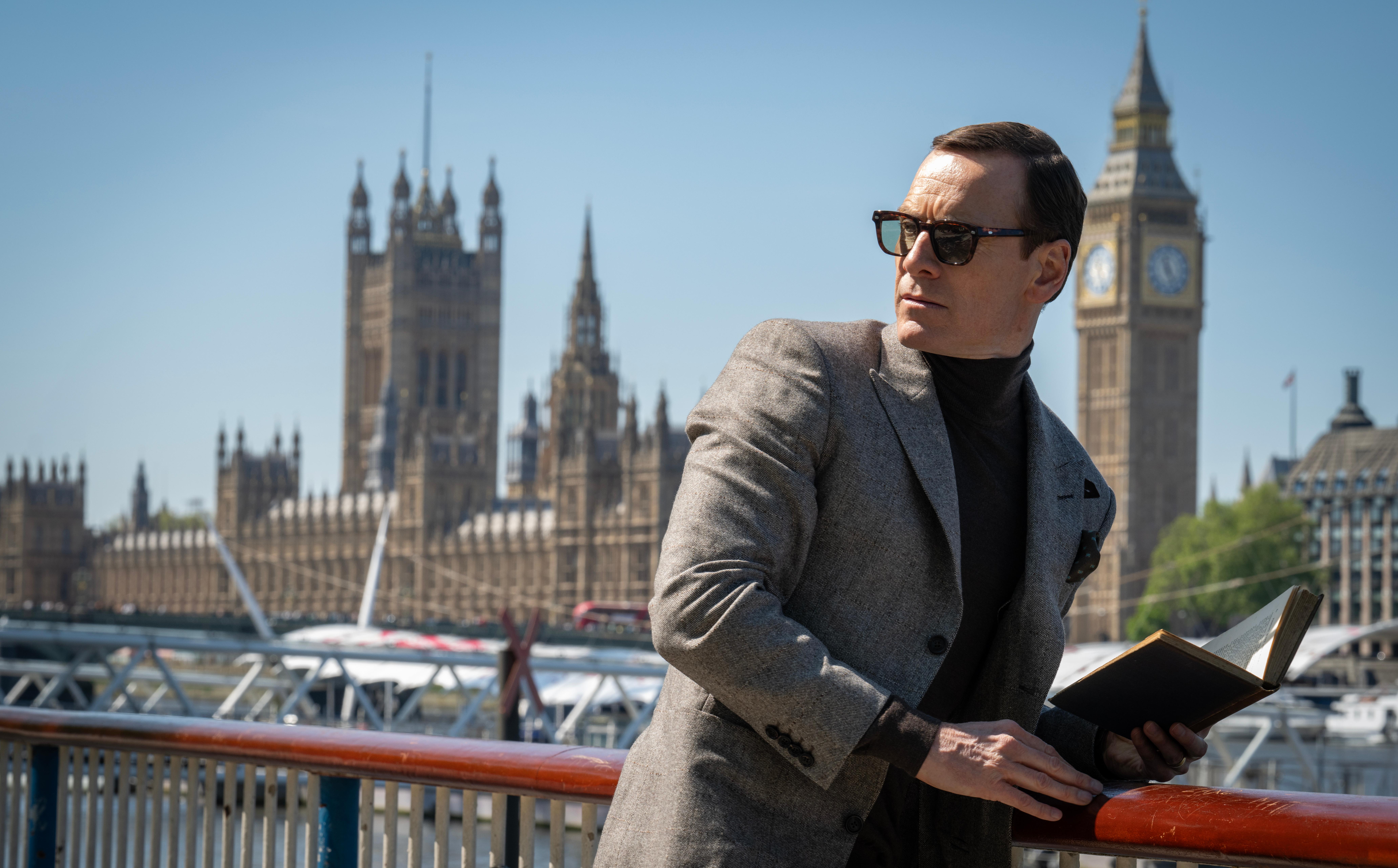
A quick precis of the set up. This is a thriller in which spy, George (Michael Fassbender), is given one week by his vape-smoking boss, Meachem (Gustaf Skarsgard) to investigate the leak of Severus (top secret software, or the McGuffin). There are five suspects who have access, one of whom is his wife, Kathryn (Cate Blanchett).
George invites the suspects for a dinner party and dopes their food to lower their inhibitions. (Kathryn is warned not to eat the channa dahl). George is meticulous in his preparation, character shown through his attention to and tension with detail.
The guests are Freddie (Tom Burke), a top ranking spy with his younger, more junior girlfriend Clarissa (Marisa Abela), a satellite imagery specialist, Freddie (Rege-Jean Page), another senior spy and his partner, the agency psychiatrist, Zoe (Naomie Harris).
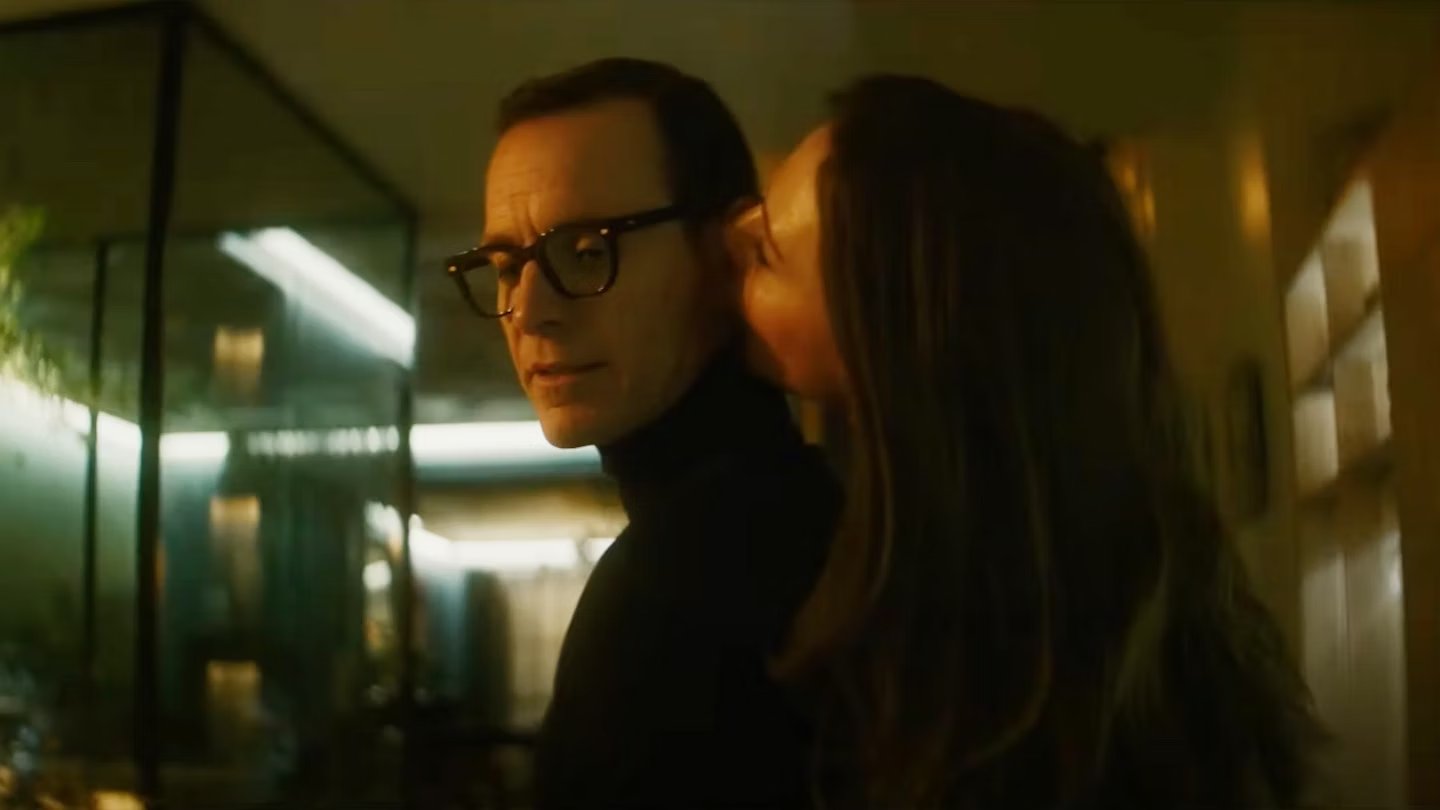
It is a film steeped in suspicion and doubt. The atmosphere is always tense. But most importantly, it is also extremely stylish.
The first twenty minutes are shot at night, meaning everything is in low light with a muted canvas of a Rembrandt, opulent, but open to interpretation. Dancing lights obfuscate faces and close-ups focus on eyebrow rises and the tiny gestures. A mood is set. So that even when we eventually enter the bright space of a modern, high-tech office it can’t bring relief.
And then there is the other location, the seemingly endless lake where George goes to fish, at first peaceful, but then a long shot establishes the potential for isolation that tugs at our fear of the impossibility of contact.
In other words, this is a beautifully shot thriller. But is it style over substance? Possibly, but big questions are asked about the ideals of honesty and loyalty.
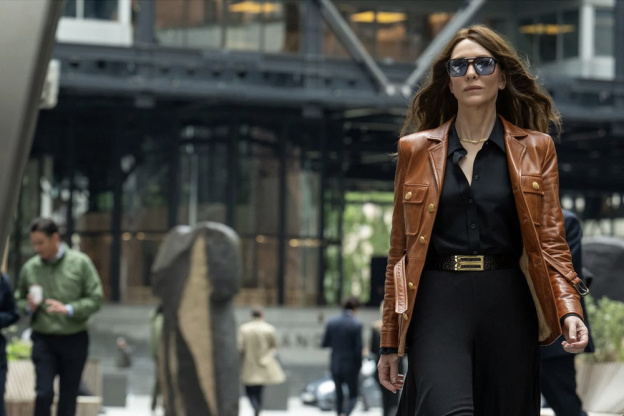
At the heart is a marriage threatened by suspicion. But the spouses have a code, a way of sharing, so that the marriage can stay strong without undermining their work roles. They have learned to navigate the tricky terrain of personal and public lives. Their love may be enough, although it looks unconventional to the outsider.
This means that to really understand the dilemma at the heart of the marriage, we need the commentary of the secondary characters.
Unlike a 1940s noir, there is no smoking. The closest we get is Meachem’s vape, a man who conducts meetings in a private members night club. How 21st century! But what does it mean? What does the plume of watermelon smelling vape signify? It reeks perhaps of a man who doesn’t set boundaries as he should. An inauthenticity, a vulnerability to exploitation. Meachem dies of a suspicious heart attack.
Then there is Zoe, the northern psychiatrist. Just a hint of that accent with flatter vowels to suggest a difference, that the world of espionage is too big an ethical chasm for the convent-educated, caring professional.
But for me, it was Clarissa who really sparked. She is bright, knowing, sassy and importantly, funny. She is the feisty girl who can see the drama, the thrill of it all. She is like Dorothy Malone in the Big Sleep, who understands and charms, but mainly stands outside the plot. Or like Eve Arden as Ida Corwin in Mildred Pierce, who has the wry smile of an observer, knowing she has her own story to tend to, outside of the main plot.
George: I understand uh, you and Freddie are still together.
Clarissa: Yeah.
George: Isn't that a bit awkward?
Clarissa: Oh because I pinned his hand to the table with a steak knife?
George: That comes to mind.
Snappy dialogue, ensemble acting, tense atmosphere, stylish cinematography: this is a film that understands story-telling. It is primarily a thriller, designed to entertain, but just occasionally pauses to ask the big questions.
Clarissa: When you can lie about everything, when you can deny everything, how do you tell the truth about anything?
If you've enjoyed what you have read, please consider subscribing to my writing on Vocal. If you'd like to support my writing, you can do so by a regular subscription or leaving a one-time tip. Thank you.
About the Creator
Rachel Robbins
Writer-Performer based in the North of England. A joyous, flawed mess.
Please read my stories and enjoy. And if you can, please leave a tip. Money raised will be used towards funding a one-woman story-telling, comedy show.
Enjoyed the story? Support the Creator.
Subscribe for free to receive all their stories in your feed. You could also become a paid subscriber, letting them know you appreciate their work.
Comments
There are no comments for this story
Be the first to respond and start the conversation.