
Billy Madison vs Happy Gilmore
Comparing Adam Sandler's first two breakout hit films

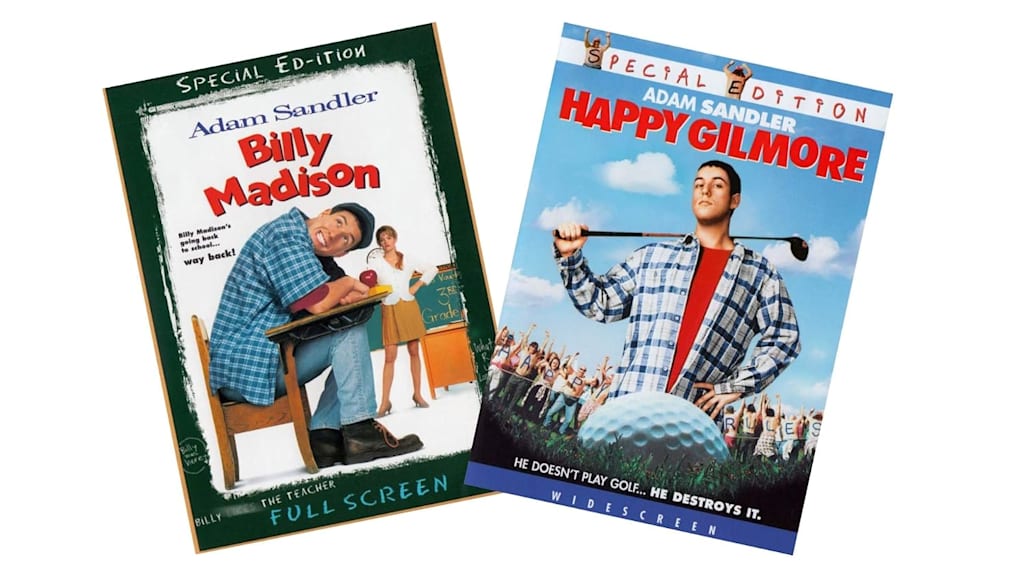
It's pretty safe to say that Adam Sandler's done it all. Sandler helped bring SNL back to prominence back in the early to mid-90s, and he followed that up with one hell of a film career. I can go on and on about Sandler's movies, and I have many times before. Classics such as The Waterboy, The Wedding Singer, Big Daddy, The Longest Yard, Grown Ups, and Pixels, just to name a few. However, we all know the two films that have defined Sandler for over three decades now: Billy Madison and Happy Gilmore.
Sandler did a few films prior to those two, his first being Going Overboard, and he was also in Coneheads and Airheads. Billy Madison, of course, was Sandler's first true breakout hit film, coming out on February 10, 1995, during the tail end of Sandler's five-season run on SNL. Just a hair over a year later, Happy Gilmore was released on February 16, 1996, coming after Sandler's SNL run ended. I remember seeing trailers to both films, and I had no idea who Adam Sandler was. Now, everyone knows him.
Similar to Tommy Boy and Black Sheep for Chris Farley (read about that here), Billy Madison and Happy Gilmore have been the measuring sticks for Adam Sandler. Let's take that deep dive:
Better Sandler Character: Happy Gilmore
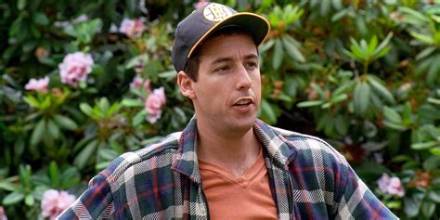
No, his hockey playing isn't the reason (though it does play a factor). Both of Sandler's signature title roles still stand out today, but the titular Happy Gilmore definitely hits a stronger note. Mostly it's because Happy is unapologetically brash and will whip ass if needed (sometimes when it's not). Happy doesn't back down from anyone. Not Shooter. Not Bob Barker. Not even a one-eyed gator. And he loves his grandma, that is always extra special.
Better Quest: Billy Madison
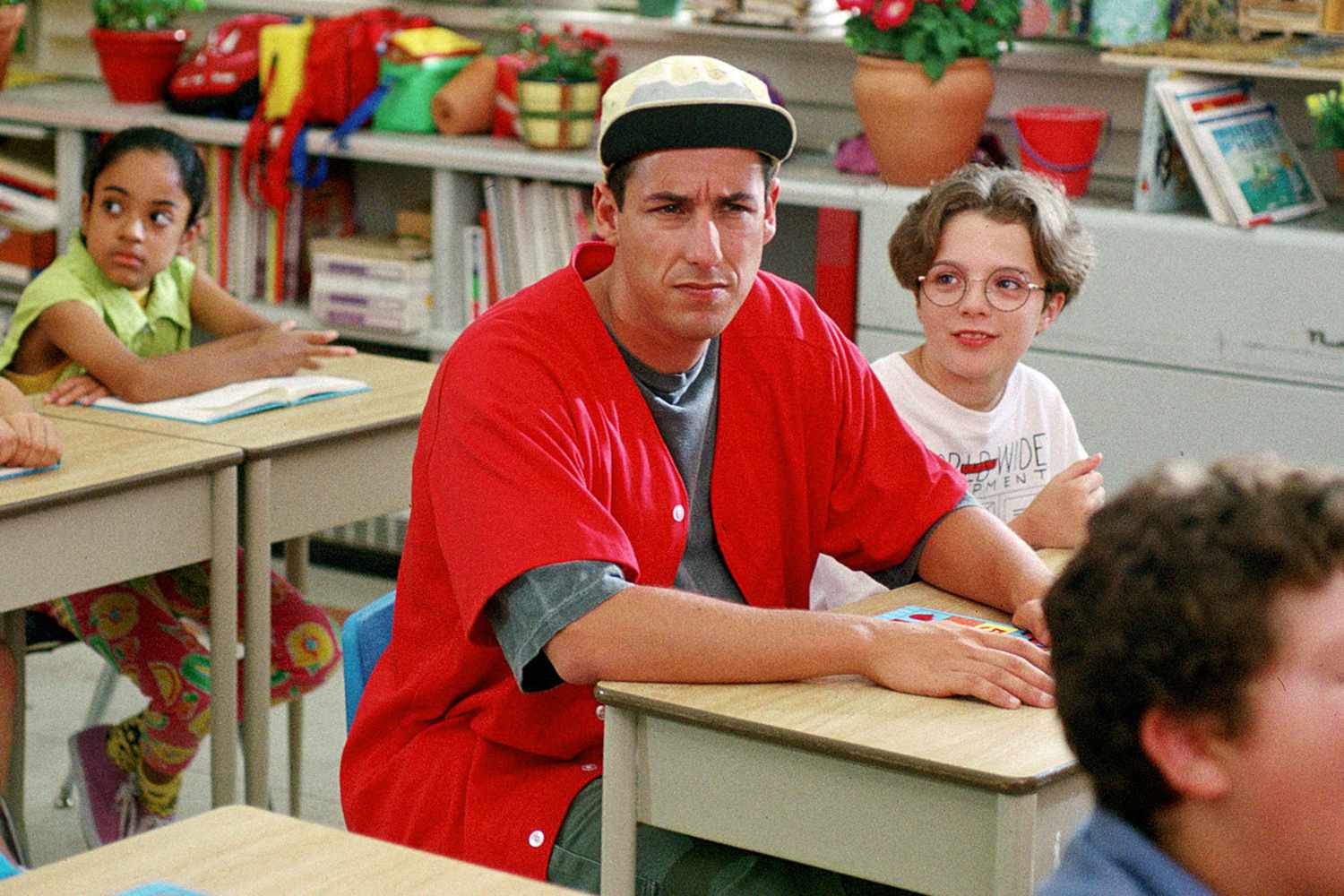
I know that Happy Gilmore had the emotional quest; the titular Happy playing golf to rack up enough money to buy back his grandma's house. However, the titular Billy Madison's quest to go through all 13 school grades (K-12) on his own is just a bit stronger. This was done because of the announcement from Billy's father, Brian Madison; Brian was retiring, and his real estate company was going to Eric Gordon. Billy knew this much: Eric's a big time crook, and regarding Billy's own pitch to run the company ("High school was a pain in the ass, but I graduated"), Brian revealed that he had been paying Billy's way through high school, and even added that the nepotism actually goes back as early as Billy's 3rd grade spelling bee. Billy's quest to go through all of the grades may have been portrayed as earning his way to running the company, but in actuality, it was Billy proving his own worth, and that he can do the work on his own.
Better Antagonist: Happy Gilmore
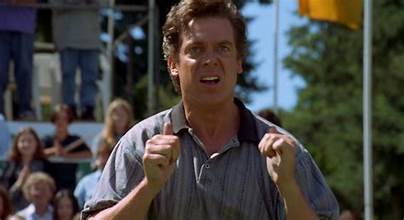
As hilarious as Bradley Whitford's Eric Gordon is, with his slick ways, his ruthless demeanor, and of course, that weasel laugh of his, he can't hold a candle to Shooter McGavin. From jump street, Shooter's truly full of himself. An argument could be made that he has a right to be. The film portrays Shooter as a golf legend, one of the best in the game, if not the best. But there's just one problem: he has yet to win the big one. Even worse, Shooter's seen everyone else win the big one. I see that a lot in sports, and yes, for the sake of this, I have to call golf a sport despite the fact that Happy's words about golf ("requires goofy pants and a fat ass") are true. That instant legend who can't win the big one, and in Shooter's case, Happy ended up being an unexpected obstacle, leading to this:
"Let's get one thing straight: this is Shooter's tour. I worked hard, paid my dues, and now, it's Shooter's turn. And Shooter's not about to let his reign at the top be threatened by some freak, sideshow clown."
Christopher McDonald played the holy hell out of this. Prior to this, McDonald had roles in films such as Dutch and Grumpy Old Men, but this role totally made him. He's mastered the art of playing the (usually comedic) jerkass villain, which is why it shocked me that he played--of all roles--Ward Cleaver in the Leave it to Beaver film a year later.
Better Father Figure: Both
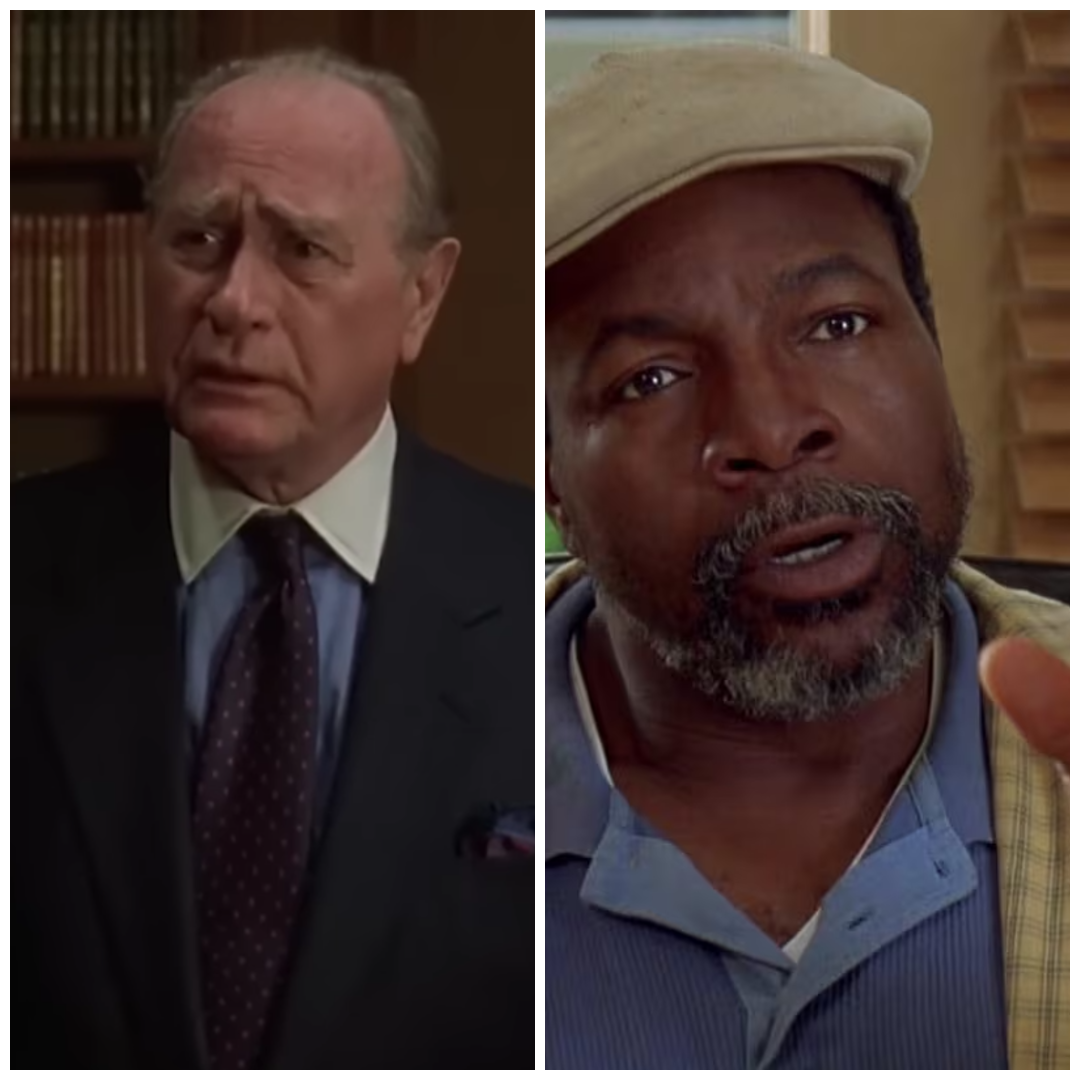
Without question, both films had equally amazing father figures for Sandler's characters. Regarding Billy Madison, we have the title character's actual dad, Brian Madison, who does mean well despite the revelation that he paid Billy's way through school, though he did admit his regret over making such a decision. Brian stood behind Billy's goal to go through all of the school grades, and after learning that Billy was being sabotaged, he wanted Billy to have another chance to complete his goal. The late, great Darren McGavin--of Kolchak: The Night Stalker and A Christmas Story fame--brought his best as Brian Madison, who truly was proud of Billy.
And of course, Happy Gilmore gave us the iconic Carl Weathers as Chubbs Peterson, a golf pro turned instructor who saw Happy's long drive and offered to personally teach him the game for free. We then dive in to Chubbs' backstory:
"Back in 1965," Chubbs said, "Sports Illustrated said I was to be the next Arnold Palmer."
"Yeah, what happened?" asked Happy.
"They wouldn't let me play on the Pro Tour anymore," answered Chubbs.
"Oh, I'm sorry. Because you're Black?"
That line always gets my attention. I think that Happy heard 1965 mentioned, and automatically assumed racial motivation because he knew that the 60s did not treat Black people well. While I am proud of how woke Happy is, he was wrong--it wasn't race:
"Damned alligator bit my hand off!"
We lost Carl Weathers back in February 2024, and the first thing that entered my mind was Happy Gilmore. He played the hell out of Chubbs Peterson, and despite the character being knocked off in the film, Weathers reprised the role four years later in another Sandler film: Little Nicky.
Funnier Supporting Cast: Billy Madison
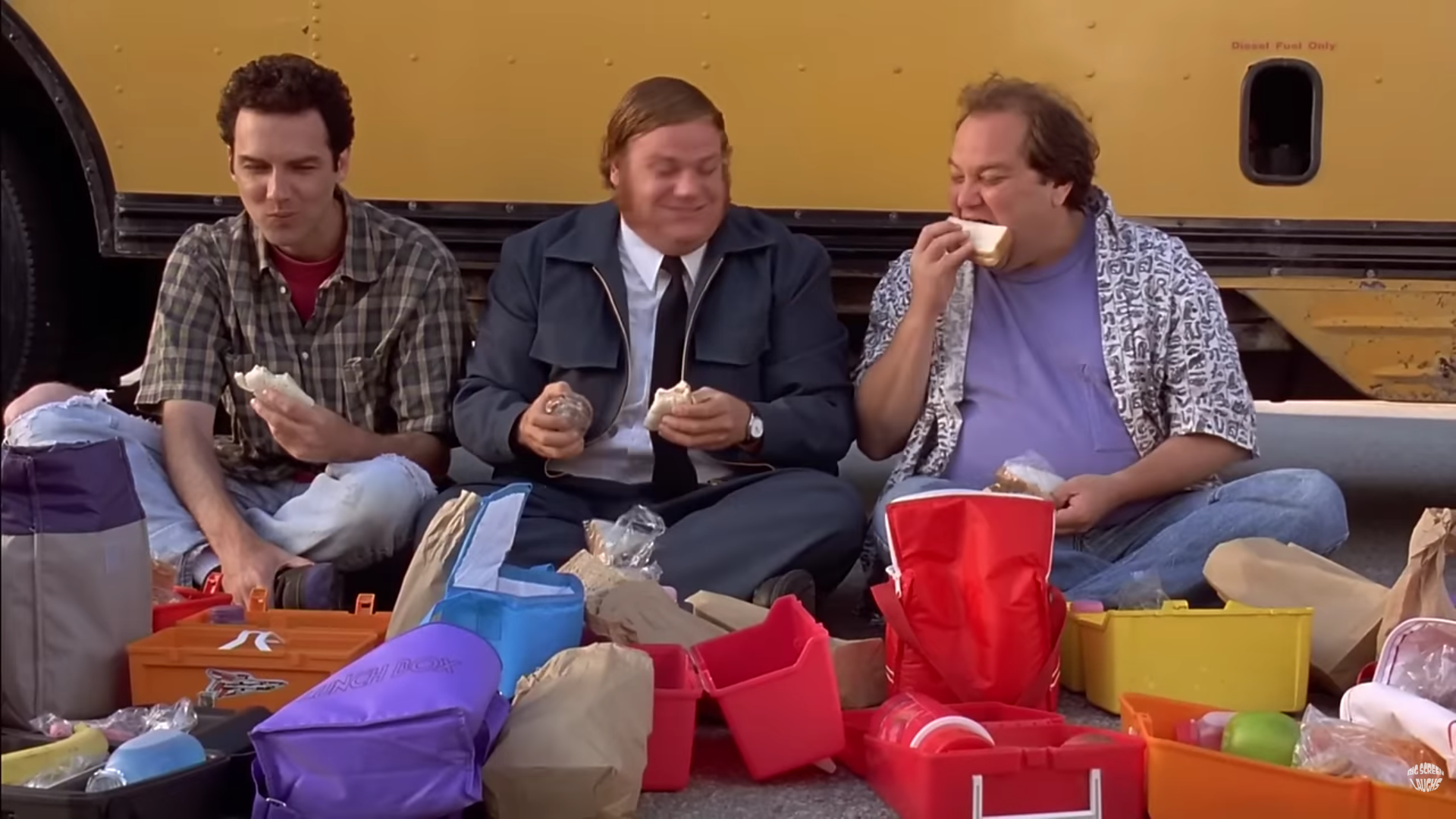
Happy Gilmore clearly had the better supporting cast, but notice I said "funnier." That's clearly Billy Madison, which was a bit more on the screwball side than the 1996 classic. While Happy Gilmore focused on star power, Billy Madison had a lot of comedic talent. This included longtime SNL head writer Robert Smigel, who actually did both films, and also included Larry Hankin (as Billy's close friend Carl) and Josh Mostel (as Principal Anderson; Mostel later appeared in another Sandler film: Big Daddy).
Also included in that cast--the three men pictured above: Norm Macdonald, Chris Farley, and Mark Beltzman. Farley was uncredited for his role as a school bus driver, while Macdonald and Beltzman played Billy's buddies, Frank and Jack, respectively. Sandler and Farley later had uncredited roles in Macdonald's 1998 comedy, Dirty Work, which served as Farley's final film and was released posthumously. We would lose Macdonald in the fall of 2021, making Beltzman the only surviving actor in that exact screenshot.
Better Love Interest: Happy Gilmore
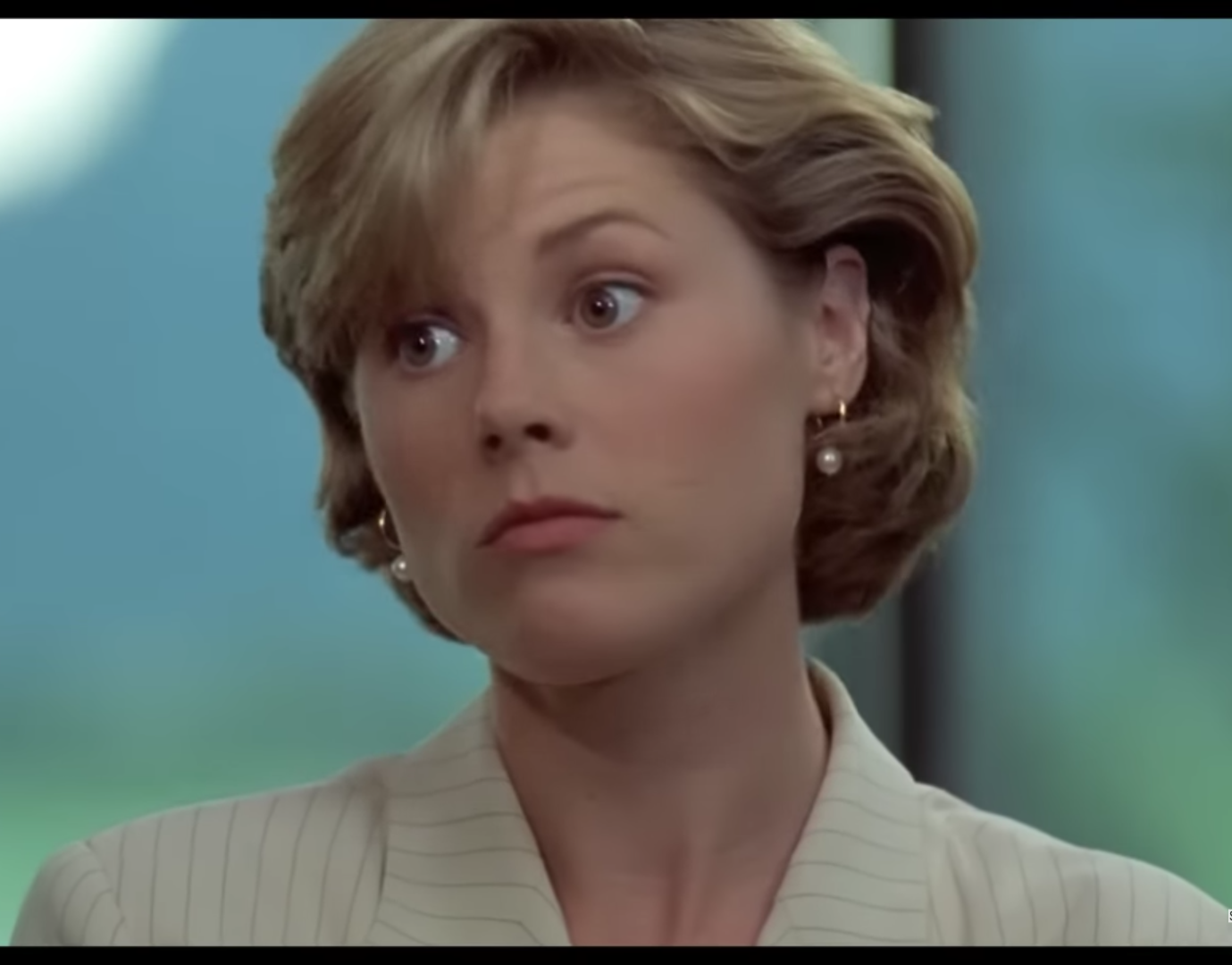
You know, I've watched Sandler's films for 30 years, and I didn't notice until very, very recently that when it comes to his character's love interests, they often have alliterative names. A lot of them are centered on the 22nd letter of alphabet, and that includes the love interests in both films. Billy Madison had Bridgette Wilson-Sampras as Veronica Vaughn, and she started out not taking Billy's man-child behavior, though she eventually went on to reciprocate his feelings and give him proverbial kick in the ass he needed. Veronica was amazing, but she would be outdone by Julie Bowen's Virginia Venit.
Similar to Veronica Vaughn in the 1995 film, Virginia Venit wasn't exactly enthused with Happy's wild, unfiltered, and violent behavior, but she admired Happy's drive. The admiration increased one night at a hockey rink, and, well, you know the rest. Happy Gilmore was Bowen's very first major film, and she definitely took that and ran with it. Boston Legal, Lost, and of course, Modern Family. She would work with Sandler again in 2020's Hubie Halloween, and she reprised her 1996 role in last year's highly anticipated sequel.
Wildest Sandler Moment: Happy Gilmore
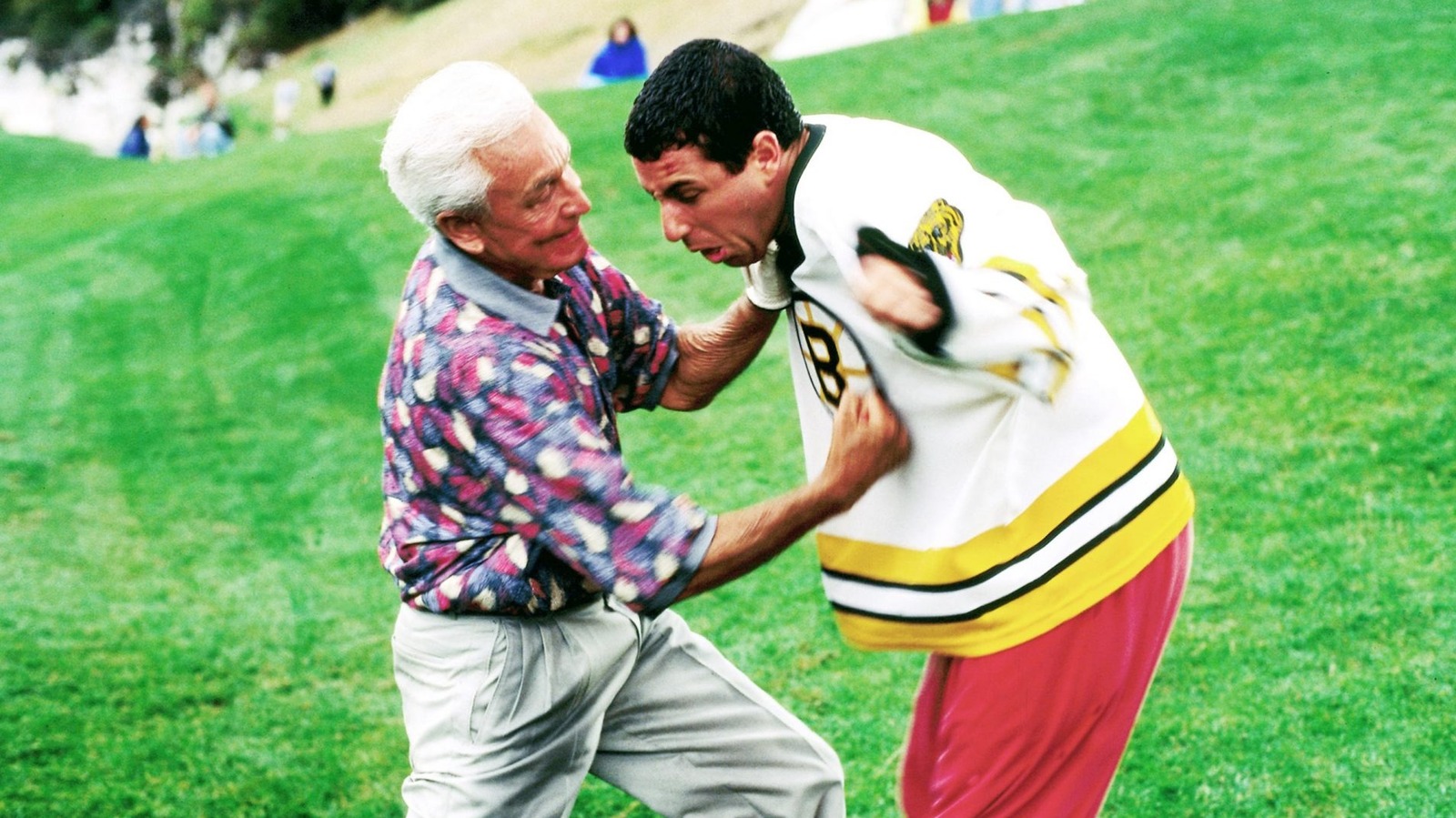
You knew this was coming. You seriously think I wouldn't mention this? This is, perhaps, the most iconic moment not just between the two films, but in Sandler's entire film history. We all remember this. Happy was paired up with Bob Barker, the iconic host of The Price is Right, and it was at that moment that we saw that heckler, Donald (brilliantly portrayed by the late, great Joe Flaherty), make several attempts to antagonize Happy ("Jackass!"). Happy spends the entire time keeping himself from going to town on Donald, but it affects his game, and Bob lets him know it. After they end up dead last, Bob chews out Happy, and that's when the fight starts.
Happy may have made the first punch, but with the exception of a headbutt, it was all Bob Barker. Happy never had a chance--not only does he take his anger out on a celebrity, he lost that fight. Sandler always mentioned that wild moment with such hilarity and praise; hell, he practically boasts about Bob Barker kicking his keister.
Without question, Billy Madison and Happy Gilmore were the two films that officially put Adam Sandler on the map, and led him to a lot of big things. Similar to my thoughts about the Farley films, I will not put one over the other; I appreciate Sandler's work too much to do that. I've been both films so many times, and I will continue to do so, because they are truly iconic classics.
About the Creator
Clyde E. Dawkins
I'm a big sports fan, especially hockey, and I've been a fan of villainesses since I was eight! My favorite shows are The Simpsons and Family Guy, etc.
Enjoyed the story? Support the Creator.
Subscribe for free to receive all their stories in your feed. You could also become a paid subscriber, letting them know you appreciate their work.
Comments
There are no comments for this story
Be the first to respond and start the conversation.