
Beyond the Danger Zone: The Legacy of Top Gun at 40
How The Fighter Pilot Fantasy Defined An Era

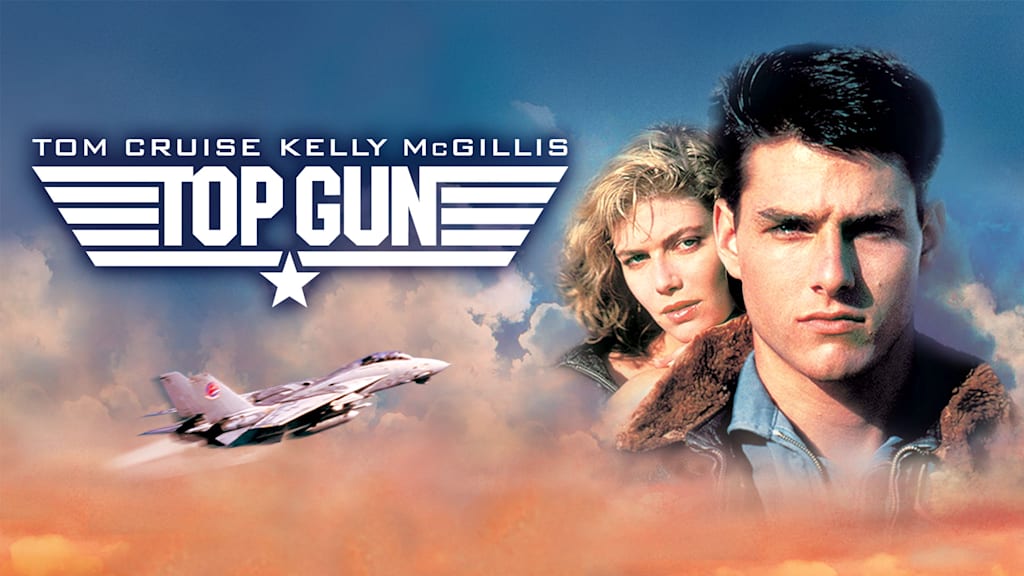
Wings of Fire: A Fighter Pilot’s Journey
Pete “Maverick” Mitchell, a talented but reckless young naval aviator with big ambitions, is chosen to attend the Fighter Weapons School, known as “Top Gun”. There, he competes against the best pilots in the Navy, pushing his skills and limits in an elite training program that demands precision and discipline.
While striving to prove himself as one of the top graduates, Maverick finds his priorities challenged when he falls in love with Charlie, a civilian instructor working with the program. As rivalry, ego, and ambition collide, Maverick must learn what it truly means to be a top fighter pilot.
Aces, Wingmen, and Commanders of the Skies
Tom Cruise delivers an excellent portrayal of Pete Mitchell, bringing a volatile mix of confidence, charm, and recklessness to the role. He embodies a young naval aviator motivated by ambition but blinded by his own ego and impulsive behavior.
Anthony Edwards offers a grounded counterbalance as Lt. Nick “Goose” Bradshaw, Maverick’s loyal RIO (Radar Intercept Officer) and closest friend, whose warmth and humor provide emotional support. Kelly McGillis portrays Charlotte “Charlie” Blackwood with intelligence and composure, serving as a love interest and intellectual equal to Maverick within the training program.
Simultaneously, Val Kilmer portrays Tom “Iceman” Kazansky with cool precision, creating a disciplined rival whose conflict with Maverick drives much of the movie’s storyline.
The supporting cast strengthens the narrative, including James Tolkan as the strict and commanding Stinger, Michael Ironside as the intense instructor Jester, Tim Robbins as the nervous yet competent Merlin, and Clarence Gilyard as Sundown, one of the competitive fighter pilots at Top Gun.
Together, the ensemble cast helps create a credible world of top-tier naval aviation, where discipline, rivalry, and mutual respect intersect. Each character adds depth to the extreme environment, reinforcing how pressure, rivalry, and discipline shape character and maturity.
Into The Danger Zone: High-Flying Moments
The aerial sequences are some of the film’s most defining highlights, blending practical flight photography with kinetic editing. The film opens aboard the USS Enterprise, where naval fighter jets launch and recover from the carrier deck as Kenny Loggins’ “Danger Zone” immediately establishes a tone of speed, intensity, and scale. This signals an intense, high-speed experience for audiences.
A key early moment occurs when Maverick and Goose are summoned by Stinger, following Maverick’s risky flying tactics. Instead of outright punishment, they are given the chance to attend the elite school for naval pilots — Top Gun — setting the stage for intense rivalry, discipline, and personal growth among the Navy’s most skilled pilots.
One of the film’s most memorable lighter scenes takes place at a bar, where Maverick, Goose, and their fellow pilots perform “You’ve Lost That Lovin’ Feeling” in an attempt to impress Charlotte. This scene highlights Maverick’s confidence and charisma while also showcasing the bond and off-duty personality of the aviators outside the cockpit.
The film builds toward the Top Gun graduation and its climactic aerial engagement, where Maverick must apply everything he has learned under extreme pressure. These moments highlight his evolution from a reckless pilot to a more disciplined aviator, underscoring the demands, intensity, and responsibility of elite fighter training.
The Making Of A Fighter Pilot Adventure
Top Gun is filled with interesting behind-the-scenes facts that would surprise many fans. One intriguing example is that the producers worked with the U.S. Navy for consultation, and this led to several changes in the screenplay. For instance, the setting of the opening dogfight was adjusted to reflect real naval aviation, shifting toward a more realistic international airspace setting, as reported by Viddy Well.
The Navy’s involvement also made the production extremely expensive at times. One well-known story from filming is that director Tony Scott paid an extra fee to keep carrier shots filming, including scenes of fighter jets launching and landing on a real aircraft carrier, which added to the film’s authentic look.
Another fun fact is that after the movie came out, the U.S. Navy set up recruitment booths in cinemas to attract people inspired by the film. It worked well, but it also had a humorous side effect — the film became so popular within Navy culture that instructors at the real Top Gun school reportedly prohibited excessive quoting of its lines, even fining pilots small amounts for it.
Casting also had twists. Val Kilmer didn’t initially want to play Iceman, but was contractually obligated. Similarly, Tom Cruise was hesitant until producer Jerry Bruckheimer took him on a ride with the Blue Angels, which convinced him to join.
There were also reports that Cruise and Kilmer didn’t get along during filming, and that off-screen friction helped make Maverick and Iceman’s rivalry feel more authentic on screen.
Lessons From the Skies of Top Gun
Reckless ambition, companionship, and teamwork are some of the key themes of Top Gun. At the beginning, Maverick is portrayed as a highly talented but impulsive pilot whose aggressive flying style puts him at odds with more restrained pilots.
This is clearly shown in his confrontation with Iceman, who tells him “You’re everyone’s problem. That’s because every time you go up in the air, you’re unsafe. I don’t like you because you’re dangerous.” It highlights how Maverick’s behavior is seen as a real risk in a high-stakes situation. Interestingly, this doesn’t result in an actual brawl, but instead deepens the competitive dynamic between them.
Companionship is another major theme in the movie. Even though the pilots compete against each other, there is still a strong sense of friendship among them as fellow aviators go through intense training. They joke, push each other, and build friendships outside the cockpit, which shows that they aren’t just rivals, but also part of the same brotherhood.
This ties directly into teamwork, which is essential in both training and combat situations. The pilots depend on their wingmen and have to trust each other completely when flying missions. Success in the air isn’t just about individual skill, but about coordination and reliability under pressure.
Near the end of the film, Maverick experiences a major personal turning point that challenges his confidence and reshapes how he approaches flying going forward.
Mission Debrief: Why Top Gun Still Soars
Not only did the film launch Tom Cruise into global superstardom, but it also became one of the most iconic action movies ever made. Its influence was so lasting that it eventually led to Top Gun: Maverick, released 36 years later. The long gap happened because the sequel needed the right story and emotional weight to return to the skies. This only reinforced how powerful the original film remained in pop culture.
Top Gun didn’t fade after release — it continued to shape aviation cinema, inspire audiences, and define the fighter pilot myth, proving its status as a true cinematic classic that still soars today.
About the Creator
TheScreenAnalyst
I am a passionate movie and TV enthusiast, devoted to analyzing storytelling, characters, visuals, and performances. I provide thoughtful critiques and insights, exploring both mainstream and independent works to engage audiences.
Enjoyed the story? Support the Creator.
Subscribe for free to receive all their stories in your feed.
Comments
There are no comments for this story
Be the first to respond and start the conversation.