
Batwara 1947 Ending Explained: Mai’s Death, Sikandar’s Final Decision and the Real Message
Subtitle: What happens to Mai, why Sikandar performs her Hindu funeral, how Javed finally changes, and what the emotional ending of Batwara 1947 really means.

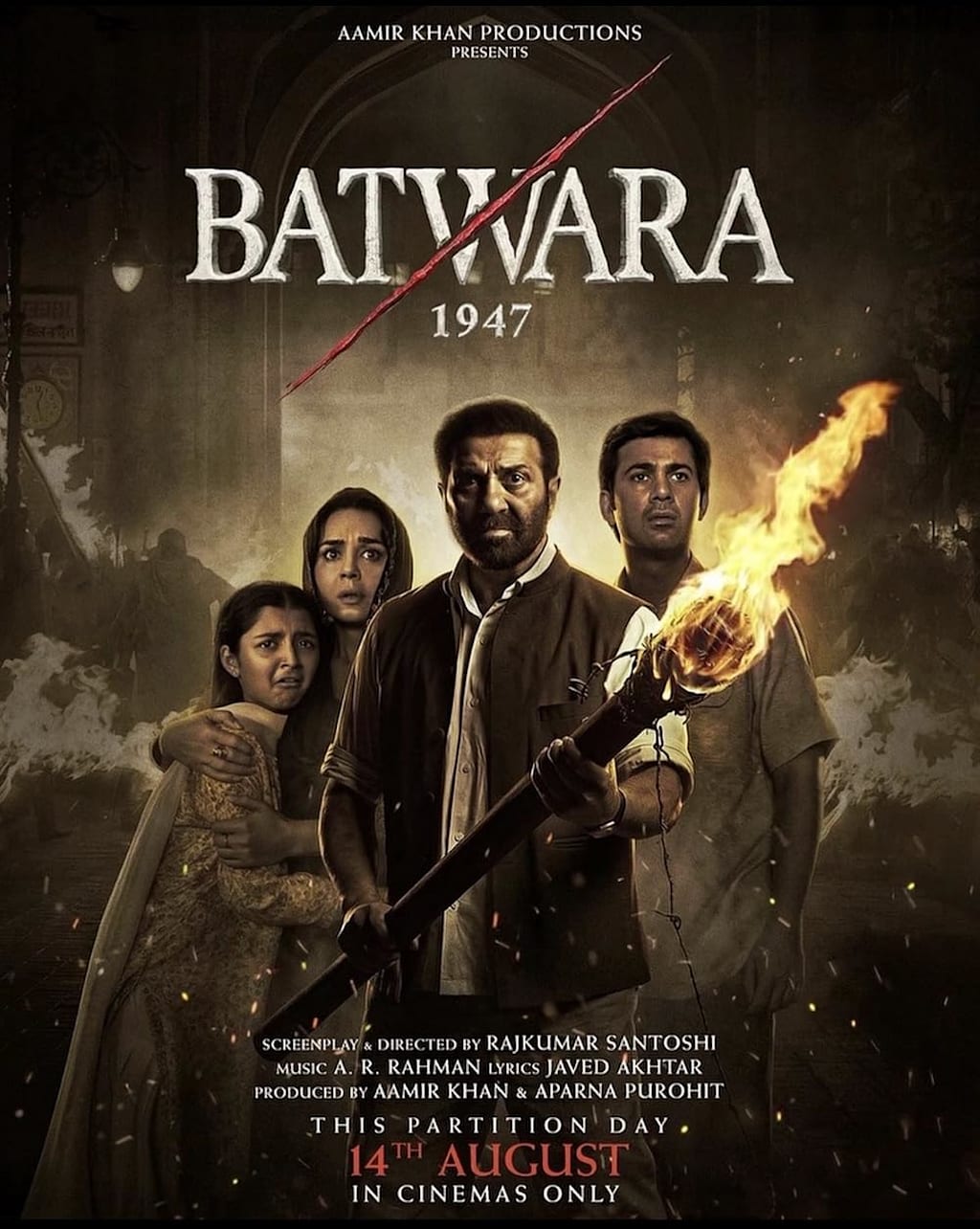
Spoiler Warning: This article contains major spoilers for Batwara 1947, including the complete story and ending.
Batwara 1947 Movie Story Explained
Batwara 1947 takes viewers back to one of the most painful chapters in the history of the Indian subcontinent—the Partition of 1947.
The story begins in Meerut on August 14, 1947. While people are preparing to celebrate India’s independence, communal violence is spreading rapidly across the city.
At the center of the story is Sikandar Mirza, a Muslim man who considers India his homeland. He wants everyone around him to celebrate independence together and even tells his workers that on August 15, nobody should greet each other with “Namaste” or “Salaam”—everyone should simply say “Jai Hind.”
But the situation soon becomes dangerous.
As riots reach Sikandar’s neighborhood, his brother Rashid convinces him that the family must leave. Sikandar does not want to abandon the country he loves, but protecting his family becomes more important.
They try to reach the railway station, where rioters attack them. Sikandar’s family is separated, and his son Javed goes missing.
Sikandar eventually reaches Lahore with his wife Begum and daughter Tanno.
Sikandar Gets Ratan’s Haveli in Lahore
After staying at a refugee camp, Sikandar struggles to get a permanent house.
Eventually, a kind-hearted poet named Habib Anwar helps him by giving him a house that has been allotted to him.
When Sikandar reaches the property, he discovers that it is not an ordinary home but a huge 22-room haveli that once belonged to a Hindu family.
However, the house is not completely empty.
An elderly Hindu woman is still living there.
She tells Sikandar that the haveli belongs to her son Ratan and refuses to leave until Ratan returns.
Sikandar initially wants her removed because the property has now officially been allotted to his family.
But this old woman soon becomes the emotional heart of the entire story.
Who Is Mai in Batwara 1947?
The woman is eventually called Mai by everyone around her.
Her real name is revealed to be Durgavati.
Mai continues living in the haveli because she believes that her son Ratan will return for her one day.
Initially, Sikandar’s family feels uncomfortable with her presence. They even tell her that Pakistan has now been created and that remaining there as a Hindu could put her life in danger.
Mai, however, refuses to leave her home.
Slowly, everything begins to change.
When Begum becomes ill, Mai takes care of her, prepares medicine for her and treats Sikandar’s family with affection.
Sikandar gradually stops seeing Mai as a stranger.
He begins seeing her as family.
Javed Returns—but He Wants Revenge
One of the biggest emotional developments happens when Sikandar’s missing son Javed suddenly returns.
The family is overjoyed.
But Javed has been deeply traumatized by what happened during the Partition riots.
After learning that a Hindu woman is living inside their haveli, Javed becomes furious. For him, Mai represents the community he blames for the suffering his family experienced.
Javed contacts local political strongman Yakub Khan, who is willing to remove and even kill Mai in exchange for money.
Yakub, however, has his own motives.
He wants control of the haveli and later turns Mai’s presence into a political issue.
Why Does Sikandar Start Calling Mai His Mother?
Sikandar later learns the heartbreaking truth about Ratan.
Ratan had reportedly tried to return with his family during the riots to rescue Mai, but they were attacked and killed before reaching her.
Sikandar does not immediately tell Mai what happened.
Instead, he embraces her and tells her that from that day onward, he is her son.
The moment is especially emotional because Sikandar lost his own mother when he was only four years old.
The relationship between Sikandar and Mai now goes beyond religion, nationality and Partition.
They become mother and son.
The Diwali Scene and Yakub Khan’s Anger
As Diwali approaches, Mai asks Sikandar if she can perform puja and light two diyas inside the haveli.
Sikandar goes even further.
He tells her that she will celebrate Diwali properly and that they will light many lamps.
The celebration becomes one of the film’s strongest symbols of communal harmony.
But Yakub Khan sees it differently.
He accuses Mai of making the land “impure” by performing Hindu rituals in Pakistan.
Sikandar strongly rejects his argument.
For Sikandar, humanity is greater than religious hatred.
He argues that religion should never be used to spread violence or hatred against another human being.
Yakub nevertheless uses Mai as a political issue and begins provoking people against her.
Habib Anwar’s Story Changes Javed
Habib Anwar also plays an important role in Javed’s transformation.
Habib tells the story of the woman he loved, Tabassum.
During the riots, Tabassum was badly injured. Habib risked his own life trying to reach her.
Before dying, Tabassum asked him to keep helping people and to find her smile in the happiness of those he helped.
Most importantly, Habib tells Javed that the people responsible for hurting Tabassum belonged to Habib’s own community.
His message is simple:
Religion itself is not good or bad. Human beings choose whether to become good or bad.
This forces Javed to reconsider the hatred he has been carrying inside him.
Batwara 1947 Ending Explained
Near the end of the movie, Mai becomes seriously ill.
Sikandar rushes home and finds her suffering from a high fever.
In her final moments, Mai imagines that her son Ratan has finally returned.
She asks Ratan to take care of Sikandar and his family because they are good people.
Soon afterward, Mai dies.
Her death completely breaks Sikandar.
But one final conflict remains.
Sikandar decides that because Mai was Hindu, she deserves to receive her final rites according to Hindu traditions.
Yakub Khan strongly opposes the decision.
He argues that performing Hindu funeral rituals would contaminate the land.
But the local Maulana supports Sikandar and says Mai should receive the funeral rites of her own faith.
Yakub responds with violence and kills the Maulana.
He then plans to attack Sikandar and everyone attending Mai’s funeral.
Why Is the Final Funeral Scene So Important?
Yakub expects only a handful of people to accompany Mai’s body.
Instead, he is stunned when a huge crowd arrives.
People walk together while chanting “Ram Naam Satya Hai.”
Mai, who was once considered an unwanted outsider, is now being mourned by an entire community.
Javed also discovers Yakub’s plan and brings the police.
Yakub Khan is arrested.
Finally, Sikandar performs Mai’s last rites according to Hindu tradition.
As Sikandar prepares to give mukhagni, Javed places his hand over his father’s hand.
That moment completes Javed’s transformation.
The young man who once wanted Mai killed now accepts her as part of his own family.
What Does the Ending of Batwara 1947 Mean?
The ending makes the movie’s central message clear.
Partition may divide countries on a map, but humanity does not have to be divided.
Sikandar and Mai begin their relationship as strangers belonging to different religions and displaced by the same historical tragedy.
By the end, they become mother and son.
Javed represents the next generation damaged by hatred and trauma, while his final decision shows that hatred can still be unlearned.
Yakub Khan represents the opposite idea—someone who uses religion, fear and division for personal and political benefit.
Mai’s funeral therefore becomes much more than a final goodbye.
It becomes a rejection of communal hatred.
Sikandar does not honor Mai because she is Hindu or Muslim. He honors her because she became his mother.
Final Thoughts
Batwara 1947 is ultimately a story about Partition, displacement, revenge, acceptance and humanity.
Its most emotional idea is that a house can be divided, a country can be divided and borders can be created—but relationships built through love and compassion can still rise above those divisions.
Mai loses her biological son but finds another son in Sikandar.
Sikandar loses his homeland and much of his family but finds a mother again.
And Javed finally understands that blaming an entire religion for the actions of violent individuals only creates another cycle of hatred.
That is what makes the final scene so meaningful.
What rating would you give Batwara 1947 out of 10? Share your thoughts in the comments.
About the Creator
parwinder singh
🎬 Movie & Entertainment Writer sharing reviews, ending explanations, story breakdowns, plot twists and hidden details from Bollywood, Hollywood, South Indian cinema, Korean dramas and OTT releases.
Enjoyed the story? Support the Creator.
Subscribe for free to receive all their stories in your feed.
Comments
There are no comments for this story
Be the first to respond and start the conversation.