
And Then There Were None Ending Explained: Who Is the Killer on Soldier Island and Why? (Spoilers)
Ten strangers are trapped on an isolated island where a mysterious killer begins executing them according to a deadly nursery rhyme—but the final revelation changes everything.

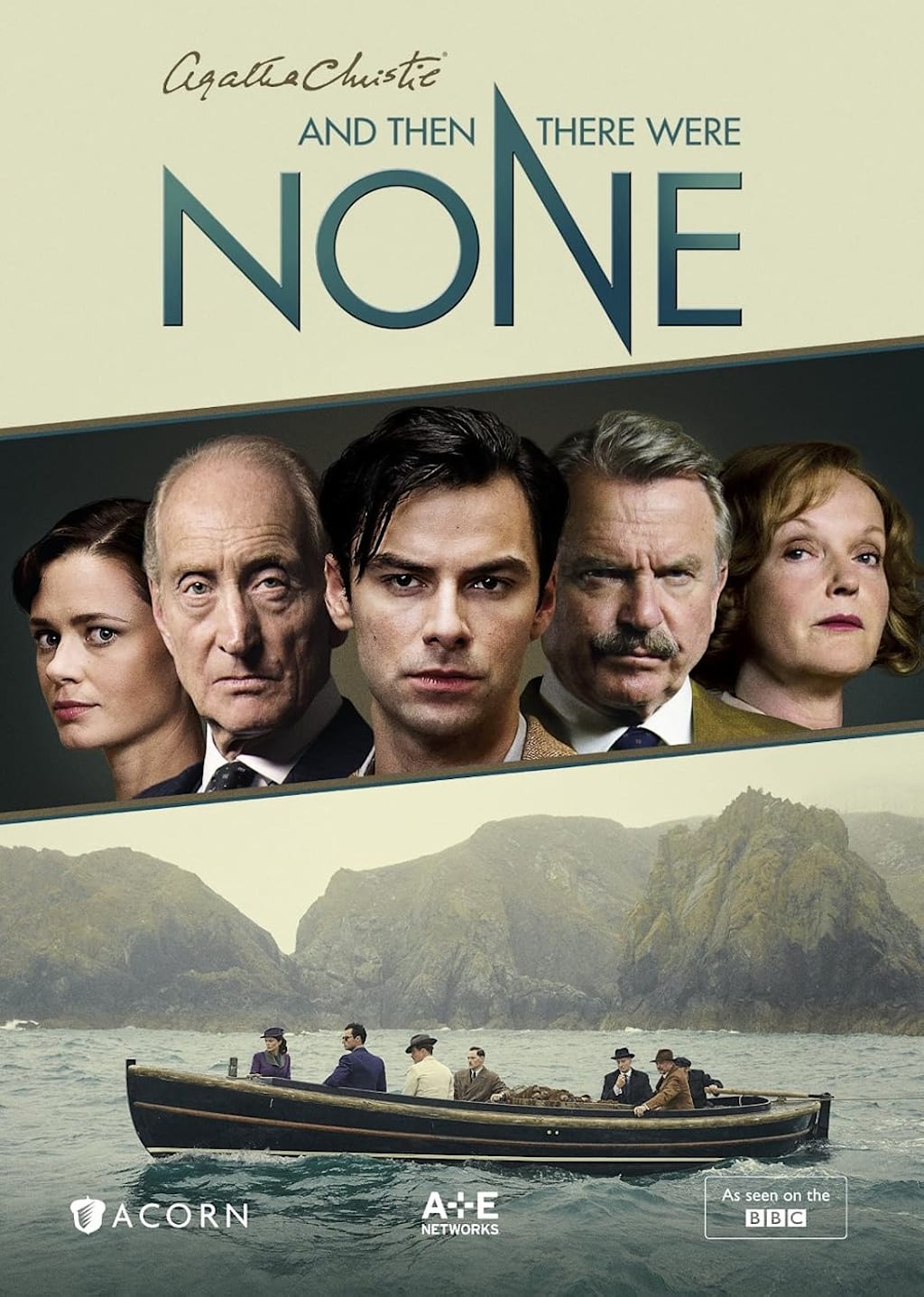
Spoiler Warning: This article contains major spoilers for And Then There Were None, including the identity of the killer and the complete ending.
Agatha Christie’s And Then There Were None is one of those murder mysteries where almost everyone looks suspicious, every death makes the situation more confusing, and the truth remains hidden until the final moments.
The 2015 miniseries begins in 1939, when a group of seemingly unrelated people are invited to a remote place called Soldier Island. None of them knows exactly why they have been chosen, and their mysterious hosts, Mr. and Mrs. Owen, are nowhere to be found.
What initially looks like an unusual gathering quickly becomes a terrifying game of judgment and death.
Ten people are trapped on the island.
Then they begin dying one by one.
And every death follows the pattern of a disturbing poem about ten little soldiers.
So who is murdering everyone? Why were these particular people brought to Soldier Island? And what really happens to Vera in the final scene?
Here is the complete And Then There Were None ending explained.
Why Are the Ten People Invited to Soldier Island?
Vera arrives on Soldier Island after accepting a job as a secretary. She desperately needs money, and although the circumstances surrounding the position seem strange, the generous payment convinces her to accept.
Several other people have received invitations for completely different reasons.
Among them are a doctor, a retired judge, a military general, Emily, detective Blore, former soldier Philip Lombard and wealthy young Anthony Marston.
A servant couple is already waiting at the mansion, bringing the total number of people on the island to ten.
The mysterious Mr. and Mrs. Owen are supposedly the owners of the property, but nobody has actually met them.
That is the first warning sign.
The second comes from a poem hanging in the bedrooms.
It tells the story of ten soldiers who die one after another in different ways.
At first, nobody takes it particularly seriously.
Then they notice ten small soldier figures displayed on the dining table.
There are ten people.
There are ten figures.
And there are ten deaths described in the poem.
The connection soon becomes impossible to ignore.
The Recording Accuses Everyone of Murder
After dinner, a recording suddenly begins playing inside the mansion.
A voice announces the names of the people gathered on Soldier Island and accuses each of them of being responsible for another person’s death.
The accusations immediately create panic.
Everyone tries to justify what happened in their past.
Some claim the deaths were accidents.
Others insist they were simply doing their jobs.
The doctor argues that patients sometimes die during surgery.
The general claims deaths during military operations are part of war.
The judge says he merely delivered sentences according to the law.
Vera explains that she had been responsible for looking after a young boy who drowned.
But beneath their excuses, uncomfortable truths begin emerging.
Some of these people really are responsible for deaths.
Lombard openly admits that he killed people for money.
Anthony Marston admits that he ran over two children while driving, yet still refuses to accept real responsibility.
Then something terrifying happens.
Marston suddenly begins choking after drinking.
Within moments, he is dead.
The first murder has occurred.
And the deadly rhyme has begun.
The Soldier Figures Start Disappearing
The next death happens during the night.
Another person dies while sleeping.
When Vera looks at the dining table afterward, she notices something disturbing.
Two soldier figures are gone.
There were originally ten.
Now there are eight.
Vera realizes that the murderer is deliberately recreating the deaths described in the poem.
Every time someone dies, one of the soldier figures disappears.
The murders are not random.
Someone planned everything.
The guests begin searching the island, believing an outsider might be hiding somewhere.
But they find nobody.
That leads to an even more frightening possibility.
The killer must be one of them.
Everyone on Soldier Island Has a Secret
As the murders continue, the survivors slowly reveal the truth about their pasts.
The doctor remembers performing surgery while intoxicated and causing a patient’s death.
The general remembers killing the man who had an affair with his wife.
Blore admits that he brutally assaulted a suspect who later died, then covered up what had happened.
Emily reveals that she threw a pregnant migrant servant out of her home. The woman had nowhere else to go and eventually died, yet Emily continues insisting that she was not responsible.
The more we learn about these characters, the clearer the purpose of Soldier Island becomes.
These people have one thing in common.
Someone believes they committed crimes for which the legal system never properly punished them.
The Murders Continue According to the Poem
The general isolates himself from the others and is later discovered dead.
Another soldier figure disappears.
By now, Vera is certain that the rhyme is predicting exactly how each person will die.
The survivors become increasingly paranoid.
Nobody trusts anybody.
Even simple actions become suspicious.
When the boat that should connect them to the mainland fails to arrive, they understand that they are completely trapped.
Another victim is killed with an axe, matching another line of the poem.
Emily is later found dead after apparently receiving a poisonous injection, symbolically fulfilling the poem’s reference to a bee sting.
Every death reduces both the number of people and the number of figures on the dining table.
The murderer appears to be controlling everything.
Doors can apparently be opened even when they are locked.
A gun disappears and later mysteriously returns.
The survivors no longer know whether the killer is hiding among them or manipulating them from somewhere inside the mansion.
Why Does Everyone Suspect the Doctor?
Eventually only five people remain.
Vera, Lombard, Blore, the doctor and Judge Wargrave.
The next lines of the poem appear to point toward specific members of the group.
Wargrave is especially vulnerable because one verse appears connected to the law.
The judge finally admits his own guilt.
He once allowed an innocent man to be executed even though he understood that the situation was more complicated than the evidence suggested.
Later, Vera is found unconscious.
When the others investigate, Wargrave appears to have died from a gunshot wound.
With the judge apparently dead, only four survivors remain.
Then the doctor disappears.
This immediately makes him the main suspect.
The others wonder whether he has been orchestrating everything and has finally stopped pretending to be another potential victim.
But that theory soon collapses.
Blore Is Killed by the Bear
Vera and Lombard eventually go outside while Blore remains behind.
Inside the mansion, Blore hears something unusual.
He investigates and is attacked by someone using the stuffed bear as part of the murder.
This death once again follows the rhyme.
Now only Vera and Lombard appear to remain alive.
Then they discover the doctor’s body near the water.
He has drowned.
That means the doctor could not have been the killer.
Vera and Lombard are now left with a horrifying conclusion.
If everyone else is dead, then one of them must be responsible.
Why Does Vera Kill Lombard?
Vera becomes convinced that Lombard is the murderer.
From her perspective, the evidence appears convincing.
Lombard is experienced with weapons.
He openly admitted killing people in the past.
His gun had mysteriously disappeared and later returned.
And he is the only other person apparently still alive.
Vera points the gun at him.
Lombard denies being responsible and attempts to stop her, but Vera no longer trusts anything he says.
She shoots him.
Lombard dies.
Vera believes she is finally the last survivor of Soldier Island.
But she is wrong.
The real killer is still alive.
Vera’s Dark Past Finally Revealed
The ending also reveals the complete truth about the boy who drowned while under Vera’s care.
Earlier, Vera described his death like a tragic accident.
The reality is much darker.
Vera loved a man who stood to inherit a fortune if the boy died.
Knowing that the child could not swim, Vera intentionally allowed him to enter the water.
When he began drowning, she made it appear as though she had tried to save him.
But she deliberately allowed him to die.
There was not enough evidence to convict her.
Legally, Vera escaped punishment.
Emotionally, however, the guilt remained buried inside her.
After killing Lombard and remembering what she had done, Vera becomes overwhelmed by that guilt.
She prepares to hang herself.
And then the impossible happens.
Judge Wargrave appears.
He is alive.
And Then There Were None Ending Explained: Judge Wargrave Is the Killer
The biggest twist of And Then There Were None is that Judge Wargrave never actually died when the others believed he had been shot.
His death was staged.
Wargrave is the person who organized the entire Soldier Island massacre.
He selected the victims.
He arranged the invitations.
He created the illusion of Mr. and Mrs. Owen.
And he designed the murders around the ten-soldier rhyme.
Wargrave spent his career watching the legal system operate.
Over time, he encountered cases in which people responsible for terrible acts escaped punishment because the evidence was insufficient or because their actions existed in legal grey areas.
This gave him a dangerous idea.
If the law could not punish them, he would.
Wargrave effectively appoints himself judge, jury and executioner.
Soldier Island becomes his private courtroom.
The invitations bring the accused together.
The recording announces their crimes.
And the poem becomes their sentence.
Why Did Wargrave Fake His Own Death?
Wargrave understands that as the number of survivors decreases, suspicion will become stronger.
Eventually everyone would begin investigating the remaining people closely.
So he removes himself from suspicion in the most effective way possible.
He appears to die.
Once everyone believes Wargrave is another victim, they stop considering him as the murderer.
He can then continue manipulating the remaining survivors while technically appearing to be dead.
This is what makes his plan so effective.
The murderer is not hiding outside the group.
He is hiding among them—and then hides behind his own supposed death.
Does Vera Die at the End?
Yes.
Vera ultimately dies by hanging.
After killing Lombard, she enters the final stage of Wargrave’s plan.
Her guilt over the child’s death returns more strongly than ever.
She prepares the noose and stands on a chair.
Then Wargrave reveals himself.
The shock causes Vera to lose her footing, leaving her hanging from the rope.
The last apparent survivor becomes another victim of the rhyme.
The ten people brought to Soldier Island are now gone.
Almost.
Wargrave still has one final task.
Why Does Judge Wargrave Kill Himself?
Wargrave originally sees himself as an instrument of justice.
In his mind, he is punishing people the legal system failed to punish.
But his actions also expose the contradiction at the heart of his philosophy.
Wargrave condemns people for causing deaths while deliberately becoming a mass murderer himself.
He decides who deserves to live.
He decides who is guilty.
He designs punishments without trials.
And he kills according to his own interpretation of justice.
Eventually, Wargrave must confront the reality that he has crossed the same moral line as the people he judged.
After completing the murders, he sits at the dining table and shoots himself.
The judge who created the deadly courtroom of Soldier Island becomes its final defendant.
And its final victim.
What Does the Ending Really Mean?
The ending of And Then There Were None is not simply about discovering the identity of a murderer.
It is about guilt, punishment and the dangerous difference between justice and revenge.
Almost every character has found a way to justify something terrible.
Some hide behind their profession.
Some blame circumstances.
Some deny responsibility entirely.
Others convince themselves that because the law never convicted them, they must be innocent.
Wargrave sees himself as the person capable of correcting those failures.
But his solution is even more horrifying.
The legal system may be imperfect, yet Wargrave replaces it with something far worse: one man deciding guilt and punishment entirely by himself.
That is what makes the final twist so disturbing.
For most of the story, everyone searches for a murderer.
In the end, the murderer turns out to be the person most closely associated with justice.
Final Thoughts
And Then There Were None builds its mystery around a brilliantly simple idea: ten people trapped in one location, ten figures on a table and a poem predicting ten deaths.
Every murder makes the group smaller.
Every disappearance of a soldier figure brings the survivors closer to the inevitable ending.
Vera killing Lombard appears to solve the mystery for a moment, but Wargrave’s return changes everything.
He was never simply another victim.
He created Soldier Island as his own twisted system of justice and brought together people he believed had escaped punishment.
But once Wargrave becomes the person deciding who deserves death, justice turns into murder.
And when the final soldier falls, the title finally becomes reality.
And then there were none.
About the Creator
parwinder singh
🎬 Movie & Entertainment Writer sharing reviews, ending explanations, story breakdowns, plot twists and hidden details from Bollywood, Hollywood, South Indian cinema, Korean dramas and OTT releases.
Enjoyed the story? Support the Creator.
Subscribe for free to receive all their stories in your feed.
Comments
There are no comments for this story
Be the first to respond and start the conversation.