
An Interview with Woodstockers Director Oliver Bernsen
Discussing Woodstockers, storytelling, and finding comedy in body horror.

Fans of Psych have been waiting years for a fourth film, though they won't have to wait much longer to see some of their favorite stars reunite on the small screen. In fact, Corbin Bernsen and Maggie Lawson are already appearing alongside one another in Woodstockers, a biting dramedy set in the heart of a once bustling hippie community turned quiet if colorful slice of a very specific kind of Americana.
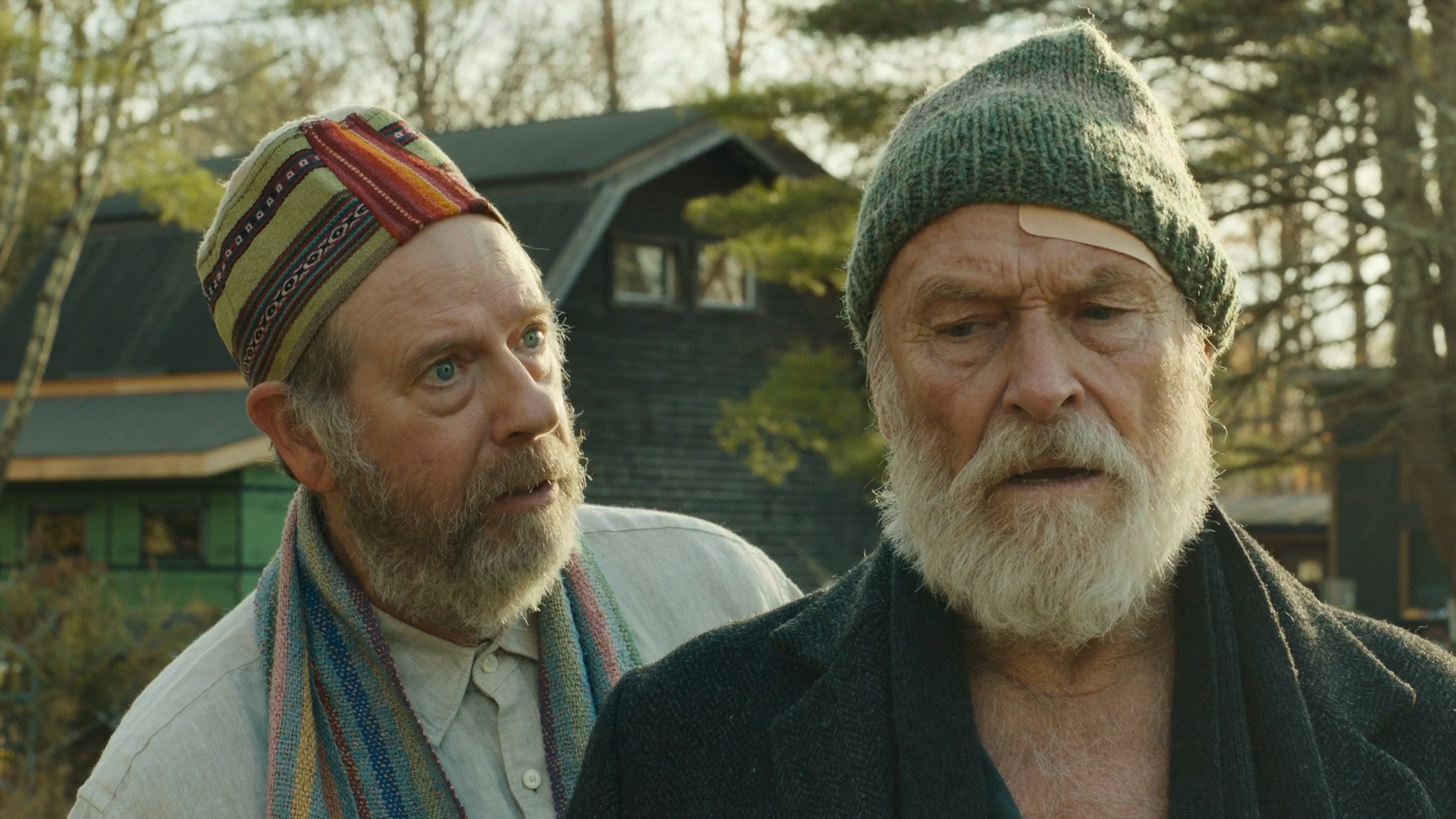
Created by Bernsen, Woodstockers revolves around Lenny, a man whose lifelong dedication to the culture he first found all the way back in 1969 meant settling down right where it all happened. Unfortunately, for Lenny, he now finds himself disillusioned with that dream, all while reeling from a failed marriage and the death of his best friend.
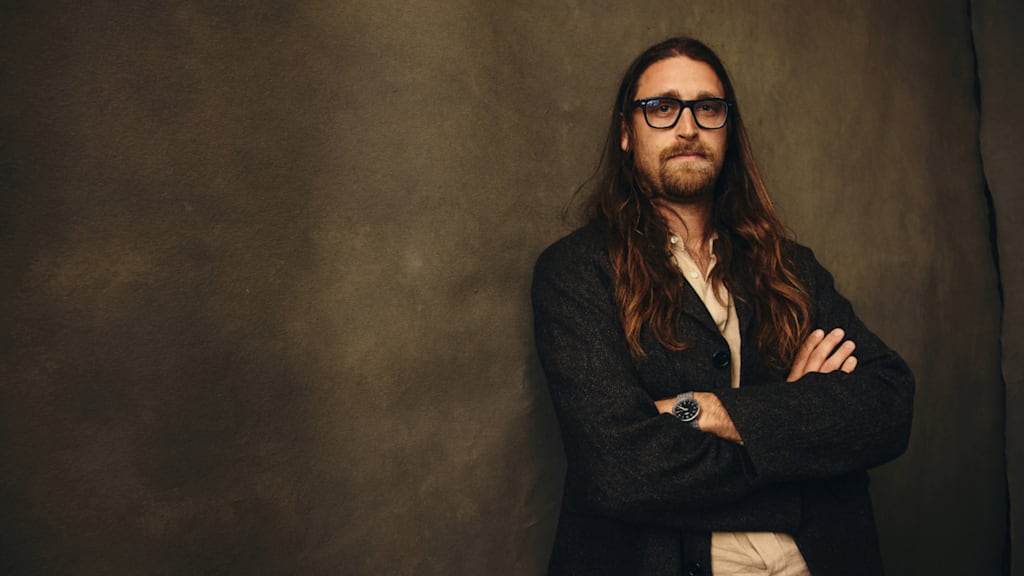
I recently had the opportunity to speak to director Oliver Bernsen about Woodstockers ahead of the pilot episode's premiere at Series Fest on May 8, who provided some key insight into not just Woodstockers as it stands now, but the challenges and stories it is ready to tell in the near future.
John Dodge : So when I previously spoke to your father about where Woodstockers came from conceptually, he gave me a pretty good idea of where he was in his life at that time, and you're a couple of decades removed from that. How did you approach that very specific counterculture that's at the center of the series?
Oliver Bernsen: I think he kind of came, I mean he came and asked if both I would do it, but also like our producer Zoe and the rest of the team that we had kind of, I had been working with on the feature we had just done prior and then a couple of shorts that even preceded that. He asked us out of pure practicality, you know, if we would be interested in coming and kind of helping him do this thing in the way we do a lot of the stuff we do, which is very like scrappy, low budget, whatever, so that was that.
But then the as far as like the material goes, I really liked that I could look at what what he was depicting through his generation, and what he had ultimately grown up believing and feeling and then how that had all transpired. And I really liked that I could look at that as going like these are these two really interesting points.
There's like the system of belief and this kind of like aspirational view of the world, and then there's like decades that span after that and you can kind of see how certain parts of that dream came to fruition and how certain parts of it fell apart. So I kind of wanted to pick that apart a little bit and, you know, be not like a critic of it, but just explore it and understand what that meant for, for Corbin as an artist.
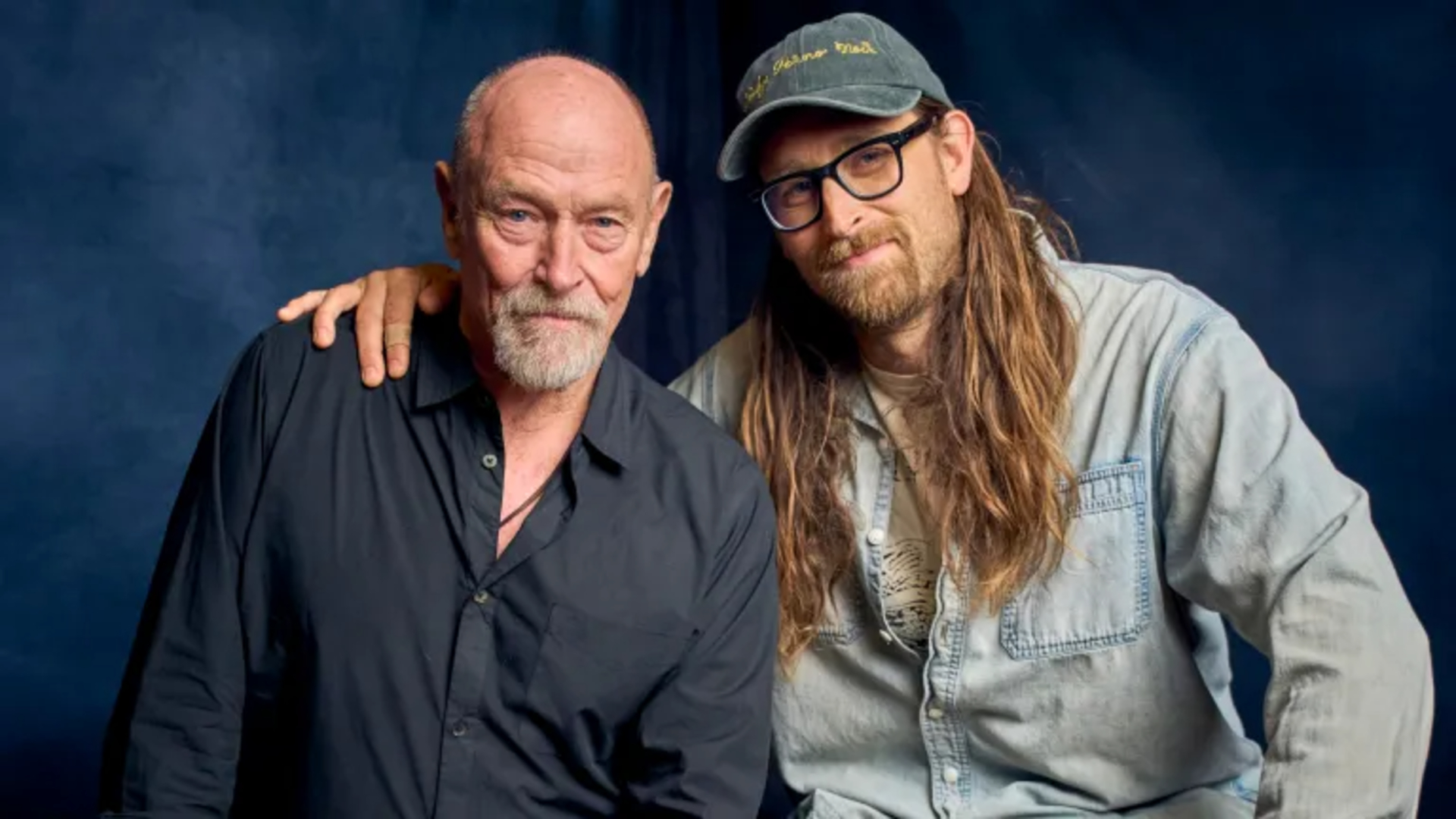
Also like what that meant for a person who's my father and I can have a deeper, I have a deeper understanding of than than most other people that I work with or probably will ever work with. And then also Lenny as a character and how he is just grappling with where everything went wrong and maybe, maybe where some other things went right cause it wasn't, it's not all bad. But I really wanted to be like as objective as I could be looking at that story and kind of picking it apart.
JD: Okay. Now, the framing of a lot of the sequences from Woodstockers goes a long way towards informing the audience about characters like Lenny, I would say almost as much as a lot of the writing does. Is there any particular sequence from that pilot that you are proud of as a storytelling device?
OB: I really love that's an interesting question. That's an interesting question. It's weird. I feel like I, I had never done a pilot or an episode of television prior to this, so it's, it's kind of its own. It has its own structure, like everything has its own structure, like a feature has its own structure and a short does, and obviously television does.
And I found that, to me, scene to scene to scene and especially in this because it kind of has this music that goes throughout, it actually felt really like what is it 40 some odd minutes at the end run time. It felt really like there's a constant flow that doesn't stop, so the whole thing, as an answer to your question, does feel a little bit like this sequence...
I don't know. I really love the scene with with Corb, and I, I love the scene with all the guys in the coffee shop cause it feels very like alive and like it's just this kind of old stoner hippie version of Cheers or something like that, which is a really cool thing to imagine. Or like, if Robert Altman shot an episode of like Cheers or something.
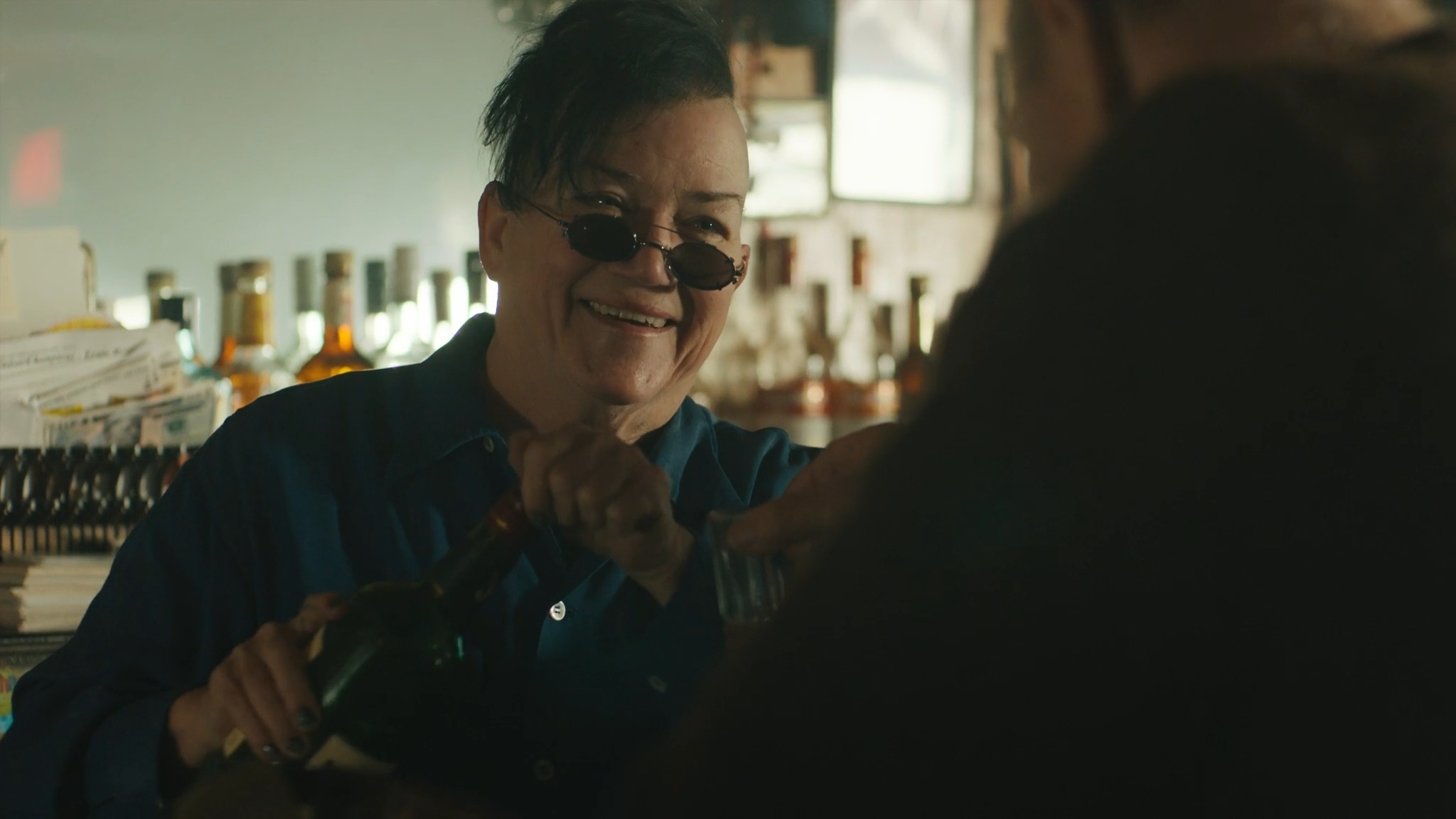
I just like how I like the energy of that of that scene, and I like the scene with with Willie, who's his friend that drives him to the funeral, they drive together and Corb is... It's like after he's just woken up from getting knocked off the side of the road and he kind of wakes up on his couch and then he takes some painkillers and it's outside and, I don't know, it just feels... I like that it's kind of sad, I like that sequence a lot.
I feel like emotionally it really delivers well. Yeah, I think that's probably my my favorite sequence in all honesty.
I also really like when Corb leaves the, when Corb leaves the the dumping of Calvin's ashes and goes to the bar and then sees that the young girl Laurie perform, and then his interaction with her outside and coming home. All these end scenes, they really feel like they build and have a lot of like emotional weight to them, so I really like that stuff.
JD: Was there anything in particular that you did as a director to ensure that flow and that pacing between individual sequences?
OB: I mean, I think I'm always very aware of that, cause what you really don't ever want in anything, television or movies or anything, is to have the momentum feel like it's kind of weird and out of whack.
I think you ultimately want to start a story that comes in exciting but grabs you, and then you kind of start to build and build and build, and hopefully by the end, whether it's like actiony or dramatic, everything is kind of coalescing.
So I think what I try to focus on is scene by scene. That each time we're seeing Lenny interact with people or be given news or information, it feels like there's more of this drama that's kind of being like a lumped on him. And he's being overwhelmed by so that when we do get to the end, it feels like he's kind of like being crushed out of the way of it, and then there's also this moment of catharsis that lets go a little bit.
So I think that was the thing I really tried to focus on that like, as we kind of went from scene to scene that he felt ever more crushed by the weight of the world and the news that's kind of being inflicted upon him.
JD: And was there any struggle in balancing that kind of overwhelming personal tragedy at the heart of the series with the humor in Woodstockers?
OB: No, that was like my honestly my favorite part and the thing I was most excited about. I like really like storytelling that doesn't allow itself to become too entrenched in the thing that it is.
So for instance, this is very much a family drama or a drama, but by adding all these moments of levity, you push and pull against that thing. So it never feels like melodrama. You know, sometimes that ss a downfall, unless you're going for it, but I think some things that intend to be drama become too self-serious and too unaware of the fact that even in moments of deep sadness or anger or whatever, there's still a lot of funny stuff that happens.
So I think I was really, really attracted to that. For me as a director, as an exercise to be able to kind of do something that's really truthful and really honest and really dramatic, but then also be able to like, you know, have a guy come into his dead friend's hospital room and see that he has a huge erection, and have both of those things hopefully work.
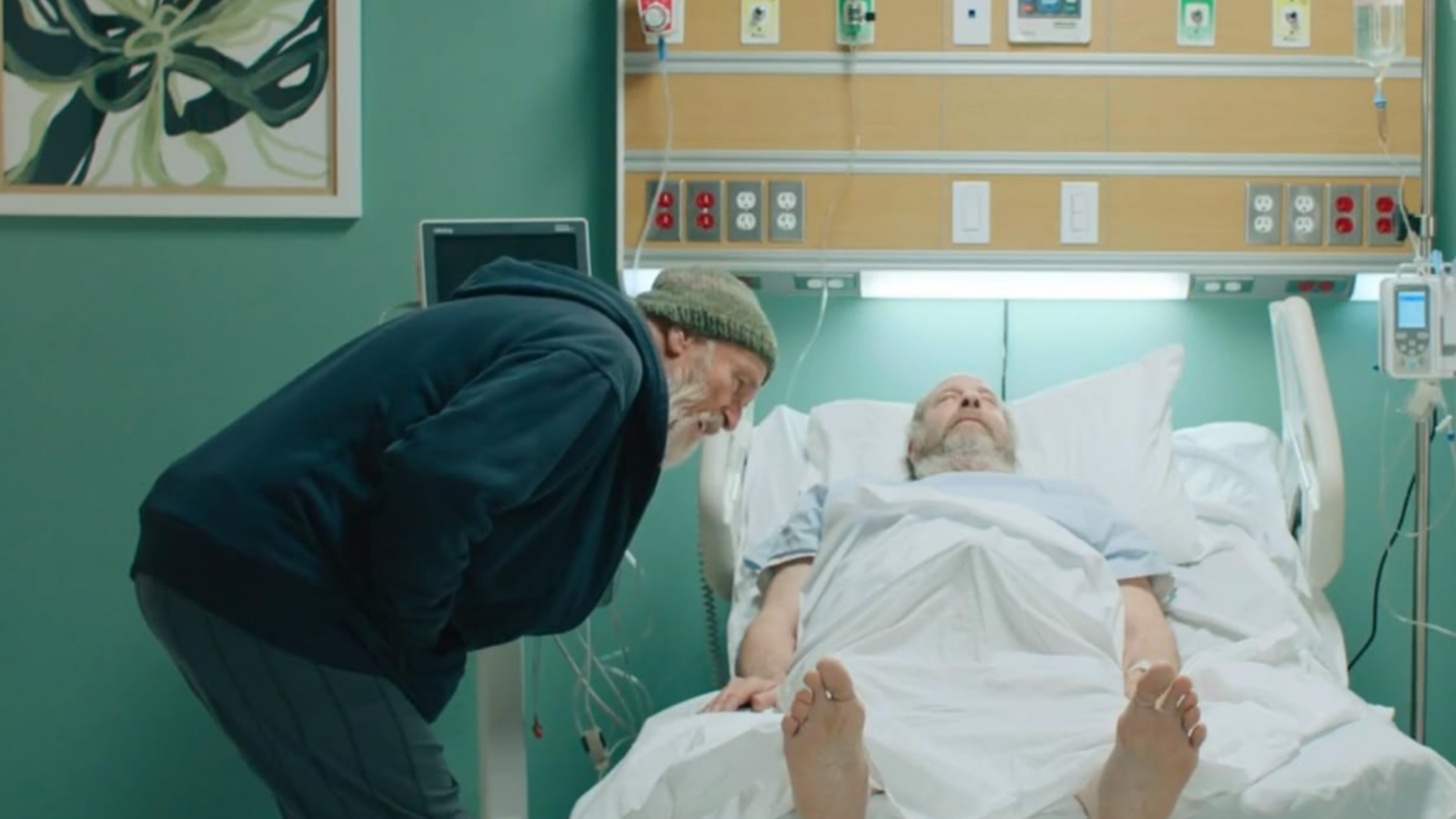
JD: Yeah, the rigor erectus bit was super funny. That was, that was a great moment.
So beyond the initial pilot, Woodstockers is planned for 4 seasons, each set across a literal different season. Is there anything about that that you're really looking forward to, assuming the whole thing goes forward? And is there anything about shooting across an entire year that you are potentially dreading?
OB: I think I'm very much so looking forward to. Telling a story just as a whole, telling this very intimate kind of, an otherwise small story, but on a pretty grand level, you know, if you're just telling Lenny's story but it takes place over 4 seasons, and each season of it is, is whatever 6 to 8 episodes, that feels like you can do so much and you can pull so much away from.
What a who a person is and why they got to where they got to. I love, I'm really excited about that as an exploration of character.
And the second thing to that, I think that there is a lot of Corbin who is really right in, in realizing that, especially in a place like upstate New York where seasonally things are so different and they really do change, that that affects you very emotionally. So you can be going through whatever you're going through sadness, happiness, death, birth, whatever, but depending on what season you're in, you're also dealing with the effects of that.
If you're in a frigid winter, you're like, huddled up by a fire and can't go outside much. You have like low exposure to to the sun and you know that decreases your energy. And so I think it's, it'll be cool to like see how that affects the story again, this kind of like push and pull of what's happening.
What am I worried about?
I think that... I mean, from a logistics standpoint, especially in the winter and the months that tend to be more dramatic in terms of snow and seasonal weather, it's very hard to keep a place consistent if you're shooting for that period of time of months and months. So I'm sure that's gonna be a total nightmare. And, you know, doing stuff that we're doing, like we do things on a very small scale and level with not a lot of support and infrastructure, and that is always a challenge regardless of how beautiful and sunny it is outside. It's always just like you never have enough people or never have enough money or never have enough time. So that's the constant challenge.
But I like all those things. I do this because I like storytelling, but also like I'm driven by kind of finding a challenge and then being able to problem solve it and get through it. It isn't fun if it's not challenging for me.
JD: All right. So, during my conversation with Corbin, he mentioned that Woodstockers is being shopped around. He also said that he is fully willing to just put it on YouTube, if it doesn't go anywhere else.
Is there any particular network or platform that you personally want to see Woodstockers end up on?
OB: I mean I I think that all of the the premium [platforms] in particular, like obviously HBO Max, whatever, puts out a lot of stuff that feels like this in many ways in regards. So I think that's a that's a good home for it because it has, it has a really good built in kind of fan user base that that already exists. Whether it's like shows like Hacks, or, you know, a show that I loved that was a tiny show was this one called High Maintenance, which was very intimate, but dramatic and comedic, and they just make a lot of really tasteful stuff.
But again, I don't know. As a comparative thing Netflix. obviously had the Kaminsky Method, which did quite well on that, and was kind of for the, you know, an older audience, as well as Grace and Frankie. So I'm sure that's a great place for it too.
You know, at the end of the day, I just want to make something. My job is just to make something that's really good.
Where it ends up is not something that I put too much of my mental time into thinking about, because if you make something really good, then everyone hopefully will want it. So, yeah, my, my goal is just to make really good quality work and hope that people see that and respect it.
JD: So, apart from Woodstockers, you've got Bagworm that I believe premiered earlier this month.
OB: Yeah, it premiered in, actually in the summer. It premiered in Spain and then, and then we went to South by [Southwest] as well with it. It was like the, it was like the North American premiere.
JD: Do you have anything else actively in development or headed into production that you can talk about or tease right now?
OB: Nothing that's headed into production. So my brother Henry wrote Bagworm, and we're working on another script that is, you know, kind of Bagworm is a very like a strange movie. Some people say it's body horror. I kind of consider it much more of like an extremely dark comedy, a strange dark comedy. But the other feature that we're working on is a bit more of a horror film, but again it kind of has a lot of elements of what Bagworm is.
It's kind of, it's like The Fly meets American Beauty.
JD: OK, that sounds amazing. I'm really looking forward to catching bagworm for myself, so anything else in that vein sounds great.
OB: Cool, yeah, it's, it's weird and fucked up. So if you like that, you'll like it.
JD: All right, so, my last question here... When I spoke to Corbin and Maggie, we started talking about collections. I know your dad has the snow globes, and Maggie has a journal collection that's piling up. Is there anything that you collect right now?
OB: Maggie has a, a journal collection?
JD: Yeah, it sounded like she's just kind of accidentally built up a collection of unused journals, which I can absolutely relate to. I'm not sure if it's things that she's picked up for herself or for other people, but we, we talked about that earlier.
OB: Yeah, I, okay... I would say I have a pretty gnarly like book addiction habit. I have a lot of books. I love art books and beautiful books.
I collect a lot of, I collect a lot of like, just little random things like organic rocks.
This is a petrified dinosaur poop.
JD: Oh, dope. That's cool.
OB: Yeah, and and like strange objects that are just, you know, I don't know, beautiful or organic and cool.
I'm like a big fan of in general like, Wunderkammers, which are like German, those old German museums where they would have a bunch of crazy organic shells and taxidermy and things. Just oddities from around the world.
Not that my house is at all a Wunderkammer, but I like collecting odd bits and pieces that I just can kind of look at and admire and, you know, I don't really know what to do with. Yeah, so I would say art books and strange oddities.
JD: Nice.
OB: I have a, like a, monkey's paw over here.
JD: Perfectly safe, I'm sure.
OB: Yeah, yeah, yeah, I just got... I just have like strange little strange shit that I find.
JD: That's amazing.
OB: Strange shit.
JD: Fantastic.
Woodstockers premieres at Series Fest on Friday, May 8.
About the Creator
Enjoyed the story? Support the Creator.
Subscribe for free to receive all their stories in your feed. You could also become a paid subscriber, letting them know you appreciate their work.
Comments
There are no comments for this story
Be the first to respond and start the conversation.