
Amadeus
The Rivals

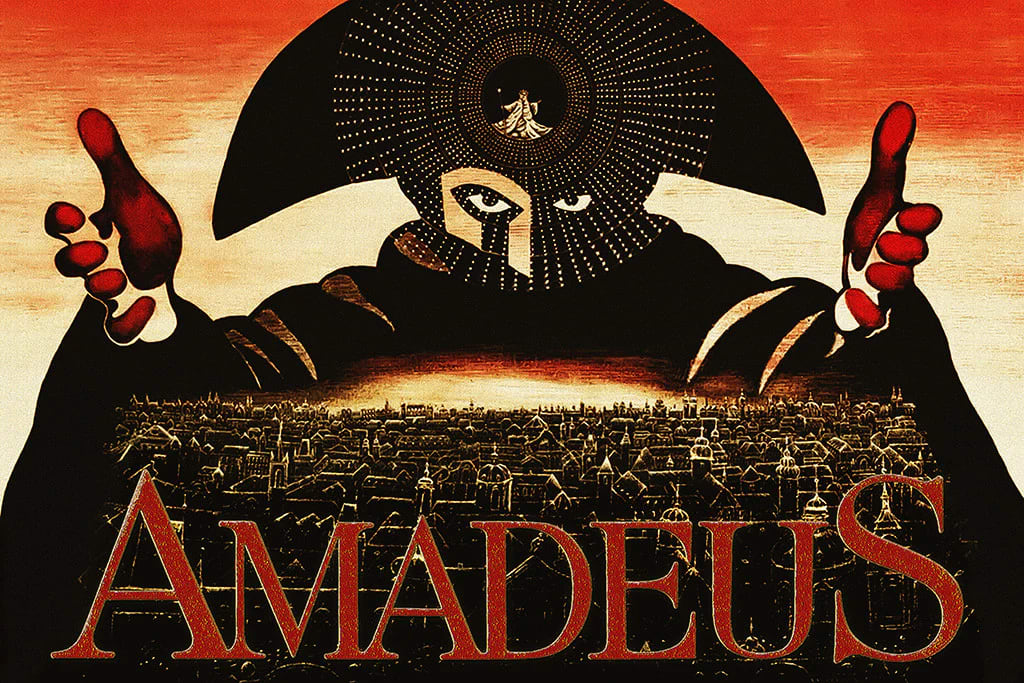
Screenplay: Peter Schaffer
Director: Milos Forman
Starring: F Murray Abraham, Tom Hulce
Going to rewatch Amadeus on the big screen, I was worried. Do you recognise that fear that something you once loved might not meet expectations on revisiting? That the memory might be better than the reality?
I first watched Amadeus as a teenaged school girl. I was, I admit, a little pretentious. I wanted to be seen as erudite and sensitive. But deep, deep down, I was prepared to be a little bored by a film about a classical composer, when I didn’t listen to classical music and knew little about it (especially in relation to the friends I was watching the film with).
But I wasn’t bored. I was captivated by the drama, the costumes, the music, the setting. I got lost in 18th Century Vienna and a plot of resentment, rivalry and regret. “Sumptuous” was the word I plumped for when describing Amadeus. I love that word. Sumptuous is delicious to say. It is awash with richness and playfulness as it rolls around the mouth. I have deliberately never rewatched the film on TV because I didn’t want the sumptuousness to be diminished. However, Amadeus has been remastered and given a second theatrical release for its 40th anniversary, meaning I had the opportunity to rewatch it on the big screen. But could it live up to the memory? Would I feel the dullness I first imagined?
I am happy to report this is not the case.
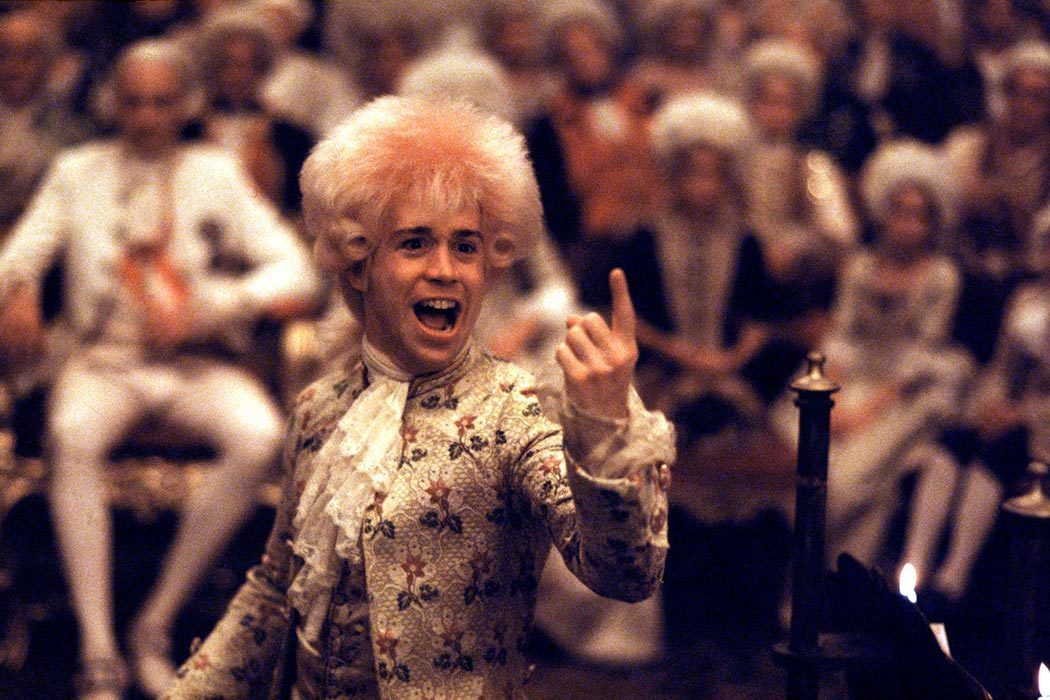
Considering I haven’t seen it in forty years, I am surprised by how much I remembered, both visually and in terms of plot. For those unfamiliar, Amadeus is a fictionalised account of Mozart’s time in Vienna, the few years before his death. This portrayal of Amadeus is filtered through the jealousy and rivalry of court composer, Salieri.
The big themes are talent and competition. Competition, in the screenplay, tears one man apart with jealousy and denies another man the care he needs. Where, the writing asks, is talent forged? Is it distributed at birth, or nurtured through hard work and sacrifice? With Salieri as narrator, the suggestion is that talent is God-given, outside of the control of mere humans. He is filled with a rage that his sacrifice doesn’t result in the sublime artistry of Mozart and merely produced a plodding competence. And for Salieri, the fault lies with God for imbuing talent in a crude, vulgar man with worldly appetites.
Salieri’s narration, however, comes from an asylum. How trustworthy can it be? It appears too easy, from a position of injured feelings and tortured conscience, to feel that God is unfair and arbitrary and to ignore Mozart’s own work ethic and a childhood of bullying into performance. Salieri also discounts his own lack of daring, choosing the life of a musical courtier rather than the sacrifice of unpopularity that creative risk-takers face.
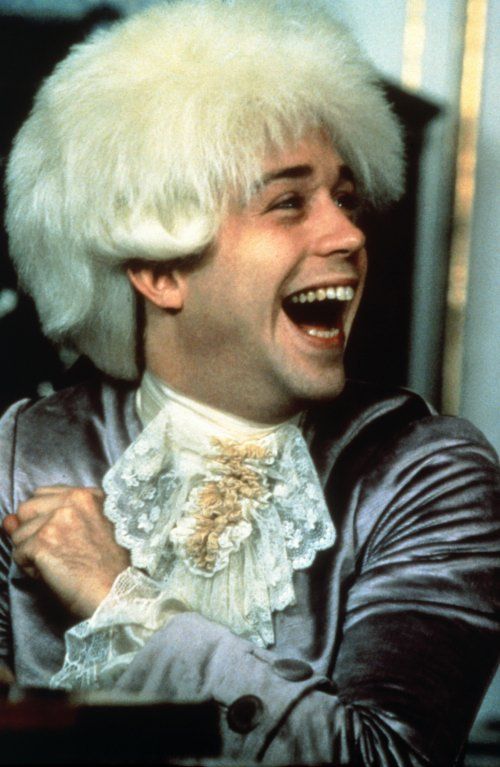
Genius can be unhinged with a giggle, but it is also feverish work to gain parental approval and an inability to look after oneself and one’s finances. However, Salieri whose mind is warped with jealousy cannot see this, and cannot be content with his own accomplishments. For a man who claims to love music, Salieri appears to find little joy in it. Ironically, he is at his happiest when collaborating (the opposite of competing) with an ailing Mozart on producing the requiem that also kills his rival.
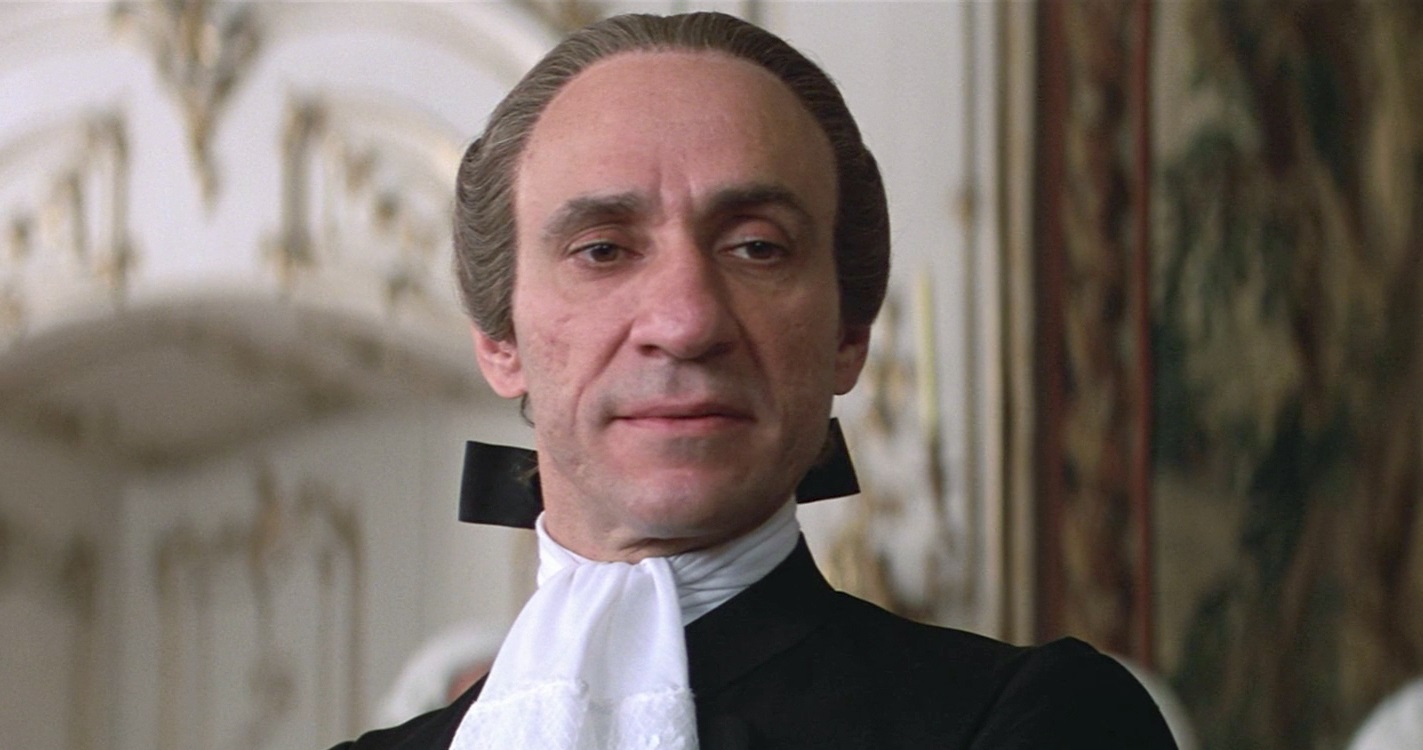
There is further irony that the two leads were pushed into faux competition of the Oscars, with the bitter rage of F Murray Abraham’s Salieri winning over the unbalanced, teetering performance of Tom Hulce as Amadeus. And with such big performances filling the screen it might also be possible to overlook the delightful restrained performance of Jeffrey Jones as the Emperor, a king turned fool, but with quirky, knowing looks.
So, yes, I still loved the film. I loved the lavish melodrama, the costumes, the candlelight, the soaring score. I loved the big themes in the writing and the debate they provoke. Does this mean that I have not moved on in my film tastes since I was 15? And does that worry me? Not really. It’s good to know that 15 year old was so discerning. She didn’t always feel cool or comfortable. But she got this one right.
If you've enjoyed what you have read, consider subscribing to my writing on Vocal. If you'd like to support my writing, you can do so by leaving a one-time tip or a regular pledge. Thank you.
About the Creator
Rachel Robbins
Writer-Performer based in the North of England. A joyous, flawed mess.
Please read my stories and enjoy. And if you can, please leave a tip. Money raised will be used towards funding a one-woman story-telling, comedy show.
Enjoyed the story? Support the Creator.
Subscribe for free to receive all their stories in your feed. You could also become a paid subscriber, letting them know you appreciate their work.
Comments
There are no comments for this story
Be the first to respond and start the conversation.