
'Almost You' (1985): The Almost-Forgotten Yuppie Comedy That Almost Made It
Before Definitely, Maybe, Adam Brooks made his feature-directing debut with a $1 million romantic comedy about Manhattan marriage, yuppie dissatisfaction, and the eternal human fantasy that somebody else might make us happier.

Hollywood Dreams and Sixty-Five Dollars a Week
Hollywood is full of stories about young people who begin with empty pockets and big dreams, struggle for a while, and eventually find themselves living the kind of life that would have seemed impossible a few years earlier. The American Dream, only with better lighting and a publicist.
Karen Young had a version of that story herself.
Born in Chester, New Jersey, and educated at Mount Olive High School and Douglass College, where she majored in English, Young took her first professional acting job at the George Street Theater in New Brunswick. The pay was $65 a week. Six months later, she was fired.
She wanted to act, not hand out tickets. The job, miserable as it was, gave her a glimpse of the business and what it might take to survive in it.
There were no quick breaks. After leaving the theater in 1978, Young spent time unemployed, reading books, and trying to figure out what came next. Eventually, she moved to New York, where aspiring writers and actors crowded together in pursuit of careers that frequently went nowhere. Some found their footing. Others found something else to do.
Young kept going.
Her persistence eventually paid off. She landed a role in Maria’s Lovers (1984), opposite Nastassja Kinski and Robert Mitchum, and found herself moving into a different phase of her career. She no longer had to work as a waitress to get by. More importantly, she felt she had gained some control over her professional life.
Then came Almost You.
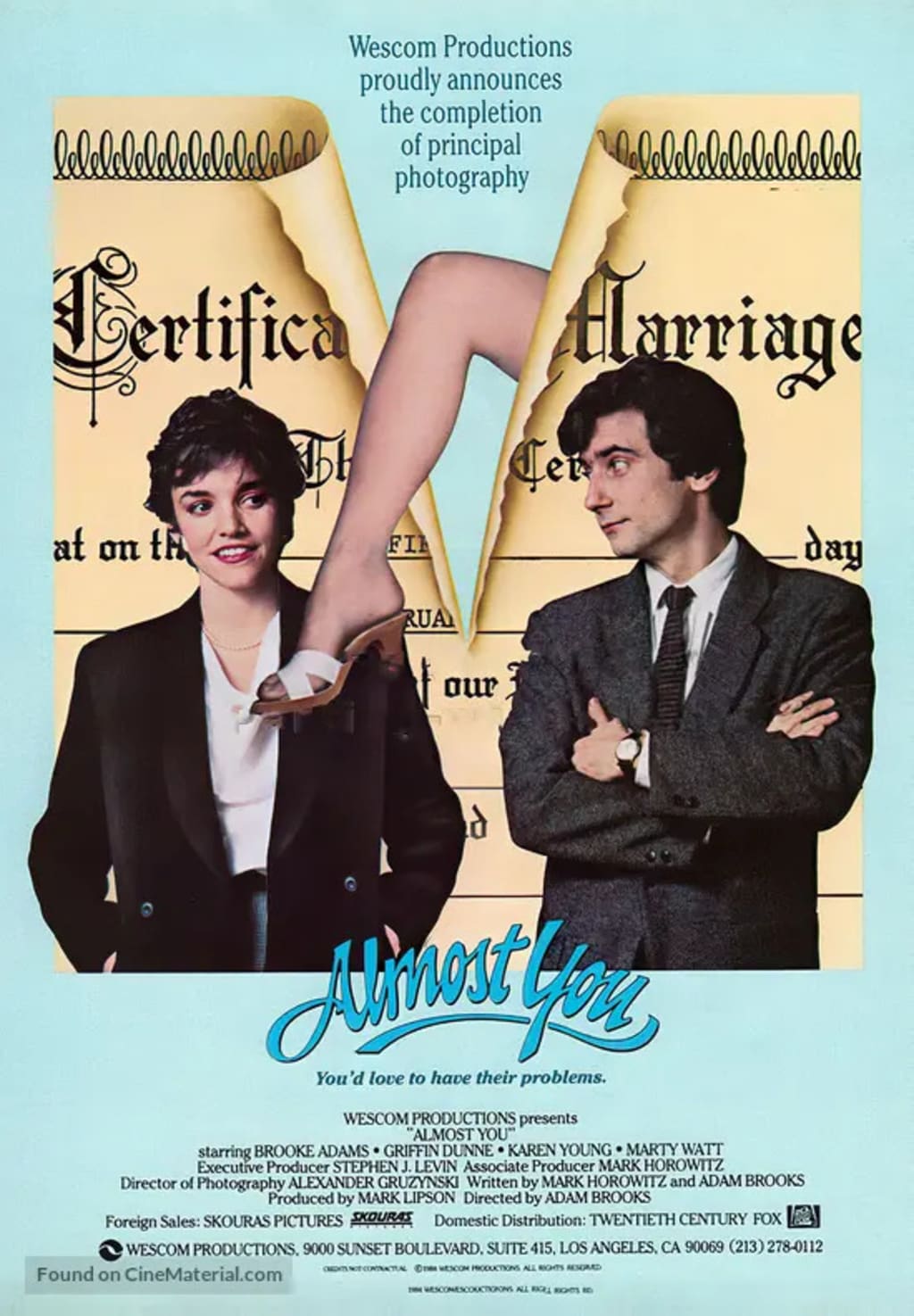
The 1985 romantic comedy, directed by first-time feature filmmaker Adam Brooks and starring Young alongside Griffin Dunne and Brooke Adams, offered her something unusual: the opportunity to play the lead in a movie written specifically for her.
Young’s casting story sounds like something a screenwriter might invent after a particularly optimistic lunch.
She was at a party when Brooks, a young director she didn’t know, stared at her for a good 20 minutes. He eventually called and asked her to star in his movie. Young thought the whole thing was rather cute and agreed, never imagining he would actually get the money to make it.
Then he did.
The film secured $1 million in financing, earned a Special Jury Prize at the 1985 U.S. Independent Film Festival in Park City, Utah, and was selected as the closing-night film at Filmex in Los Angeles.
And today? You’d be forgiven for having never heard of it.
Almost You is a modest, character-driven comedy about a Manhattan marriage coming apart at the seams. It’s also a snapshot of a particular kind of 1980s dissatisfaction: people with comfortable lives, promising careers, and nice apartments who cannot quite figure out why they’re unhappy.
The movie almost found an audience. Almost became a success. Almost entered the conversation about the independent cinema of its time.
The title, as it turns out, was rather prophetic.
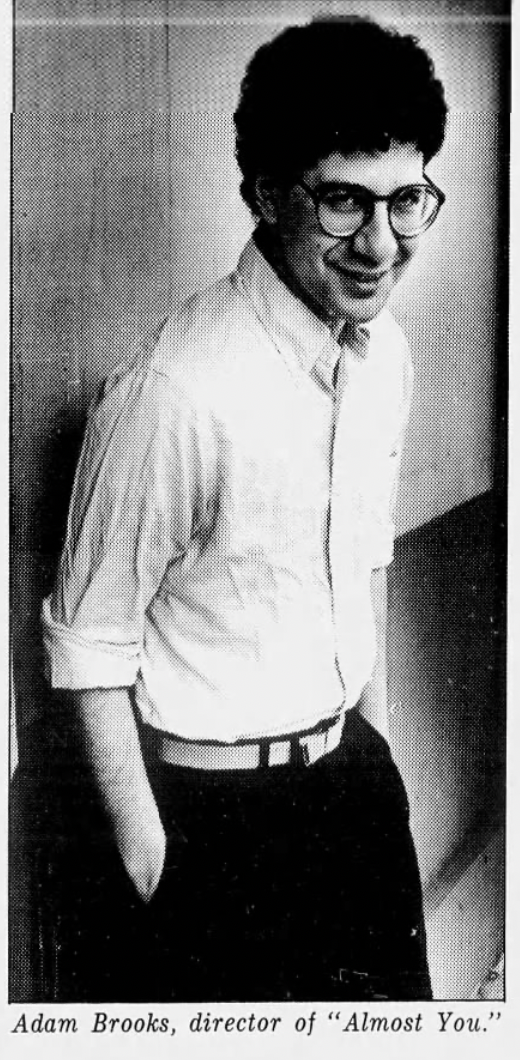
Adam Brooks Gets His First Shot
In 1984, Adam Brooks was 28 years old and had already spent time working behind the scenes on films directed by John Sayles. His credits included Lianna (1983), Baby It’s You (1983), and Reckless (1984).
He was learning the business from the inside. And, apparently, he was paying attention.
While working as a script supervisor on Baby It’s You, Brooks developed a treatment for a movie of his own. Griffin Dunne, who had produced and starred in that earlier film, liked the idea and wanted to play the lead. Dunne also recommended Brooke Adams for the female lead.
Brooks and Mark Horowitz subsequently developed the screenplay, and the involvement of Dunne and Adams helped persuade Wescom, the production arm of the San Francisco Chronicle Company, to finance the picture.
The budget was $1 million.
For Wescom, this was a significant commitment. Almost You became the company’s first fully financed feature. Fox Classics, through its TLC Films division, agreed to distribute it.
Of course, getting a movie financed is one thing. Getting the movie you actually want to make is another.
Brooks later described the process as a kind of “Faustian deal,” though he also maintained that the greatest achievement was making the film they had intended to make.
It’s a familiar independent-film dilemma. You need money to make your movie, but money comes with expectations. Somebody wants a comedy. Somebody wants romance. Somebody wants a film that audiences can understand without having to consult a therapist afterward.
Brooks wanted to make a comedy rooted in recognizable human behavior. Whether audiences would find those human beings charming was another question entirely.
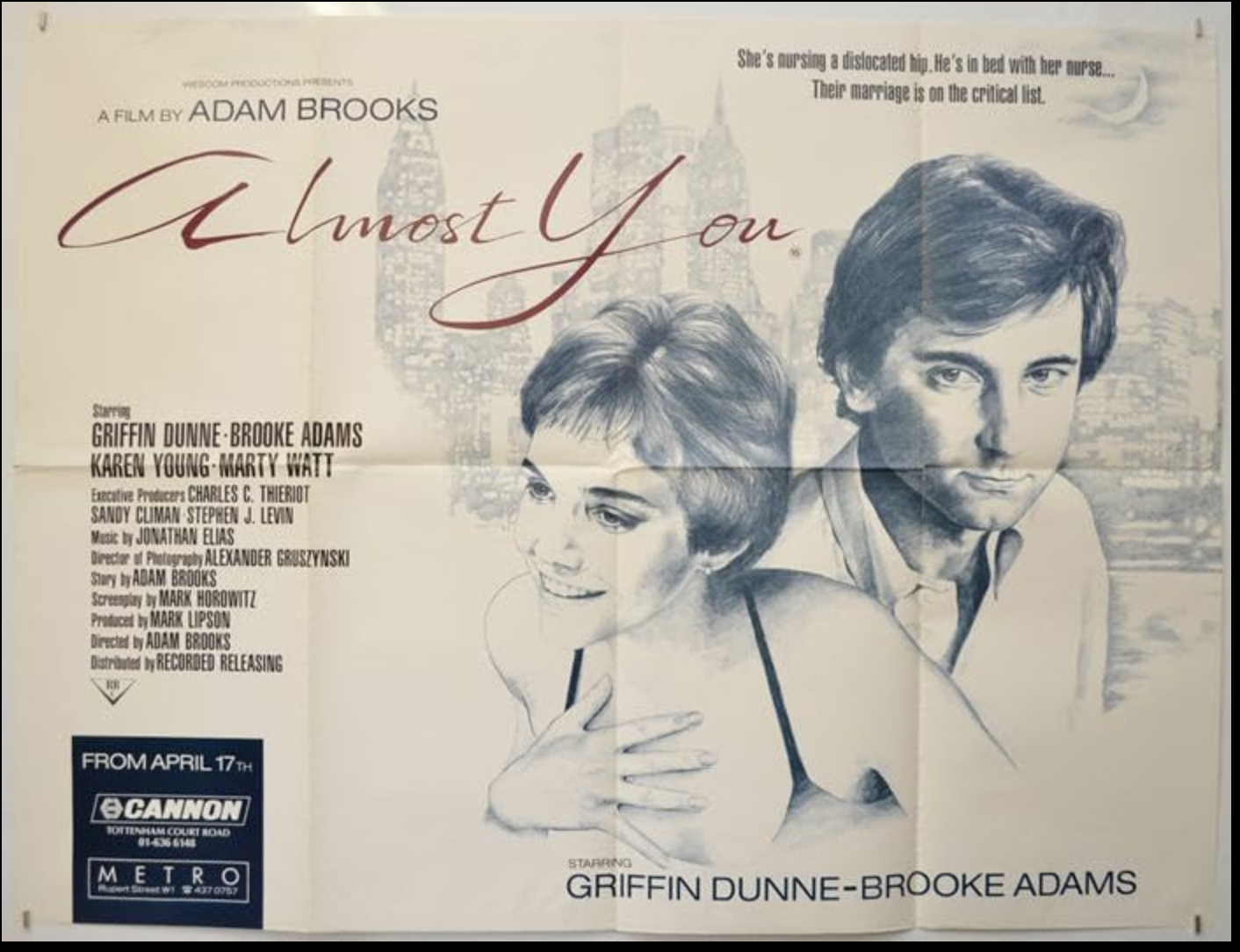
Twenty-Five Days in New York
Principal photography took place in New York City from late January through late February 1984. The production had approximately six weeks of preparation, including two weeks of rehearsals, before completing its shoot in just 25 days.
That’s a brisk schedule for a film built around characters, conversations, and the uncomfortable business of watching people make terrible decisions.
The production had a relatively young cast and crew, and accounts of the shoot described a family-like atmosphere. Brooke Adams reportedly worked for less than her usual fee, while the production operated under a low-budget union arrangement.
Craig Laurence Rice served as first assistant director, helping keep the production moving on a tight schedule.
Then the weather intervened. In a helpful way, for once.
The film’s final blizzard sequence was shot after principal photography had officially wrapped. A real snowstorm arrived, giving the production an opportunity it couldn’t have manufactured on its limited budget. Cast and crew were called back for an overnight shoot to capture the conditions.
You can plan a movie down to the last minute, but you can’t order a blizzard to arrive on schedule. At least not without a considerably larger budget and some questionable dealings with the weather department.
In this case, nature provided the production with a little free production value.
There was also a more substantial version of the film before it reached theaters. Accounts of the original cut put its running time at approximately 107 to 110 minutes, compared with the roughly 96-minute theatrical version.
Fourteen minutes might not sound like much. But in a character-driven comedy, where the success of a scene can depend on how long you sit with an uncomfortable silence or an awkward exchange, those minutes matter.
The surviving theatrical version is the one audiences encountered in 1985. Whether the longer cut would have helped the movie is another matter. More time with characters isn’t necessarily the same thing as a better understanding of them.
Sometimes you need less of a person. Sometimes you need to understand them better.
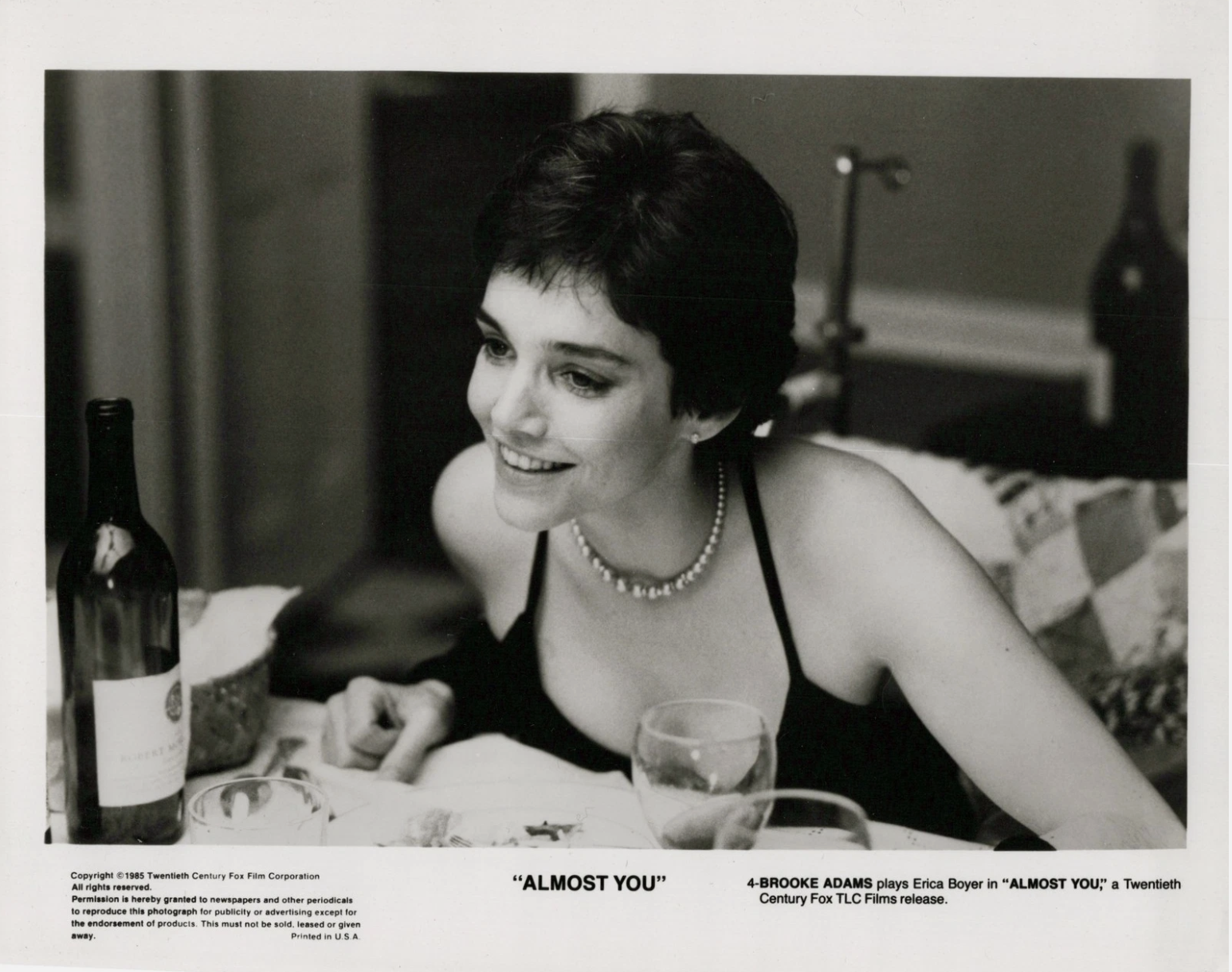
The Woman at the Center of It All
Brooke Adams plays Erica Boyer, a Manhattan wife whose marriage to Alex, played by Griffin Dunne, is in serious trouble. Alex is dissatisfied with his job, bored with his domestic life, and generally convinced that happiness must be waiting somewhere else.
Erica’s taxi accident leaves her temporarily disabled, bringing a physical therapist named Lisa Willoughby into their lives. Karen Young plays Lisa, who becomes the object of Alex’s wandering attention.
Lisa has a boyfriend of her own, Kevin, played by Marty Watt. He’s not particularly thrilled about the prospect of losing her to a married man. Meanwhile, Alex and Erica’s social circle supplies additional examples of people attempting to build stable relationships while demonstrating that stability may be the last thing they understand.
The situation is ripe for comedy. Infidelity, jealousy, marital resentment, and a man who seems to believe that a change of woman might be the same thing as a change of life.
What could possibly go wrong?
Brooks wrote Lisa specifically for Young, and the actress recognized something of herself in the opportunity. In a contemporary newspaper interview, she described the experience of getting the role as feeling like a scene from one of her own movies.
The role mattered for reasons beyond the paycheck. After Maria’s Lovers, Young had found herself in a position to stop working as a waitress and start making more of her own decisions about her career. She described the opportunity to star in Almost You as a chance to maintain that control.
“It’s someone small, someone I can tell what to do and keep control over my own career,” she explained.
There’s an interesting bit of parallel here. Brooks was a young filmmaker trying to make the movie he wanted to make. Young was an actress who had fought her way into a position where she could take a leading role and exercise some control over her working life.
Neither was operating at the top of Hollywood’s food chain. Both were trying to establish themselves, and both had reasons to value the opportunity.
That doesn’t make Almost You a masterpiece. But it does make its production story more interesting than the finished film’s modest reputation might suggest.
Young’s career was not without its difficulties. She spoke candidly about the challenges of working on a film set, where actors must find a way to communicate their needs to an entire crew while remaining focused on their performances. Sometimes, she suggested, you have to fight to get what you need.
The work, in other words, involves more than memorizing lines and waiting for the camera to roll.
The supporting cast includes Dana Delany, Miguel Piñero, Spalding Gray, and Joe Silver and Joe Leon as Alex’s uncles. It’s an appealingly eclectic collection of performers, the sort of ensemble that makes revisiting an obscure 1980s production worthwhile even when the movie itself doesn’t quite come together.
And then there’s the wonderfully confusing business of the names above the title.
The director is Adam Brooks. The leading actress is Brooke Adams.
No relation is implied by the resemblance, but the reversal is a small gift to anybody trying to keep the credits straight. You couldn’t invent a more convenient bit of trivia if you were trying to make a movie about mistaken identities.
A Marriage in Crisis, or Just Another Tuesday in Manhattan?
Almost You belongs to a particular family of 1980s movies: the romantic comedies about successful people who have everything they were supposed to want and remain spectacularly unhappy.
The decade’s yuppie characters were often presented as people who had won the game and discovered that winning wasn’t much fun. They had money, careers, apartments, and the freedom to pursue whatever they wanted. Unfortunately, they also had themselves.
Alex Boyer is an especially useful specimen.
He has inherited a partnership in a garment business run by his uncles and lives in a comfortable Manhattan apartment. He’s not facing the kind of financial catastrophe that drives the plot of a conventional working-class comedy. His problem is more existential. He doesn’t like his life, and he appears to have reached the conclusion that the life itself must be the problem.
His marriage has become an obstacle. His job has become an obstacle. The ordinary obligations of adulthood have apparently conspired against him.
Enter Lisa, who offers the intoxicating possibility of starting over.
It’s a familiar fantasy. If you could just escape your current circumstances, you might finally become the person you were meant to be. If you could find the right partner, the right job, the right city, or the right apartment, everything would fall into place.
The problem is that Alex carries himself into every new situation.
This is where Almost You has the potential to be more than a romantic comedy about adultery. Its characters are not particularly interested in understanding themselves. They are much more interested in rearranging their circumstances.
And that is a very 1980s problem, although it certainly didn’t disappear when the decade ended.
The film arrived at a moment when independent American cinema was exploring characters and situations that didn’t necessarily fit the clean contours of a mainstream Hollywood comedy. Films such as Stranger Than Paradise (1984) and Blood Simple (1984) demonstrated that smaller productions could find distinctive audiences and establish filmmakers who weren’t operating within the usual studio machinery.
Almost You occupies a different corner of that landscape. It isn’t trying to reinvent the language of cinema. It wants to tell a recognizable story about marriage, dissatisfaction, and infidelity, with enough comedy to keep the audience from feeling as miserable as its characters.
That’s a reasonable ambition. It also turns out to be a difficult balancing act.
The Critics Weren’t Entirely Convinced
The early festival attention suggested that Almost You might have a promising future. It screened at the Mill Valley Film Festival in September 1984, won the Special Jury Prize at Park City in January 1985, and was selected to close Filmex in Los Angeles that March.
The theatrical release followed.
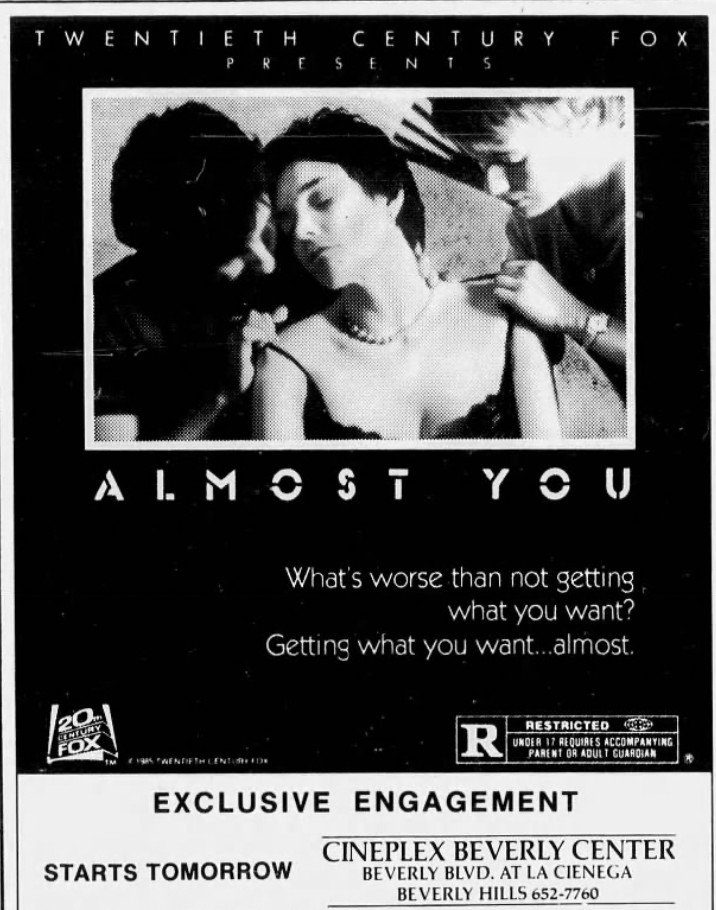
The film opened in Los Angeles on March 29, 1985, before reaching New York on May 8. Twentieth Century-Fox distributed it on a limited basis.
The reviews were not kind.
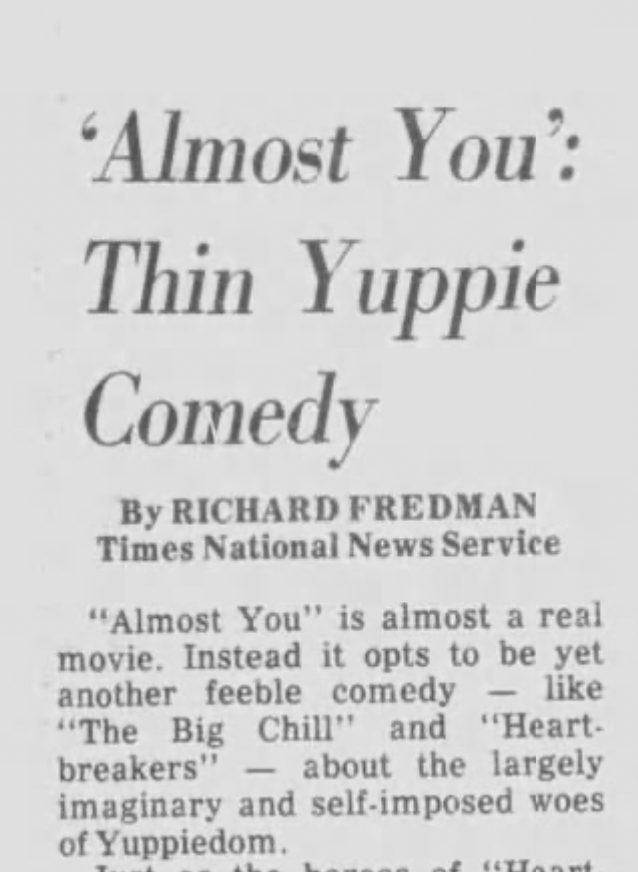
In the Los Angeles Times, Kevin Thomas titled his review “‘Almost You’ Is Almost Devoid of Poignancy.” He argued that the film’s attempt to find humor and emotional depth in a Manhattan yuppie’s marital crisis had overlooked an essential ingredient: charm.
Thomas found the characters difficult to like and struggled to see why audiences should care about their problems.
It’s a harsh assessment, but it gets at the central challenge of this kind of comedy. If your characters are selfish, shallow, and frequently unpleasant, the movie needs to give us some reason to spend time with them. Recognition alone may not be enough.
Vincent Canby was similarly critical in The New York Times. He found the film short-sighted and faulted its lack of satiric distance, suggesting that it didn’t sufficiently step back from the behavior it was depicting.
Both reviews point toward the same problem. A movie about unpleasant people doesn’t automatically become an effective satire of unpleasant people.
There’s a difference between exposing a character’s selfishness and simply asking an audience to spend 96 minutes with somebody selfish.
Adam Brooks himself recognized the difficulty.
Speaking to the Los Angeles Times in March 1985, he explained that the film was challenging because it attempted to balance comedy with characters grounded in recognizable emotional realities. As he put it, “It’s not supposed to be Neil Simon.”
That’s a useful distinction. Brooks wasn’t necessarily interested in making a machine for generating punchlines. He wanted the comedy to emerge from people who felt real, even when their behavior was ridiculous.
But sincerity can be a tricky thing in a comedy. You can make your characters believable without making them engaging. You can capture the awkwardness of real life without necessarily transforming that awkwardness into something entertaining.
Sometimes a movie’s ambitions are more interesting than its results.
That doesn’t mean the film has nothing to offer. Its performances and its value as a glimpse of 1980s yuppie culture make it a useful companion to other films of the period that examined the gap between professional success and personal satisfaction.
Still, the contemporary criticism shouldn’t simply be brushed aside because the movie has become obscure. A film can be interesting without being a masterpiece. In fact, some of the most interesting movies to revisit are the ones that never quite worked.
They leave you wondering what might have happened if a few things had gone differently.
From Almost You to Definitely, Maybe
The film’s commercial performance was less ambiguous than its title.
Almost You earned approximately $95,000 domestically against its $1 million production budget. It was a substantial disappointment by any ordinary theatrical measure.
The film had received festival recognition, attracted established performers, and secured distribution through a major studio’s specialty arm. But none of that translated into a significant audience.
It’s tempting to treat the movie’s obscurity as a tragedy. There is something disappointing about a film that brings together a promising first-time director, a talented cast, and a production story full of small victories, only to vanish from the popular conversation.
But a disappointing theatrical run isn’t necessarily the end of a filmmaker’s story.
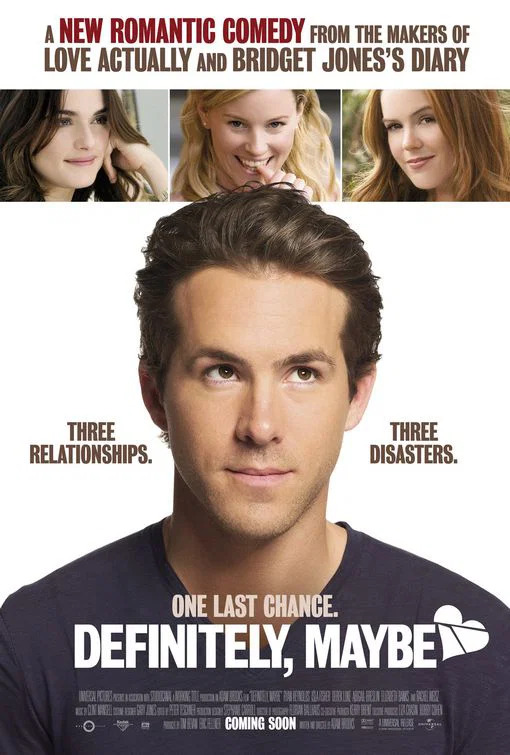
Adam Brooks continued working as a screenwriter and director. His later credits include French Kiss (1995), Practical Magic (1998), Bridget Jones: The Edge of Reason (2004), and Wimbledon (2004). He eventually directed Definitely, Maybe (2008), a romantic comedy built around the complications of love, memory, and the stories people tell themselves about their relationships.
That career trajectory makes Almost You especially interesting in retrospect.
Here was a young filmmaker already drawn to romantic entanglements and the gap between what people want and what they actually need. The first feature didn’t establish him as a major new voice in American cinema. It didn’t become a box-office success or a widely remembered cult favorite.
But it was a beginning.
Brooke Adams continued working in film and television, while Karen Young built a long career across film, television, and theater. The movie’s failure to find a broad audience did not mean that the people involved had failed.
The distinction matters. Movies are collaborative undertakings, and their commercial lives rarely provide a fair measure of everybody’s contribution.
A film can disappear while the people who made it continue to do interesting work. Sometimes the movie itself becomes more interesting precisely because we know what came afterward.
A Little Piece of the 1980s, Left Behind
There is a particular pleasure in discovering a film like Almost You decades after its release.
Not every forgotten movie deserves to be rediscovered. Some films are obscure because they are bad, some because they are unremarkable, and some because the business of getting a movie in front of an audience has always been a combination of luck, timing, marketing, and money.
Almost You offers a little of everything.
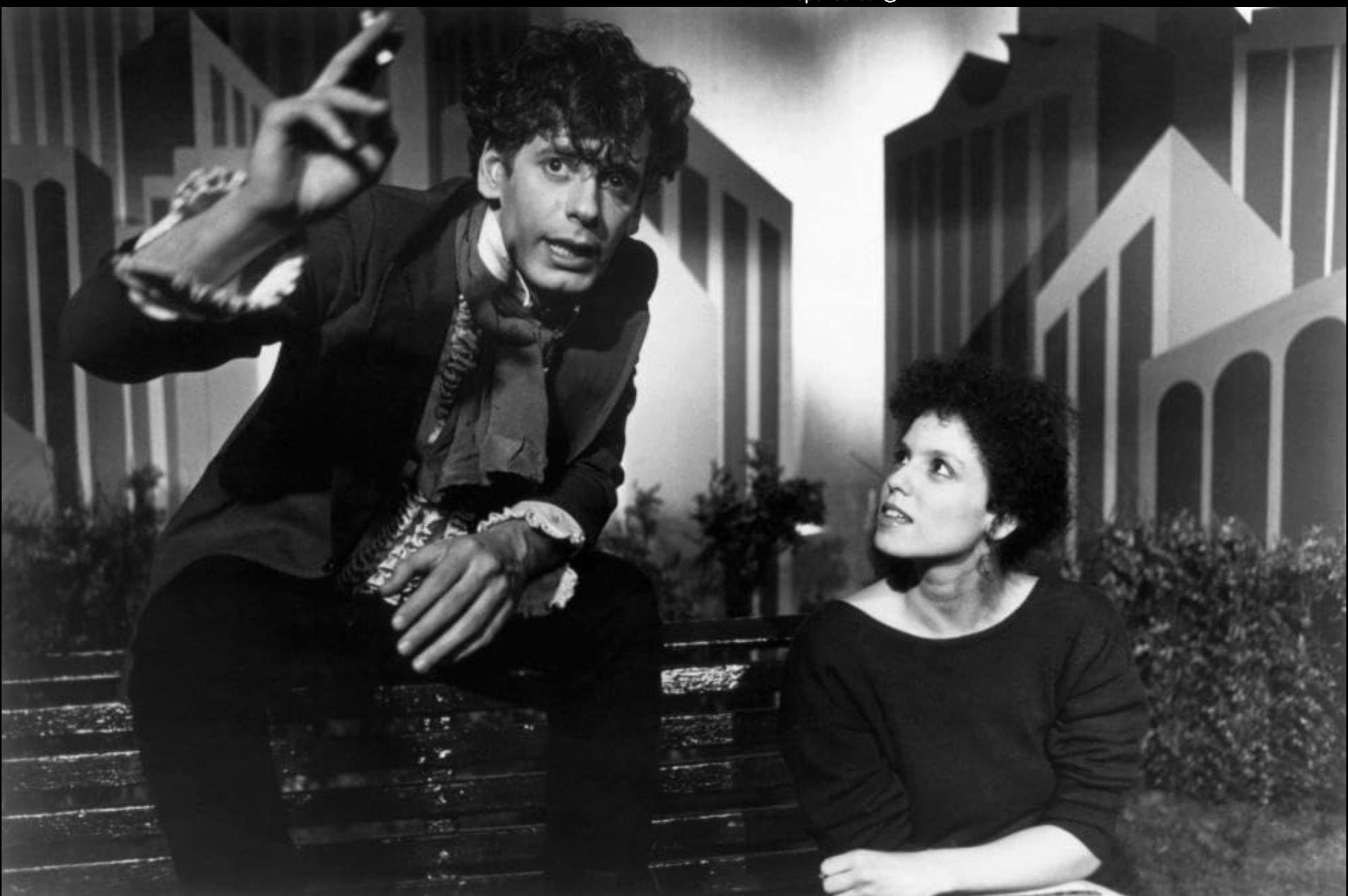
It has the production story of a young filmmaker getting his first feature financed. It has a leading actress whose own path to the screen reads like a miniature Hollywood success story. It has a real blizzard that arrived at just the right moment, a supporting cast filled with recognizable performers, and a brief but genuine moment of festival prestige.
It also has a portrait of mid-1980s Manhattan in which people who appear to have achieved the good life are busy trying to escape it.
That last part may be the most enduring element.
The yuppie comedy was always a strange genre. Its characters often possessed the very things that conventional movie heroes were supposed to want, yet they were miserable anyway. They had climbed the ladder and discovered that the view from the top wasn’t particularly inspiring.
The obvious response is to tell them to stop complaining.
But dissatisfaction doesn’t become less real simply because somebody is comfortable. Sometimes people really do discover that the life they pursued isn’t the life they want. The comedy comes from watching them attempt to solve that problem without examining their own role in creating it.
Almost You doesn’t entirely succeed in turning that observation into a satisfying film. The critics who found its characters difficult to like had a point. The movie’s ambitions occasionally seem more compelling than its execution.
But there’s something worth seeing in the attempt.
The title is an accidental summary of the film’s own history. It almost became a significant independent success. It almost found a wider audience. It almost established Adam Brooks as a filmmaker to watch.
Almost.
And yet, here it is, still waiting to be discovered by anyone willing to dig a little deeper into the decade’s cinematic leftovers.
If you’re interested in the early Sundance era, the evolution of the 1980s romantic comedy, or the films that helped launch careers without becoming famous themselves, Almost You is worth a look.
Just don’t expect a lost masterpiece. Expect a flawed, occasionally revealing time capsule from an era when independent filmmakers were trying to find new ways to tell familiar stories.
Sometimes the almost-forgotten movies tell us as much about their time as the ones everybody remembers.
And sometimes, almost is enough to make a movie worth talking about.
About the Creator
Movies of the 80s
We love the 1980s. Everything on this page is all about movies of the 1980s. Starting in 1980 and working our way the decade, we are preserving the stories and movies of the greatest decade, the 80s. https://www.youtube.com/@Moviesofthe80s
Enjoyed the story? Support the Creator.
Subscribe for free to receive all their stories in your feed.
Comments
There are no comments for this story
Be the first to respond and start the conversation.