
A Private Function (1984): When a Pig Became a Matter of Class, Power and Survival
Alan Bennett, Maggie Smith, Michael Palin and one very unruly pig created one of the strangest—and funniest—British comedies of the 1980s.

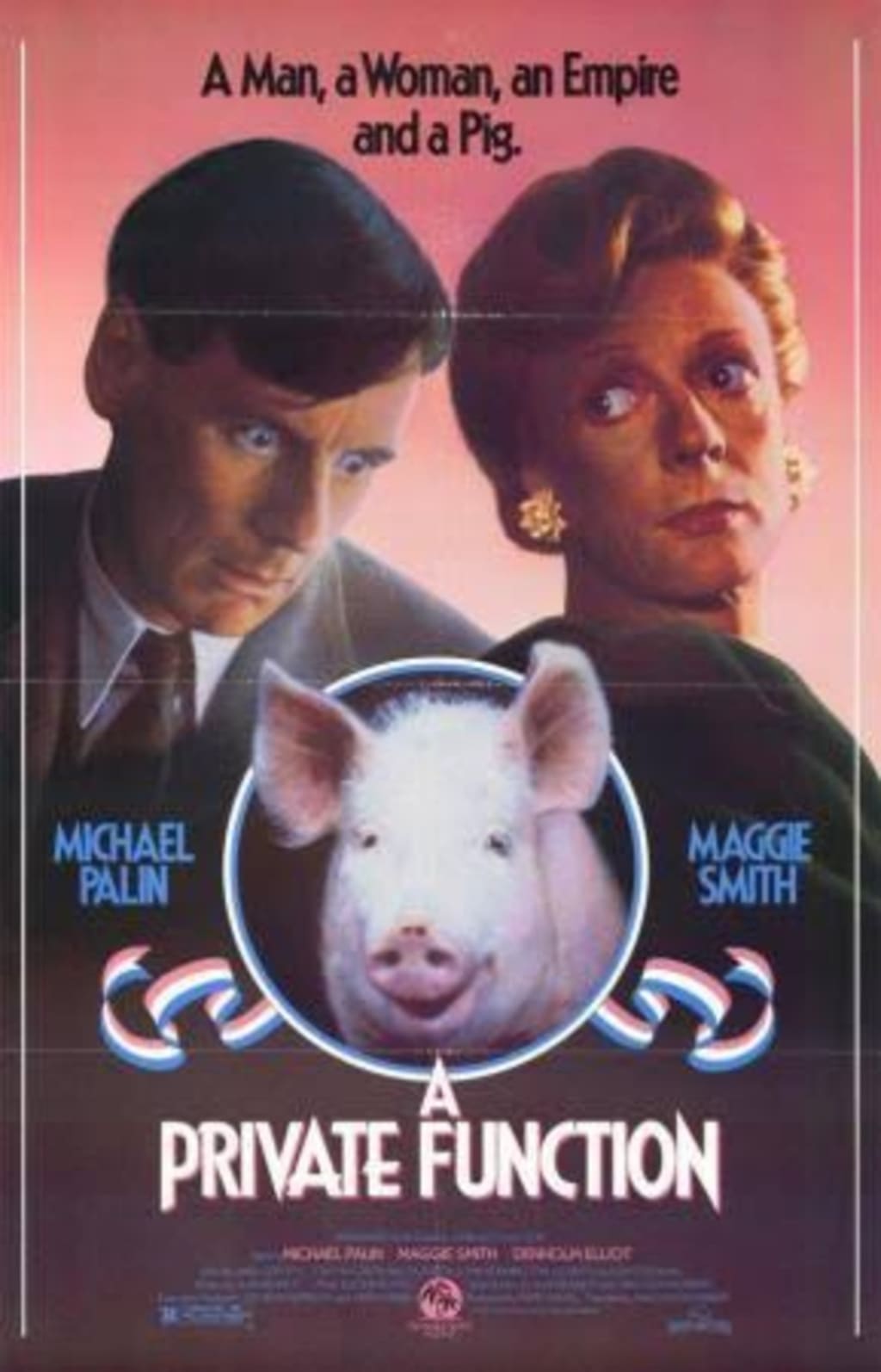
The Pig Is Power
There are many ways to become a respectable member of British society.
Steal a pig probably isn’t one of them.
But if you’re Joyce Chilvers, respectable society is the whole point.
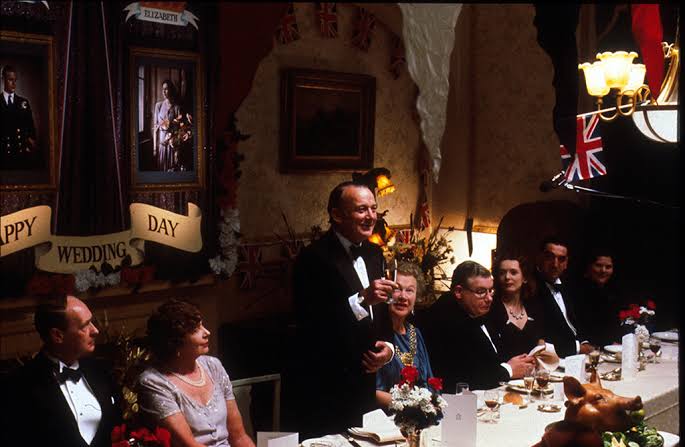
It is 1947 in Yorkshire. World War II has been over for two years, but Britain is still living with rationing. Meat is scarce. Social distinctions remain very much alive. And the upcoming wedding of Princess Elizabeth to Prince Philip has inspired the local establishment to plan a celebration.
There is only one problem.
They need pork.
So a group of local businessmen secretly fatten an illegally obtained pig for their private celebration.
Then Joyce Chilvers discovers the existence of the pig.
And Joyce has plans.
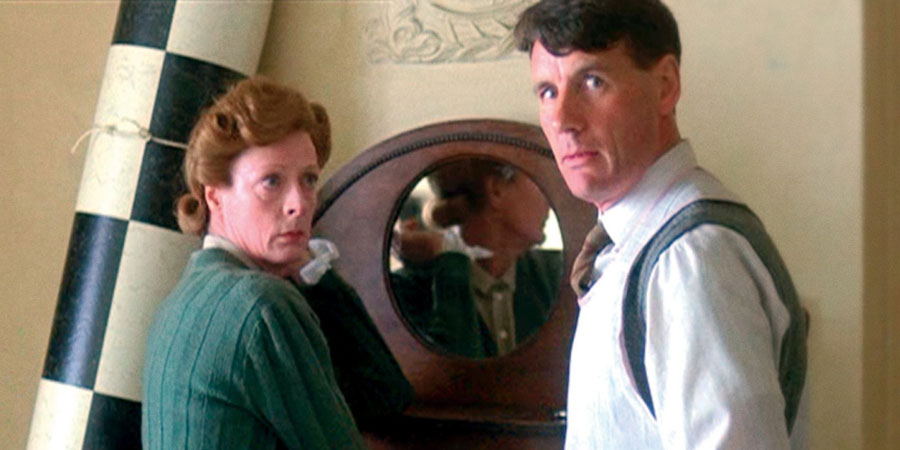
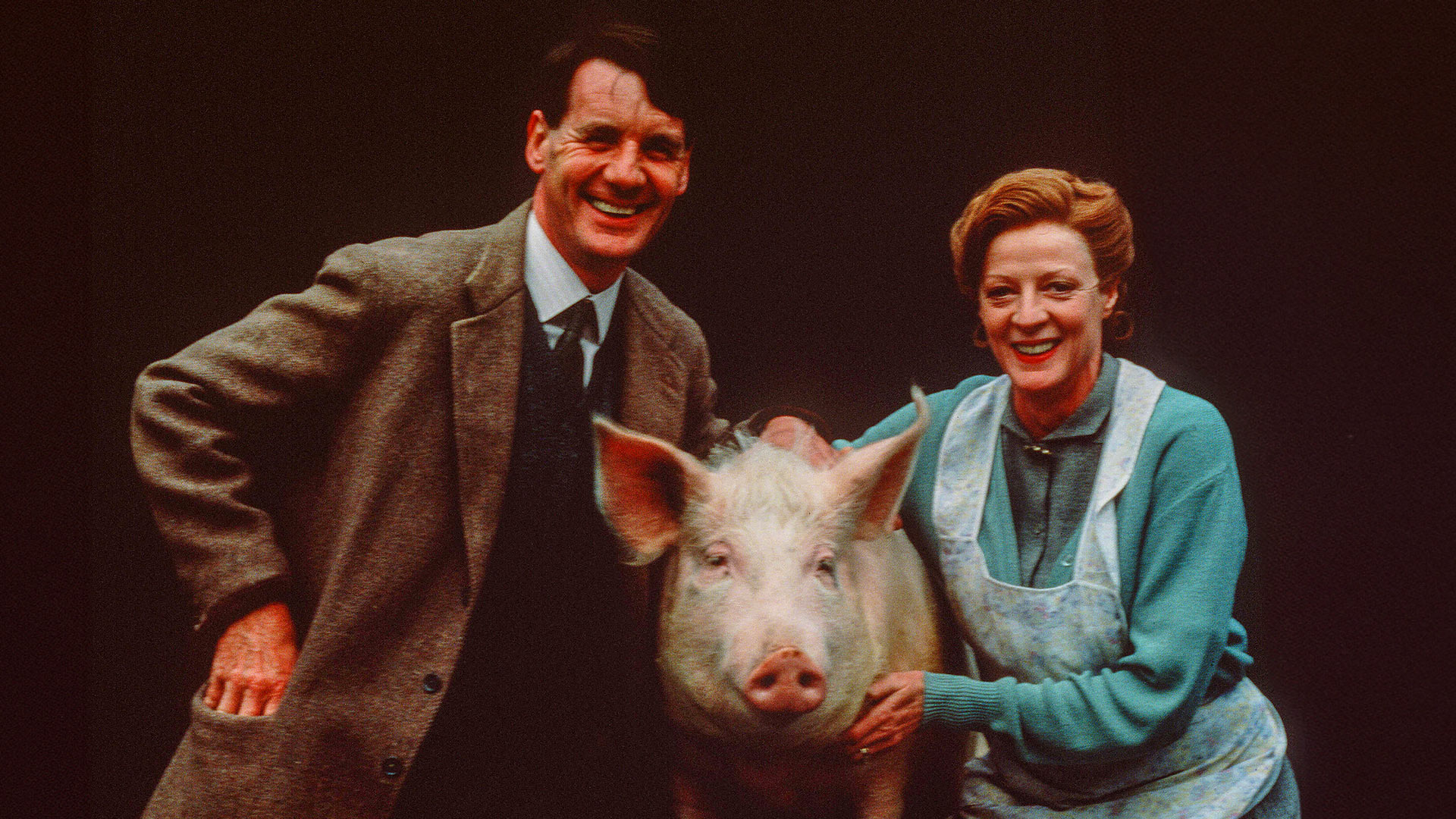
Her husband Gilbert is a mild-mannered chiropodist. Joyce is considerably more ambitious. She sees the pig not merely as food but as an opportunity. A chance to move upward. A chance to prove that she and Gilbert belong among the people who matter.
So naturally, she convinces her husband to steal it.
This is the wonderfully ridiculous premise of A Private Function, the 1984 British comedy directed by Malcolm Mowbray and written by Mowbray and Alan Bennett.
And somehow, against all reasonable expectations, it works.
It works because the pig isn’t really the story.
The pig is power.
And everybody wants some.
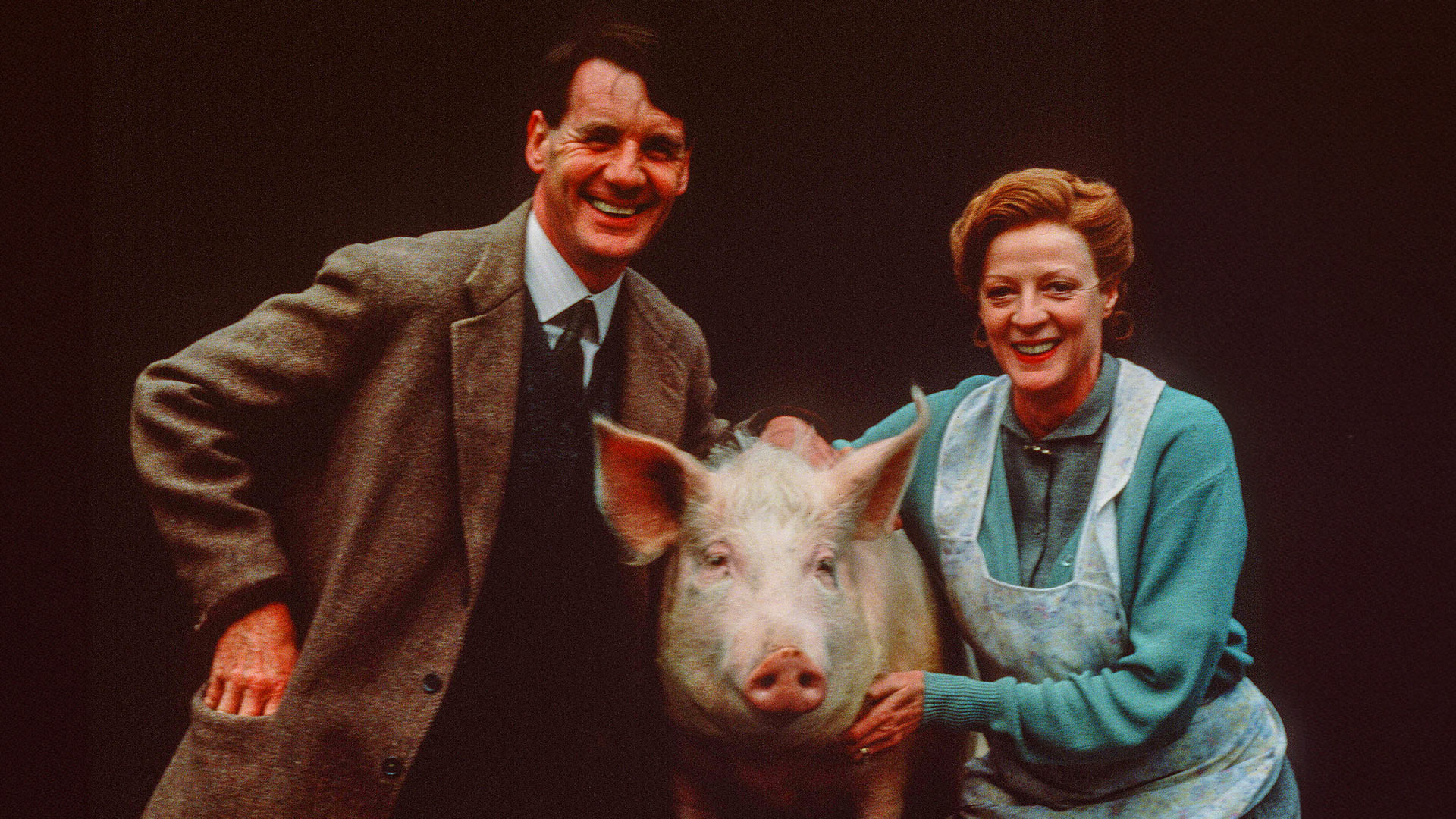
The Perfect Marriage of a Pig and a Chiropodist
The film’s origins are almost as strange as its plot.
Mowbray had the idea for a film about a pig. Bennett had an idea for a film about a chiropodist.
As Bennett later recalled, the two simply put the ideas together.
A pig.
A chiropodist.
What could possibly go wrong?
Quite a lot, actually.
The collaboration began in the early 1980s, and Mowbray later recalled that it took roughly two years, from 1982 to 1984, to get the screenplay together.
It was Bennett’s first feature-film screenplay. Early versions reportedly carried titles including Pork Royale and Saturday Night Swine Fever, which are wonderful reminders that even Alan Bennett occasionally had to work his way toward the joke.
The finished screenplay would become something considerably more interesting than a simple farce.
Bennett and Mowbray built a story around the peculiar mixture of desperation and absurdity that characterized postwar Britain. The war was over, but the country hadn’t exactly returned to normal.
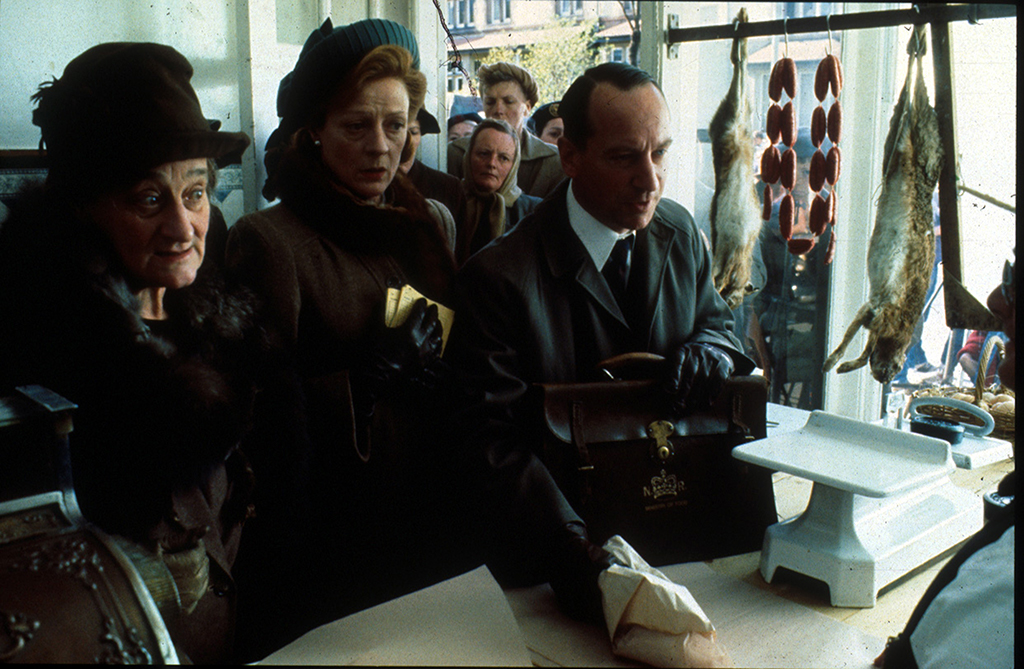
Food was rationed.
The black market existed.
Class distinctions remained brutally clear.
And everybody was trying to make do with what they had.
Which, in this case, meant a pig.
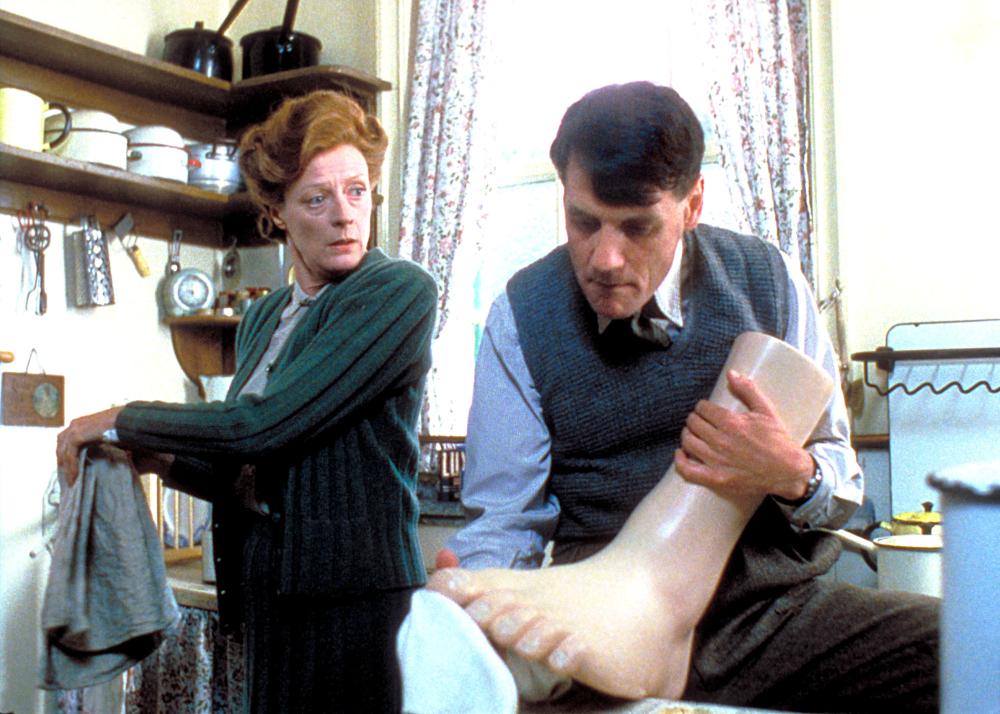
Enter Michael Palin
Michael Palin was a particularly inspired choice to play Gilbert Chilvers.
Palin was already famous as one of the gentler faces of Monty Python. He had played eccentric characters, bureaucrats, idiots, authority figures and assorted lunatics.
But Gilbert is different.
He isn’t an idiot.
He simply doesn’t have much fight in him.
Joyce does.
Played by Maggie Smith, Joyce is the engine of the entire film. She is ambitious, frustrated, status-conscious and absolutely convinced that the life she deserves is being denied to her.
Gilbert, meanwhile, seems to have accepted the world as it is.
That makes their marriage one of the film’s great comic inventions.
Joyce wants to climb.
Gilbert wants to avoid trouble.
Joyce sees the pig as opportunity.
Gilbert sees the pig as something that might get him arrested.
Guess which one wins?
Palin later explained that what appealed to him about Gilbert was the decision to play him completely straight. Director Malcolm Mowbray kept pushing him toward dullness rather than overt comedy.
That was the trick.
Gilbert doesn’t think he’s in a comedy.
He’s a man whose wife has talked him into stealing livestock.
He is understandably concerned.
The BFI has subsequently highlighted the performance as one of Palin’s finest, noting how effectively his real Yorkshire background connects him to the setting and how well his understated performance captures a man being pushed around by circumstances far beyond his control.
And that’s the secret to Palin’s performance.
He doesn’t chase the laughs.
He lets Maggie Smith do that.
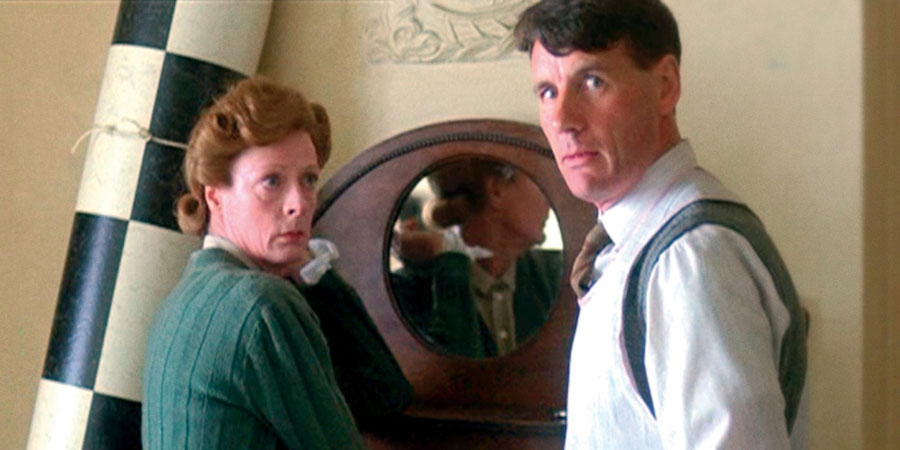
Maggie Smith Wants Her Pork
If Gilbert is the film’s reluctant participant, Joyce is its glorious monster.
Not a monster in the traditional sense.
She’s much more recognizable than that.
Joyce simply believes she deserves more.
More money.
More respect.
A better house.
Better friends.
Better clothes.
A better place in the social hierarchy.
And when the opportunity presents itself in the form of a large, illegally raised pig, Joyce doesn’t hesitate.
Maggie Smith plays her with the kind of precision that makes every tiny social calculation funny.
Joyce isn’t merely greedy.
She’s humiliated.
And that makes her much more interesting.
She knows exactly where she stands in the local hierarchy. She knows who has money, who has influence, who gets invited to the important parties and who doesn’t.
The private function is therefore much more than a celebration.
It is a social border.
Joyce intends to cross it.
The fact that her method involves pig theft is almost incidental.
Almost.
Smith’s performance earned her the BAFTA for Leading Actress, one of three BAFTAs the film won. Denholm Elliott won Supporting Actor and Liz Smith won Supporting Actress. The film was also nominated for Best Film and Best Original Screenplay.
That’s an extraordinary amount of awards attention for a movie whose central dramatic question is essentially:
Who stole the pork?
And Then There Are the Pigs
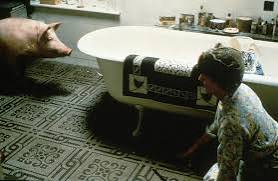
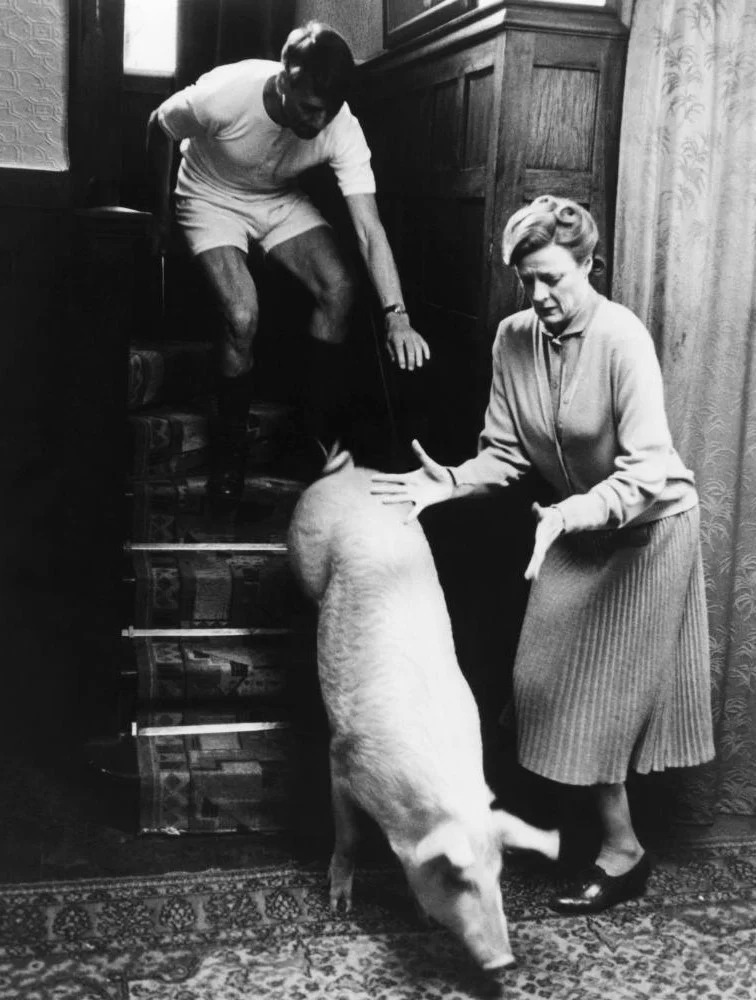
There were three pigs used in the production.
All three were named Betty.
This seems appropriate.
According to production accounts, the pigs were female and approximately six months old, selected partly because they would be smaller and supposedly less aggressive.
Supposedly.
They were unpredictable.
They were smelly.
They were occasionally dangerous.
During one kitchen scene, Maggie Smith reportedly found herself cornered by one of the pigs and had to vault over its back to get away.
Michael Palin later remembered that the pigs effectively ran the set.
Only one of the three, Betty One, was considered particularly reliable on camera. Even then, she had identifying black marks that had to be covered with makeup so the three animals could be made to look interchangeable.
And then there was the smell.
Pigs, as it turns out, do not care that you’re making a movie.
They have their own agenda.
Palin’s recollections of the production make it sound like the cast and crew were essentially negotiating with livestock for the duration of filming.
It also created one of those wonderfully practical details that could never have been invented by a screenwriter.
A “bucket boy” was required on the production because, well, pigs are pigs.
There are certain aspects of filmmaking that simply don’t appear in film-school brochures.
HandMade Films Meets Yorkshire
The film was produced by HandMade Films, the company associated with George Harrison and Denis O’Brien.
HandMade had become one of the great eccentric success stories of British cinema.
It had begun with Monty Python’s Life of Brian and subsequently developed a reputation for taking chances on unusual British projects.
A Private Function fit that philosophy perfectly.
It wasn’t an obvious blockbuster.
There were no American action stars.
No expensive special effects.
No enormous spectacle.
There was Michael Palin, Maggie Smith, Alan Bennett, a collection of superb British character actors and a pig.
The budget was approximately £1.2 million.
Filming took place primarily around Ilkley and Ben Rhydding in West Yorkshire, allowing the movie to make the landscape itself part of the comedy.
The supporting cast was ridiculous in the best possible way.
Denholm Elliott.
Richard Griffiths.
Liz Smith.
Bill Paterson.
Tony Haygarth.
Alison Steadman.
Jim Carter.
Pete Postlethwaite.
These are the kinds of actors who could walk into a scene, say three lines and somehow create an entire biography for their character.
That’s another thing A Private Function shares with the great British comedies that preceded it.
Nobody is merely there to deliver jokes.
Everybody has a social position.
Everybody wants something.
Everybody thinks somebody else is beneath them.
And everybody is convinced that they are the reasonable one.
The Ealing Ghost
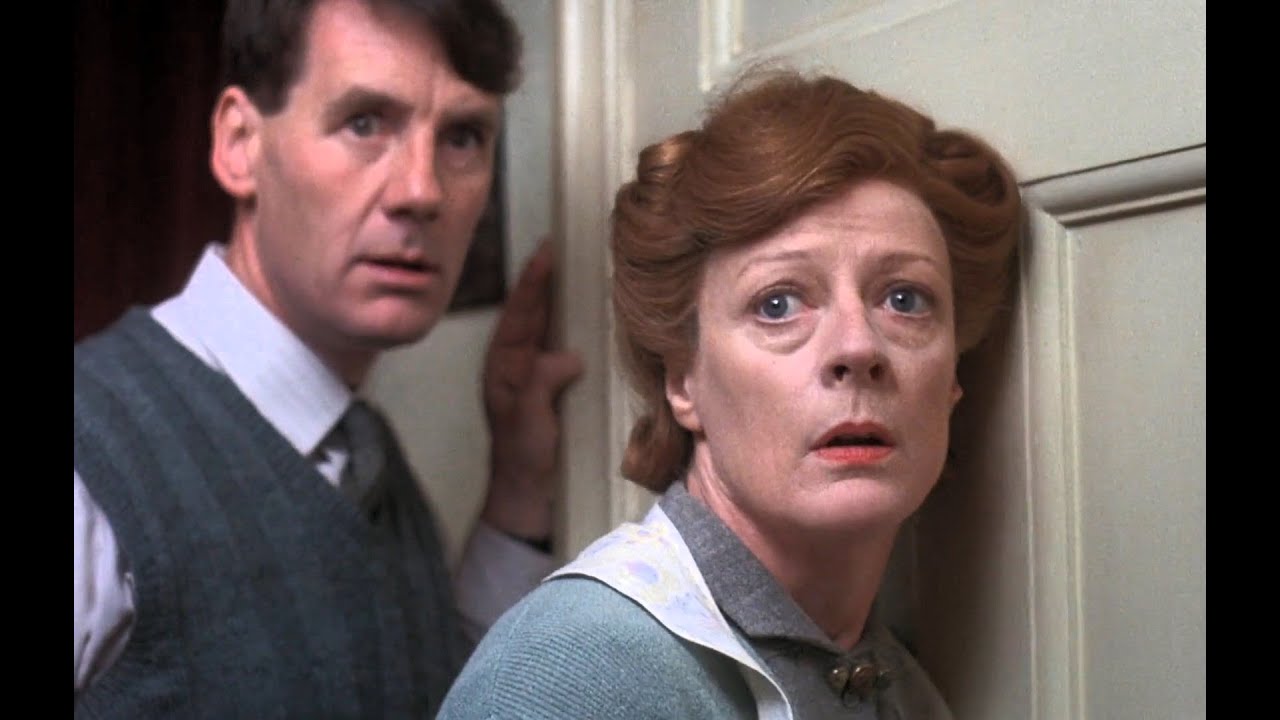
It is impossible to discuss A Private Function without talking about Ealing.
The classic Ealing comedies of the late 1940s and 1950s—Passport to Pimlico, The Lavender Hill Mob, The Ladykillers and their various cousins—often took ordinary British people and dropped them into extraordinary situations.
A Private Function clearly belongs to that tradition.
But it isn’t simply trying to recreate it.
The Ealing films were products of their own moment.
A Private Function was made decades later, looking backward at postwar Britain through the sensibility of Alan Bennett.
That makes it stranger.
And, in some ways, dirtier.
The film isn’t afraid of bodily functions.
The pig smells.
People get sick.
There is a distinctly earthy quality to the comedy.
The refined social world Joyce desperately wants to enter is constantly being dragged back down into the mud.
Literally.
That’s the joke.
Britain may have social classes, manners, titles and royal celebrations.
But eventually somebody still has to deal with the pig.
The Criterion Channel has explicitly described the film as harkening back to classic Ealing comedy while emphasizing its social satire and the combination of Bennett’s script with Smith and Palin’s performances.
And that seems exactly right.
It isn’t an Ealing comedy.
It’s a movie about people trying desperately to behave as though they live in an Ealing comedy while everything around them keeps getting progressively filthier.
Pork Is Power
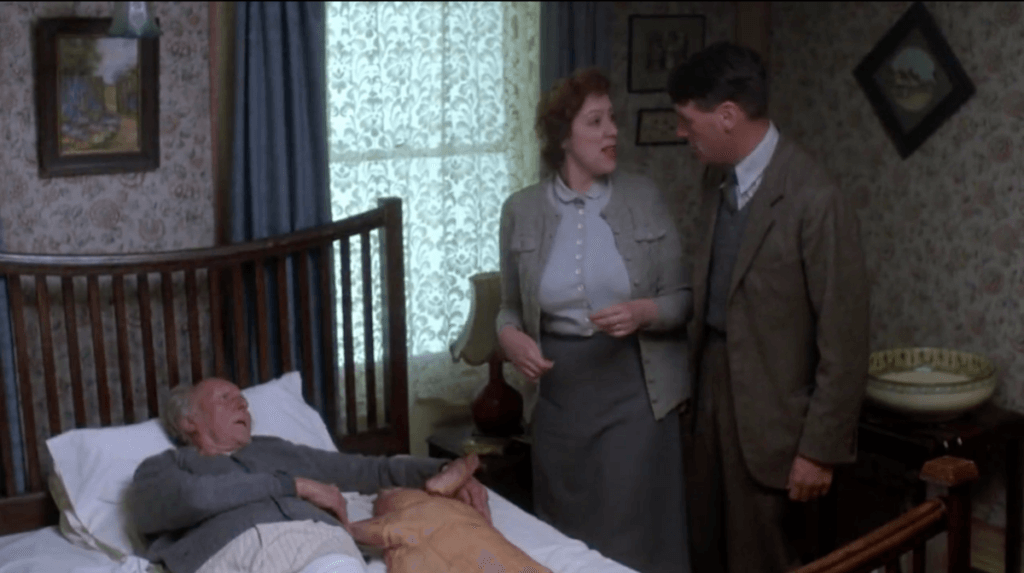
The most interesting thing about A Private Function is that the pig represents something different to everyone.
To the local businessmen, it is a way around rationing.
To Joyce, it is social currency.
To Gilbert, it is a potential catastrophe.
To the authorities, it is evidence of criminal activity.
To the audience, it is a giant walking plot device.
But underneath all of that is a very simple idea:
Scarcity changes people.
When something is unavailable, it becomes valuable.
When it becomes valuable, people start making compromises.
And when everybody is making compromises, the difference between respectable society and the black market can become remarkably small.
That is where Bennett’s comedy gets its teeth.
Nobody in A Private Function thinks of themselves as a villain.
The wealthy men aren’t cartoon criminals.
Joyce doesn’t think she’s immoral.
Gilbert certainly doesn’t think of himself as a criminal mastermind.
They’re simply trying to get what they want.
And that makes the whole thing much funnier.
And much more uncomfortable.
The Critics Saw the Joke
Contemporary critics generally responded warmly to the film, particularly to the performances and Bennett’s screenplay.
David Grapes praised what he called the film’s “masterful combination of elements,” describing it as a dry, witty and sometimes urbane comedy with a rowdier farce underneath.
He singled out Maggie Smith’s performance as a delight and praised Palin for moving between comedy and genuine emotion without losing Gilbert’s essential character.
Harry Haun similarly saw echoes of the old Ealing films, particularly in the film’s ensemble comedy. He praised Smith’s ability to maintain a kind of “tattered dignity” while dealing with a renegade pig and described the performance as character comedy at its best.
Robert W. Butler was somewhat more reserved, noting the film’s bathroom humor and its resemblance to earlier British comedies while suggesting that its central joke occasionally felt stretched.
That last criticism is worth acknowledging.
A Private Function is, after all, built around a pig.
Eventually the pig has to carry quite a lot of movie.
But the reason the film survives that potential problem is that Bennett keeps expanding the joke.
The pig is never only a pig.
It’s rationing.
It’s class.
It’s marriage.
It’s ambition.
It’s British respectability.
It’s the absurdity of trying to maintain dignity when everything has gone completely to hell.
And then there is Maggie Smith.
Maggie Smith could probably make a ham sandwich feel socially threatening.
Here, she gets an entire pig.
A Surprise Success
The film received a royal charity premiere in London in November 1984 and subsequently opened theatrically in Britain.
It then crossed the Atlantic, where Island Alive released it in the United States in March 1985.
Its American theatrical run was modest by Hollywood standards, but the film earned about $2.53 million domestically.
More importantly, it established itself as the sort of film that could travel beyond its very specifically British setting.
That is not always easy.
American audiences weren’t necessarily going to understand every social nuance of postwar Yorkshire.
But they could understand Maggie Smith wanting something.
They could understand Michael Palin not wanting to get arrested.
And they could certainly understand a pig causing trouble.
The film also reached Cannes in 1985 as part of the Un Certain Regard selection.
For a small British comedy about rationing, class anxiety and porcine contraband, that isn’t bad.
The Great Underrated Michael Palin Performance
There is a temptation to think of Michael Palin primarily as the Python guy.
That undersells him.
Palin was exceptionally good at playing ordinary men who find themselves trapped inside extraordinary circumstances.
He could be funny without seeming to know that he was funny.
That makes Gilbert such a good role for him.
The film doesn’t require him to mug.
It doesn’t require him to behave like a Python character.
It simply asks him to be Gilbert.
And Gilbert is a man who has somehow found himself married to Maggie Smith’s Joyce and stealing a pig because she wants to attend a better party.
His desperation is funny because it is genuine.
His confusion is funny because he isn’t performing it.
And when the movie eventually pushes Gilbert beyond his comfort zone, the comedy comes from watching a fundamentally decent, timid man discover that he has limits.
The BFI’s later assessment of Palin’s performance as one of his finest feels particularly appropriate.
It’s quiet work.
Which is exactly why it works.
Three BAFTAs and a Lot of Pork
A Private Function eventually received substantial recognition from the British Academy.
Maggie Smith won Leading Actress.
Denholm Elliott won Supporting Actor.
Liz Smith won Supporting Actress.
The film was also nominated for Best Film and Alan Bennett received a nomination for Original Screenplay.
It is one of those awards histories that tells you something important about the movie.
The industry wasn’t merely rewarding the joke.
It was rewarding the acting.
The writing.
The ensemble.
The observation.
The film’s ability to make something ridiculous feel truthful.
Because underneath all the pork jokes is a very recognizable human story.
Everybody wants to be somebody.
And almost everybody is terrified that somebody else will discover they aren’t.
From Private Function to Betty Blue Eyes
The story eventually made another unlikely journey.
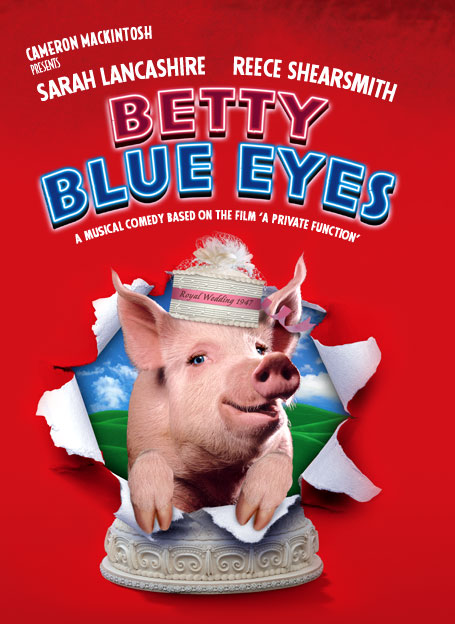
In 2011, A Private Function became a West End musical called Betty Blue Eyes, produced by Cameron Mackintosh.
Reece Shearsmith played Gilbert and Sarah Lancashire played Joyce.
The title was changed, but the pig remained.
Because apparently there is no escape from Betty.
The musical adaptation is perhaps the ultimate testament to the film’s durability.
You can remove the black-and-white memories of postwar Britain.
You can change the medium.
You can add songs.
But the central idea remains intact:
Give desperate people something they desperately want, make it scarce, and then watch what happens.
Preferably with a pig.
Why A Private Function Still Works
The 1980s produced plenty of bigger British films.
There were prestige pictures.
There were costume dramas.
There were giant Hollywood productions.
There were Indiana Jones movies and Star Wars movies and movies about aliens, cyborgs and teenagers.
And then there was this.
A little Yorkshire comedy about a chiropodist, his social-climbing wife and an illegally raised pig.
It sounds almost aggressively modest.
That’s part of its charm.
A Private Function doesn’t need to overwhelm you.
It observes.
It waits.
It lets Joyce become increasingly insane.
It lets Gilbert become increasingly desperate.
It lets the pig do whatever the hell the pig wants.
And eventually the entire carefully constructed world of postwar respectability begins collapsing under its own weight.
That is why the film feels like an especially good fit for the Movies of the 80s series.
The decade is often remembered through its excesses.
But some of the best movies of the period were smaller, stranger things that slipped through the cracks.
A Private Function is one of those movies.
It is a British comedy about rationing that is really about class.
A movie about a pig that is really about power.
A movie about social ambition that is really about insecurity.
And a movie about a marriage in which the husband steals a pig because his wife wants a better dinner invitation.
What more could you possibly want?
Well.
Apparently Joyce Chilvers wanted the pork.
And Joyce generally gets what Joyce wants.
Eventually.
Even if the pig has other ideas.

Sources
British Film Institute, A Private Function and Michael Palin retrospective material.
British Comedy Guide, production history and Alan Bennett/Malcolm Mowbray background.
BAFTA, awards records for A Private Function.
Criterion Channel, film description and historical context.
Time Out, contemporary critical context and film information.
Box Office Mojo / The Numbers, U.S. release and box-office data.
Contemporary reviews and interview material by David Grapes, Harry Haun, Robert W. Butler and Desmond Ryan, as identified in the research material for this article.
About the Creator
Movies of the 80s
We love the 1980s. Everything on this page is all about movies of the 1980s. Starting in 1980 and working our way the decade, we are preserving the stories and movies of the greatest decade, the 80s. https://www.youtube.com/@Moviesofthe80s
Enjoyed the story? Support the Creator.
Subscribe for free to receive all their stories in your feed.
Comments
There are no comments for this story
Be the first to respond and start the conversation.