
A Passage to India: David Lean’s Final Epic Was a Fourteen-Year Comeback
After more than a decade away from the movies, David Lean returned in 1984 with one last enormous production—and one of the most beautifully photographed films of the decade.

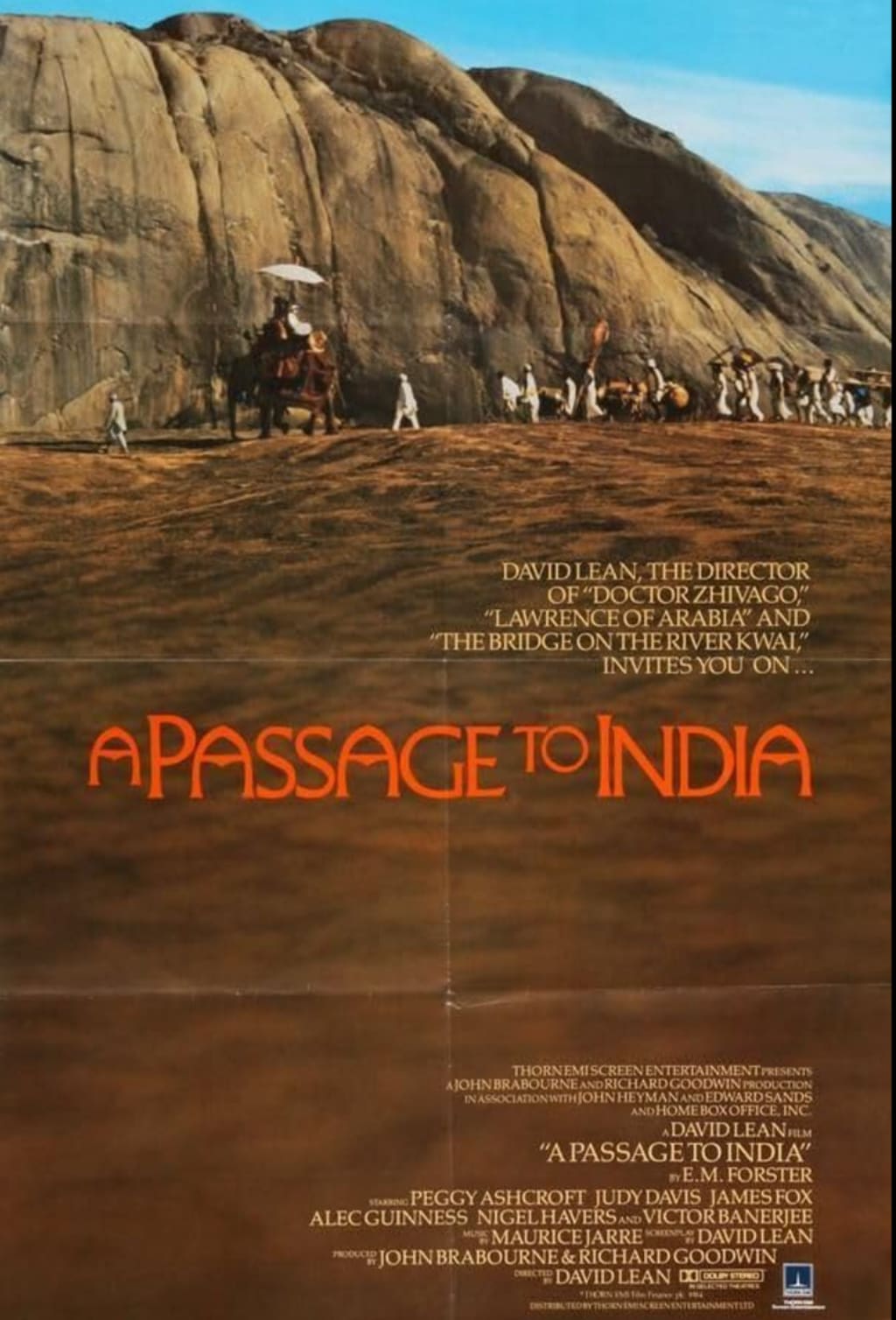
There are movie careers that end quietly, and then there is David Lean.
By the time A Passage to India arrived in 1984, Lean had already directed some of the most celebrated films in the history of cinema. Brief Encounter. The Bridge on the River Kwai. Lawrence of Arabia. Doctor Zhivago. Ryan’s Daughter. His films were enormous in scale, but they were rarely empty spectacle. Lean understood how to make landscapes, architecture, weather and crowds feel like characters in their own right.
And then, suddenly, he disappeared.
His last film, 1970’s Ryan’s Daughter, had been a critical disappointment despite its impressive box office. Lean was so stung by the reaction that he spent the next fourteen years struggling to get another project onto the screen.
When he finally returned, he chose an extraordinarily difficult book to film.
The result was A Passage to India, a sweeping adaptation of E.M. Forster’s 1924 novel and Santha Rama Rau’s stage adaptation. It would become Lean’s final film.
And, appropriately enough, it was an epic about people who could never quite understand one another.
A Story Hollywood Had Been Trying to Make for Decades
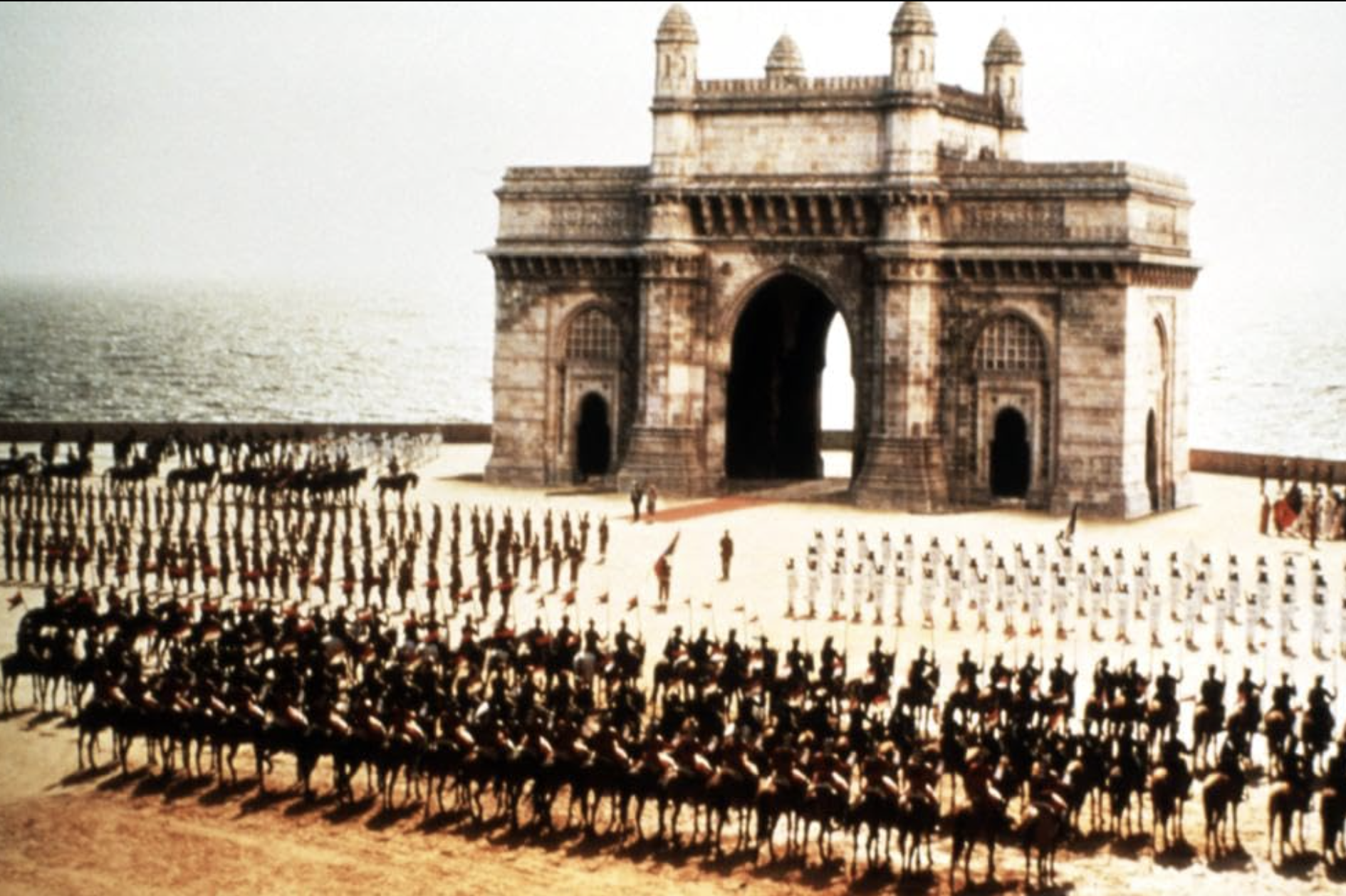
A Passage to India takes place in British India during the 1920s, in the fictional city of Chandrapore. The British Raj is still firmly in place, but the relationship between the British ruling class and the Indian population is becoming increasingly strained.
Into this world come Adela Quested, played by Judy Davis, and the older Mrs. Moore, played by Peggy Ashcroft. Both women are curious about India and less comfortable with the casual racism and rigid social hierarchy surrounding them than many of their British companions.
They encounter Dr. Aziz, an Indian physician played by Victor Banerjee, and Cyril Fielding, an English school administrator played by Nigel Havers.
The relationships initially seem to offer the possibility of genuine friendship across cultural lines.
Then come the Marabar Caves.
During an excursion to the caves, something happens—or perhaps doesn’t happen. Adela emerges traumatized and accuses Aziz of attempting to assault her.
The accusation detonates across Chandrapore.
Suddenly, the question of what actually happened inside those caves becomes almost secondary to what everyone believes happened. The British community rallies around Adela. The Indian community rallies around Aziz. The courtroom becomes a battleground for the larger tensions of colonialism.
That ambiguity is central to Forster’s novel.
And it was precisely the sort of ambiguity that made the story incredibly difficult to translate to the screen.
Forster Didn’t Want Hollywood Touching It
The film nearly didn’t happen.
E.M. Forster had been notoriously protective of the rights to his novel. He wasn’t convinced that cinema could adequately capture the book’s peculiar mixture of social observation, sexuality, colonial politics and almost supernatural uncertainty.
Santha Rama Rau had already been allowed to adapt the novel for the stage, but Forster remained reluctant to surrender the property to filmmakers.
Among those interested was legendary Indian director Satyajit Ray.
He couldn’t get the rights.
After Forster died in 1970, the responsibility for the estate passed to King’s College, Cambridge, which continued to guard the property carefully. Filmmakers including Joseph Losey and the Merchant Ivory team expressed interest, but the project remained trapped in development hell.
Finally, in 1981, the situation changed.
Producers John Brabourne and Richard Goodwin, who had been pursuing the project for years, secured the rights.
There were conditions.
Rau had to be involved, and the estate had to approve the director.
Brabourne wanted David Lean.
It was an inspired choice.
Lean had been interested in A Passage to India since the early 1960s. After years of failed projects and frustration following Ryan’s Daughter, the opportunity represented something more than another movie.
It was a way back.
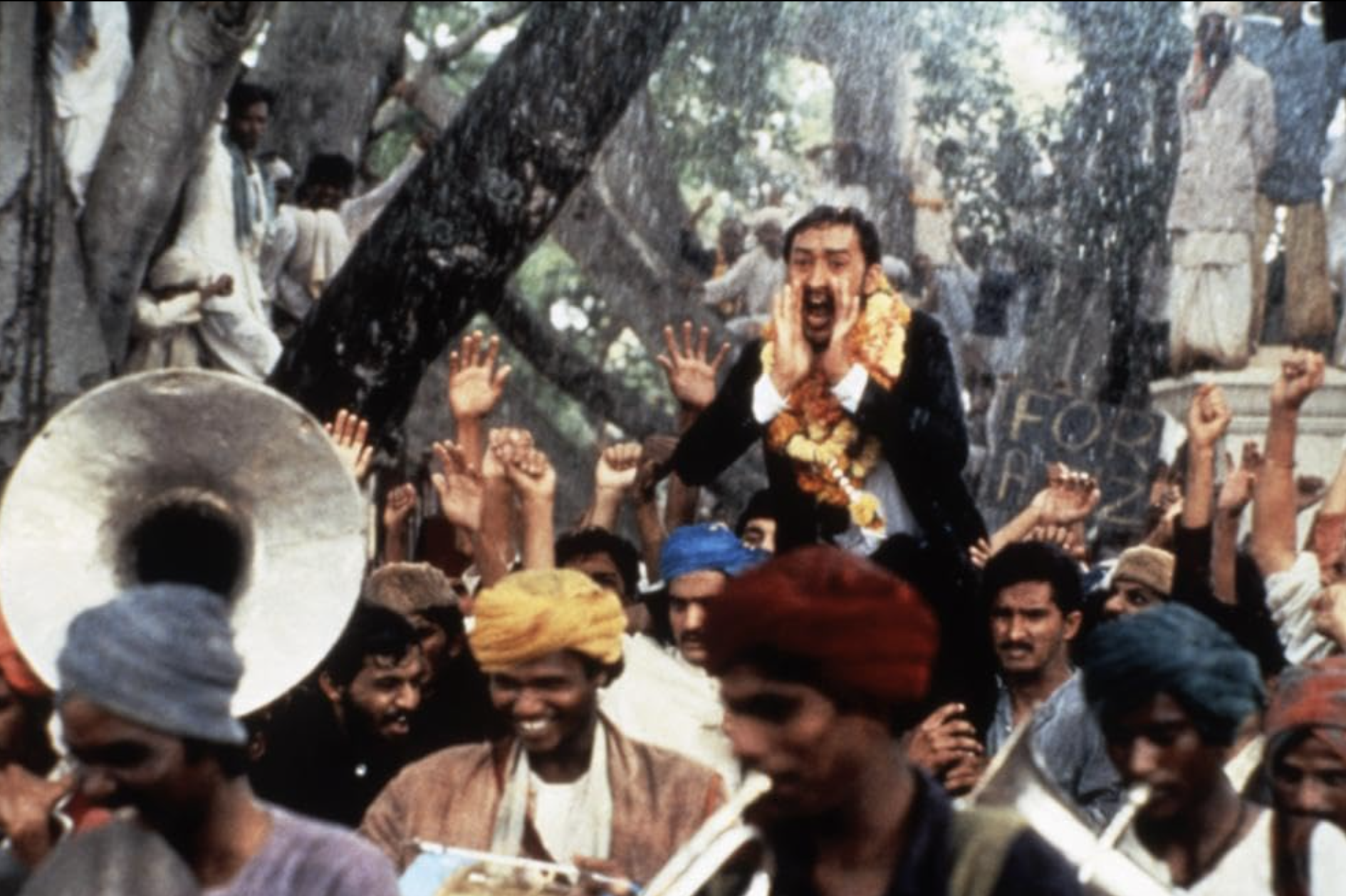
David Lean Goes Back to India
The first screenplay was written by Santha Rama Rau, but Lean wasn’t satisfied.
He felt the script was too closely tied to the stage and didn’t exploit the possibilities of cinema. A story like A Passage to India couldn’t simply be filmed as a series of conversations in rooms.
This was David Lean.
He wanted India.
He wanted enormous landscapes, crowded bazaars, palaces, railways, mountains and caves.
He wanted the movie to feel physically immense.
Lean substantially rewrote the screenplay himself and spent months traveling through India, researching locations and reworking the script.
Production finally began in November 1983.
The budget was somewhere between $14.5 million and $16 million, a considerable investment for a literary prestige picture. Columbia Pictures and HBO were among the financial backers.
The production would continue through June 1984.
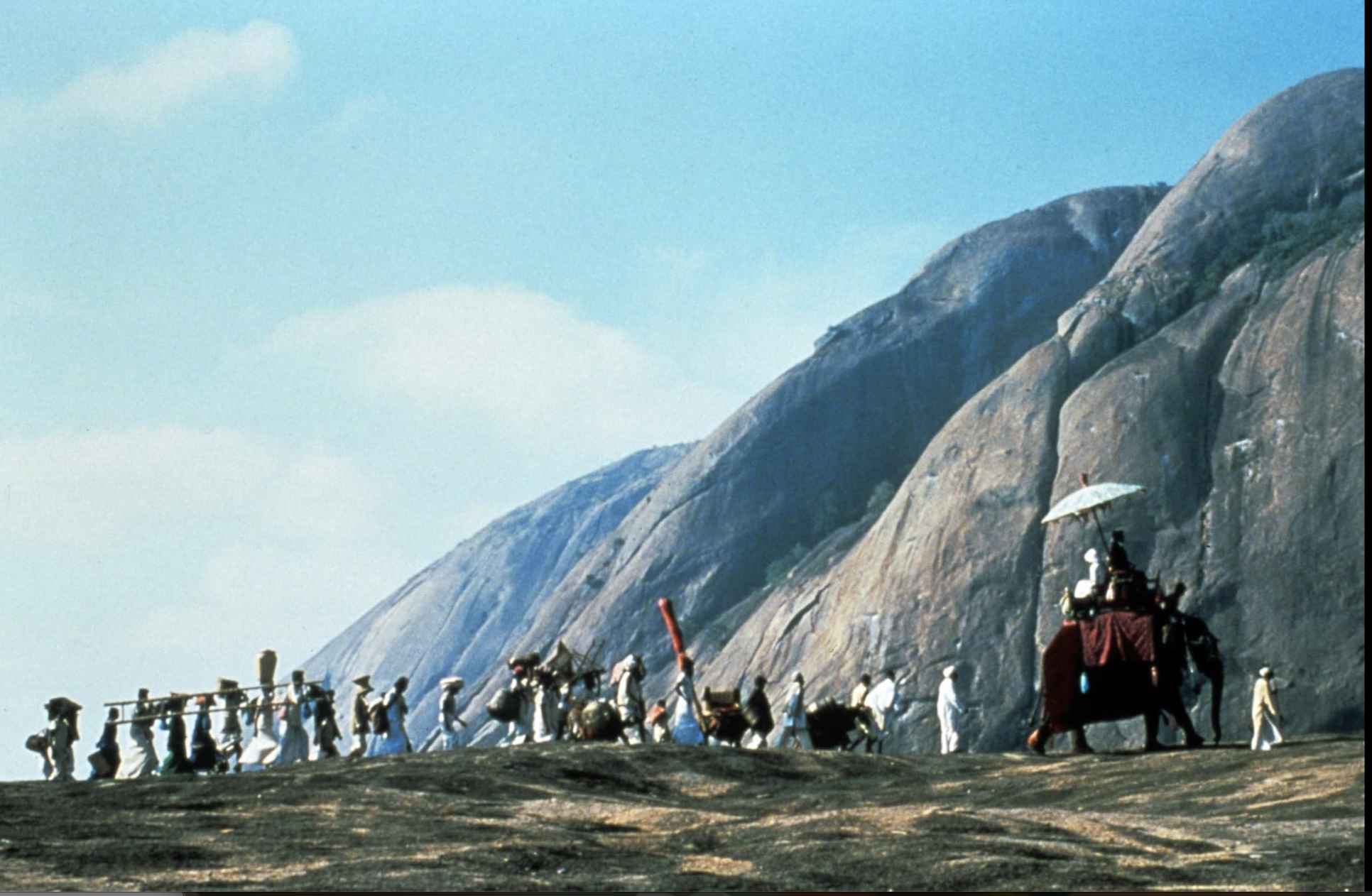
Lean’s crew based much of the production around Bangalore, where palace grounds could be transformed into convincing representations of the fictional Chandrapore. Bungalows, markets and other period settings were constructed and dressed to recreate the world of British India.
Finding the right caves proved considerably more difficult.
The actual Barabar Caves in Bihar were rejected for security and aesthetic reasons. Instead, Lean’s production used locations around Savandurga and Ramadevarabetta.
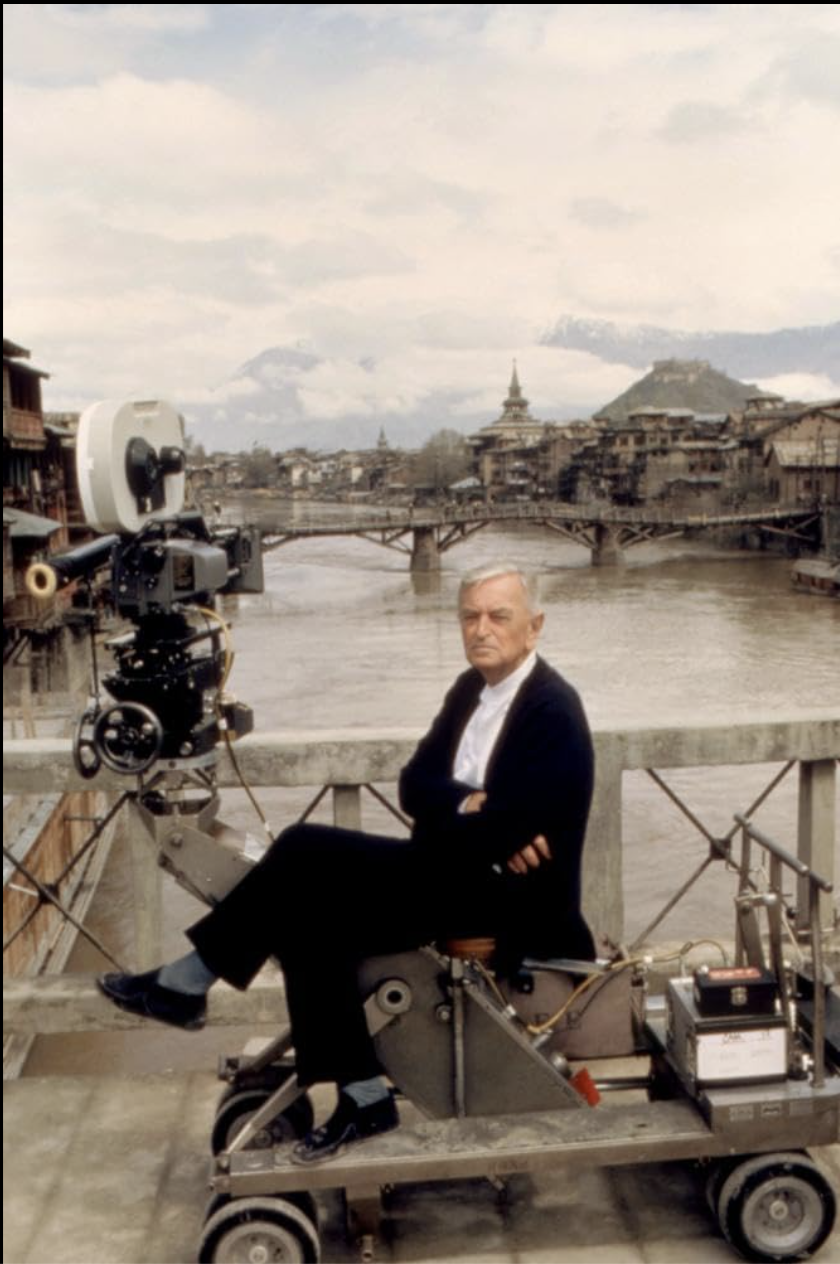
The Nilgiri Mountain Railway also became part of the production, while additional filming took place in Kashmir.
Lean wanted authenticity.
More importantly, he wanted scale.
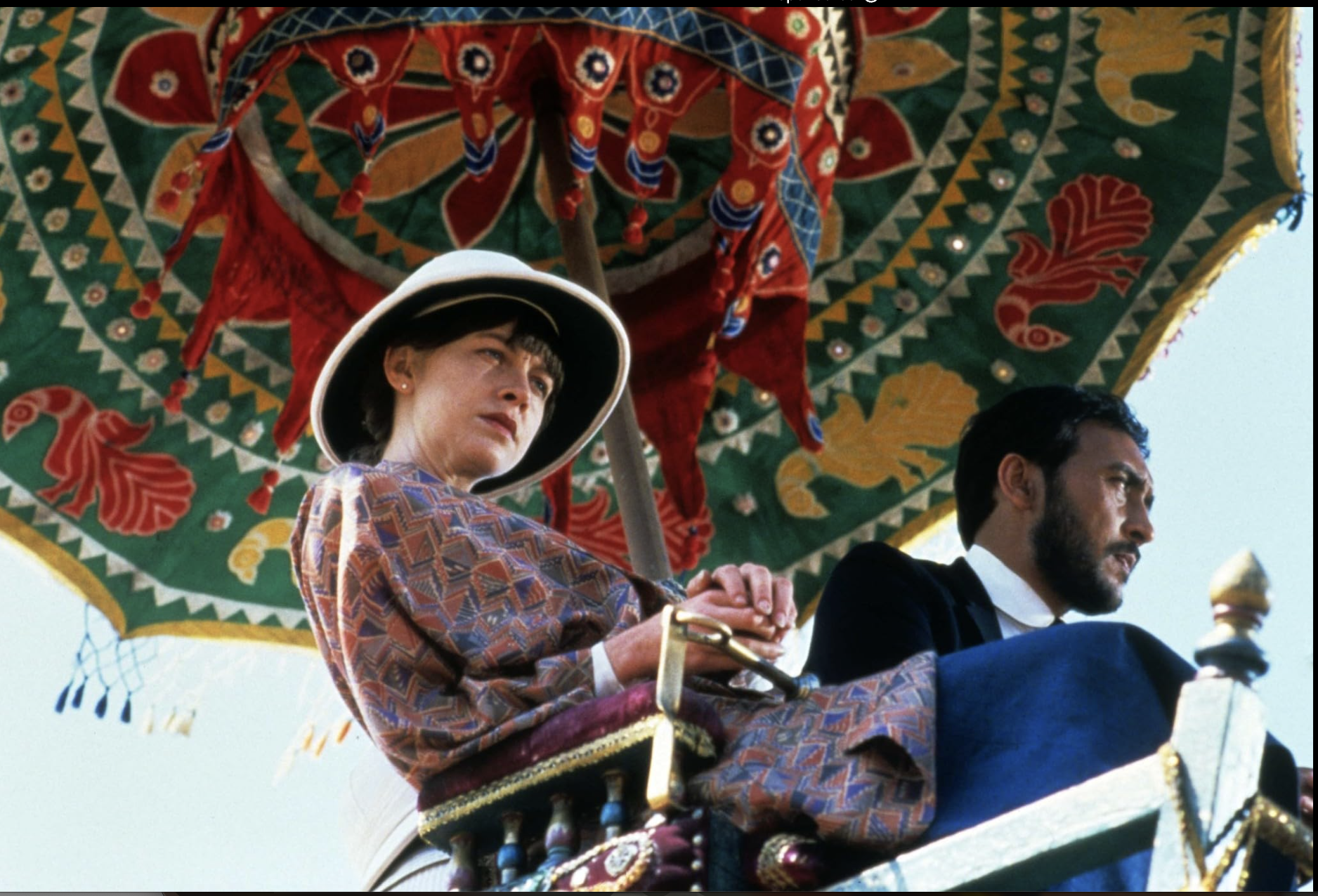
The India of A Passage to India isn’t merely a backdrop. It is overwhelming. The characters are constantly surrounded by landscapes and architecture that dwarf them.
That visual strategy is one of the reasons the film still looks extraordinary.
The Return of the Master
Lean reunited with composer Maurice Jarre, who had provided the unforgettable music for Lawrence of Arabia and Doctor Zhivago. Ernest Day served as cinematographer, while production designer John Box helped create the film’s enormous visual world.
But the production wasn’t exactly harmonious.
Lean’s legendary perfectionism remained firmly intact.
He clashed with Judy Davis. He also had difficulties with Alec Guinness, who played Professor Godbole, the eccentric Indian scholar whose presence becomes increasingly important to the film’s strange spiritual dimension.
The casting of Guinness would eventually become one of the movie’s most controversial aspects. His brownface performance is difficult to reconcile with modern expectations of authentic casting, and even in retrospect it is one of the film’s most uncomfortable elements.
But Lean’s command of the production remained absolute.
Every composition feels deliberate.
Every landscape has been carefully chosen.
Every crowd seems positioned with mathematical precision.
At 164 minutes, A Passage to India is unapologetically large.
This was not a director attempting to reinvent himself.
This was David Lean reminding everyone what David Lean could do.
The Final David Lean Epic
A Passage to India opened in the United States on December 14, 1984, initially in limited release before expanding in 1985.
It wasn’t an immediate blockbuster.
It didn’t need to be.
This was prestige filmmaking, the kind of movie designed to gather momentum as awards season approached. Positive word-of-mouth helped turn the film into a substantial commercial success.
Critics were largely enthusiastic.
Vincent Canby of The New York Times considered it Lean’s most moving film since Brief Encounter. Roger Ebert praised it as a superb literary adaptation.
Not everyone thought Lean had captured Forster perfectly.
Some critics felt the director’s instinct for clarity and visual grandeur had removed some of the novel’s mystery. Pauline Kael, among others, recognized that Lean had transformed Forster’s ambiguities into something more conventionally cinematic.
That criticism is worth considering.
Because A Passage to India is, in some ways, almost too beautiful.
Lean’s camera is constantly telling us where to look. The novel is more elusive. It leaves certain questions hanging in the air.
Lean’s film wants to give those questions a shape.
Yet that tension is also what makes the movie fascinating.
The Oscars Loved It
The Academy certainly had no trouble embracing the film.
A Passage to India received 11 Academy Award nominations, including Best Picture and Best Director for Lean.
It won two.
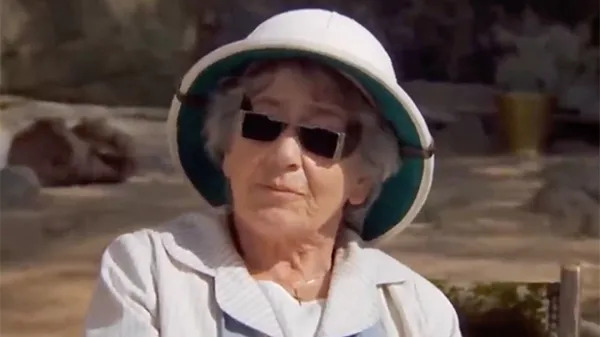
Maurice Jarre took home Best Original Score, while Peggy Ashcroft won Best Supporting Actress.
Ashcroft was 77 years old when she won, making her the oldest winner in that category at the time.
Her performance is the emotional center of the movie.
Mrs. Moore begins as an outsider within the British community, but her encounters with India gradually destroy her confidence that the world can be neatly divided into British and Indian, civilized and uncivilized, right and wrong.
Ashcroft plays that transformation with extraordinary delicacy.
There is no grand speech required.
You can see her certainty disappearing.
The film also collected awards from the Golden Globes, BAFTAs and numerous critics’ organizations.
Commercially, it earned roughly $27 million in the United States and Canada and approached $40 million worldwide.
For a 164-minute period drama about colonialism and spiritual uncertainty, that was hardly a failure.
David Lean’s Last Movie
Lean would never make another film.
He continued developing projects throughout the late 1980s, including plans for an adaptation of Nostromo, but his health deteriorated before he could bring another production to the screen.
He died in 1991.
That makes A Passage to India something more than another 1980s prestige picture.
It is a farewell.
And there is something almost poetic about Lean choosing a story about cultural misunderstanding, failed communication and the impossibility of completely knowing another person as his final cinematic statement.
The film is also unmistakably a product of the 1980s.
This was the decade when Hollywood rediscovered the prestige epic. Movies like The Right Stuff, Out of Africa, The Killing Fields and Gandhi demonstrated that enormous historical dramas could still attract audiences and awards attention.
A Passage to India fit comfortably into that tradition.
But Lean was working in a different cinematic universe.
He wasn’t trying to make a modern blockbuster.
He was making the kind of movie Hollywood had once routinely produced.
An enormous story.
An enormous canvas.
An enormous cast.
An enormous production.
And an enormous amount of time.
The Last Passage
Today, A Passage to India can sometimes feel like a relic of another Hollywood.
That isn’t necessarily a criticism.
There is something magnificent about watching a filmmaker who had already made Lawrence of Arabia and Doctor Zhivago return after fourteen years and essentially say: I’m going to make one more epic.
Lean was 76 when the film was released.
He could have gone out quietly.
Instead, he went back to India.
He brought the cameras, the enormous sets, Maurice Jarre, the sweeping landscapes and his notoriously uncompromising eye. He made a film that is beautiful, complicated, occasionally uncomfortable and deliberately old-fashioned.
And perhaps that’s the most interesting thing about A Passage to India.
It is not simply the final film of David Lean.
It is the final argument for David Lean’s entire cinematic philosophy.
Cinema, in Lean’s hands, could still be enormous.
It could still take you somewhere you had never been. It could still put thousands of people on a screen and make them feel like part of a single composition. It could still turn a railway, a cave, a mountain or a sunset into something monumental.
A Passage to India may not possess the raw mystery of Forster’s novel, and some of its casting decisions have aged very badly. But as a piece of filmmaking, it remains astonishingly accomplished.
And knowing what we know now, there is something haunting about its finality.
David Lean had spent his career making movies that seemed to demand the biggest screen available.
For his last one, he simply looked out across India one final time.
Then he walked away.

About the Creator
Movies of the 80s
We love the 1980s. Everything on this page is all about movies of the 1980s. Starting in 1980 and working our way the decade, we are preserving the stories and movies of the greatest decade, the 80s. https://www.youtube.com/@Moviesofthe80s
Enjoyed the story? Support the Creator.
Subscribe for free to receive all their stories in your feed.
Comments
There are no comments for this story
Be the first to respond and start the conversation.