
70 Years Later, The King and I Remains a Hollywood Masterpiece
An exploration of its legacy, performances, and enduring place in cinematic history

Venturing Into The Kingdom
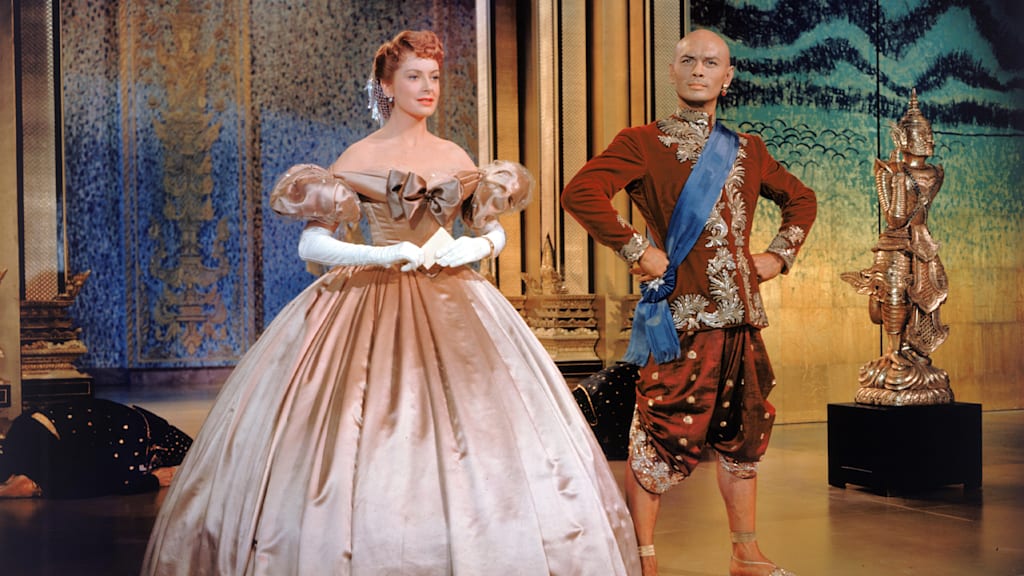
The story revolves around Anna Leonowens, an English schoolteacher who travels to Siam (present-day Thailand) during the 1860s after being hired to tutor the children of the King. Expecting a disciplined and orderly task, she instead enters a royal court governed by strict traditions, cultural hierarchy, and political complexity. As Anna attempts to introduce Western ideas of education and independence, she repeatedly challenges the King’s authority and worldview. Over time, their relationship evolves from tension to mutual respect, revealing the deeper themes of cultural misunderstanding, tradition versus evolution, and the challenge of bridging two different worlds.
A Court Brought To Life
Deborah Kerr’s portrayal of Anna Leonowens is one of the film’s greatest aspects. She balances firmness with compassion, creating a character who is both determined and caring. Her performance captures Anna’s struggle to maintain her principles while adapting to life within the royal court of Siam.
Yul Brynner delivers the film’s commanding performance as King Mongkut. He combines authority with intelligence, humor, curiosity, and vulnerability, making the King far more than a stern ruler. His chemistry with Kerr gives the narrative much of its emotional weight.
Rita Moreno brings warmth and charm to the role of Tuptim. Her performance highlights the character’s hopes, fears, and longing for freedom, adding expressive depth to one of the film’s most compelling subplots. Complementing her, Carlos Rivas delivers a heartwarming portrayal of Lun Tha, a Burmese scholar whose love for Tuptim forms one of the film’s touching moments. Rivas brings a fierce determination and raw energy to the role, making audiences invest in their relationship.
Rex Thompson is charming as Louis, Anna’s son. He provides a sense of innocence and wonder as he experiences a new environment. Terry Saunders is memorable as Lady Thiang, portraying the King’s senior wife with grace, wisdom, and elegant demeanor. Her character serves as the bridge between Anna and the royal family.
The supporting cast also leaves a strong impression. Martin Benson’s Kralahome is loyal and authoritative, while Patrick Adiarte’s Prince Chulalongkorn displays intelligence and promise as the heir. Together, these performances enrich the film’s setting and help bring its world to life, creating a memorable ensemble that remains one of the film’s greatest accomplishments.
Vibrant Sequences in the Kingdom
One of the film’s most important moments happens near the beginning when Anna Leonowens and her son Louis arrive in Siam and are greeted by the Kralahome, the King’s royal chief minister. Their introduction to the country establishes the cultural barriers that Anna will overcome throughout the journey and sets the stage for the story that follows.
Another memorable sequence comes when Anna teaches the King’s children about the world beyond Siam and presents them with a map of the globe. Their fascination and joy emphasize the power of education and discovery. During Anna’s lessons on human rights and references to Uncle Tom’s Cabin, the young Prince Chulalongkorn questions how slaves can be set free if their masters do not wish to release them. Anna responds by saying that some matters are not defined by preference but by what is right and just. This exchange helps shape the kind of a ruler he will become.
The scenes involving Tuptim and Lun Tha provide some of the film’s most heartwarming moments. When Anna discovers Lun Tha secretly visiting the City of Women at night, she urges him to leave or else he will be caught and executed. The scene demonstrates the risks people are willing to take for love. It also serves as a payoff to Anna’s earlier conversation with Tuptim, when she remarks that it is difficult to stop loving someone even when circumstances keep them apart.
Finally, the royal reception for the British delegation stands as one of the film’s most significant sequences. Through diplomacy, King Mongkut directly challenges the British delegation’s assumptions about Siam, creating a moment of political and cultural tension that underscores his leadership.
Between Fact And Fiction: Historical Accuracy
The King and I is based on the novel Anna and The King Of Siam (1944) by Margaret Landon. While researching the film’s historical background, I discovered that Anna Leonowens did, in fact, teach the children of King Mongkut. However, one detail not mentioned in the film or many of its adaptations is Dan Beach Bradley, an American Protestant missionary, had spent decades introducing Western medicine, printing technology, and educational ideas to the kingdom long before Anna began her tenure in Siam.
The romance between Lun Tha and Tuptim, while emotionally effective for the plot, has no basis in reality. According to an article published by Smithsonian Magazine examining the historical figures, Tuptim was a real person, and some records suggested that she became one of the wives of King Chulalongkorn. One thing I found particularly interesting is that historians questioned Anna Leonowens’s account of Tuptim’s alleged adultery, arguing that those were likely based on rumors that predated King Mongkut’s reign, rather than verified events.
In addition, the same source states that historians have questioned some of aspects of her own background, including her birthplace and heritage. While Anna claimed in her autobiography she was born in Wales, in reality, she was born in 1831 in the British-controlled Bombay Presidency.
These historical uncertainties extend beyond Leonowens herself. King Mongkut is often depicted in popular adaptations as rigid and domineering, yet he is widely recognized by historians as a reform-minded ruler who embraced Western science, language, and diplomacy during a period of rapid transformation in Siam.
The 1956 film and other adaptations of The King and I have been prohibited in Thailand because its portrayals of King Mongkut and the royal court are considered grossly misleading and insulting to national history. This ongoing debate highlights the tension between artistic representation and authentic portrayals of historical figures.
Behind The Palace Walls: Facts About the Production
According to a Yahoo Entertainment article, actress Deborah Kerr, who played Anna Leonowens, reportedly spent long days filming under studio lights while wearing costumes that weighed around 40 pounds. The conditions were so physically demanding that she reportedly sweated during production and lost 12 pounds as a result. Kerr even jokingly referred to herself as “The Melting Miss Kerr”, a nickname that reflected how complicated the filmmaking process can be.
One interesting fact about The King and I is that it’s based on the 1951 Broadway musical of the same name, in which Yul Brynner originated the role of King Mongkut. Brynner became so closely associated with the role that he reprised it multiple times over the years, including Broadway revivals and later screen and television adaptations, including the 1972 miniseries, Anna and The King, in which different actresses portrayed Ann Leonowens.
Deborah Kerr was not the first choice for the role of Anna Leonowens. Other actresses were reportedly considered but one of the musical’s original composers, who worked on the film, named Richard Rodgers wanted Kerr instead and the rest is history.
Finally, while Kerr’s performance is remembered as one of the film’s memorable aspects, her singing voice was actually dubbed by Marni Nixon, a well-known playback singer who provided vocals to several Hollywood musicals of the era.
These behind-the-scenes facts highlight the physical demands, casting choices, and production decisions that helped shape The King and I into the classic it became.
Lessons Beyond The Classroom
One of the most prominent themes in The King and I is the challenge of breaking down the barrier between different cultures. Throughout the film, Anna introduces new ideas that seem unfamiliar, and sometimes even radical, to the people of Siam. At the same time, her lessons spark curiosity and encourage learning. This is evident during the scene in which Anna teaches the King’s children using a map of the world, exposing them to places beyond their kingdom.
The film also explores women’s rights and personal autonomy. Tuptim longs to be with the man she truly loves, yet cultural norms and her role within the royal court prevent her from freely choosing her own future. Her struggle highlights the limited freedom available to many women during the period. In addition, her theatrical adaptation of Uncle Tom’s Cabin, titled The Small House of Uncle Thomas, critiques slavery and oppression while reinforcing the film’s broader themes of human dignity and liberty.
Another important theme is the tension between tradition and modernization. King Mongkut is often hesitant to accept ideas that challenge long-held customs, yet he also recognizes the importance of change in an increasingly interconnected world. Through the developing relationship between Anna and the King, the film suggests that progress is more meaningful when people are willing to learn from one another.
A Beautiful Journey
Through the King and I, audiences are reminded that change can often lead to growth and insight. However, the film also suggests that embracing new ideas doesn’t mean abandoning one’s cultural identity. Instead, substantial development comes from honoring tradition and being open to different perspectives. Seventy years after its release, the motion picture continues to resonate with viewers through its memorable performances, a timeless soundtrack, and enduring messages about compassion, open-mindedness and respecting one another’s differences.
About the Creator
TheScreenAnalyst
I am a passionate movie and TV enthusiast, devoted to analyzing storytelling, characters, visuals, and performances. I provide thoughtful critiques and insights, exploring both mainstream and independent works to engage audiences.
Enjoyed the story? Support the Creator.
Subscribe for free to receive all their stories in your feed.
Comments
There are no comments for this story
Be the first to respond and start the conversation.