
60 Years of Mission: Impossible: The Legacy Of a TV Series
Revisiting the television show that laid the groundwork for a legendary franchise

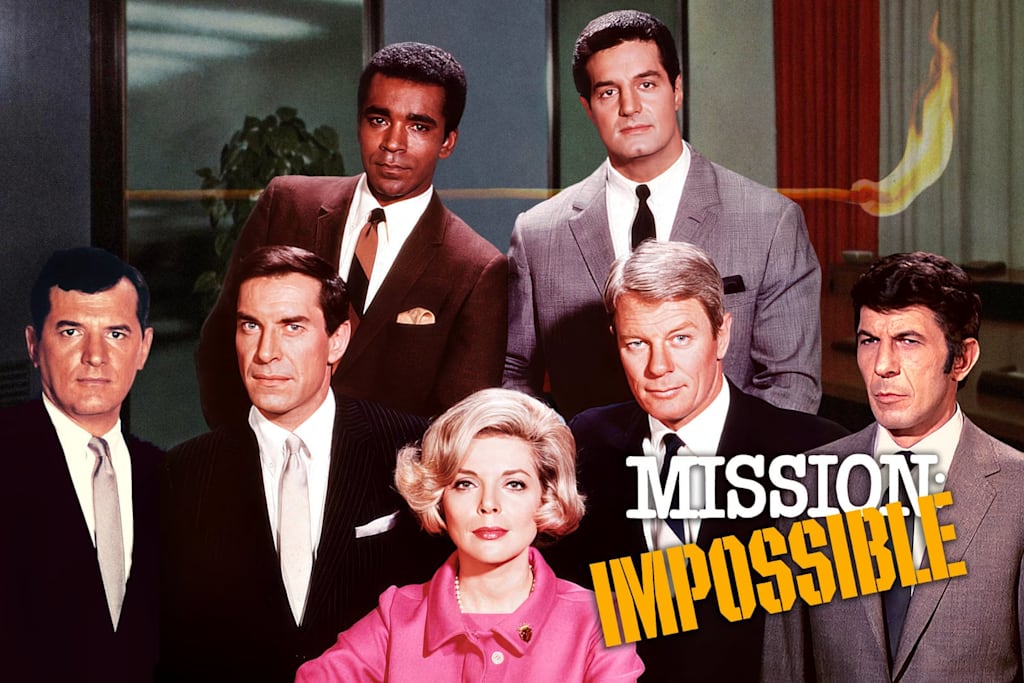
September 17th, 1966: The Spy Series That Changed Everything
On September 17th, 1966, Mission: Impossible aired on CBS. The show focused on the Impossible Mission Force (IMF), a team of highly trained agents who carry out dangerous and seemingly impossible missions.
The IMF relied on disguises, face masks, fake identities, technology, and carefully crafted schemes to complete their missions. This made Mission: Impossible stand out from other spy series of its time and would eventually help establish a formula that influenced the franchise for decades to come.
Bruce Geller’s Unique Vision: The Making of Mission: Impossible
Bruce Geller didn’t want to create just another spy show. He wanted Mission: Impossible to be a layered series rather than just another spy adventure. Unlike James Bond, who was more of a lone wolf, Geller built his series around a team of operatives who work together to complete their missions. According to an article from Bold Entrance, Geller drew inspiration from films such as Topkapi and The Ipcress File when developing the show’s formula.
The same article also states that Geller insisted that the IMF agents rarely use guns because, to him, relying on violence represented an intellectual defeat. He would rather see the IMF use their intelligence and specialized skills than simply overpower their foes.
When I started watching the show for the first time, one thing I noticed was how rarely violence was shown. This shows that heroes don’t always need to shoot their way out of a situation or beat their enemies to a pulp. Instead, there’s far more satisfaction in the antagonists coming to the realization that they’ve been deceived by the IMF.
The Evolution and Diversity of the IMF
In Season 1, Dan Briggs was the leader of the IMF. However, beginning with Season 2, Jim Phelps took over as the team’s leader and remained in charge through the duration of the original series. The real-world reason for Steven Hill’s departure had to do with production difficulties surrounding his religious beliefs. According to The Hollywood Reporter, Hill had an agreement that allowed him to observe the Jewish Sabbath, which meant he couldn’t work during certain Friday hours. This became increasingly challenging for the production to work around, eventually leading to Hill’s departure from the series. In-universe, there was never an explanation as to why Dan Briggs disappeared.
One of the things I enjoyed about the original series was that every member of the IMF brought something different to the team. Barney Collier was the team’s electronics and technical expert, while Cinnamon Carter used her skills as a model and actress to help with disguises and deception. Rollin Hand was an actor, magician, and makeup artist who could become almost anyone the mission needed. Willy Armitage provided the team’s physical strength.
The IMF continued to grow as members left and new ones joined. After Martin Landau left following Season 3, Leonard Nimoy joined the cast as Paris for Seasons 4 and 5. Paris was an ex-magician and master of disguise, making him a natural replacement for Rollin’s role within the team. Nimoy had also just finished playing Spock on Star Trek, making his arrival especially interesting for fans of both shows.
Just like Star Trek, I think the diversity of the IMF is one of the great parts of the original series. The characters weren’t simply there to fill space. Each member had a specific skill that made the team stronger, and the changing lineup showed that the IMF could continue functioning even as its members changed.
The End of an Era and the 1988 Revival
The cancellation of the original series was due to budget cuts, a changing landscape, and problems with CBS and Paramount. According to an article from Bold Entertainment, executives were interested in ending the show to take advantage of profits from syndication. The ratings also declined, and budget cuts affected the production and cast. By the time the series concluded, it had a much smaller core lineup compared to its earlier years.
The same article also states that the final straw came when a heated dispute between Paramount president Frank Yablans and CBS president Robert Wood caused the relationship between the two companies to collapse. CBS also moved Mission: Impossible to a less favorable time slot during its final season. The series ended after seven seasons in 1973.
During that time, the world had changed. The Watergate scandal was making headlines, which contributed to a growing distrust of government institutions. Later movies of the period, such as The Parallax View (1974) and Three Days of the Condor (1975), also presented negative views of government and secret agents.
In 1988, Mission: Impossible was revived during the Writers Guild of America strike. ABC needed content that could be aired without commissioning new scripts, so the network initially planned to revive the series by using scripts from the original run. Peter Graves returned as Jim Phelps, while Phil Morris played Grant Collier, the son of Barney Collier — and Phil was Greg Morris’ son in real life. Thaao Penghlis played Nicholas Black, while Antony Hamilton played Max Harte.
The revival was cancelled after two seasons. ABC moved the series to Thursday nights during its second season, where it faced stiff competition, and its ratings declined. ABC eventually moved it back to Saturday nights, but the move did not save the series.
The Mission Continues: From Television to the Big Screen
The cancellation of the 1988 revival didn’t stop Mission: Impossible. Tom Cruise was a massive fan of the original TV series and wanted to bring it to the big screen. As Cruise revealed in a Blu-ray extra for the 25th-anniversary edition of the original movie, he had signed an agreement with Paramount that allowed him to set up his own production company and choose any intellectual property he wanted to develop. So he chose Mission: Impossible.
Tom wanted to bring back the original cast from the TV series. Nevertheless, several members of the original cast strongly objected to the idea of their characters being killed off early. Peter Graves was especially displeased when he discovered that Jim Phelps had been rewritten as the villain all along, so he declined to reprise his role.
Graves wasn’t the only original cast member who objected to the movie. Greg Morris disliked the change to Jim Phelps so much that he walked out before finishing the film. Martin Landau also passed on returning because he felt that Cruise’s movie missed the mark of the original series by leaning heavily into action and adventure.
Nevertheless, the movie franchise went on to become a major commercial success and expanded beyond the original film. Sequels were released in 2000, 2006, 2011, 2015, 2018, 2023, and 2025. While the movies developed their own identity, the template established by the original series remained: the IMF, impossible missions, disguises, elaborate schemes, specialized agents, and the iconic self-destructing mission messages.
Brain Over Brawn: The Lasting Influence of Mission: Impossible
Mission: Impossible stood out because of its emphasis on brain over brawn. Instead of relying on violence to solve every problem, the IMF showed audiences the importance of intelligence, teamwork, and careful planning. I also think the original series can be a good influence on audiences, especially younger viewers, because of the importance it places on leadership and looking out for one another, even when times are tough. Sixty years later, the original series continues to show why a great team can accomplish the impossible when everyone plays their part. Its mission may have begun in 1966, but its influence continues.
About the Creator
TheScreenAnalyst
I am a passionate movie and TV enthusiast, devoted to analyzing storytelling, characters, visuals, and performances. I provide thoughtful critiques and insights, exploring both mainstream and independent works to engage audiences.
Enjoyed the story? Support the Creator.
Subscribe for free to receive all their stories in your feed.
Comments
There are no comments for this story
Be the first to respond and start the conversation.