
5 ‘Star Wars' Characters Improved By Animation
Not just for kids.

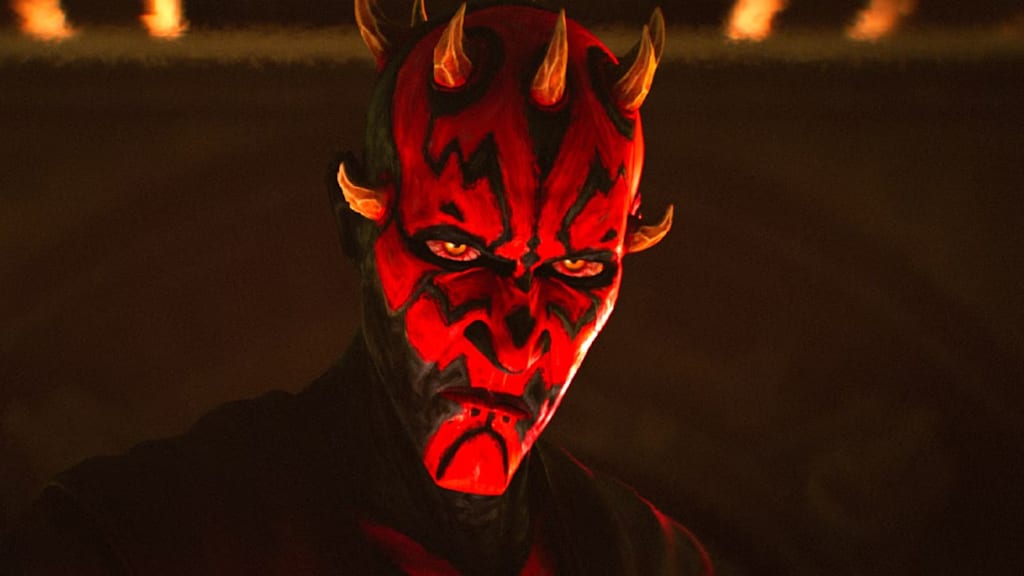
Prior to the debut of the Star Wars: The Clone Wars animated series in 2008, few could have predicted just how much animated projects would enrich and expand the Star Wars mythology. However, largely under the stewardship of Dave Filoni, Lucasfilm Animation has filled in the gaps of various unexplored periods in the Star Wars franchise, creating new characters who have become nearly as iconic as those in the original films, while lifting some existing characters beyond what they originally were.
A great example of this is Darth Maul, who's story is currently continuing in Maul: Shadow Lord, which recently concluded its first season on Disney Plus, with a second season already in the pipeline. Let's take a closer look at Maul, and other Star Wars characters who were actually improved by their appearances in animated projects.
1. Darth Maul
Introduced in Star Wars Episode I: The Phantom Menace as the then-apprentice of the Sith Lord Darth Sidious, aka the future Emperor Palpatine, many fans at first assumed that Darth Maul would be a significant antagonist in the prequel trilogy. However, while his design was praised, beyond that The Phantom Menace's mute Maul isn't really all that interesting. He's a very generic creepy evil guy, and despite expectations only strikes one genuine blow to the Light Side, killing Qui-Gon Jinn before hinself being sliced in half by Obi-wan Kenobi, and long assumed dead.
This all changes when Maul, miraculously alive, returns during the Clone Wars animated series. No longer mute, he is brought to life by the voice of Sam Witwer. Maul is given a race, a culture, a troubled past, and a deep desire for revenge on those who have wronged him, no matter which side of the Force they fall on. Maul is a more tragic, complicated character than his live action counterpart could ever have suggested. If one subscribes to the theory that Star Wars represents Greek philosophy, Maul is Sisyphus: forever pushing a boulder uphill, fated to fail.
When Maul meets his end in Star Wars: Rebels (which takes place after Shadow Lord), duelling Kenobi for the final time, it is at least a little sad.
2. Anakin Skywalker
All seasoned Star Wars fans know that the Jedi Knight Anakin Skywalker is destined to become the Sith Lord Darth Vader. The prequel trilogy films tell the story of Anakin's rise in the Jedi Order and subsequent fall to the darkside, largely through his love for Padme Amidala and fear of losing her. The problem is that the films actually bypass a significant chunk of the story everyone watched them for.
Episode II: Attack of the Clones, ends with the beginning of the Clone Wars, and Episode III: Revenge of the Sith, though widely considered the strongest film of the prequels, begins just as the war is ending. Anakin is already on the precipice of his fall to the dark side before the opening crawl, and as such, his fall can feel somewhat sudden.
The Clone Wars animated series fills the gaps and corrects this somewhat. Anakin's fall isn't just about his fear for Padme, or the Jedi Council's lack of full trust in him, although they are both contributing factors.
The truth is that Anakin's faith in the Jedi Order is slowly chipped away over a long period of time. Palpatine whispering in his ear, his frustration at being unable to openly be with Padme are both known elements of his fall that are explored further. However, perhaps one of the most important stories is Anakin's relationship with his Padawan, Ahsoka Tano.
The circumstances that lead to Ahsoka's departure from the Order greatly add to Anakin's becoming increasingly jaded with the Jedi Council. Worse, because she is no longer a Jedi, the Council keep Ahsoka from speaking to Anakin at a critical moment in which she may have been the last hope at helping him see through Palpatine’s manipulations.
It makes Anakin’s fall seem less sudden and more tragic, the final horrible play in Darth Sidious's long game.
3. Padme Amidala
Padme Amidala first appeared in The Phantom Menace as the newly elected teenage Queen of Naboo, fighting to free her planet from Trade Federation occupation. In Attack of the Clones, the now adult Padme represents Naboo in the Galactic Senate, leading a faction opposed to the creation of the Clone Army. Attack of the Clones also sees the origin of Padme's romance with Anakin.
Revenge of the Sith has Padme sidelined relatively early on due to her pregnancy. As with Anakin, Padme suffers from the films skipping the bulk of the Clone Wars.
The Clone Wars animated series actually contains some of the most interesting parts of Padme's story. Far from just Anakin's doomed love interest, Clone Wars sees Padme constantly fighting for justice in the Senate, often against difficult odds, and doesn't entirely escape more active adventures. Anytime Padme is paired with Ahsoka for a story usually turns out to be good value, slightly chaotic fun.
Padme's animated adventures prove that in the desire to fight the good fight, Luke and Leia inherited a lot from their Mother.
4. Mon Mothma
Mon Mothma, a former Republic Senator, is first seen in the Star Wars original trilogy as the leader and founder of the Rebel Alliance. In these films, she mostly seems to be a figurehead, with the circumstancs of how she reached this decision not explained. Parts of her story, rising from a sympathetic Senator secretly funding rebels to rebel leader, have subsequently been scattered throughout the franchise.
One of Mon Mothma's most important and pivotal moments actually occurs in animation, namely 'Secret Cargo', episode 18 of the third season of Star Wars: Rebels. After a dramatic, rebel-rousing speech in the Imperial Senate (Events we eventually saw unfold in Andor season two), Mothma is rescued and handed into the care of the crew of the Ghost, who then transport her to a secret location from which she beams a second speech across the galaxy. This speech was a call to action to the various scattered rebel cells, marking the birth of the true Rebel Alliance.
5. Clone Troopers
Introduced in Attack of the Clones as a response to the growing threat of the Separatists, the Clone Troopers were created on the planet Kamino from base genetic material provided by the Mandalorian foundling bounty hunter Jango Fett, and engineered for battle. AotC has them at the centre of an ethical dilemma, while in Revenge of the Sith, they appear as little more than army drones following orders, seeming to have little qualms with executing the Order 66 command that has them turn on and murder their Jedi commanders.
The Clone Wars and subsequent animated series turn these early assumptions about the clones entirely on their head. Despite sharing genetic material, each clone has their own individual personality, shown through personalising their helmets and armor, and each choosing a name. This growing individuality eventually leads to philosophical conversations about the nature of the Clones’ existence: What happens to beings bred for war when the war is over?
For the most part, the Clones were genuinely loyal to their Jedi. Order 66 was not an order they blindly followed, but one that was triggered by a behavioural chip in each clone's head. Many clones spend the remainder of their lives haunted by Order 66. Initially seeming like drones, the clones are instead tragic figures.
With a post-war Clone Rebellion/liberation movement in it's early days during The Bad Batch, we're definitely set to see more clone stories in the future, and if said stories happen to be animated, they are sure to be just as good as any live action Star Wars content.
About the Creator
Kristy Anderson
Passionate About all things Entertainment!
Enjoyed the story? Support the Creator.
Subscribe for free to receive all their stories in your feed. You could also become a paid subscriber, letting them know you appreciate their work.
Comments
There are no comments for this story
Be the first to respond and start the conversation.