
1918 (1985): Horton Foote’s Quiet Texas Home Front
Before the Spanish flu became a subject of historical retrospection, Horton Foote brought the tragedy of 1918 to the screen through one Texas family’s struggle to survive a world at war.

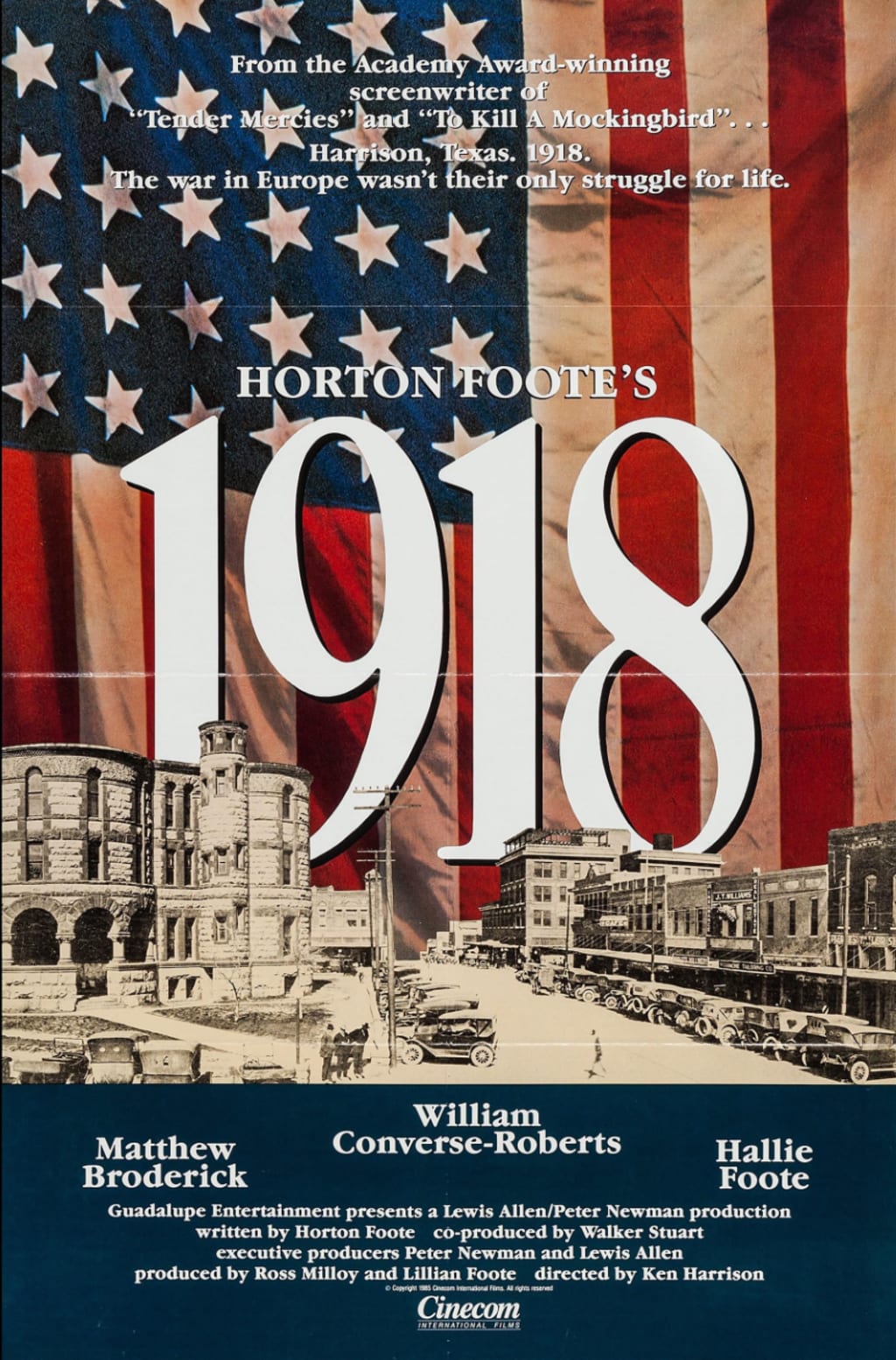
A Different Kind of War Movie
In the summer of 1985, audiences could find plenty of reasons to head to the movies. There were spectacular adventures, science fiction extravaganzas, action pictures and expensive Hollywood productions designed to give audiences something they couldn’t experience anywhere else.
And then there was 1918.
No explosions. No battlefield heroics. No sweeping romantic adventure about the Great War. Just a small Texas town, a young family, a community struggling with the consequences of a distant conflict, and an epidemic that would eventually claim more American lives than the war itself.
Written by Oscar-winning screenwriter and playwright Horton Foote, 1918 was an intensely personal film about ordinary people living through extraordinary circumstances. It was also something of a family affair. Foote’s daughter, Hallie, played one of the central characters, while other members of the Foote family participated in the production. The cast included a young Matthew Broderick, still riding the success of WarGames (1983), in an early dramatic role.
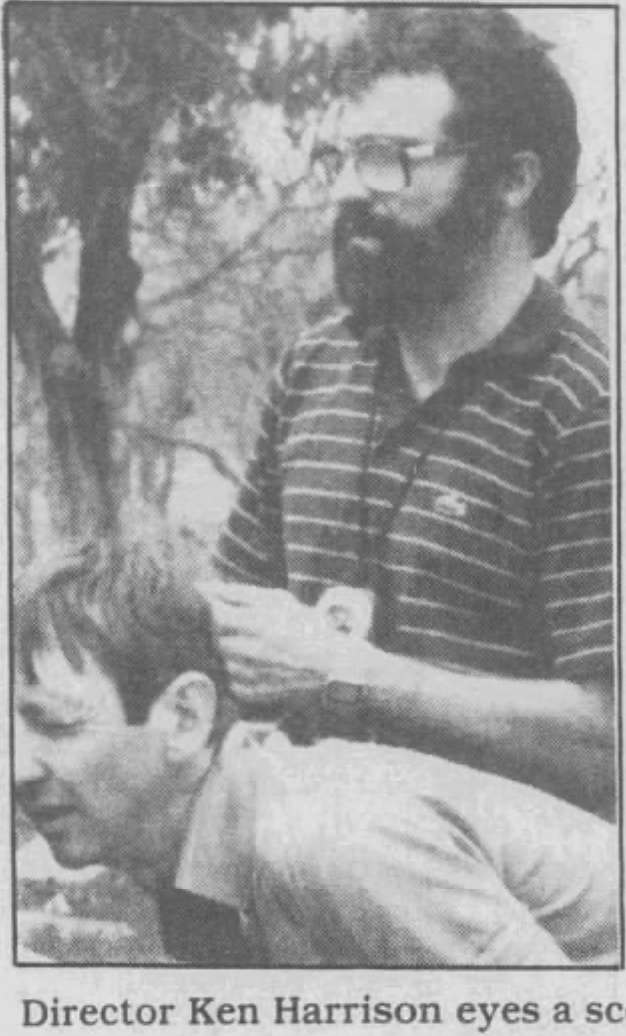
Directed by Dallas filmmaker Ken Harrison, the picture was made for approximately $1.7 million and filmed in Waxahachie, Texas. It wasn’t particularly interested in the conventions of commercial filmmaking. In fact, its deliberate lack of conventional drama would become one of its defining characteristics.
1918 is a movie about the home front, but not the version of the home front that Hollywood traditionally preferred. Its war is largely happening somewhere else. Its tragedy is happening right here.
Horton Foote’s Texas
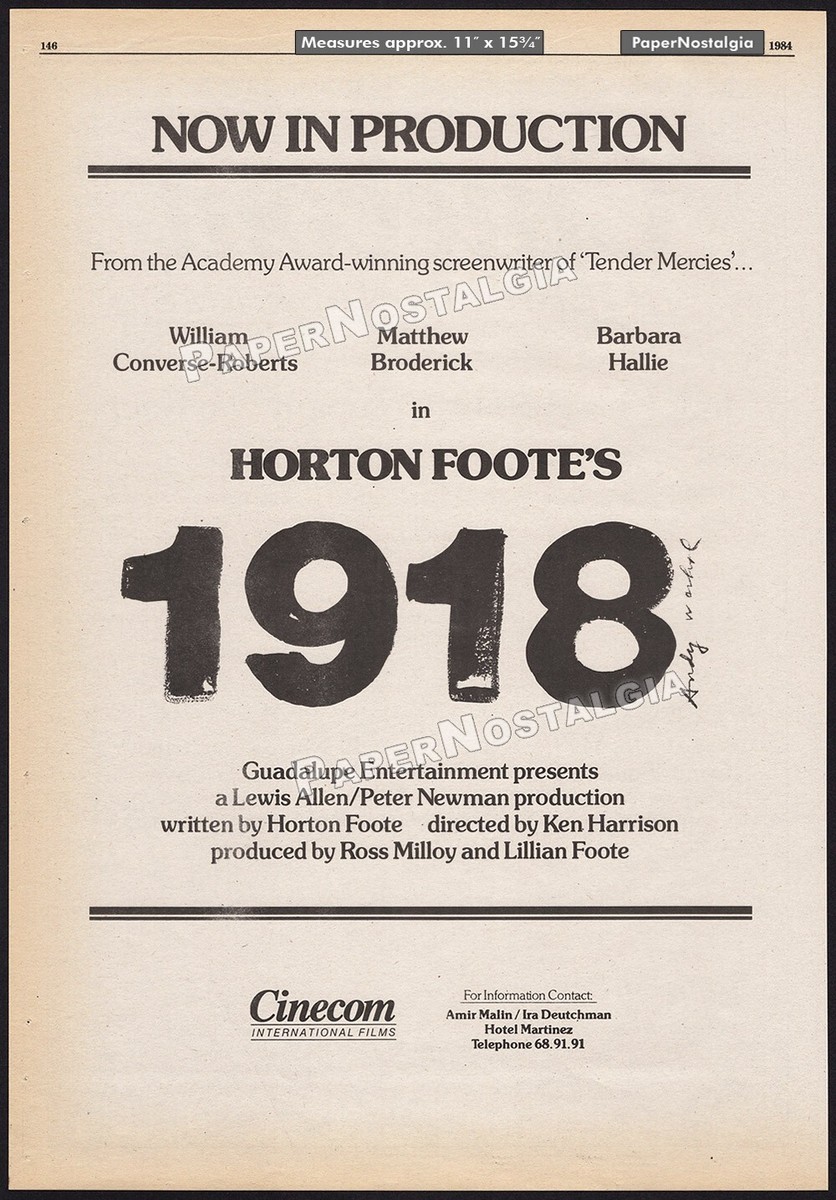
By the time 1918 reached theaters, Horton Foote had established himself as one of America’s most respected dramatic writers.
Born in Wharton, Texas, in 1916, Foote had spent much of his career writing about people whose lives rarely attracted much attention from the outside world. His characters were shopkeepers, farmers, laborers, family members and small-town residents. They were often hardworking, occasionally stubborn, and generally doing the best they could with the circumstances life had handed them.
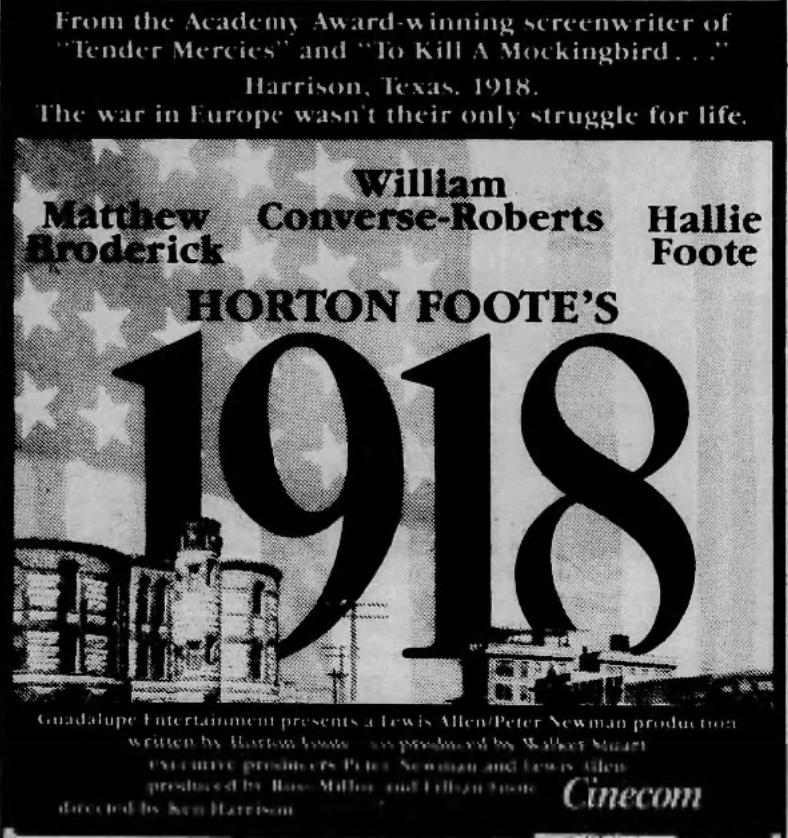
Foote was also an Academy Award winner, having received Oscars for his adaptations of To Kill a Mockingbird (1962) and Tender Mercies (1983).
His approach to storytelling was distinctive. He wasn’t particularly interested in manufacturing melodrama or turning ordinary people into larger-than-life characters. He preferred the small details of everyday existence: conversations, family disagreements, disappointments, unexpected kindnesses and the quiet adjustments people make as their lives change.
That sensibility found its most ambitious expression in The Orphans’ Home Cycle, a series of nine plays inspired by his own family history.
Set in the fictional Texas town of Harrison, based on Foote’s hometown of Wharton, the cycle follows the life of Horace Robedaux and the generations surrounding him. Together, the plays trace a family’s experiences across the early decades of the twentieth century.
The nine plays are:
Roots in a Parched Ground
Convicts
Lily Dale
The Widow Claire
Courtship
Valentine’s Day
1918
Cousins
The Death of Papa
Although the plays can be experienced individually, they form a much larger narrative about family, belonging, marriage, loss and the complicated business of building a life.
Foote had been thinking about the material for years. In discussing the development of the cycle, he explained:
“Roots in a Parched Ground was first written for television 15 years ago (Circa 1985). And this thing began to percolate in my mind. I kept notebooks full of notes. The first one I wrote as a full play was 1918, then Convicts. And they all deal in some way with Horace.”
The personal nature of the project was hardly incidental. Foote drew heavily on his family’s experiences, although he was never particularly interested in presenting the material as straightforward autobiography.
As he explained:
“In the sense that everything is autobiographical, you start with some facts… Then you begin to fool around with the facts, but the writing grows from your own experiences. I have the kind of imagination that couldn’t let me escape it. I wouldn’t know how to write any other way.”
That philosophy helps explain why 1918 feels so lived-in. Foote wasn’t simply reconstructing a historical period. He was revisiting the world his parents and grandparents inhabited, imagining the conversations they might have had and the anxieties they carried.
It was a particularly fertile period for Foote. Other projects connected to his work included On Valentine’s Day, another installment of the cycle, Convicts, which would eventually feature Robert Duvall, and a new screen adaptation of The Trip to Bountiful.
The latter would become one of the most celebrated American films of 1985.
Making a Small Texas Movie
The production of 1918 was itself something of an independent filmmaking adventure.
Producer Ross Milloy was working through Austin-based Guadalupe Entertainment, a company established with the backing of Texas businessmen. Milloy’s background was an unusual one for a film producer. He had worked as a political aide, investigative reporter and journalist before becoming involved in the movie business.
The company was simultaneously developing 1918 and Alamo Bay, another Texas-centered production. Both projects represented an attempt to bring independent filmmaking and outside production money into the state.
According to the contemporary reporting, Milloy had been approached by Austin businessmen interested in establishing a film company. The result was a production arrangement involving Texas investors and outside financing.
The AFI Catalog identifies the budget for 1918 at approximately $1.7 million. Guadalupe Entertainment provided part of the financing, with additional support from Cinecom International and CBS/Fox Video. The production also involved a partnership with twenty Texas investors.
Milloy wasn’t pretending that the picture had the resources of a major Hollywood production.
As he put it:
“That’s a real low budget movie.”
It was directed by Ken Harrison, a Dallas filmmaker making his theatrical feature debut. Principal photography began in April 1984, with Waxahachie serving as the principal location. Shooting wrapped in May after a six-week production schedule.
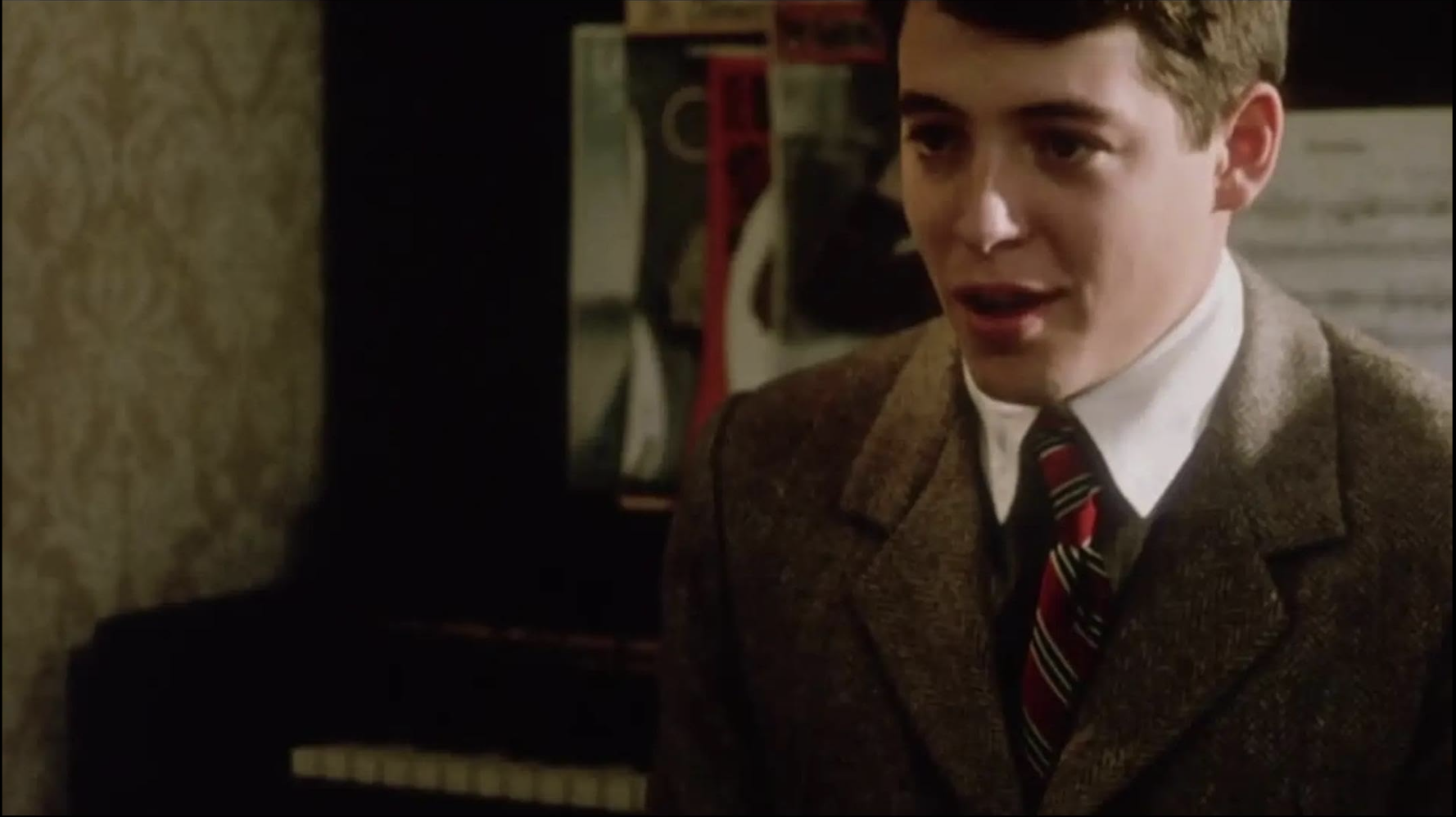
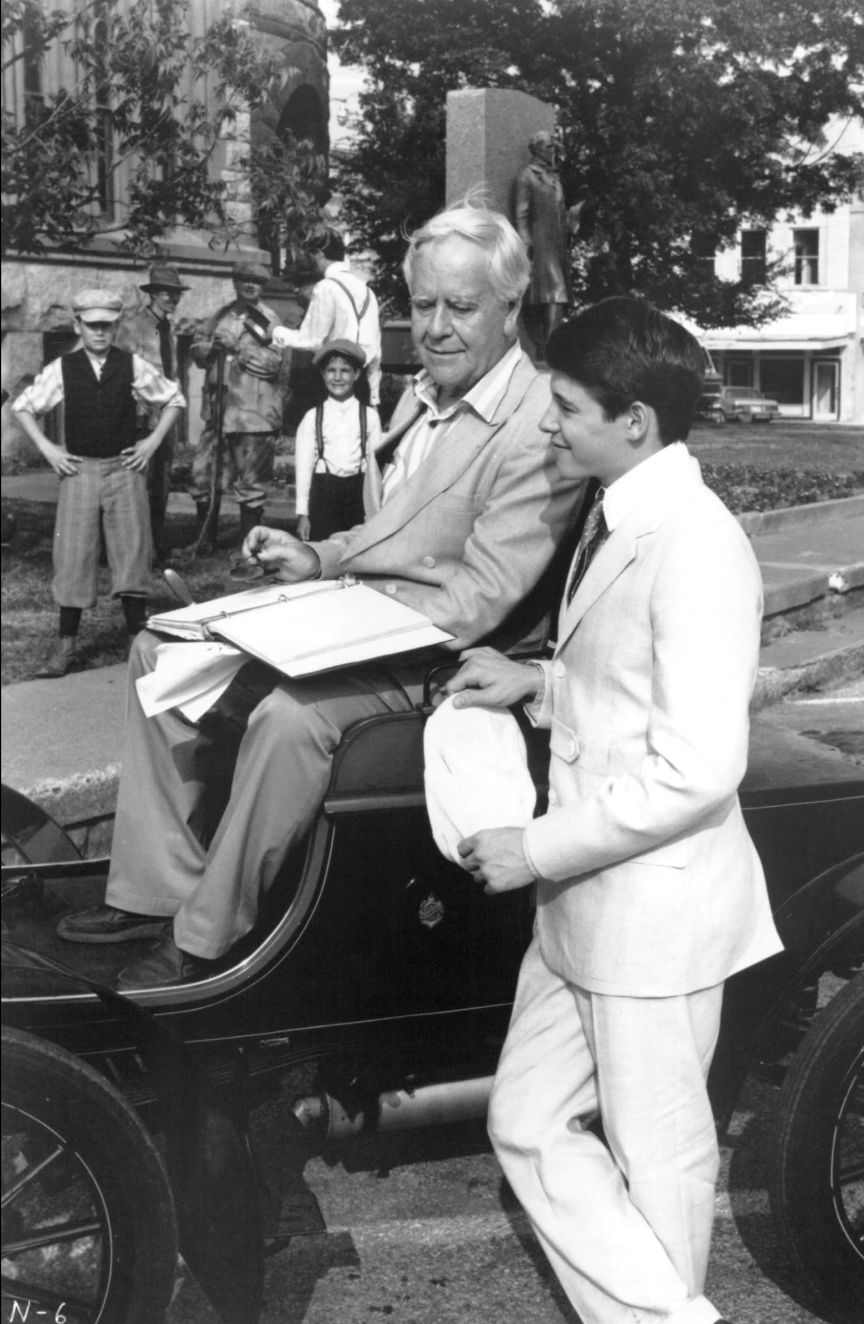
The cast included William Converse-Roberts as Horace Robedaux, Hallie Foote as his wife Elizabeth, and Matthew Broderick as Brother Vaughn.
Broderick’s involvement was particularly interesting. Fresh from WarGames, he was already a recognizable young actor, but this was a very different assignment from playing a teenager accidentally drawn into a computer-generated nuclear crisis.
He reportedly agreed to work for scale, partly because his father, actor James Broderick, was a close friend of Horton Foote.
Hallie Foote’s casting was even more personal. She was playing Elizabeth, a character inspired by her grandmother, and her involvement gave the production an additional connection to the family history behind the material.
Producer Lillian Foote, Horton’s wife, was also involved, while Horton Foote Jr. had a small acting role and worked in casting.
This wasn’t simply a film adaptation of a family story. The family was helping make the movie.
Making Drama Out of Ordinary Life
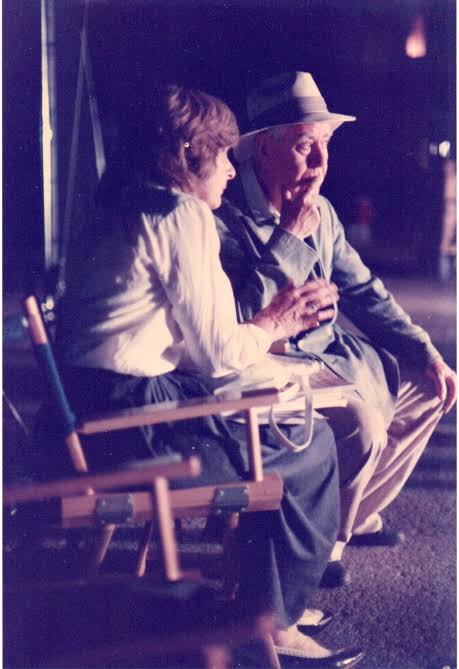
One of the biggest challenges facing Ken Harrison was translating Foote’s theatrical writing into a cinematic experience.
The material wasn’t exactly overflowing with conventional movie action. Much of the story unfolds through conversations, domestic situations and small emotional shifts. Characters don’t necessarily announce their feelings, and the most important developments sometimes happen almost imperceptibly.
Harrison understood the challenge.
“The action is not physical but emotional. The characters moved, they went forward an infinitesimal amount. And the challenge was to make that interesting to viewers who are used to car chases. We had to give it the classical cinematic tension.”
That was a considerable assignment for a first-time feature director.
The film largely retains the theatrical qualities of Foote’s writing. Camera movement is restrained, the performances are understated, and the story relies heavily on dialogue rather than visual spectacle.
Foote himself remained involved in the production process, including the editing. He was particularly conscious of the need to make adjustments when material that worked on the stage didn’t necessarily translate to the screen.
He offered a rather revealing observation about the experience:
“If something doesn’t work, it doesn’t work… Of course when things are cut out, sometimes you bleed a little bit.”
It’s an appropriately Foote-like sentiment. Even when something has to go, there’s a personal attachment to it.
The challenge was to preserve the emotional substance of the original play without simply photographing a stage production.
Whether Harrison completely succeeded is another question. But the film’s theatrical qualities are inseparable from its identity.
A Texas Family in 1918
The story takes place in Harrison, Texas, during the final year of World War I.
Horace Robedaux is a young husband, father and store owner trying to establish a stable life for himself and his family. He is married to Elizabeth, and they have an infant daughter.
But stability is becoming increasingly difficult to maintain.
America is at war, and the pressure to demonstrate patriotism is everywhere. Young men are expected to enlist, communities are consumed by wartime anxieties, and those who remain at home are increasingly forced to explain their decisions.
Horace has responsibilities that complicate the question of military service. His wife and daughter depend on him, and the prospect of leaving them behind isn’t an especially appealing one.
Meanwhile, Elizabeth’s younger brother, Brother Vaughn, is a restless presence in the household. Played by Matthew Broderick, Brother represents a different kind of youthful uncertainty. He is less settled, less responsible and considerably more inclined to test the boundaries of the world around him.
The family is also dealing with the expectations of Elizabeth’s father, whose stern personality adds another layer of pressure to an already complicated household.
But the war isn’t the only danger.
As 1918 progresses, the influenza epidemic begins spreading through communities across the country. What initially seems like another distant concern becomes an increasingly immediate threat.
The Spanish flu, as it became known, would ultimately kill hundreds of thousands of Americans and tens of millions of people worldwide.
For the residents of Harrison, the epidemic makes the distinction between the distant battlefield and the immediate home front increasingly meaningless.
There are deaths to mourn, families to worry about and lives that must somehow continue.
Foote doesn’t approach these events as opportunities for grand cinematic gestures. He is more interested in how people react when confronted with loss, how they comfort one another and how they carry on when there isn’t much else they can do.
The title might suggest a sweeping historical drama, but 1918 is really about the people who would otherwise be relegated to the background of history.
A Movie That Casts a Pleasant Spell
When 1918 finally reached theaters, it received a limited release through Cinecom International Films.
The film opened in New York on April 26, 1985, before reaching Los Angeles on June 12. It wasn’t positioned as a major commercial attraction, and its modest box-office performance suggested that its appeal was going to be fairly specialized.
Contemporary critics were divided.
Some appreciated the material but felt that the film was too firmly rooted in its theatrical origins. The Los Angeles Times review, published June 12, 1985, was particularly critical.
Under the headline “Right Stuff, Wrong Medium in ‘1918,’” the reviewer argued that Foote hadn’t sufficiently developed the play for the screen. Director Ken Harrison’s work was described as stiff and unimaginative, and the picture was criticized for failing to give several characters sufficient dimension.
The review did, however, acknowledge the involvement generated by Hallie Foote and William Converse-Roberts, particularly during the film’s earlier passages.
Not everyone was quite so disappointed.
Writing for the Seattle Post-Intelligencer, film critic William Arnold gave the picture three stars. Arnold acknowledged that his affection for Foote’s work and his own Southern background probably influenced his reaction, but he clearly appreciated what the film was attempting to accomplish.
He wrote that he enjoyed 1918:
“very much—although it is so laid-back and deliberately undramatic that I hesitate to wholeheartedly recommend it to a general audience.”
Arnold recognized that the film wasn’t particularly interested in conventional dramatic construction. He described it as:
“a mood piece with no real beginning or end, a slice of life that captures a time of passage, a group of characters and a way of life that is very different from what we have now and somehow is very appealing.”
He concluded that it was:
“a movie that casts a pleasant spell over the viewer and stays with him a considerable time after leaving the theater.”
That’s a pretty good description of the film’s appeal.
Arnold was especially impressed with Hallie Foote, whose performance as Elizabeth becomes increasingly important as the story develops. He singled out her portrayal of a grieving mother, calling it:
“probably the best argument for nepotism I’ve ever seen.”
It’s a funny observation, but there’s something rather appropriate about it. Hallie wasn’t simply benefiting from her father’s influence. She was bringing an intimate understanding of the material to a role connected to her own family history.
The performances across the board are strong, particularly Converse-Roberts as Horace. Broderick also makes an interesting contribution, playing against the more familiar image of the quick-witted, energetic teenager he had established in WarGames.
The difference between the Arnold and Los Angeles Times reviews gets at the central question surrounding 1918: Is its deliberately undramatic approach a strength or a limitation?
The answer probably depends on what you’re expecting from the movie.
If you’re looking for a conventional historical drama, there isn’t much here to satisfy that appetite. If you’re willing to spend time with Foote’s characters, however, the film has a considerable amount to offer.

The Quiet Corner of 1980s Cinema
There is something particularly interesting about 1918 when viewed within the larger context of 1980s filmmaking.
The decade is often remembered through its biggest commercial successes. The blockbusters, the franchises, the action heroes and the increasingly elaborate special effects.
But there was another side to 1980s cinema, one that included literary adaptations, regional stories and independent productions that weren’t necessarily interested in competing for the same audience.
1918 belongs to that tradition.
It also represents an important piece of Horton Foote’s larger body of work. The film was followed by On Valentine’s Day (1986), another adaptation drawn from the Orphans’ Home Cycle. Together, the pictures brought portions of Foote’s deeply personal theatrical universe to the screen.
The commercial results were modest, and neither film became a major cultural event. But their significance isn’t necessarily measured by ticket sales.
Foote was attempting something rather unusual: preserving a particular way of life, not through sweeping historical commentary, but through the ordinary experiences of people who might otherwise have been forgotten.
His characters aren’t particularly concerned with making history. They’re trying to get through the day.
And that’s precisely the point.
The 1918 influenza epidemic offers the film an additional historical resonance. The epidemic was an enormous tragedy, but its consequences weren’t experienced as statistics by the people living through it. They were experienced as empty chairs, worried conversations, interrupted routines and the sudden absence of people who had been there yesterday.
Foote understood that history is made up of these individual experiences.
His movie doesn’t need to show us the entire war or explain the full scale of the epidemic. It only needs to show us what those events meant to one family in one small Texas town.
A Small Movie Worth Discovering
1918 isn’t going to work for everybody.
Its pacing is deliberate, its dramatic structure is unconventional, and its theatrical origins are never entirely concealed. There are stretches when the film seems content to sit with its characters rather than push them toward the next plot development.
That’s either going to be frustrating or rather refreshing.
For anyone interested in Horton Foote’s work, Southern literature on film or the less commercially minded corners of 1980s independent cinema, it’s worth seeking out.
It also makes an interesting companion to Tender Mercies and The Trip to Bountiful, two films that demonstrate Foote’s remarkable ability to find emotional depth in seemingly ordinary lives. And for those interested in exploring the larger Orphans’ Home Cycle, On Valentine’s Day offers another opportunity to spend time in the world he created.
What I particularly like about 1918 is its refusal to turn an extraordinary historical moment into an excuse for ordinary movie theatrics.
There is a war going on. There is a deadly epidemic spreading. People are dying. Families are being tested.
But life continues in Harrison, Texas. People go to work, argue with their relatives, worry about money and try to figure out what tomorrow might bring.
Sometimes that’s enough of a story.
William Arnold’s description of the film casting a pleasant spell over the viewer might sound like faint praise in an era when movies were increasingly expected to grab audiences by the throat.
I think it’s actually a compliment.
1918 is a small movie about a very big year. It doesn’t shout to be heard, and it doesn’t particularly care whether you’re impressed.
It simply invites you to spend a little time with people who lived through something extraordinary.
And sometimes the quietest movies are the ones that stay with you.

Horton Foote’s 1918 (1985), starring Matthew Broderick and Hallie Foote, is an overlooked independent drama about World War I, the Spanish flu and family life in small-town Texas.
Sources and Further Reading
The following sources provide the production history, contemporary critical reaction and background on Foote’s work.
American Film Institute Catalog – 1918 (1985). Production credits, cast, release dates, filming locations, financing and production history. AFI Catalog: 1918
Los Angeles Times – “Movie Review: Right Stuff, Wrong Medium in ‘1918’” (June 12, 1985). Contemporary review examining the film’s theatrical qualities and performances. Los Angeles Times review
William Arnold, Seattle Post-Intelligencer. Contemporary three-star review, including his assessment of the film as a mood piece and his praise for Hallie Foote’s performance. (Original newspaper clipping.)
UPI Entertainment Writer Victoria R. Bowles. Contemporary production reporting and interview with producer Ross Milloy concerning Guadalupe Entertainment, the financing and the production of 1918. (Original UPI article.)
Horton Foote and Ken Harrison. Contemporary feature reporting on Foote’s work and the production of 1918, including comments about the Orphans’ Home Cycle, screen adaptation and the challenges of translating the play to film. (Original newspaper article.)
Horton Foote – The Orphans’ Home Cycle. Background on the nine-play sequence and its autobiographical origins. The Orphans' Home Cycle – Concord Theatricals
About the Creator
Movies of the 80s
We love the 1980s. Everything on this page is all about movies of the 1980s. Starting in 1980 and working our way the decade, we are preserving the stories and movies of the greatest decade, the 80s. https://www.youtube.com/@Moviesofthe80s
Enjoyed the story? Support the Creator.
Subscribe for free to receive all their stories in your feed.
Comments
There are no comments for this story
Be the first to respond and start the conversation.