
10 Best Office Chairs for Back Pain Relief
Struggling with back pain from long sitting hours? Here are the 10 best office chairs for back pain relief that improve posture and reduce strain.

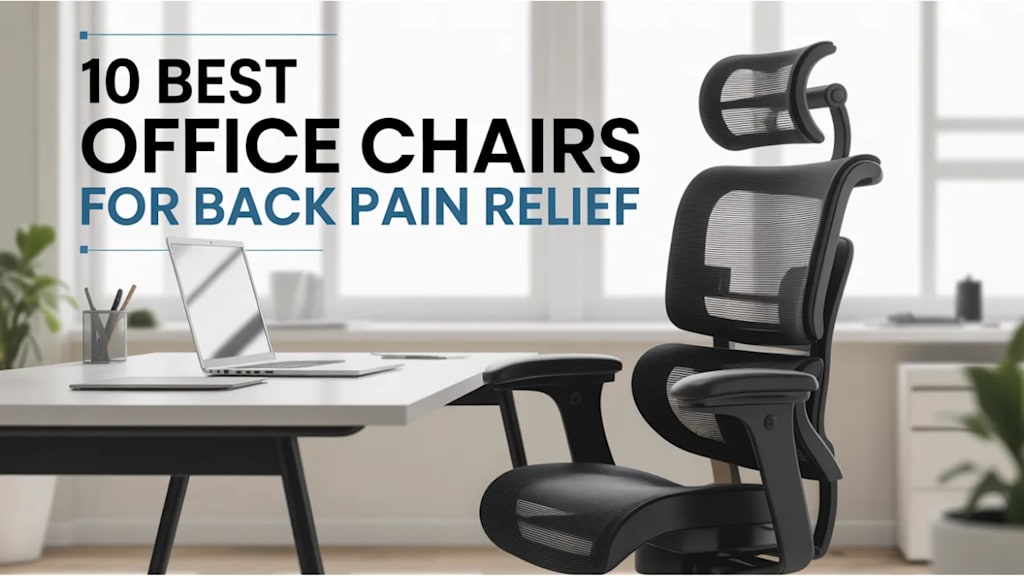
Back pain has quietly become one of the biggest problems of modern work culture. Millions of people spend six to ten hours every day sitting at a desk, often in chairs that offer little support for the spine. Over time, this can lead to lower back pain, neck stiffness, poor posture, muscle fatigue, and even long-term spinal stress.
An ergonomic office chair cannot magically cure chronic back pain, but it can significantly reduce the strain caused by prolonged sitting.
Many people make the mistake of buying office chairs based only on appearance or cushioning. A soft chair may feel comfortable for an hour, but without proper spinal support it can actually worsen posture over time. The best office chairs support the natural S-curve of the spine and encourage movement throughout the workday.
In this guide, we will explore ten of the best office chairs for back pain relief, including premium ergonomic models, budget-friendly options, and chairs designed for long hours of sitting.
What Makes an Office Chair Good for Back Pain?
Before choosing a chair, it helps to understand why some chairs relieve pain while others create it.
According to ergonomic specialists and physiotherapists, the most important factor is adjustability. A chair should adapt to your body instead of forcing your body into a fixed position.
The key features include:
- Adjustable lumbar support
- Recline and tilt tension
- Adjustable armrests
- Seat depth control
- Breathable backrest
- Proper head and neck support
- Stable seat cushioning
Lumbar support is especially important because it helps maintain the natural inward curve of the lower spine. Without that support, many people begin slouching after sitting for long periods, which increases pressure on spinal discs and muscles.
Another important detail is movement. Even the best chair cannot fully compensate for sitting still all day. Ergonomic experts frequently recommend standing, stretching, and changing posture throughout the day.
Why Your Chair Might Be Causing Your Back Pain
Most people blame long working hours for their back pain. That is only part of the story.
The real issue is how your body adapts to your chair.
When your lower back is not supported, your spine loses its natural curve. You start leaning forward or slouching without even noticing. Your muscles tighten to compensate, and over time, that tension turns into pain.
A good chair does the opposite. It supports your spine in a way that feels natural. It allows your muscles to relax instead of constantly working to hold you upright.
The difference is subtle at first, but over weeks and months, it becomes significant.
What Actually Helps When Choosing a Chair
There is a lot of marketing around ergonomic chairs, but not all of it is useful.
What really matters is simple. A chair should support your lower back. It should allow you to adjust the height and angle. It should not force you into a rigid position.
Comfort is important, but support matters more. A very soft chair might feel good for an hour, but it often leads to poor posture later.
Breathability also makes a difference. Sitting for long hours can feel exhausting if your chair traps heat.
Most importantly, the chair should fit you. Not every chair works for every body.
Top 10 Office Chairs to Relieve Back Pain
Back pain often builds up slowly from long hours of sitting in poor posture. Most standard office chairs do not properly support the spine, which leads to pressure on the lower back, stiffness, and fatigue over time.
A good office chair helps maintain natural spinal alignment and reduces unnecessary strain on your muscles. It also supports movement, since staying in one fixed position for too long can make discomfort worse.
In the following list, we look at ten office chairs that are known for better ergonomic support and improved sitting comfort. These include both premium ergonomic models and more affordable options that still make a noticeable difference in daily use.
1. Herman Miller Aeron
The Aeron is often mentioned in conversations about back pain, and there is a reason for that.
It feels different from most chairs the moment you sit in it. Instead of cushioning your body, it supports it evenly. The mesh design keeps you cool, while the structure encourages a natural sitting position.
What stands out is how it supports the lower back without feeling forced. You do not have to think about your posture. The chair quietly guides you into it.
It is expensive, but many people who use it daily feel the difference within weeks.
2. Steelcase Leap
The Steelcase Leap is built around movement.
Most chairs expect you to sit still, but this one adapts as you shift. If you lean forward or recline, the backrest adjusts to keep your spine supported.
That flexibility makes long hours easier. You do not feel locked into one position, which helps reduce stiffness.
It is the kind of chair you stop noticing after a while, and that is usually a good sign.
3. Herman Miller Sayl
The Sayl looks unusual, but its design has a purpose.
The backrest is flexible, which allows it to respond to your movements instead of resisting them. It feels lighter than traditional office chairs, and that openness can be surprisingly comfortable.
It does not rely on heavy padding. Instead, it focuses on keeping your posture aligned.
For people who prefer a more responsive chair, this one feels natural.
4. Branch Ergonomic Chair
Not everyone wants to spend a large amount on a chair, and that is where the Branch Ergonomic Chair fits in.
It offers the basics that actually matter. You can adjust the height, the armrests, and the lumbar support. The mesh back helps with airflow, which is useful during long sessions.
It is simple, but it works.
For many home setups, this level of support is more than enough.
5. Hbada Ergonomic Chair
The Hbada chair keeps things simple.
It does not have the advanced features of premium chairs, but it still provides decent support for everyday use. The design is clean, and it fits well in smaller spaces.
It is a practical choice if your back pain is mild and you want something better than a basic chair.
6. IKEA MARKUS
The MARKUS has been around for years, and people keep coming back to it.
It has a high back that supports your entire spine, which is something many budget chairs lack. The built-in lumbar support is not adjustable, but it works well for most people.
It is not fancy, but it is reliable.
For its price, it offers more support than you might expect.
7. Haworth Fern
The Fern feels different in a subtle way.
The backrest moves with your spine, almost like it is following your posture instead of correcting it. That creates a more relaxed sitting experience.
It is a good option if you spend long hours at your desk and want something that feels less rigid.
Comfort here comes from movement, not just cushioning.
8. OdinLake O2
The OdinLake O2 takes a unique approach.
Its backrest is divided into sections, each supporting a different part of your spine. This helps distribute pressure more evenly.
It also allows deeper reclining, which can be useful when you need a break without leaving your chair.
It is designed for people who want both support and flexibility.
9. IKEA FLINTAN
The FLINTAN is a basic chair, but it still improves on many low-end options.
It offers height adjustment and a breathable back, which are small features that make a noticeable difference.
It is not meant for very long hours, but it works well as an entry-level upgrade.
Sometimes, even a small improvement in your setup can reduce discomfort.
10. Herman Miller Embody
This is probably the most natural next step after Aeron, especially for back pain content.
The Embody is designed specifically around spinal alignment and pressure distribution. Instead of a traditional frame feeling, it has a pixelated support system that adapts to micro-movements in your back.
Choosing What Works for You
There is no perfect chair that works for everyone.
What matters is how the chair fits your body and your routine. Someone who sits for ten hours a day will have different needs than someone who uses a desk occasionally.
It also depends on the kind of discomfort you feel. Lower back pain, shoulder tension, and neck stiffness often require different types of support.
Trying a chair, if possible, always helps. If not, focusing on adjustability gives you a better chance of finding the right fit.
A Chair Alone Is Not Enough
It is easy to expect a chair to solve everything, but that is rarely the case.
Your habits matter just as much.
Taking short breaks, stretching, and adjusting your sitting position throughout the day can make a big difference. Even a few minutes of movement each hour helps your body reset.
Think of the chair as support, not a complete solution.
Final Thoughts
Back pain often feels like a normal part of modern work life, but it does not have to be.
The way you sit, the chair you use, and the habits you build all play a role in how your body feels at the end of the day.
The chairs in this list are not magic fixes, but they are tools that can help you create a healthier workspace.
Sometimes, improving your comfort is not about doing something complicated. It is about making better choices, one small change at a time.
And in many cases, it starts with the chair you sit on every day.
About the Creator
Saif
Exploring different parts of life.
Enjoyed the story? Support the Creator.
Subscribe for free to receive all their stories in your feed.
Comments
There are no comments for this story
Be the first to respond and start the conversation.