
Why This Alleged GTA 6
Easter Egg Has Sparked a Backlash

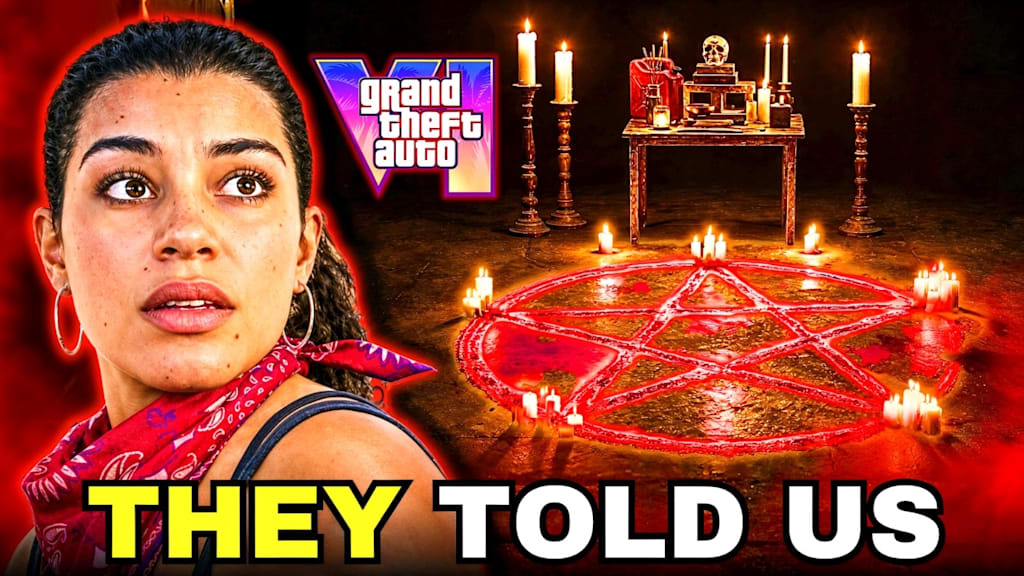
A hidden warehouse. An altar. A book pointing toward a disturbing ceremony. Footage circulating as a GTA 6 Easter egg has raised a question that goes beyond how much violence a Grand Theft Auto game can contain: does asking players to participate in a ritual cross a different kind of line?
I grew up playing video games, so this is not about pretending gaming itself is the problem. But the South Capri warehouse sequence being shared online feels different from the usual chaos associated with GTA. Its imagery, the way it guides the player, and the reward supposedly attached to completing it are what make it so unsettling.
One distinction matters before going further: the material presented here does not independently establish that this is authentic GTA 6 gameplay. The warehouse sequence and other purported GTA 6 discoveries should be treated as alleged content, not confirmed Rockstar features. The reaction is still worth examining, but so is the difference between what footage appears to show and what it actually proves.
The South Capri Warehouse Easter Egg
The sequence centers on an apparently empty warehouse in South Capri. Above the entrance is a damaged sign with missing letters that appears to spell “Temple.” At first, that might look like another strange environmental detail. Once the interior is revealed, the name takes on a much darker meaning.
Inside is a nearly black room with red writing across the walls. Farther back, a pentagram sits on the floor, surrounded by candles. An altar stands behind it, with the word “sacrifice” written on the wall.
A book near the altar supplies another clue. One page contains a drawing; the other suggests that burning is the only means of escape. Taken together, the room is not simply decorated to look frightening. Its objects appear to set up an interaction.
Nothing initially happens. The apparent trigger comes after the player leaves the building.
The Cat, the Woman, and the Return Inside
Outside, a black cat appears and leads the player toward a woman beside the warehouse. A large hammer nearby adds to the implication of what the sequence wants the player to do next.
The player then carries the woman inside and places her on the symbol on the floor. That action appears to activate the ceremony.
This is the detail that bothers me most: the guidance seems to come through the environment rather than a straightforward mission briefing. The writing establishes the demand. The book supplies a clue. The cat directs the player toward a person. The room provides the destination.
It is an indirect chain of instructions, but the intended progression appears clear.
What Happens When the Ceremony Begins?
Once the woman is placed on the pentagram, the warehouse erupts into supernatural activity. Flames flare up, the candles and symbols illuminate, and a voice that sounds like Lucia calls for help from upstairs.
Following that voice leads to a figure seated in a chair. The figure rises into the air and attacks. The encounter then appears to involve an entity trying to force Jason over the upper floor’s edge.
Back downstairs, the woman placed on the symbol reanimates and becomes hostile. The book’s earlier warning now functions as a solution: the entity must be set ablaze to end the encounter.
The sequence is also described as awarding an achievement for participating in the sacrifice. If authentic, that reward would be an important part of the criticism. There is a difference between stumbling across a disturbing scene and being guided through it, completing it, and receiving recognition for doing so.
GTA is hardly unfamiliar with shocking material. Still, I understand why someone might see this as a different category of content. The objection is not only that something terrible happens. It is that the player appears to become the necessary participant in making it happen.
Why the Warehouse’s Location Raises Questions
Another detail drawing attention is the surrounding neighborhood. South Capri is presented as an affluent area, with expensive sports cars nearby.
That contrast invites a suspicious reading: why place a sinister warehouse in the middle of apparent wealth? Is the setting meant to suggest that powerful or wealthy characters use it?
That is an interpretation, not an established explanation. Nearby luxury cars do not prove who owns the building or what story its designers intended. But the contrast between a polished neighborhood and a hidden, disturbing interior is precisely the kind of detail that encourages people to look for connections.
The Abandoned Hotel and Recurring Symbols
The warehouse is not the only purported discovery being discussed. Another sequence takes place in an abandoned hotel, where strange symbols appear on the walls.
Upstairs, a mannequin faces a wall. Elsewhere in the room, another mannequin lies on a bed, with a message on the floor nearby. As the player approaches the route to the roof, the lights flicker and additional symbols illuminate along the walls.
Other examples presented alongside these scenes include:
Three posters displaying similar imagery during a mission.
A poster that appears to resemble a tarot card.
Symbols incorporated into building signs and storefront displays.
The argument is that these details form a recurring visual theme rather than one isolated horror encounter.
I find repetition worth noticing. Background art, signs, props, and lighting all contribute to a game’s atmosphere. But repeated imagery does not, by itself, establish one hidden meaning or a developer’s personal beliefs. Recognizing a pattern and proving what that pattern means are two different things.
The Yacht Conversation and the Question of Powerful Insiders
An early conversation presented as in-game dialogue adds another layer to the discussion. A character claims that famous people, including politicians, actors, and billionaires, are invited onto a yacht once they reach a certain level of recognition.
He describes that invitation as entry into an exclusive club and insists that yacht transit records could establish who has been aboard.
When asked who organizes it, he launches into a list that includes the IAA, the FIB, other organizations, and even Cluckin’ Bell. He also makes a claim about a waste treatment operation collecting his DNA.
The exchange mixes allegations about powerful insiders with an increasingly outlandish delivery. That context matters. A fictional character making conspiratorial claims is not the same as a game confirming those claims.
Even so, I can understand why people connect this conversation to the warehouse. One scene suggests a secretive world of wealthy, influential people. Another appears to place a ritual site in an expensive neighborhood. The thematic connection is easy to make.
What is missing is evidence that the two are actually connected within the story.
GTA V Already Explored Similar Territory
The broader concern does not begin with the alleged GTA 6 footage. GTA V also includes cult imagery and optional encounters built around disturbing groups.
The clearest comparison is the Altruist compound in the mountains. Playing as Trevor, it is possible to deliver certain hitchhikers to the group in exchange for money. After four deliveries, the arrangement turns against him, leading to a confrontation in which he has to fight his way out.
The group’s dialogue invokes offerings, purity, flesh, blood, and the promise of renewal. The scene combines ritual language with grotesque violence.
That comparison explains why the warehouse footage immediately felt familiar to some people. The concern is not simply that GTA might contain a frightening room. It is that the series has already used optional activities to bring the player into contact with cult-like groups and their practices.
Other details cited in this discussion include symbols throughout GTA V, references to secretive groups, and a painting in Franklin’s house. These contribute to the broader interpretation, although their presence alone cannot settle what any particular image means.
Why Some Christians See More Than Fiction
The strongest objections highlighted in the backlash come from Christians who believe the issue goes beyond fictional entertainment.
Their argument is that what a person consumes matters spiritually. From that perspective, buying a game and voluntarily participating in scenes centered on sacrifice or occult imagery cannot automatically be dismissed as harmless just because the setting is imaginary.
Several related concerns emerge:
Participation: The player appears to perform the actions that activate the ceremony.
Financial support: Purchasing the game is seen as supporting material that conflicts with Christian beliefs.
Spiritual influence: Some believers argue that entertainment deserves the same discernment as other influences in their lives.
Personal conviction: Some reject the idea that this should be left entirely to individual comfort, believing the content creates a clearer religious boundary.
The opposing response is familiar: it is fictional, optional, and part of a series already built around exaggerated wrongdoing. From that perspective, encountering disturbing material does not mean endorsing it.
That is the real disagreement. The two sides are not merely debating whether the scene is creepy. They are working from different understandings of what participation in fiction means.
Is “It’s Just a Game” Enough?
I do not have a problem with gaming as a whole. But I also do not think calling something entertainment automatically ends every conversation about its content.
Games ask us to make choices and carry out actions. That is part of what makes them engaging. It is also why a scene can feel different when progress depends on doing the disturbing thing rather than simply encountering it.
For me, the alleged warehouse encounter raises a reasonable question: why build an optional activity around this particular experience?
That question does not justify claiming we know Rockstar’s intentions. Nor does it prove that fictional imagery has supernatural consequences. It does leave room for people to decide that certain experiences are not something they want to participate in, even virtually.
A Similar Concern About Television
The discussion also brings to mind an actor’s account of feeling conflicted about work on a television production.
He described reaching a promising point in his career while becoming increasingly uncomfortable with the material. In one scene, his character’s body was being created on a slab in a story involving future travel and replacement bodies. He recalled language resembling the biblical account of humanity being formed from dust, alongside recurring eye imagery that troubled him.
He interpreted those creative choices through his faith and described feeling that he should step away, even while hoping that one more job could provide enough money to support his mother.
His account does not prove anything about GTA. Its relevance is the underlying tension: what happens when entertainment, career opportunities, or financial rewards conflict with a person’s spiritual boundaries?
The Question Worth Asking
The alleged GTA 6 warehouse Easter egg brings together several things likely to provoke a strong response: implied human sacrifice, supernatural horror, environmental instructions, and an apparent reward for completing the sequence.
Before assigning responsibility, the footage’s authenticity needs to be established. Connections between the warehouse, wealthy characters, scattered symbols, and secret clubs also remain interpretations rather than demonstrated facts.
But the personal question does not require pretending that every interpretation is proven: what are you comfortable participating in for entertainment?
Some people will see an optional horror encounter and nothing more. Others will see a boundary they do not want to cross. I understand why this imagery troubles people. The strongest discussion takes that concern seriously while remaining equally serious about what the available material can, and cannot, establish.
About the Creator
Enjoyed the story? Support the Creator.
Subscribe for free to receive all their stories in your feed.
Comments
There are no comments for this story
Be the first to respond and start the conversation.