
United States Video Game Market Set for Strong Growth as Cloud Gaming, Esports, and Digital Innovation Transform Entertainment
Rising consumer spending, technological advancements, and the growing popularity of online gaming are expected to propel the U.S. video game industry to new heights through 2034.


The United States remains one of the most influential and profitable gaming markets in the world. From console and PC gaming to mobile platforms and cloud-based services, video games have become a central part of modern entertainment culture. What was once considered a niche hobby has evolved into a multi-billion-dollar industry that attracts players of all ages and backgrounds.
According to Renub Research, the United States Video Game Market is projected to increase from US$53.74 Billion in 2025 to US$125.37 Billion by 2034, growing at a CAGR of 9.87% between 2026 and 2034. This remarkable growth is being fueled by increasing consumer engagement, rapid technological innovation, expanding online communities, and the growing popularity of esports and live streaming.
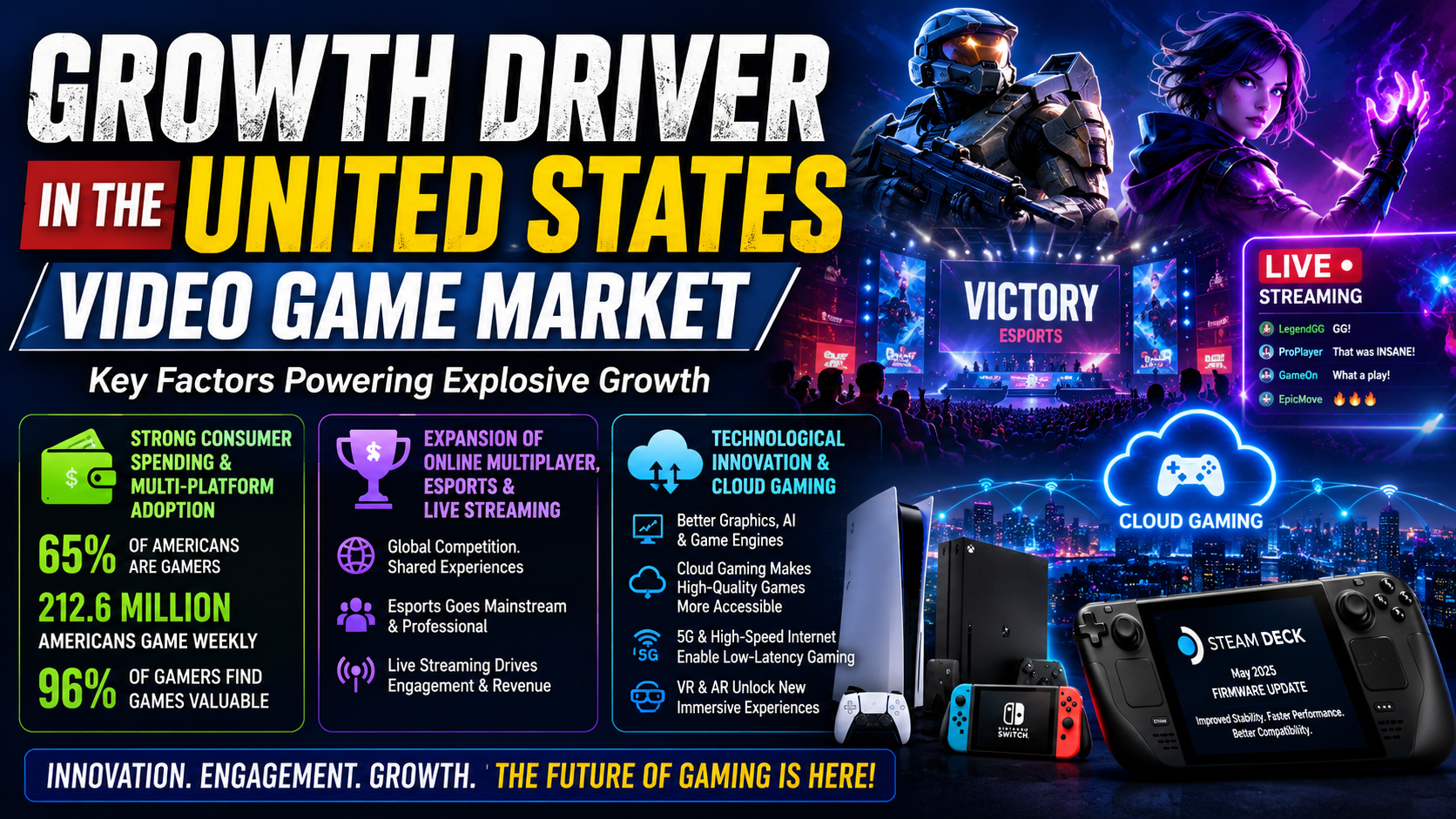
Video Games Have Become a Mainstream Form of Entertainment
Video games are interactive digital experiences played on consoles, computers, smartphones, tablets, and other connected devices. They include a wide range of genres such as action, adventure, sports, simulation, strategy, role-playing, and casual games.
In the United States, gaming has expanded far beyond traditional demographics. Children, teenagers, adults, and even senior citizens participate in gaming activities regularly. Modern games offer not only entertainment but also social interaction, creativity, competition, and immersive storytelling.
The widespread adoption of internet-connected devices and high-speed broadband has helped gaming become a major cultural force. Online multiplayer environments allow players to connect globally, while digital distribution platforms make games more accessible than ever before.
As a result, gaming has become deeply integrated into everyday life and continues to attract millions of new users annually.
Strong Consumer Spending Continues to Drive Growth
One of the primary factors supporting market expansion is strong consumer spending on gaming products and services.
American consumers consistently invest in gaming hardware, software, subscriptions, downloadable content, and in-game purchases. The convenience of digital purchases and subscription-based services has encouraged gamers to spend more frequently while accessing larger game libraries.
The gaming ecosystem now extends beyond purchasing a game once. Many players spend money on season passes, cosmetic items, expansions, premium memberships, and virtual currencies. These recurring revenue streams have significantly increased the overall value of the industry.
As disposable income rises and gaming becomes a preferred entertainment choice, consumer spending is expected to remain a key growth engine for the market.
Online Multiplayer Gaming Is Changing the Industry
Online multiplayer gaming has fundamentally transformed how people experience video games.
Instead of playing alone, gamers can now connect with friends, family members, and competitors from around the world. This social component has increased engagement levels and encouraged longer playing sessions.
Multiplayer games create communities where players collaborate, compete, and communicate in real time. These experiences often extend beyond the game itself through forums, social media groups, and streaming platforms.
The popularity of multiplayer gaming has also encouraged developers to continuously update content, introduce seasonal events, and maintain long-term player engagement.
As internet infrastructure improves and gaming networks become more sophisticated, online multiplayer gaming is expected to remain one of the industry's strongest growth segments.
Esports Is Creating New Opportunities
Competitive gaming has evolved into a global phenomenon.
Esports tournaments now attract millions of viewers and generate substantial revenue through sponsorships, advertising, ticket sales, and media rights. Professional gamers, teams, and content creators have transformed gaming into a viable career path.
The United States is one of the leading esports markets worldwide, hosting major tournaments and supporting a growing ecosystem of professional organizations and gaming communities.
Esports also increases demand for gaming hardware, software, accessories, and live-streaming services. The industry's influence extends beyond entertainment into education, marketing, and digital media.
As viewership continues to expand, esports will likely remain a critical contributor to future gaming market growth.
Live Streaming Is Reshaping Player Engagement
Live streaming platforms have revolutionized how gamers interact with content.
Players can now broadcast gameplay in real time, allowing audiences to watch, learn, and engage with their favorite creators. This has created entirely new forms of entertainment and community engagement.
Streaming has become a powerful marketing tool for game developers and publishers. Popular streamers often influence purchasing decisions and help introduce new titles to large audiences.
The growth of live streaming has also generated additional revenue opportunities through subscriptions, advertisements, sponsorships, and viewer donations.
As streaming culture continues to grow, it is becoming an increasingly important component of the overall gaming ecosystem.
Technological Innovation Is Driving the Next Generation of Gaming
Technology remains one of the most powerful forces shaping the future of the gaming industry.
Advancements in graphics processing, artificial intelligence, game engines, and cloud computing are creating more immersive and realistic gaming experiences. Modern games feature cinematic visuals, intelligent characters, and dynamic virtual worlds that were unimaginable only a decade ago.
Artificial intelligence is improving gameplay experiences by creating adaptive systems that respond to player behavior. Enhanced game engines allow developers to build larger environments and more detailed simulations.
These innovations are not only improving game quality but also attracting new audiences to the industry.
Cloud Gaming Is Expanding Accessibility
Cloud gaming represents one of the most exciting developments in the video game market.
Traditionally, players needed expensive consoles or gaming computers to access high-quality titles. Cloud gaming removes this barrier by allowing games to be streamed directly from remote servers.
This means players can enjoy advanced gaming experiences using smartphones, tablets, laptops, and smart televisions without purchasing expensive hardware.
The growth of broadband internet, 5G networks, and cloud infrastructure has significantly improved the practicality of cloud gaming services.
As technology continues to advance, cloud gaming is expected to become a major contributor to industry expansion by making gaming more affordable and accessible.
Young Adults Remain a Key Market Segment
The 18–24 age group represents one of the most active and influential segments within the U.S. gaming market.
These consumers regularly engage with consoles, PCs, and mobile gaming platforms while actively participating in esports, online multiplayer experiences, and live-streaming communities.
Young adults are often early adopters of new technologies, making them a critical audience for innovations such as cloud gaming, virtual reality, and subscription-based gaming services.
Their preferences frequently shape broader industry trends and influence future product development.
Male Gamers Continue to Contribute Significant Revenue
The male gaming segment remains a major contributor to industry revenue.
Male gamers generally show strong participation in competitive multiplayer titles, esports, action games, sports simulations, and first-person shooters. They also tend to spend more on gaming hardware, accessories, subscriptions, and premium content.
Strong engagement within this demographic continues to support growth across multiple gaming categories.
Medium-Income Households Are Supporting Market Expansion
Medium-income households represent a significant portion of the gaming consumer base in the United States.
These consumers often seek affordable entertainment options and are increasingly attracted to subscription services, discounted digital content, and cloud gaming platforms.
The availability of flexible pricing models has expanded access to gaming and helped drive broader adoption among mainstream audiences.
As gaming services become more affordable, participation among medium-income households is expected to continue increasing.
California Leads the Nation's Gaming Industry
California remains one of the most important gaming markets in the United States.
The state is home to numerous game developers, publishers, technology companies, esports organizations, and content creators. Its strong technology ecosystem and entertainment industry create ideal conditions for innovation.
California also benefits from high consumer spending, advanced internet infrastructure, and strong interest in emerging technologies such as virtual reality and augmented reality.
As a result, the state continues to play a leading role in shaping the future of gaming.
Texas Emerges as a Fast-Growing Gaming Hub
Texas has become one of the fastest-growing gaming markets in America.
Cities such as Austin, Dallas, and Houston have developed vibrant gaming communities supported by technology companies, game developers, and esports organizations.
Strong population growth, increasing broadband access, and a growing technology workforce have contributed to the state's expanding influence within the gaming industry.
New York Continues to Strengthen Its Gaming Presence
New York's dense urban population and digital connectivity make it an important gaming market.
Consumers in the state frequently engage with online multiplayer games, digital downloads, mobile gaming, and subscription-based services. New York also supports a growing ecosystem of independent developers, esports events, and gaming-focused media companies.
The state's continued investment in digital entertainment positions it as a significant contributor to industry growth.
Washington Drives Innovation Through Technology
Washington State plays a critical role in gaming innovation.
Its strong technology infrastructure and highly connected consumer base support widespread adoption of PC gaming, online gaming, and cloud-based services.
The presence of major technology and gaming companies has helped establish Washington as a center for software development, digital distribution, and gaming innovation.
Challenges Facing the Industry
Despite its strong outlook, the U.S. gaming market faces several challenges.
Game development costs continue to rise as developers create larger and more sophisticated experiences. Marketing expenses and competition for player attention have also increased significantly.
Regulatory concerns surrounding player wellbeing, data privacy, gaming addiction, and in-game monetization practices remain important issues. Companies must balance innovation and profitability while maintaining consumer trust.
Market saturation presents another challenge, making it increasingly difficult for new games to stand out in a crowded marketplace.
Final Thoughts
The United States video game industry is entering an exciting period of growth and transformation. Driven by strong consumer demand, cloud gaming adoption, esports expansion, live-streaming culture, and ongoing technological innovation, the market is positioned for significant long-term success.
With the industry expected to grow from US$53.74 Billion in 2025 to US$125.37 Billion by 2034, gaming will continue to play a major role in shaping the future of entertainment and digital experiences across America.
For players, developers, investors, and technology companies alike, the next decade presents tremendous opportunities in one of the world's most dynamic and rapidly evolving industries.
About the Creator
Enjoyed the story? Support the Creator.
Subscribe for free to receive all their stories in your feed.
Comments
There are no comments for this story
Be the first to respond and start the conversation.