
U4gm Legacy Reborn: How Iconic Aion Skills Are Being Reimagined in Aion 2
Legacy Reborn: How Iconic Aion Skills Are Being Reimagined in Aion 2.

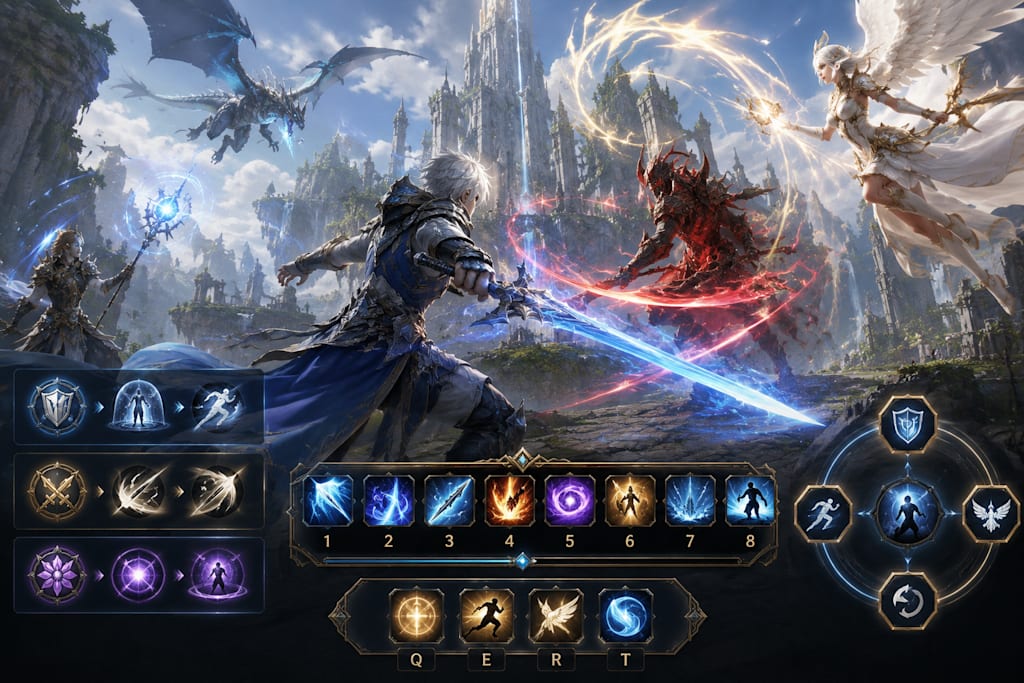
With NCsoft confirming a global launch window for Aion 2 in Q4 2026 across PC and consoles, long-time fans of Atreia are closely analyzing early developer showcases and test footage. One of the biggest questions from veterans is how the original game’s complex skill system will translate into a modern action MMO.
The original Aion was known for its extremely dense skill bars, often requiring players to manage dozens of abilities at once. In Aion 2, this system is being streamlined into a more action-oriented design with 8 main active skills and 4 auxiliary inputs, alongside a restructured economy where resources like Aion 2 Kinah play a more integrated role in overall progression.
However, fewer visible buttons does not necessarily mean less depth. Instead, the game appears to be shifting toward contextual combat systems and skill chains that emphasize timing, reactions, and execution.
Below is a breakdown of how some of the most iconic legacy mechanics are expected to evolve.
1. Remove Shock (Crowd Control Break System)
In the original Aion, Remove Shock was a crucial PvP mechanic that allowed players to instantly break free from crowd control effects such as stuns or knockdowns. It often created fast, high-pressure decision-making moments where players had to choose between defense and immediate counterplay.
Expected Evolution in Aion 2
In Aion 2, this mechanic is being redesigned to better fit a fast-paced action combat system.
Instead of existing as a dedicated ability on the hotbar, Remove Shock appears to be shifting into a contextual response system. When a player is affected by heavy crowd control, the UI may dynamically present a break-free option tied to active skill slots.
Given the game’s expanded aerial combat system, breaking free from CC may also transition directly into movement options such as air recovery, glide repositioning, or directional dodges.
2. Weaving (Auto-Attack Animation Timing)
Weaving was one of the defining mechanical skills in the original Aion. Players optimized damage by inserting basic attacks between skill animations to maximize DPS output and reduce downtime.
Expected Evolution in Aion 2
In the new system, traditional animation cancel weaving appears to be replaced with structured combo chains and timing-based rewards.
Instead of manually inserting auto-attacks, players are expected to execute skills in rhythm-based sequences. Proper timing may trigger bonus effects such as:
- Increased attack speed
- Additional damage procs
- Enhanced combo finishers
This shifts the mechanic from animation exploitation into intentional combo execution within the combat system itself.
3. Divine Power (DP) Skills and Transformations
In Aion, Divine Power (DP) skills and transformations were powerful, high-impact abilities that could dramatically shift the outcome of large-scale battles such as Abyss sieges. These abilities were typically gated behind long cooldowns and resource accumulation.
Expected Evolution in Aion 2
In Aion 2, long cooldown-based ultimate abilities are expected to be redesigned into more dynamic systems.
Rather than saving power for rare moments, players may build up transformation or ultimate energy through active gameplay, such as:
Dodging and countering attacks
Landing successful skill chains
Maintaining combat momentum
This approach would make high-impact abilities more frequent and integrated into regular combat flow rather than isolated “super button” moments.
4. Chanting Mantras and Spirit Commands
Support classes in Aion relied heavily on buff management and pet control systems. Chanters maintained multiple active buffs, while Spiritmasters managed elemental summons through dedicated pet interfaces.
Expected Evolution in Aion 2
These systems appear to be significantly simplified and integrated into core combat loops.
For Chanters, buffs may now trigger dynamically through offensive skill rotations rather than manual toggling.
For Spiritmasters, pets are expected to function more like embedded combat effects or summoned bursts tied directly to skill usage, rather than persistent units requiring separate management.
This reduces UI clutter while maintaining class identity through combat interactions.
The Big Picture: A More Fluid Atreia
Overall, Aion 2 appears to be moving away from static hotbar management and toward a more responsive, action-driven combat system.
Key design shifts include:
- Fewer active buttons, but higher impact per skill
- Context-sensitive defensive responses
- Combo-based offensive systems
- Dynamic resource-driven ultimate abilities
Rather than removing complexity, the redesign appears focused on relocating skill depth into timing, positioning, and decision-making during combat.
While longtime players may miss the extremely dense skill bars of the original Aion, the new system aims to modernize combat while preserving strategic depth.
If executed well, Aion 2 could strike a balance between accessibility and high-skill gameplay by transforming legacy mechanics into faster, more reactive systems.
The real question now is whether veterans will embrace this streamlined design or continue to prefer the complexity of the original system.
About the Creator
Billo Nali
Step into the thrilling world of u4gm, your go-to destination for the latest game updates, expert strategies, and exclusive tips.
Enjoyed the story? Support the Creator.
Subscribe for free to receive all their stories in your feed.
Comments