
Tomb Raider Retrospective - 6
Chapter 6: The Survivor Era, a Darker, Grittier Lara

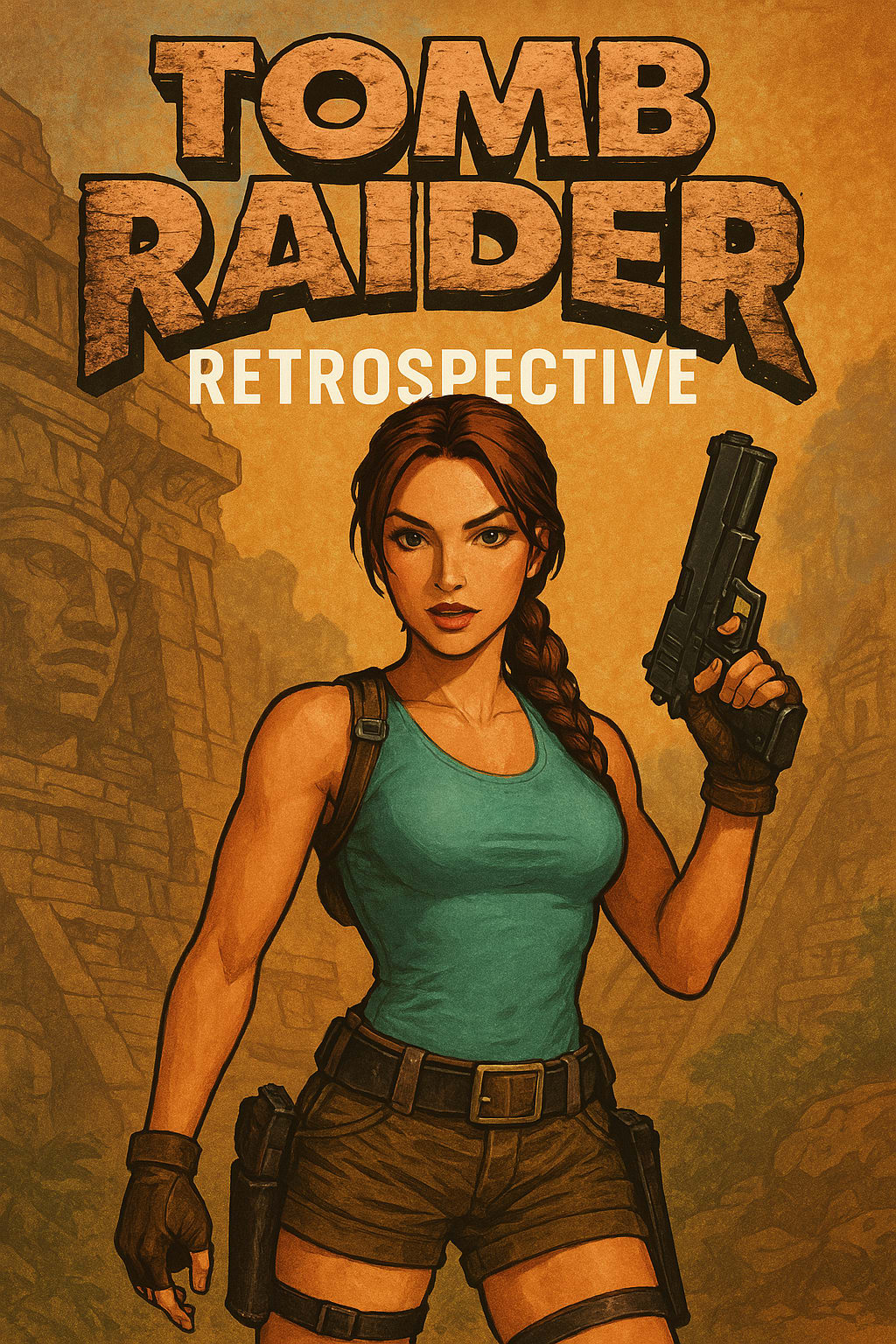
Tomb Raider: Underworld performed well critically, but it did not sell as strongly as Square Enix had hoped. Even so, it would be another five years before Lara Croft returned. The game that eventually emerged in 2013 was originally conceived as a direct sequel, but events in the wider entertainment industry helped change that plan. Films like Batman Begins (2005) and Casino Royale (2008) had shown that long-running, iconic characters could be successfully revitalised by returning them to their beginnings.
For Crystal Dynamics, Tomb Raider suddenly seemed ready for the same kind of reinvention.When discussing the project, Crystal Dynamics head Darrell Gallagher explained:
“Bond and Batman faced the same challenges as us. They were iconic characters who had to be refreshed and modernised for a new generation. These stories were a reaffirmation to us, that we could do this.” — Darrell Gallagher
The idea of a reboot had been circulating for some time. After Core Design had fumbled the release of Angel of Darkness, Crystal Dynamics had spent the following years stabilising the series with the Legend trilogy. They even experimented with a smaller-scale, isometric spin-off, Lara Croft and the Guardian of Light, which was well received. With that foundation in place, the studio decided it was time to do something more radical: to rebuild Lara Croft from the ground up.
The first teaser for the new Tomb Raider appeared in 2011. In preparation, the team studied real-world survival stories, including interviews with Aron Ralston and Piers Paul Read’s book Alive. The intent was clear from the start. This would not be a story about confidence or mastery, but about endurance. Lara would no longer begin as a capable adventurer. She would become one.
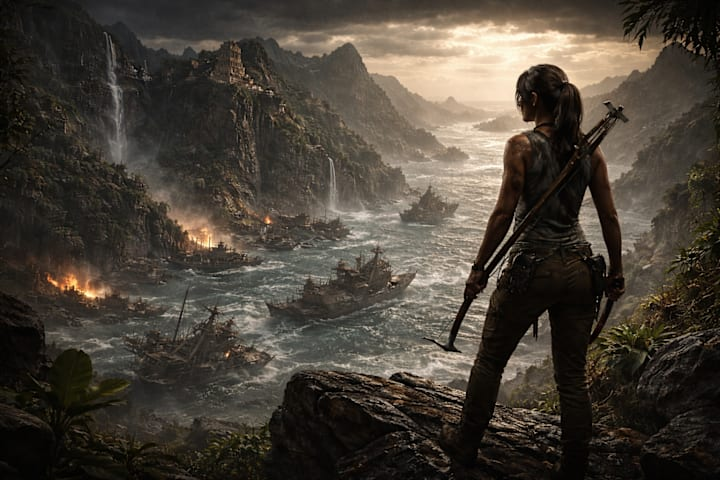
Released in 2013, Tomb Raider reframed the character through suffering. Its island setting, oppressive atmosphere, and emphasis on scavenging and crafting all served a single narrative goal: to make the player feel exposed and overwhelmed. Presentation played a major role in this shift. The game leaned heavily on ambient sound design, dramatic lighting, and motion-captured performances, with Camilla Luddington stepping into the role of a younger, more vulnerable Lara.
Mechanically, the series was also rebuilt. Lara’s equipment was streamlined into a focused survival loadout, and progression became tied to resources, upgrades, and incremental improvement. Combat was brutal, direct, and often spectacular. On a mechanical level, it was satisfying. On a thematic level, it introduced a tension that would come to define the entire trilogy.
Lara was meant to be frightened and inexperienced. The story insisted on it. But the game consistently rewarded the player for efficient, often savage violence. The gap between who Lara was supposed to be and what the game asked her to do sat quietly at the centre of the experience.
Rather than resolving this contradiction, Rise of the Tomb Raider expanded it.
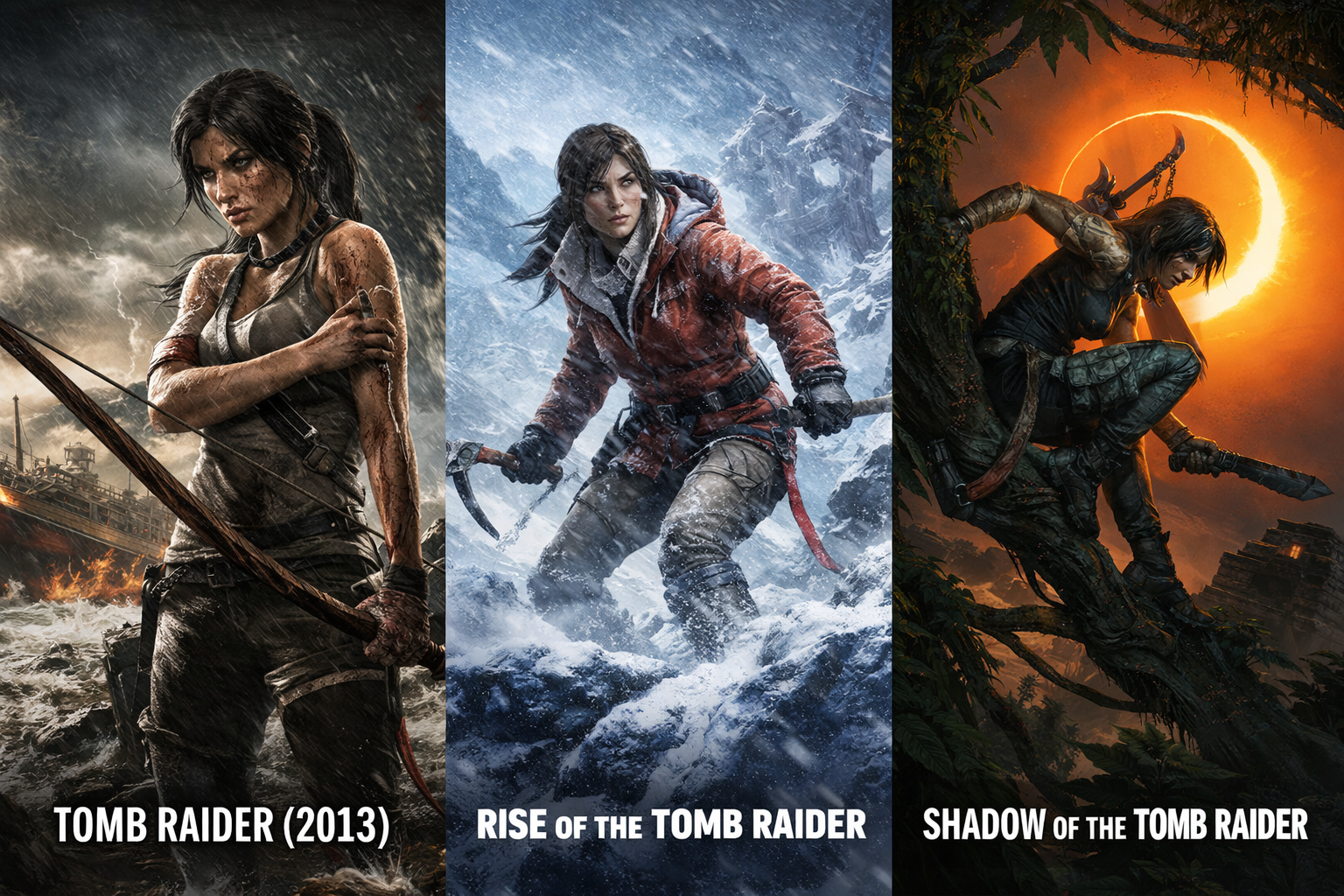
Released in 2015, Rise shifts Lara from reaction to pursuit. No longer simply trying to survive, she is now chasing a legend: the lost city of Kitezh and its promise of immortality. The tone changes accordingly. This Lara is no longer defined by circumstance, but by obsession. Her conflict with Trinity is not just a race to a destination, but a mirror — two sides driven by belief, both willing to cause harm in the name of a greater truth.
Structurally, Rise is a larger, more confident game. Its environments are broader and more open, built around hubs that encourage exploration and revisiting old spaces. Tombs return as a more central pillar of the experience, and puzzle-solving begins to reclaim some of the importance it had lost in 2013. Crafting, upgrades, and skill trees are expanded, and the rhythm of play settles into a steady loop of exploration, scavenging, and combat.
The fantasy of survival remains, but it is now intertwined with mastery. Lara is still framed as emotionally wounded, still shaped by trauma, but she is also highly capable, heavily armed, and extraordinarily efficient. Survival is no longer the goal. Discovery is.
By the time Shadow of the Tomb Raider arrives in 2018, the trilogy begins to turn inward.
The third game opens with Lara causing a catastrophe through her own actions. For the first time, the story is not about reacting to danger or racing an enemy, but about dealing with the consequences of her obsession. Shadow is the most overtly self-critical entry in the trilogy. It asks whether Lara’s pursuit of ancient secrets is meaningfully different from Trinity’s exploitation of them, and whether her need to uncover the truth has become a kind of arrogance.
Mechanically, there is a noticeable shift in emphasis. Combat is de-emphasized in favor of stealth, traversal, and exploration. Lara gains more tools to avoid confrontation, to hide, and to move through spaces unseen. The environments are dense and oppressive, and the tombs are once again among the game’s strongest moments. There is a clear attempt here to reconnect Tomb Raider with its roots as a series about places rather than enemies.
And yet, the trilogy’s central contradiction never fully disappears. Even as Shadow pushes Lara toward restraint, it is still built on systems that reward efficiency, optimization, and violence when things go wrong. The narrative questions her actions. The mechanics still validate them.
About the Creator
Greg Seebregts
I'm a South African writer, blogger and English tutor; I've published 1 novel and am working on publishing a 2nd. I also write reviews on whatever interests me. I have a YouTube Channel as well where I review books, and manga and so on.
Enjoyed the story? Support the Creator.
Subscribe for free to receive all their stories in your feed.
Comments
There are no comments for this story
Be the first to respond and start the conversation.