
This MMO Has 700k Players, But I've Never Felt More Alone.
The 'Lord of the Mysteries' adaptation nails the atmosphere, but its combat and multiplayer systems completely break the spell.
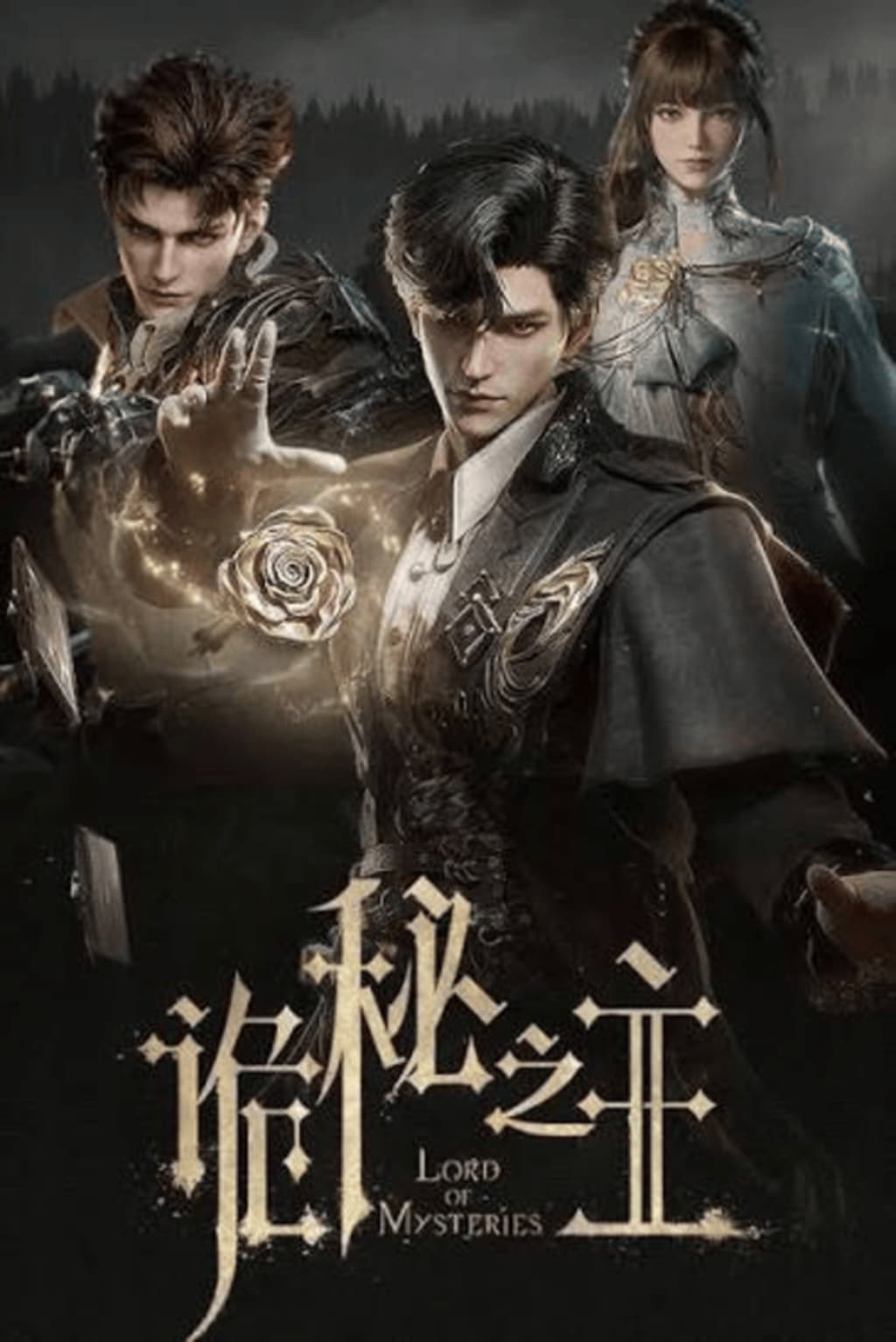
A player who has never read the novel, and one who has read it three times, walk away from the same city with completely different things.
The gas lamps of Backlund flicker on at six in the evening. A yellowed recruitment notice is pasted to a lamppost, its corners softened by damp fog. A player in a gray trench coat runs past, their ID tag flashing above their head before they vanish around the corner of the cobblestone street.
I stand beneath the Nighthawks' dormitory building. I don't move.
One hour after launch, concurrent online players have broken 700,000. The number is plastered on the official homepage — red on white, like a victory declaration. I'm standing in a city that countless readers have built in their imaginations, smelling virtual coal smoke, hearing distant, faint steam whistles — and, all around me, the chaotic jumble of over a dozen players unleashing skills at the same time.
The city is right. But the people in it — they're not.
After the Cinematic Ends
The opening CG runs for about seven minutes.
The camera pushes forward through the fog, passes through the church's stained‑glass windows, and lands on Klein's pale face. He opens his eyes, gaslight reflected in his pupils. The score is low and restrained — strings drawn tight, about to snap.
For a 2026 domestic Chinese game, this cinematic stands near the top. The character's micro‑expressions carry enough detail: when Klein coughs, his fingers instinctively press against his chest — and that gesture draws a clear arc toward his later, post‑"Fool" composure, which borders on cold indifference. If you've read the novel, this arc lets you revisit an emotional beat in just seven minutes.
The problem is what comes after. The real‑time rendered gameplay drops noticeably — the gap feels like falling from the church steeple.
Facial detail of the character models drops under real‑time rendering. Klein's cheekbone structure is still there, but the dazed confusion of "just transmigrated and hasn't figured anything out" has been replaced by a standard, wooden game‑protagonist blankness. The camera cuts during dialogue also reveal an uneven budget — key dramatic scenes get polished, meticulous cutscenes, while ordinary quests get stiff, standing‑around dialogue so rough you want to hit skip.
One player on Tieba put it bluntly: "In the CG it's Klein. In the gameplay, it's my cousin wearing a wig."
To be fair, the game's environmental art still exceeds the average for domestic MMOs. The cobblestones of Tingen have realistic water reflections; Backlund's smog is layered, with a palpable distance between the near‑gray haze and the yellowish industrial exhaust farther off. The church's lighting is especially meticulous — through the window beside the pipe organ, shafts of light reveal floating dust.
If you turn off all player ID tags, hide the UI, and just walk through the city, this game can give you about fifteen minutes of high‑quality immersion.
After fifteen minutes, you'll run into the first player sprinting past with a rainbow‑colored title: "Lord of the Mysteries · First Kill Worldwide · Bernadette's Dog."
A Friend Who Has Read the Novel Three Times Cried Over Voice Chat
I invited a friend who has read Lord of the Mysteries at least three times to play alongside me. He stayed silent over voice chat for the first forty minutes — until the main quest reached the arc involving Nighthawks captain Dunn Smith. That's when I heard him sniffle.
"They actually did it," he said. "The dialogue is almost verbatim."
The game offers two story paths: a "novel‑accurate" path that strictly follows the source material, and an "expanded" path that adds original content. The novel‑accurate path is restrained — almost no extra dialogue filler. Instead, it recreates the novel's classic moments through camera language and environmental staging. Dunn's ending, Klein's monologue in front of the church, and that conversation about "guardians" — all recreated frame by frame.
For fans of the novel, that alone is reason enough to play. You don't need polished combat. You don't need intricate dungeon design. You just need to stand in that scene, hear that soundtrack, watch that character speak the lines you remember — and then you're hit.
But if you haven't read the novel, the situation is far more complicated.
The game's tutorial system is extremely unfriendly to newcomers. Terms like "Sequence," "potion," "pathway," "mythical creature," and "secret organization" bombard you in the early hours. The new‑player guidance comes in pop‑ups that read like footnotes in a college textbook — the information is there, but it carries no emotional attachment. You can't remember the difference between a "Seer" and a "Mystery Pryer," just as you can't remember all the names introduced in the first fifty pages of an unfamiliar fantasy novel.
The side quests, however, turn out to be an unexpected bright spot.
One side quest tells the story of a lowly newsboy in Backlund, completely unrelated to the main plot. You help him deliver a few newspapers, run across two blocks, and eventually discover that he takes two extra streets every day to avoid a certain alley — an alley where something happened that the game never explicitly states, but that you can infer from environmental details (scorch marks on the wall, burnt scraps of paper on the ground). This side quest has no voice acting, no cutscenes — it's delivered entirely through environmental storytelling and a brief dialogue text — yet its execution is more polished than some main quests.
These side quests offer a revelation: this game does better in the "small" things than in the "big" ones. It knows how to tell stories through environment, but it doesn't know how to use its systems to let players tell their own.
While Fighting, I Was Also Scrolling on My Phone
The combat system is one of the most bewildering designs I've encountered in any MMO.
The confusion isn't that it's bad (though it is). It's why it chose to be bad in this particular way.
The core appeal of the Lord of the Mysteries novel lies in secrecy, strategy, information asymmetry, and Lovecraftian helplessness. Battles are rarely about direct confrontation — they're about intelligence, preparation, environment, and a bit of luck. But the game turns combat into a standard turret‑style rotation — lock on, mash keys, dodge red circles, wait for cooldowns, repeat.
The biggest flaw is impact feedback. When you summon a "Paper Figurine Substitute," your character raises a hand, a white light flashes, and a damage number pops above the enemy. But your hands feel nothing. No screen shake, no hit‑reaction animation on the enemy, no heavy‑impact audio cue. The skill feels like it swipes through air, and then the system tells you "you hit."
One player on NGA described it accurately: "It's like two people each acting out their own part, with an invisible sheet of glass between them."
The dungeon design presents even more complications.
The game features 6‑player party dungeons and 12‑player raid dungeons, with mechanics that blend puzzles and combat. In one dungeon, for example, four players must simultaneously wait at four different gas‑lamp switches and activate them in a specific sequence to break the boss's invincibility shield. In another, the team must step on floor tiles in the order of the "Fool" tarot card suits during combat.
These designs are interesting in themselves. The problem is that puzzles require quiet observation and thought, while multiplayer environments naturally generate noise. In pickup groups, someone is shouting "left left left" over voice chat, someone is typing "the order is reversed" in party chat, and someone steps on the wrong tile in the chaos, causing a wipe. You were expecting to unravel an ancient riddle alone in a gloomy underground tomb — and instead, your teammates are waving their rainbow titles in your face while the chat spams "rez me rez me."
Some players will enjoy this chaos. But if you were drawn in by the lonely, secretive, fumbling‑in‑the‑dark atmosphere of Lord of the Mysteries, this dungeon experience will leave you with a deep sense of dissonance.
The "Acting Method" Is Beautiful in Theory, Flat in Practice
The leveling system is built around the novel's "Acting Method." In theory, you need to "act" as your class to digest potions and advance through Sequences. A Seer must frequently perform divination; an Audience member must observe others; a Magician must put on performances.
If done deeply, this could become one of the most unique progression systems in any MMO — it grounds "role‑playing" not just in social interactions but in mechanics. You level up not because you killed a certain number of monsters, but because you actually "do what this person is supposed to do."
In practice, however, the Acting Method has been reduced to a template of daily tasks: "Use divination skill 3 times," "Meditate for 5 minutes at designated location," "Use 'Pendulum Divination' interaction on 3 players." Change the names, and these tasks could fit into any game with a class system. The shell of the Acting Method remains, but the flesh inside is assembly‑line quest padding.
The upside: you don't have to grind mobs to level. Follow the main quest, do a few acting dailies on the side, and your level naturally rises. For casual players who don't want to spend too much time on leveling, this curve is smooth enough.
But the cost is that you miss the narrative beauty of the novel — the idea of gaining power through truly understanding the essence of a profession. When you reach Sequence 7, you won't feel like you've genuinely become a "Magician." You'll just feel like you finished a weekly chore.
The Shop Outfits, and That 5,000‑Yuan Meme
On launch day, the pricing of cosmetic outfits in the in‑game shop sparked a modest controversy.
The most expensive set — a "Fool"‑themed outfit — carried a price tag of roughly 5,000 RMB. The official stance was that all cosmetics are purely aesthetic, with no stat bonuses. That's worth noting: in the current domestic MMO landscape, "no stat‑boosting items in the cash shop" remains a stance that requires explicit declaration.
But the aesthetic design of the outfits triggered another layer of discussion.
One male character outfit for the Witch pathway was designed as high heels paired with a lace skirt. This design is faithful to the novel's lore — that the Witch pathway gradually makes males more flamboyant, even feminine — but the in‑game execution comes across as overly literal. Players who equipped it found the skirt physics reasonably well‑done while running, but the overall visual impact made most male players opt to "put it aside for now, we'll see later."
The rest of the regular outfits lean conservative and bland: trench coats, top hats, gloves, riding boots — all basic Victorian‑era staples, lacking any standout details. Compared to the meticulously designed job sets in Final Fantasy XIV, or the innovative looks in Jian Wang 3 that blend traditional Chinese elements, this game's cosmetics lean more toward "reproduction" than "design."
One player who wrote a lengthy post on Weibo summed it up: "Free players have nothing to wear, and paying players don't look particularly good either. Neither side is happy — that's a kind of balance too."
That "Single‑Player Mode" Just Hides Other Players' Names
Before launch, the developers added a "single‑player story mode" in response to player feedback.
When enabled, the server hides other players' overhead ID tags and makes non‑party members' models invisible. As you walk through the streets of Backlund, you see empty avenues — gaslight spilling onto wet cobblestones, only a distant NPC silhouette in the distance.
If you just want to follow the main story and watch the cinematics, this mode can bring the immersion back to an acceptable level.
But at its core, it's still a multiplayer server. You can't play offline. You can't save at critical story junctures. You can't avoid dungeons that require a party (though the system will match you with AI teammates). More importantly, if you open the map in "single‑player mode," you'll still see "party recruitment" markers placed by other players. If you open the chat channel, trade messages continue scrolling in public.
One player who wrote a review on Zhihu put it precisely: "They hid other players' names, but they didn't hide other players themselves. You walk down an empty street, but you can still hear someone farming a dungeon behind you."
The game also includes four standalone mini‑games of varying styles — including a narrative short where you play the "Joker," and a Souls‑like action game called Lord of the Mysteries: Curse. Their quality is uneven, but they're all too small in scope — more like an apologetic gesture from the development team saying "we wanted to make a single‑player game too."
For players who only want the single‑player experience, these contents add up to roughly six to eight hours. After that, you're still facing the game's main body — which wears its 700,000‑player online count like a badge, while simultaneously reminding you at every turn that "this is an online game."
I Stood Beneath the Nighthawks' Dormitory for an Hour
One last thing.
I turned off all UI, switched to first‑person view, and stood beneath the Nighthawks' dormitory building for about an hour.
In‑game time was evening. The gas lamps had just come on. Fog drifted from the river, forming a soft halo around the streetlights. Occasionally an NPC would pass by — their pace slow, no ID overhead, no title, no health bar.
In this state, the city felt right. Moss in the gaps between cobblestones. A potted plant on a windowsill, nearly withered. A second‑floor curtain half‑drawn, revealing warm yellow light inside. You know that's a quest trigger point — but before you walk over, it's just a lit window.
I took over a dozen screenshots. When I looked back later, I realized almost every one of them was empty of people.
This, I think, will be the moment I remember this game for — not the dungeons I cleared, not the Sequences I advanced, but the time I found a corner inside a city where hundreds of thousands of people were online at once, and pretended it was mine alone.
Then I exited screenshot mode and returned to the game interface. A message refreshed in the top‑left chat channel: "Lord of the Mysteries · First Kill Worldwide · Bernadette's Dog has come online."
I closed the game.
I'll probably open it again tomorrow. Finish the main quest, see how they handle the later story arcs. The cinematics are still worth watching.
As for the rest — we'll see.
About the Creator
Jin
Writer of reamstories
https://reamstories.com/jin
Enjoyed the story? Support the Creator.
Subscribe for free to receive all their stories in your feed. You could also become a paid subscriber, letting them know you appreciate their work.
Comments
There are no comments for this story
Be the first to respond and start the conversation.