
The VIP Rumor: Inside the Buzz Around Harry, Meghan, and the World Cup
How online speculation, celebrity influence, and global events collided to create a viral controversy

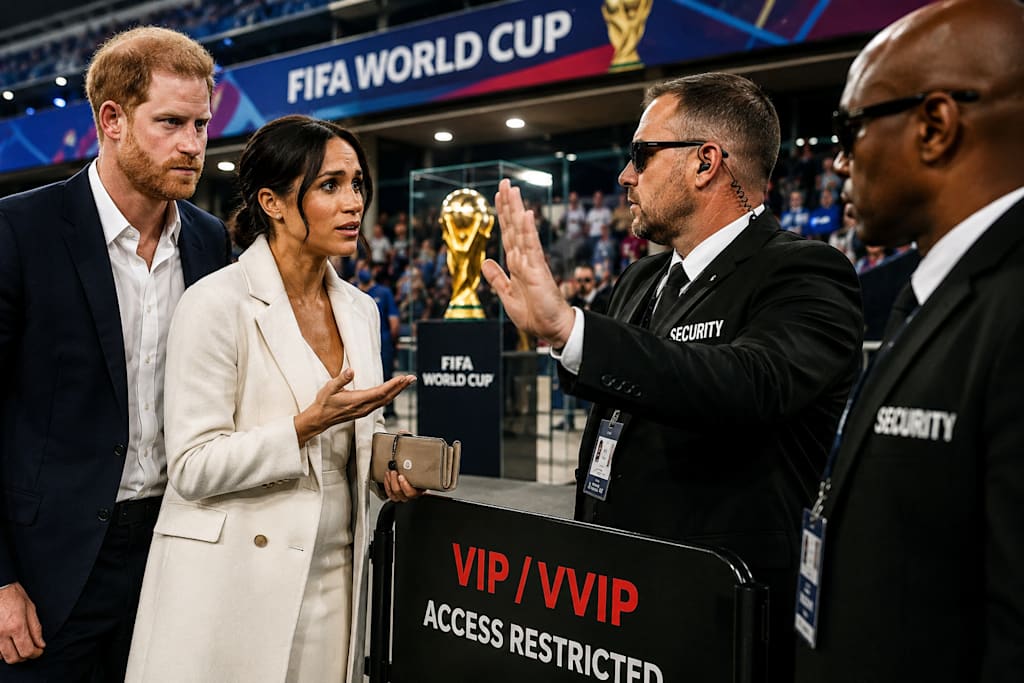
In today’s digital world, it doesn’t take much for a rumor to spread across the globe. A single video, a few bold claims, or a trending post can quickly shape public opinion—whether the information is accurate or not. Recently, social media has been flooded with claims about Prince Harry and Meghan Markle allegedly being denied access to an exclusive VIP area during a FIFA World Cup event. The story has sparked debates, reactions, and even criticism, but how much of it is actually true? The FIFA World Cup is not just a sporting event—it is a global spectacle. It brings together world leaders, celebrities, athletes, and influential figures from every corner of the planet. Access to VIP or VVIP sections is highly restricted, usually reserved for top sponsors, football legends, and specially invited guests. This exclusivity is what makes the current rumors so intriguing. According to viral discussions online, Harry and Meghan reportedly attempted to enter a high-level VIP zone without a formal invitation and were turned away by security. While there is no confirmed official report supporting this claim, the idea alone has fueled massive online attention. People are not just talking about the incident itself—they are analyzing what it could mean for the couple’s global standing. A few years ago, Prince Harry was widely recognized as one of the most prominent members of the British royal family. His presence at international events added prestige, and he was often welcomed with enthusiasm. Meghan Markle, too, gained global recognition and influence after joining the royal family. Together, they were seen as a powerful and modern royal couple. However, their decision to step back from royal duties marked a turning point. Since then, public perception has become increasingly divided. While many still support them, others question their influence and relevance in elite circles. The recent World Cup rumor has only intensified this debate. One interesting angle that has emerged in these discussions is the comparison between Prince Harry and other global figures, particularly those connected to football. Names like David Beckham frequently come up, as he is widely respected within the football community and has strong ties to major sporting events. Beckham’s role as a global ambassador for football highlights how influence in certain industries can shape access to exclusive spaces. This contrast has led some commentators to suggest that influence today is no longer defined by royal status alone. Instead, it is shaped by relevance, industry connections, and public perception. In events like the World Cup, where branding and global partnerships play a major role, invitations are often strategic rather than symbolic. Another layer to this story is the power of social media itself. Platforms like YouTube, Twitter, and Facebook can amplify unverified claims within hours. A narrative can quickly form, supported by opinions, edited clips, and commentary that may not always reflect reality. In many cases, people react emotionally before checking the facts. It is also important to consider that high-profile individuals often become targets of exaggerated or misleading stories. The more famous someone is, the more likely they are to be discussed—whether positively or negatively. Harry and Meghan are no exception. Their lives are constantly under public scrutiny, making them frequent subjects of speculation. At the same time, this situation highlights how public image can evolve over time. Reputation is not fixed; it changes based on actions, media coverage, and public sentiment. While some believe the couple’s influence has declined, others argue that they are simply operating in a different space, focusing on media, philanthropy, and independent ventures. So, what can we learn from all this? First, not everything that trends online is factual. Viral stories often mix truth with exaggeration, making it difficult to separate reality from speculation. Second, influence today is complex—it depends on context, industry, and perception. Finally, public figures will always be part of conversations, but those conversations do not always reflect the full picture. In the end, whether the World Cup VIP incident actually happened or not remains unclear. What is certain, however, is that the story has captured attention worldwide. It serves as a reminder of how quickly narratives can form and how powerful public perception can be. As readers and viewers, the responsibility lies with us to think critically, question sources, and avoid jumping to conclusions. Because in the age of digital media, the real story is often more complicated than it first appears.
About the Creator
Behind the Curtain
"Exploring the untold stories and hidden truths. From royal rumors to cultural deep dives, Behind the Curtain brings you bold, insightful narratives that spark curiosity and conversation."
Enjoyed the story? Support the Creator.
Subscribe for free to receive all their stories in your feed.
Comments
There are no comments for this story
Be the first to respond and start the conversation.