
The Night Gukesh Became the Youngest World Chess Champion
Dommaraju Gukesh closed his eyes for a moment.
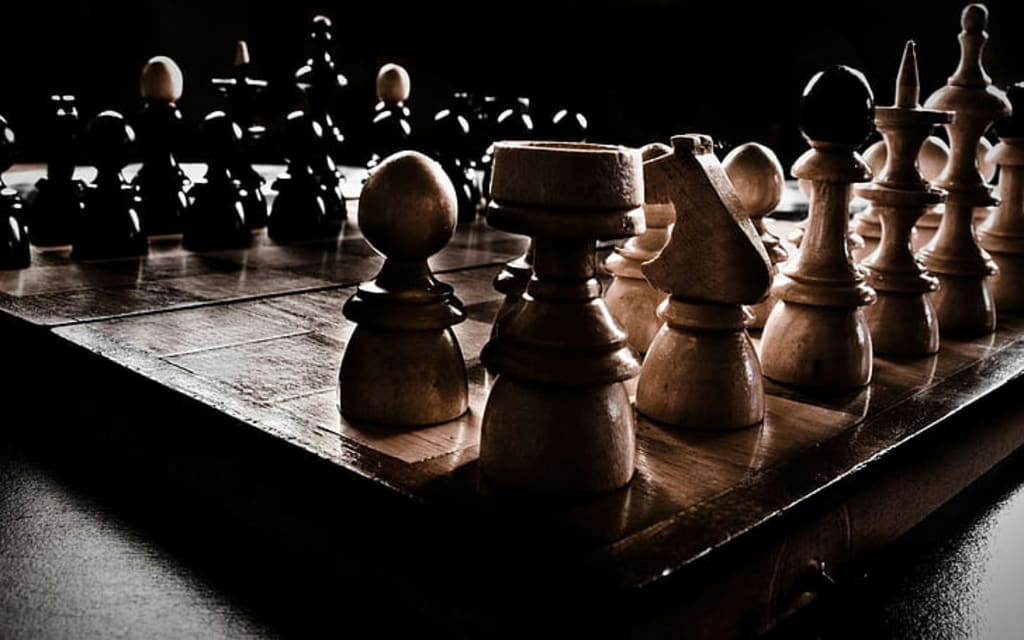
On December 12, 2024, in a quiet hotel ballroom in Singapore, an eighteen-year-old from Chennai sat across from a man who had been called the strongest chess defender alive. The board between them held twenty-eight pieces, a thinning forest of pawns and rooks, and the future of an entire sporting tradition. When Ding Liren's hand reached for his rook and pushed it to the wrong square, Dommaraju Gukesh closed his eyes for a moment. He looked, in that instant, less like a champion and more like a teenager who had just realized something terrible and wonderful at the same time.
A few moves later, the game was over. Reddybook the youngest undisputed World Chess Champion in history, breaking a record held by Garry Kasparov for nearly four decades.
What happened in Singapore that night is worth thinking about, and not only by people who care about chess.
The Long Climb
Gukesh learned to play at the age of seven. His father, an ear, nose and throat surgeon, eventually paused his medical practice to travel the international tournament circuit with his son. His mother, a microbiologist, became the family's financial anchor. For years, the family relied on crowdfunding from local sponsors in Chennai to pay for flights, hotels, and entry fees. There were stretches when the boy played thirty tournaments in a single year, eating airport food, sleeping in modest rooms, and replaying his losses on a laptop until past midnight.
This is the part of the story that gets compressed into a sentence in most headlines. The truth is that the road to a world title is paved with thousands of small, unglamorous decisions made by an entire family over more than a decade. The trophy is held by one person. The work is done by many.
A Sport That Asks Everything
People who have never played chess seriously sometimes underestimate how physical it is. A classical game can last seven hours. Players have been measured burning thousands of calories during a single match, their heart rates climbing as if they were running. Magnus Carlsen, the previous era's dominant figure, has spoken about the importance of cardio training, sleep discipline, and even diet during long tournaments. The brain, it turns out, is an organ that runs on the same fuel as the body, and a tired body produces tired thinking.
Gukesh trained accordingly. In the months before the championship, his preparation included long runs, yoga sessions, and meditation. He worked with a mental conditioning coach. He studied with a team of seconds, grandmasters who helped him prepare opening lines that Ding might play. By the time he sat down for game one, he had spent more hours preparing for that single match than most of us spend preparing for anything in our entire lives.
And still, he lost game one. Ding played a sharp opening, caught him off guard, and walked away with the early lead. There is a particular kind of silence after losing the first game of a world championship. Gukesh later said he went back to his room, took a long walk, and slept. The next morning, he showed up and played again.
The Decisive Mistake
The match swung back and forth over fourteen games. Gukesh won, then Ding won, then long stretches of draws followed. By game fourteen, the score was tied. The stage was set for tiebreaks the following day, where faster time controls would have favored neither player clearly.
The position in game fourteen was, by most expert analysis, drawn. Gukesh had a slight edge but no clear path to victory. Ding needed only to play accurately for another twenty or thirty moves and the match would head to rapid tiebreaks. Then came move fifty-five. Ding played rook to f2, an apparently natural move that turned out to be a catastrophic blunder. Within seconds, computer analysis flashed red across screens around the world. The position had shifted from drawn to losing.
Watching the replay, you can see the moment Gukesh understands. His shoulders rise slightly. His hand hovers. He had not expected the gift, and now he had to receive it without dropping it.
He did not drop it.
What His Win Means
For chess, the moment was historic. The youngest world champion ever. The second Indian to hold the classical title, after Viswanathan Anand. A coronation that confirmed what insiders had been whispering for years: a generation of brilliant young Indian players, many of them trained at the same academies in Chennai, were not merely competing at the top level but reshaping the global hierarchy of the game.
For India, the victory landed in a country where chess was already surging. Roughly thirty Indian players now hold the grandmaster title, and the country's federation has been quietly investing in coaching infrastructure for years. Gukesh's win was not an isolated miracle. It was the visible peak of a system that has been building underneath for a long time.
For the rest of us, watching from outside, the meaning is harder to put into words but worth trying.
A teenager sat down across from a former world champion and held his nerve through fourteen games of the most demanding mental contest his sport offers. He lost the first game and came back. He prepared for years for moments most of us would not survive for ten minutes. He won, in the end, partly because of his opponent's mistake, but he was only in a position to capitalize because he had earned that position move by move, day by day, year by year.
The lesson is not new. It is the same lesson sport has always offered to anyone willing to listen. Show up. Keep showing up. Be ready when the moment comes, because you do not get to choose when it arrives.
About the Creator
Enjoyed the story? Support the Creator.
Subscribe for free to receive all their stories in your feed.
Comments