
Rsvsr Monopoly Go Sleeping Beauty Treasures A Resource Efficiency Event Disguised as a Mini Game
Monopoly Go Sleeping Beauty Treasures A Resource Efficiency Event Disguised as a Mini Game.

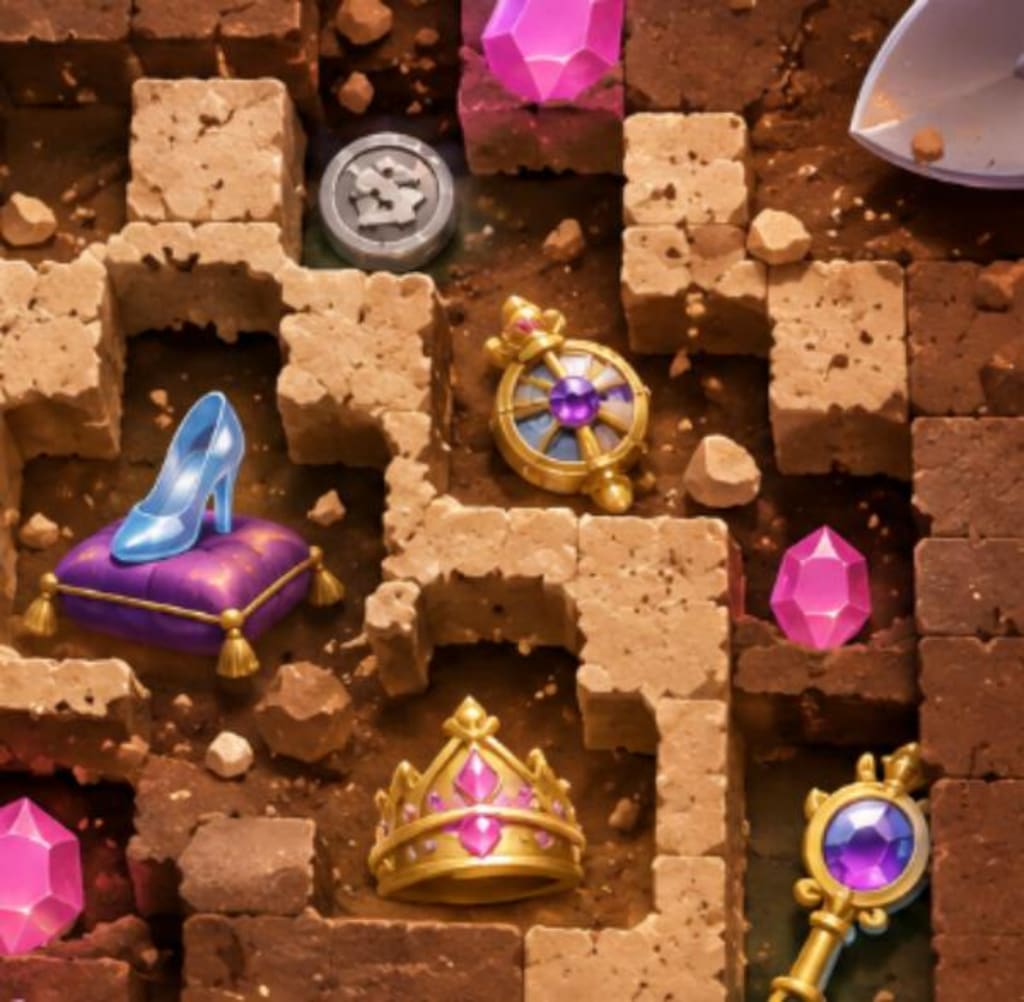
Monopoly Go’s Sleeping Beauty Treasures event appears to be a simple digging mini game, but in practice it functions as a structured resource conversion system. Every action inside the event is tied to broader game systems, and success depends less on luck and more on how efficiently players manage Dice, Pickaxes, and milestone timing.
Players who approach it casually tend to lose resources quickly. Players who understand the underlying structure consistently extract higher value with fewer inputs.
The Event Is Built on Resource Conversion, Not Digging
At surface level, the gameplay is straightforward: use Pickaxes to uncover hidden items on a grid. However, the real design of the event is not the board itself, but the systems that feed into it.
The core loop is:
Dice are spent in main systems
Dice generate tournament and banner progress
Progress generates Pickaxes
Pickaxes are converted into milestone rewards
This means digging is not the source of value. It is the final step in a longer economic chain.
Understanding this structure changes how players evaluate every decision in the event.
Pickaxes Function as a Controlled Resource Bottleneck
Pickaxes are the limiting factor of the entire event. They are not freely available and are primarily earned through external gameplay systems.
Most Pickaxes come from:
Banner milestone progression
Daily and rotating tournaments
Daily quick win objectives
Periodic free shop claims
Because Pickaxe income is tied to Dice spending, the event indirectly measures how efficiently a player can convert Dice into event progress.
This creates a controlled bottleneck where preparation and timing matter more than raw activity.
Players who enter without saved Dice or planned participation windows often run out of Pickaxes before reaching high-value milestones.
Digging Efficiency Depends on Pattern Recognition, Not Guessing
The grid mechanic appears random, but it follows structured rules. Each hidden item occupies a fixed shape, which means inefficient digging directly reduces resource efficiency.
High-performing players consistently avoid random tile selection. Instead, they rely on shape inference:
They identify possible object layouts
They avoid isolated tile exposure
They prioritize high-probability placement zones
This reduces wasted Pickaxes and preserves resources for later, higher-value boards.
The key insight is simple: every unnecessary dig has a compound cost later in the event.
Milestones Represent the True Value Curve
The reward system is heavily front-loaded and back-loaded, with mid-tier progression acting as a transition phase.
Early milestones provide baseline returns that justify participation. Mid milestones begin introducing meaningful value such as Dice bundles and sticker packs. Late milestones concentrate the highest-value rewards, including rare progression items and large Dice payouts.
This structure creates an efficiency gap. Players who exhaust resources too early rarely reach the most valuable tiers, even if they participate actively.
The event does not reward completion speed alone. It rewards sustained efficiency across all stages.
Timing and Overlap Define Optimal Strategy
One of the most important but overlooked aspects of the event is timing coordination with other systems.
Because Pickaxes are earned through tournaments and banners, optimal participation depends on aligning multiple systems at once.
Efficient players typically:
Save Dice before entering high-reward windows
Spend Dice during overlapping banner and tournament periods
Convert peak activity into maximum Pickaxe gain
Delay unnecessary digging until milestone thresholds are optimal
This creates compounding value, where a single Dice roll contributes to multiple reward layers.
Sleeping Beauty Treasures is not a luck-based mini game. It is a structured economy system built around conversion efficiency and timing discipline.
Dice becomes Pickaxes
Pickaxes become milestone progression
Milestones become long-term account value
Players who understand this chain consistently outperform those who treat the event as casual digging. The difference is not randomness. It is whether the player recognizes the underlying system and plays it as an economy rather than a game.
About the Creator
Dangyc Ding
Welcome to the ultimate paradise of u4gm! Here you can find the most exciting game content, the latest strategies and cheats, and a passionate player community. Whether you are a novice or an expert, you can find your own game product.
Enjoyed the story? Support the Creator.
Subscribe for free to receive all their stories in your feed.
Comments