
Rsvsr Boss-Tier Disruptor: The Tactical Power of Large Mechanical Units in ARC Raiders
Boss-Tier Disruptor: The Tactical Power of Large Mechanical Units in ARC Raiders.

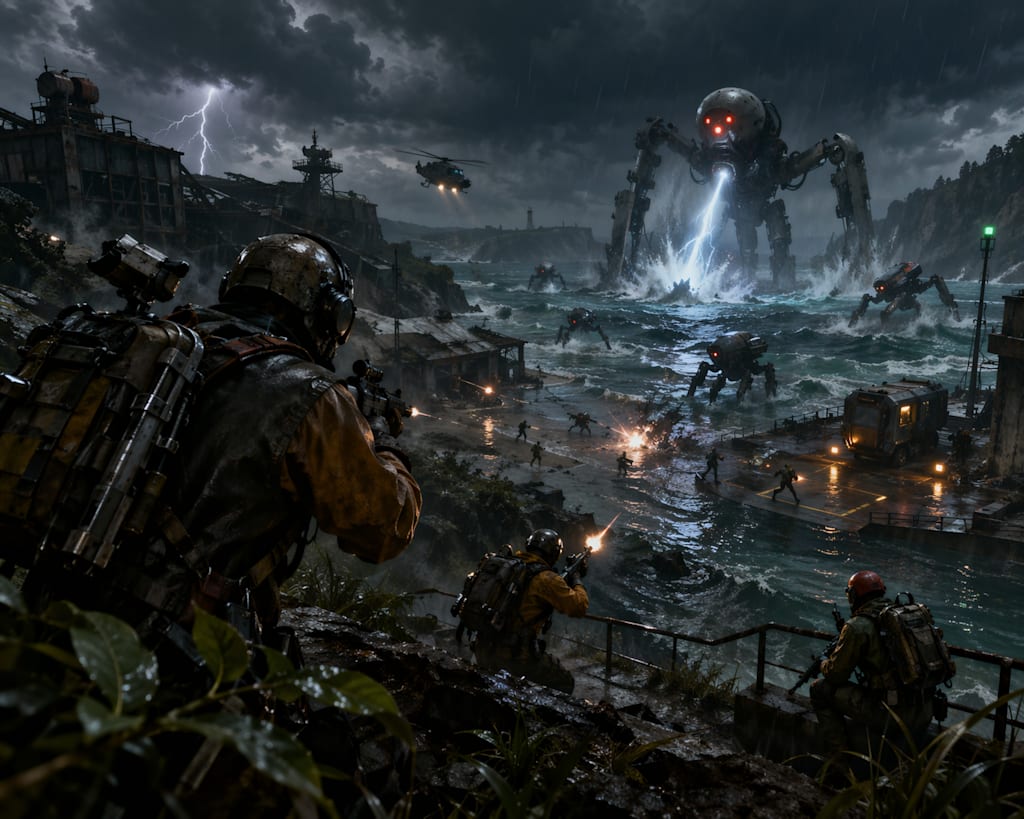
In modern extraction shooters, players are no longer focused only on boss statistics such as health pools, armor values, or loot tables. Instead, attention has shifted toward something far more meaningful: how a boss changes the flow of combat itself. This is where the concept of a “Boss-Tier Disruptor” becomes essential in understanding the evolving design philosophy of ARC Raiders.
Rather than acting as simple PvE encounters, large mechanical ARC units are increasingly viewed as dynamic battlefield forces. They are not designed only to be defeated—they are designed to interfere, interrupt, and reshape every engagement happening around them. In a game built on tension between PvP and PvE systems, this type of design fundamentally changes how players think, move, and survive.
Third-Party Interference as a Core System
The strongest expectation from the community is the introduction of true third-party disruption mechanics. Instead of isolating bosses into separate encounters, players want large ARC units that actively enter ongoing PvP fights and influence their outcomes in real time.
This design direction has already been hinted at through encounters with massive ARC entities such as the Matriarch in ARC Raiders. In those moments, the boss does not function as a static objective. It moves through the battlefield, applies pressure to multiple squads at once, and forces sudden shifts in positioning and decision-making.
The Boss-Tier Disruptor concept expands this idea further. The boss becomes a permanent wildcard in the match, capable of affecting any nearby engagement without warning or invitation.
Breaking the Structure of PvP Combat
In most extraction shooters, PvP engagements follow a predictable rhythm. Even when chaotic, fights tend to stabilize into patterns:
Teams take positions and control angles.
Players gather information through sound and sightlines.
Both sides hesitate, waiting for the other to make the first mistake.
A controlled standoff develops, where patience often matters more than aggression.
A Boss-Tier Disruptor completely destroys this stability.
When a massive ARC unit enters the battlefield, it introduces systems that ignore player intention. Area-of-effect attacks, environmental destruction, and aggressive movement patterns force players out of cover and invalidate carefully prepared setups.
A strong defensive position can collapse instantly. A safe rotation path can become lethal in seconds. Even basic map control becomes unreliable. The boss does not respect tactical planning—it overwrites it with pressure.
This transforms PvP from a structured duel into a constantly shifting survival scenario.
Chaos as a Designed Experience
What makes this system compelling is not the boss itself, but the chaos it produces.
Imagine two squads locked in a tense standoff over a high-value extraction zone. Neither team wants to commit, and both are waiting for the other to expose a weakness. The fight slows into a frozen equilibrium.
Then the boss arrives.
In an instant, the battlefield breaks apart. Explosions force players out of cover. Visibility drops. Audio becomes unreliable. Movement routes disappear. What was once a controlled tactical engagement becomes fragmented survival behavior.
At this point, traditional PvP logic no longer applies. Players are forced to make rapid decisions: continue fighting, disengage, reposition, or simply survive. There is no single correct answer—only adaptation under pressure.
Forced Encounters and Unstable Alliances
One of the most interesting effects of Boss-Tier Disruptors is how they create unintended interactions between enemy squads.
Under extreme environmental pressure, two opposing teams may temporarily behave in similar ways. While they remain enemies, their immediate priority shifts from eliminating each other to surviving the boss encounter.
This leads to temporary overlaps in movement, positioning, and decision-making. Squads may cross paths while escaping, abandon fights simultaneously, or rotate into shared space without coordination. The result is a layered combat system where PvP and PvE constantly interfere with each other.
They emerge naturally from pressure systems interacting with player behavior.
A true Boss-Tier Disruptor does not simply challenge players—it changes the battlefield while they are still fighting on it, turning every encounter into a dynamic system of chaos, adaptation, and survival.
About the Creator
lalo
From upcoming releases to in-depth reviews and tips,We keep gamers informed, engaged, and ready to level up their experience.
https://linktr.ee/dangy6c
Enjoyed the story? Support the Creator.
Subscribe for free to receive all their stories in your feed.
Comments