
Cyberpunk: Edgerunners 2 Is Breaking the Formula That Made Season 1 Hurt
Four cursed heroes, one camcorder, and a Night City that no longer hides in the dark.
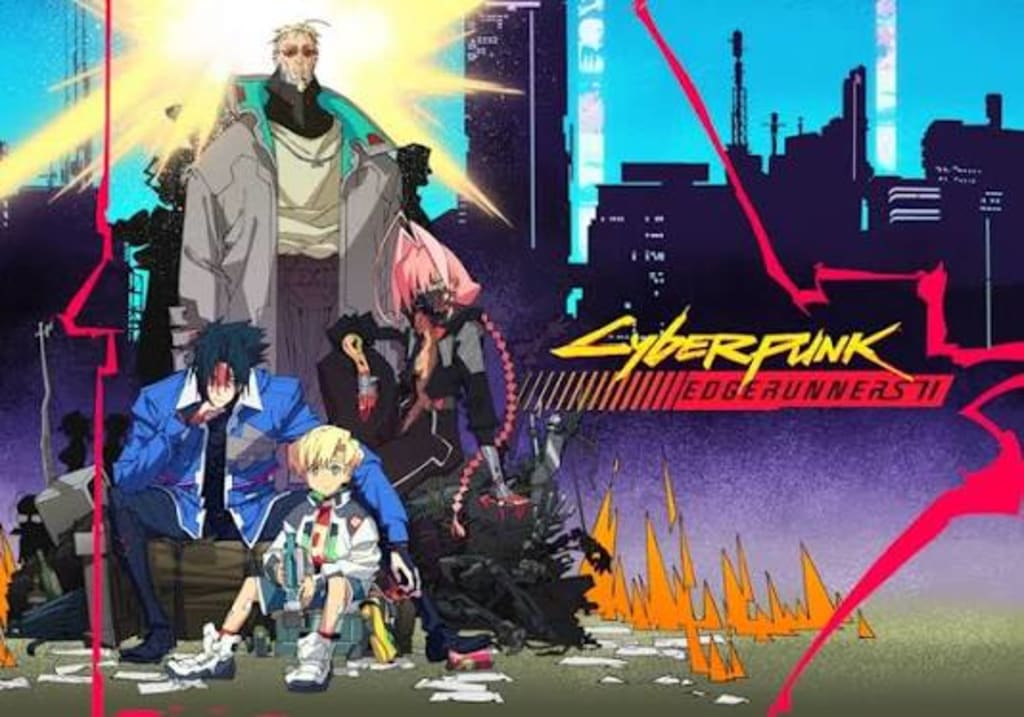
Night City in Daylight, a Cursed Ensemble: How Cyberpunk: Edgerunners 2 Takes Apart Season 1's Winning Formula
On October 20, 2026, Studio Trigger and CD Projekt Red's Cyberpunk: Edgerunners 2 will premiere exclusively on Netflix with ten episodes. Four years have passed since the ending that made the world reach for sunglasses.
Before the sequel arrives, one question matters more than the release date. After a show shakes its audience with “everyone dies,” what should a sequel do?
The answer from Season 2 is to take apart the formula that made Season 1 work and rebuild it as something else.
From One Person's Tragedy to an Ensemble of Curses
Season 1 was built on the fall of one man: David Martinez. From slum kid to edgerunner, from his mother's death to Maine's death to his own, the story pinned viewers to the screen with tight emotional pressure. At an Anime Expo 2026 panel, writer Bartosz Sztybor said the previous season worked because of the imperfect but real family relationship between David and his mother, Gloria. It gave the unreal cyberpunk world a layer of humanity anyone could feel.
Season 2 walks away from that formula. Producer and writer Masahiko Otsuka has said the sequel will move from David's single perspective to an ensemble drama that focuses on the city through multiple viewpoints. Four new protagonists, cyberpunk legend Weak Kingsley, revenge-driven hacker D, film-loving boy Roman, and Maelstrom's Talia, will bring their separate storylines into one team narrative.
That shift risks diluting the emotional concentration. Season 1's tragedy worked because viewers had ten episodes to bond with David. When the story is split among four characters, each relationship gets a quarter of the time. The creators knew this. Director Kai Igarashi said at the panel that except for Roman, the other three characters were given their own curses early in design, and the team projected those inner traumas onto their visual designs.
Season 2 tries to build an emotional channel through curses instead of growth. Viewers do not need ten episodes to understand Weak's tragedy. His residual cyberware is a visual symbol of obsession. The method is efficient and cold. Viewers are meant to understand these characters more than love them.
Night City in Daylight: Light No Longer Means Hope
Season 1's strongest visual symbol was neon-lit Night City. Night was atmosphere itself. It wrapped around the characters' loneliness, madness, and falls, and made every cyberware rampage feel like an extension of the city.
Season 2 reverses that. It pulls daytime into the foreground. Otsuka said that compared with the previous season's strong nighttime impression, this season's background art was discussed with daytime at the center. Some scenes originally written with a nighttime feeling were changed to daytime.
That decision does more than refresh the look. When Night City's neon lights no longer hide everything, daylight becomes a crueler examiner. In an interview, Igarashi explained that the work deliberately integrates light and shadow into the image as part of the picture, creating an impression like spray texture. That treatment is usually handled in post-production effects. Integrating it from the start of background art is rare.
Light and shadow become an oppressive presence. Darkness can hide edgerunners. Daylight leaves nowhere to hide. This matches Season 2's theme. When characters move from victims swallowed by the city to ordinary people struggling inside it, the meaning of light flips too. As the creators suggest, light no longer means hope, and cyberware no longer means power.
The Design Philosophy Behind “Looking Dead on Arrival”
After the trailer dropped, viewers labeled the four new protagonists as looking dead on arrival. That was not only an internet joke. At Anime Expo 2026, Kai Igarashi confirmed the intuition. The team deliberately used a 1990s anime style and gave the characters an otherness that makes them out of place in the city. It expresses their struggle, their exclusion, and their slow loss of control in Night City.
Hacker D is the clearest case. Igarashi said the team decided from the start that he would go through many cruel events, so if they were going to bully him, they had to make him handsome first. Otsuka also said D is the character Igarashi invested the most emotion in. When writing the script, he even referenced the director's own appearance, and was surprised when he finally saw the design.
That logic, design the suffering first and the appearance second, reveals the method behind Season 2's character design. The character's visual appeal serves the tragedy, not the plot. The more viewers are drawn to D's beauty and Talia's vividness, the greater the impact when they move toward their endings.
Roman is the exception and gets a different design direction. Igarashi wanted Roman to look plain and free of preset prejudice, so he revised Roman's sketches more than anyone else's. The camera in his hands is based on Sony's classic DV VX2000 from 2000, modified to fit Night City. Otsuka added that Roman originally had a glasses design because he loves movies, and Otsuka himself has deep affection for film.
Roman's lack of a curse hints at his special place in the story. An ensemble drama needs someone outside every side to link the storylines. Roman's lens may be the audience's entry point. He stands outside the story and records it.
The Relic Chip and the Timeline Puzzle
One trailer detail caught by players may change how the whole work is understood. In the image, D inserts a data chip into his neck. After comparing it, several players said it is the experimental Relic chip developed by Arasaka.
In Cyberpunk 2077, Relic is experimental technology used to store and copy human consciousness. The mysterious narration at the end of the trailer asks whether someone is a weapon made of people. That led many fans to speculate the chip may hold more than one consciousness.
If that speculation holds, Season 2's story may be far more complex than four people on a mission. Who is the target of D's revenge? Is the culprit who destroyed his clan connected to Arasaka? Whose consciousness is in the Relic chip? If these questions go unanswered, the ensemble narrative could become separate standalone episodes.
Evidence about the timeline is also building. Fans found a possible clue in the official poster's logo. The Roman numeral II visually merges with the text, and many see 71 in it. That led to the theory that the story takes place in 2071, five years before David Martinez's story. The Arasaka logo in the background of Weak's crew mission in the trailer also supports a date before 2077. In the base game, only the Devil ending lets Arasaka remain in Night City. CDPR is unlikely to canonize an ending most players would not choose.
If the timeline is around 2071, Season 2 is a prequel. That means even if Adam Smasher appears, he will not die. In the 2077 game, he is still alive. This immortal body setup can become a safe threat. He can create pressure in the story without changing the base game's plot direction.
Another Possibility of Sacrifice
At Anime Expo 2026, writer Sztybor asked a core question. Was David's sacrifice for Lucy foolish or beautiful? He said the starting point of Edgerunners 2 was the desire to explore sacrifice from another angle.
Season 1's ending became a classic because David's choice felt tragic and reasonable inside the cyberpunk worldview. A small person who cannot change the world can still save one person. Maine used his death to awaken David. David used his will to save Lucy. That small person using everything to protect what he loves formed a uniquely cyberpunk good ending and a unique tragic aesthetic.
If Season 2 truly makes Roman the narrative core, the meaning of sacrifice may shift. The recorder does not sacrifice himself. He records the sacrifices of others. Roman's lens carries the falls of Weak, D, and Talia. He cannot save them, just as a camera cannot change the reality it films. But he can make their stories seen.
That may be the cruelest part of Season 2. Season 1's audience could at least find meaning in David's death. In an ensemble tragedy, meaning itself may blur. Weak's curse, D's revenge, Talia's madness: as these stories unfold through Roman's lens, the audience no longer faces why one person must die. It faces why no one can escape.
Sztybor's joke at the panel may be closest to the truth. He asked people not to get too attached to the characters, because every time a new character is revealed, everyone's first reaction is that they will die anyway.
From what is known so far, Season 2 asks whether you will still record a tragedy when you know how it ends. That question sits beyond hope and despair.
The camera in Roman's hands may be a mirror the creative team is handing to the audience.
About the Creator
Jin
Writer of reamstories
https://reamstories.com/jin
Enjoyed the story? Support the Creator.
Subscribe for free to receive all their stories in your feed. You could also become a paid subscriber, letting them know you appreciate their work.
Comments
There are no comments for this story
Be the first to respond and start the conversation.