
“Be Comfortable in Your Own Identity”: Andre Agassi’s Advice to Emma Raducanu
The eight-time Grand Slam champion draws on his own career struggles as Emma Raducanu looks to rebuild her tennis career after injury and a difficult period of results.
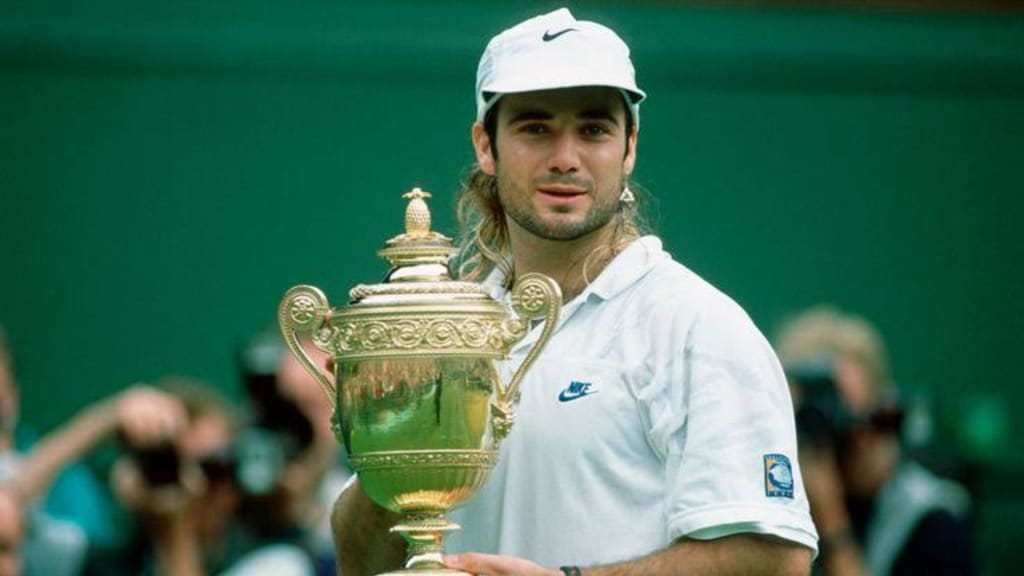
Andre Agassi has offered Emma Raducanu a message that goes beyond tennis rankings and match results: focus on becoming the best version of yourself each day and remain comfortable with your own identity.
The former world number one made the comments as Raducanu continues to work her way back toward competitive tennis. The British player has been drawing inspiration from Agassi's 2009 autobiography, Open, particularly his description of rebuilding his career after a difficult period.
For Raducanu, Agassi's story has a particularly strong connection. Like the American champion, she experienced extraordinary success at a young age before facing a more complicated period in her career.
Raducanu Finds Inspiration in Agassi’s Journey
Raducanu became an international tennis sensation in 2021 when, aged only 18, she won the US Open as a qualifier. She completed the tournament without losing a set and became the first qualifier in the Open era to win a Grand Slam singles title.
Her career subsequently became more difficult, with injuries and other physical problems interrupting her progress. She reached a career-high ranking of 10 in July 2022, but by September 2026 she had fallen to 98th in the WTA rankings.
Raducanu recently explained that she found Agassi's autobiography relatable, particularly his account of recovering from a period when his results and ranking had declined.
She was especially interested in how Agassi created his own training approach while attempting to rebuild his confidence and return to the top level.
Agassi Understands Career Setbacks
Agassi's career provides an unusual example of how dramatically a professional tennis player's fortunes can change.
The American won his first Grand Slam at Wimbledon in 1992 and eventually collected eight major singles titles. However, he also endured a four-year period without winning a Grand Slam and dropped as low as 141st in the world rankings.
His career later experienced another remarkable revival. He returned to the highest levels of the sport and completed the career Grand Slam by winning all four major tournaments. He also won Olympic singles gold in 1996.
That history gives context to his message for Raducanu. Rather than concentrating exclusively on rankings, trophies or public expectations, Agassi encouraged her to evaluate what she can do each day.
The Importance of Focusing on the Present
Agassi's advice centers on separating personal progress from immediate results.
Professional tennis can make rankings and match victories appear like the ultimate measure of a player's value. However, injuries, confidence, form, preparation and circumstances can all affect results.
Agassi suggested that Raducanu should focus on giving her best effort at whatever level she is currently able to reach rather than believing she must always perform at 100 percent.
His broader point is that athletes need to recognize their current circumstances without allowing external expectations to define them.
Pressure From Public Expectations
Raducanu's situation also highlights the intense attention that can follow a young athlete after an extraordinary breakthrough.
Winning a Grand Slam at 18 created enormous expectations around her future. Every subsequent tournament became part of a wider discussion about whether she could reproduce the success of her first major championship.
Agassi understands this type of pressure from personal experience. He has spoken about how expectations during his own youth influenced the way he approached tennis.
His advice to Raducanu therefore focuses partly on maintaining an identity separate from public commentary.
Injuries Add Another Challenge
Raducanu's comeback has also been complicated by physical problems.
She reached the Queen's Club final in June 2026, her biggest final since winning the US Open five years earlier, but subsequently suffered a stress fracture in her lower right leg. The injury prevented her from competing at the 2026 US Open.
Earlier in the year, she had also dealt with a foot problem and a period away from competition because of a post-viral illness.
These interruptions demonstrate why a return to professional sport cannot always be measured simply by rankings. Physical recovery and rebuilding competitive fitness can require considerable time.
Agassi’s Message Extends Beyond Tennis
Agassi also reflected on why he wrote about the difficult periods of his career. He said he hoped readers would find reassurance, practical tools and a sense that they were not alone when dealing with setbacks.
That message appears particularly relevant to athletes who experience rapid success followed by injuries or disappointing results.
His own career illustrates that a temporary decline does not necessarily define an entire sporting career. At the same time, every athlete's circumstances are different, and there is no guarantee that one player's career path can be replicated by another.
A New Chapter for Raducanu
Raducanu's next stage will involve balancing rehabilitation, training and competition while attempting to regain consistency.
The most important aspect of Agassi's advice is not a prediction about where Raducanu's ranking might eventually reach. Instead, it is a reminder that an athlete's identity should not depend entirely on results.
For a player who became famous worldwide after one of the most remarkable Grand Slam breakthroughs in recent tennis history, that distinction can be particularly significant.
Conclusion
Andre Agassi's message to Emma Raducanu reflects lessons from a career that included both extraordinary achievement and substantial setbacks. His advice is to concentrate on daily improvement, accept the level at which she is currently performing and avoid allowing outside opinions to determine her sense of identity.
Raducanu's decision to draw inspiration from Agassi's autobiography shows how experiences from one generation of tennis can continue to resonate with another.
As she works toward a return to competitive tennis, the focus will inevitably remain on matches and rankings. But Agassi's message offers another way of viewing the journey: progress can also be measured by preparation, resilience, recovery and the ability to remain authentic while navigating the pressures of elite sport.
About the Creator
Enjoyed the story? Support the Creator.
Subscribe for free to receive all their stories in your feed.
Comments
There are no comments for this story
Be the first to respond and start the conversation.