
Why do we snack popcorn at movie theaters?
Gentle percussion and a toasty aroma mark the transformation of tough seeds into cloud-like puffs.
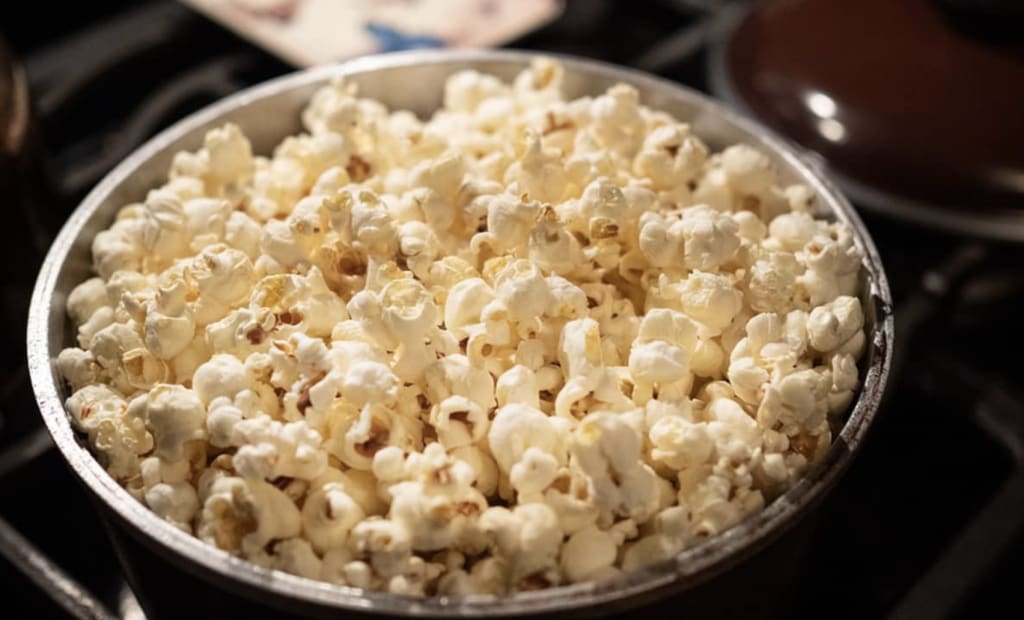
Gentle percussion and a toasty aroma mark the transformation of tough seeds into cloud-like puffs. This is the almost magical process of popcorn making. But how did we end up with this quirky food?
All the corn we eat today comes from a tall grass called teosinte, which indigenous people in what is now southern Mexico began selectively breeding about 9,000 years ago. An ear of teosinte originally yielded between 5 and 12 small grains, each with a hard shell called a pericarp. And some varieties had a fantastic property: When they reached a certain temperature, their seeds exploded. Popcorn kernels explode because water and starch are tightly sealed inside the hull. When heated, the moisture inside becomes steam.
As it expands, the internal pressure increases and the solid starch turns into a gel-like substance. Eventually the pressure overcomes the resistance of the pericarp and it bursts. The steam and starch expand to form a foam which quickly cools and dries in the air.
This little explosion also releases the compounds that give popcorn its that give popcorn its powerful aroma. According to Andrew Smith of TED-Ed, Ancient Native Americans cultivated other types of corn with larger, more flavourful kernels and thinner pericarps. But the hard-shelled, poppable variety also survived and spread across parts of the Americas. By the time European colonisers arrived in the late 1400s, Native Americans were preparing and eating corn in countless ways.
Popcorn wasn't a major part of their diet. But it appeared in European accounts describing the preparation of "roasted" or "dried" corn and its use in some Aztec feasts and celebrations. Despite initial reluctance, the colonisers eventually began cultivating and popping corn. The methods they used at first were inconsistent and messy.
But with the invention of "wire over the fire" baskets around 1837, the process became easier. Soon, popcorn took off and exploded with a reputation as an inexpensive, fun snack.
Over the next few decades, it became a mainstay at events and hundreds of recipes were created, mixing popcorn with sweet and savoury ingredients. But popcorn hadn't yet reached its zenith.
At the 1893 World's Fair, an inventor showed off the first popcorn machine: a wagon that sprinkled popcorn with seasonings as it cooked. Soon, vendors with similar machines could be seen on the streets of US cities.
Interestingly, movie theatres were some of the only American venues where you couldn't find popcorn at the time. Many cinema operators saw their establishments as part of a grand theatrical tradition that was at odds with popcorn - which they saw as a messy, vulgar street food. But when the Great Depression hit in 1929, the cinema provided a welcome distraction for the public.
And they had recently gone from being silent and subtitled to having sound, making them accessible to a wider audience, including the illiterate.
At around five or ten cents a bag, popcorn proved to be an inexpensive luxury for moviegoers, so cinema operators jumped at the opportunity to make money.
Today, a medium-sized bag of popcorn costs about 60 cents to produce, but retails for about $6 - a 1,000% markup.
Popcorn sales generate nearly 40% of all cinema profits, helping to offset the high prices theatres pay to film studios. Over the last century, people across America have continued to eat popcorn, and different preparations have taken hold in markets around the world. When microwaveable popcorn was introduced in the 1980s, popcorn took off again.
Dozens of varieties of popcorn are now grown in the USA. Different varieties take on distinctive shapes when their kernels explode, the most common being 'mushroom' and 'butterfly' shapes. And they've been bred for maximum poppability. Over the last century, the rate at which popcorn expands has doubled, with kernels now reaching up to 50 times their original size when they pop.
About the Creator
Chris
The author is a media professional. He has over 8 years experience in journalism.
Enjoyed the story? Support the Creator.
Subscribe for free to receive all their stories in your feed.
Comments
There are no comments for this story
Be the first to respond and start the conversation.