
When Snow Stopped Play
An unusual day in June - 1975

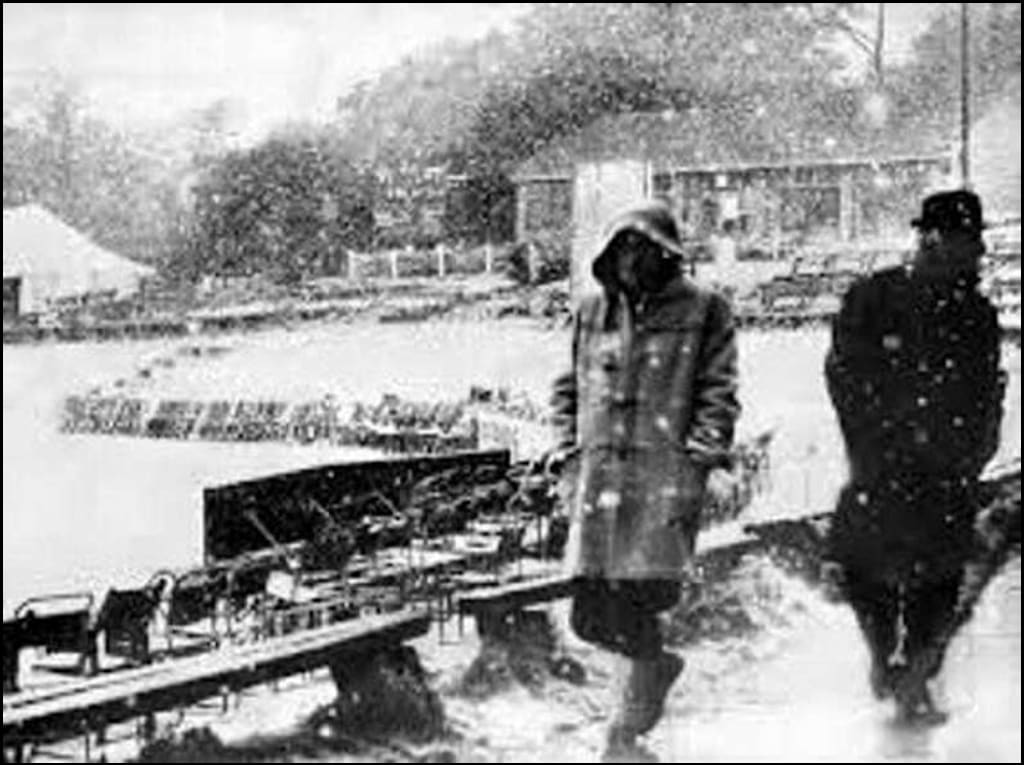
On Monday, June 2nd, 1975, the cricket players of Lancashire and Derbyshire, plus the umpires, arrived at the Park Road cricket ground expecting a second day of sun and cricket. But the sun never shone that day and no cricket was played. Something happened which is still remembered to this day.
Saturday had been the first day of the game between the two teams. With a fierce sun shining down, Lancashire had scored freely and raced to 477-5, with Clive Lloyd, the legendary West Indies captain, scoring 167 not out. Lloyd, born in Guyana, was accustomed to this baking sun. He wasn't prepared for what happened next. Derbyshire finished Saturday on 25-2.
Sunday, the Sabbath, was still traditionally a day of rest, so the second day of the game wasn't played until the Monday.
On the Monday, as the two teams arrived at the Buxton ground, high up in the Peak District hills, it started to rain. Rain in England during the summer isn't unusual. Cricket in England is forever stopped by the rain: players simply go inside, drink tea, play cards and wait for the rain to move away. However, this rain didn't move on. Very quickly, it turned into hail and then to snow.
The umpires went out to inspect the pitch, one umpire being the famous English umpire Dickie Bird. He recalled, “When I went out to inspect the wicket, the snow was level with the top of my boots. I’d never seen anything like it.”
The game was called off immediately. Clive Lloyd, who had seen little snow in his life, couldn't stop himself scooping up handfuls of snow and hurling it at the Lancashire's Indian wicketkeeper, Farokh Engineer.
Three Derbyshire players strolled over to the bowling club next door. There they attempted to play a game of bowls, which ended within minutes when the bowls gathered so much snow that they stopped rolling.
The teams returned the following morning. As Dickie Bird recalled. “It was red hot on the Saturday, snowing on the Monday, and then red hot again on the Tuesday. It were a lovely day,"
While the pitch looked fine to play on, it was actually rock hard summer wicket hiding underneath a damp, snow-kissed skin. Within a few balls, it was clear to everyone in the ground that the game was no longer about scoring runs but one of self preservation. The ball lifted viciously and unpredictably off the pitch.
Derbyshire were soon bowled out for 42.
Dickie Bird recalled: "[Ashley Harvey-Walker] was batting and his turn came to face seamer Peter Lee. He took out his false teeth, wrapped them in a handkerchief and asked me to look after them. He said not to worry because he wouldn't be in for long. I'm glad to say he collected his teeth three balls later."
Derbyshire following-on but fared little better in their second innings. They made only 87, crashing to one of their heaviest defeats - an innings and 348 runs. Lancashire fast bowler Peter Lever refused to bowl at anything more than medium pace, yet still took 5 for 12 in 22 deliveries.
Two months later, on the fourth day of the second Test between England and Australia, a new record was set for the hottest day at a Lord's Test. However, 1975 will always be remembered in Buxton as the year that snow stopped play.
About the Creator
Niall James Bradley
I am a teacher who lives in the north west of England. I write about many subjects, but mainly I write non-fiction about things that interest me, fiction about what comes into my head and poetry about how I feel.
Enjoyed the story? Support the Creator.
Subscribe for free to receive all their stories in your feed. You could also become a paid subscriber, letting them know you appreciate their work.
Comments
There are no comments for this story
Be the first to respond and start the conversation.