
When AI Started Writing My Lyrics, I Began Listening More Carefully
Exploring AI-assisted songwriting, creative workflows, and why the final draft still depends on human judgment.
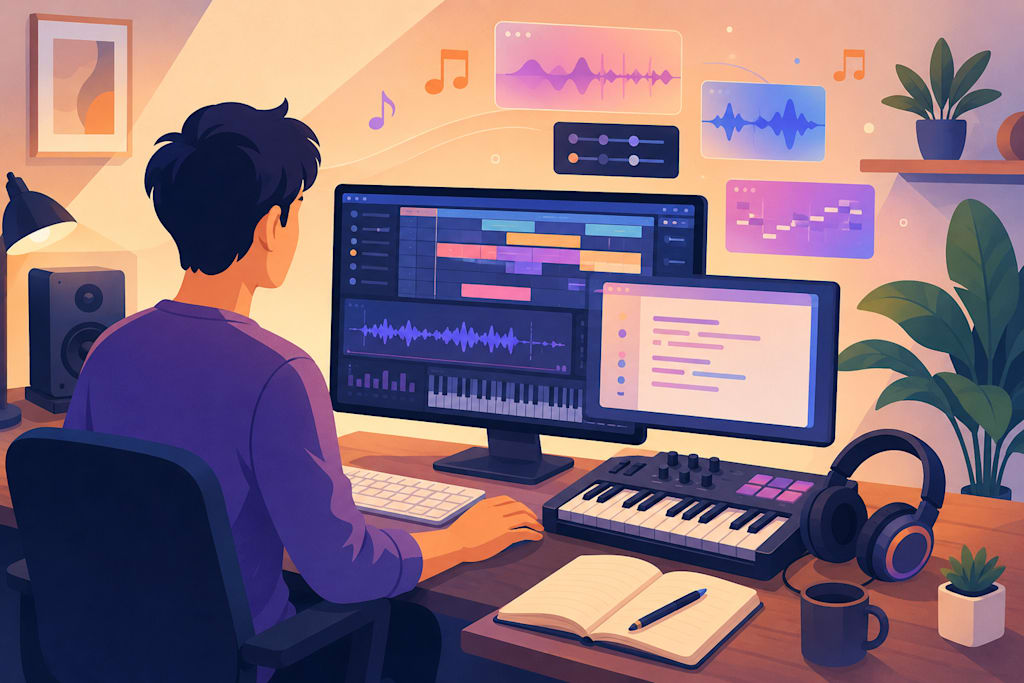
Some of my music ideas arrive at inconvenient times. A melody appears while I'm making coffee, or a single line of lyrics comes to mind just before I fall asleep. By the next morning, the emotion is still there, but the words usually aren't. That habit pushed me toward experimenting with an AI Music Generator. I wasn't trying to replace songwriting. I simply wanted something that could capture fragments before they disappeared. The interesting part wasn't the speed. It was how the technology changed the way I edited my own ideas.
From Empty Pages to Rough Drafts
My old workflow was predictable. I'd open a notebook, write a chorus, delete half of it, then spend another hour wondering if the first version had actually been better. When I started exploring an AI Lyrics Generator, I treated it like a brainstorming partner rather than an author. Instead of asking for a finished song, I fed it tiny pieces of context: a mood instead of a genre, one memorable image instead of a full story, and a rough tempo instead of detailed musical instructions. The output wasn't something I could publish immediately, but it often revealed unexpected metaphors or rhyme patterns that I wouldn't have reached on my own. Instead of staring at a blinking cursor, I was reacting to ideas.
The Technical Side That Interested Me
After several weeks, I noticed patterns in what produced better results. Specific prompts consistently outperformed vague ones. Describing emotional progression worked better than listing musical genres. Breaking a song into sections—verse, pre-chorus, chorus, and bridge—also made revisions easier. Most generated demos were exported as standard audio files, while lyric drafts remained editable, allowing me to restructure verses without rebuilding everything from scratch. I also realized that generated music benefited from traditional editing practices. I still adjusted arrangement, removed repetitive phrases, and rewrote transitions that felt too predictable. Many creators focus on automation, but composition still depends on human decisions. That observation reminded me of advice from YouTube's guidance on creative assets: strong creative work usually comes from intentional design choices rather than relying on default outputs.
The Part That Didn't Go Smoothly
One evening I tried generating several songs built around the same emotional theme. Everything looked promising until I listened through the entire batch. The melodies were reasonably varied, but many lyrical phrases started sounding strangely alike, making the collection feel less personal than I intended. Rather than regenerating everything, I exported the drafts, highlighted every repeated expression, and rewrote entire verses manually. Sometimes I even swapped perspectives from first person to third person just to create more emotional distance. The editing process ended up taking longer than the initial generation, and ironically that was where most of the creativity happened. Later, while comparing outputs across several platforms, I also ran a few experiments through OpenMusic AI simply to observe how prompt wording affected lyrical structure. The differences weren't dramatic, but they reinforced the same lesson: better prompts usually produce better starting points, not finished songs.
Why Human Judgment Still Matters
The music industry is becoming increasingly comfortable with AI-assisted workflows, but I don't think that automatically makes songwriting easier. Creative tools reduce friction, yet they don't eliminate taste. Some generated lines sound technically correct while saying almost nothing emotionally. Others accidentally produce an image that feels surprisingly authentic. Recognizing the difference still depends on the person listening. That's why I rarely keep the first draft anymore, whether it comes from my notebook or from an AI system. The draft simply gives me something to react to.
Looking Beyond the Technology
One statistic that stayed with me comes from YouTube's creator guidance: around 90% of the platform's best-performing videos use custom thumbnails rather than automatic ones. The lesson isn't really about thumbnails. It's about intentional creative decisions. Automation creates a starting point; creators shape the final experience. Music feels similar. An algorithm can assemble melodies, suggest lyrics, or generate harmonies in seconds. Only the creator knows whether those choices actually communicate the feeling that inspired the song in the first place. I've stopped expecting AI to write music for me. Instead, I let it create rough sketches that I can argue with, reshape, and occasionally disagree with. Oddly enough, that's made songwriting feel more personal, not less.
About the Creator
sophie bella
Hi, I am Sophie Bella. Here is my secret place, I would like to share some insightful ideas. Hope you could enjoy!:)
Enjoyed the story? Support the Creator.
Subscribe for free to receive all their stories in your feed.
Comments
There are no comments for this story
Be the first to respond and start the conversation.