
What is non-Euclidean Geometry
Euclid was a great influence on geometry. However, there are others that have contributed to its understanding.

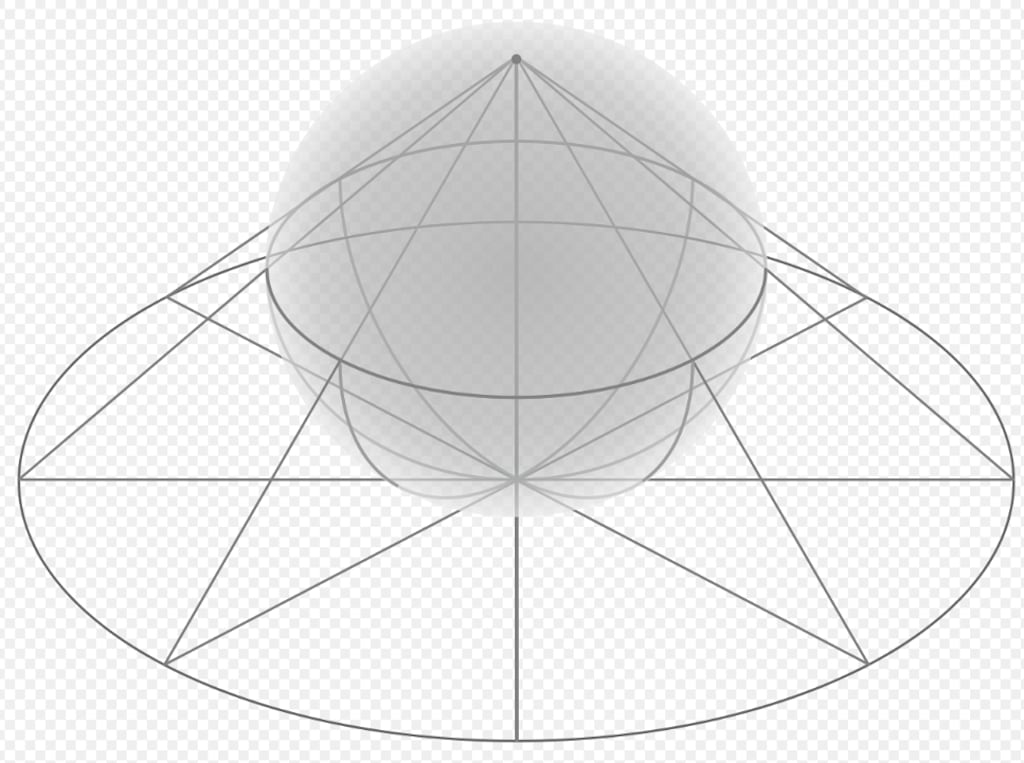
Geometry That Doesn’t Adhere
In the evolution of math, established beliefs and understanding of analytical thinking will always be challenged. And, in many cases, those new ways of thinking about math will eventually replace, modify, or give birth to a new way of understanding this discipline.
Non-Euclidean geometry is one example. This concept is aptly named, for it refers to geometry that doesn’t adhere to all the postulates of Euclidean spaces (or to be more precise, any concept of geometric shapes and spaces that doesn’t follow traditional views held since Euclid’s time).
This specification is a term that refers to several theories of geometry:
- Hyperbolic geometry (also known as Lobachevsky-Bolyai-Gaus geometry),
- elliptic geometry (or Riemannian geometry), and
- Spherical geometry.
Euclid Vs. Non-Euclid Geometry
The difference between Euclid geometry and non-Euclidean geometry can be characterized by the dimensions used. According to the website, Wolfram Math World, Euclidean geometry, (also known as parabolic geometry,) is a “flat” geometry; it focuses on one type of dimensional shapes or spaces . Non-Euclidean geometry explores two and three dimensions within a particular shape.
Euclid’s influence on geometry is undeniable. In 300 BC, the Greek mathematician of antiquity wrote “Elements,” the most influential text on geometry. His concepts would become the hallmark of math and science. It would also influence countless mathematicians, physicists, astronomers, and other scientists for thousands of years.
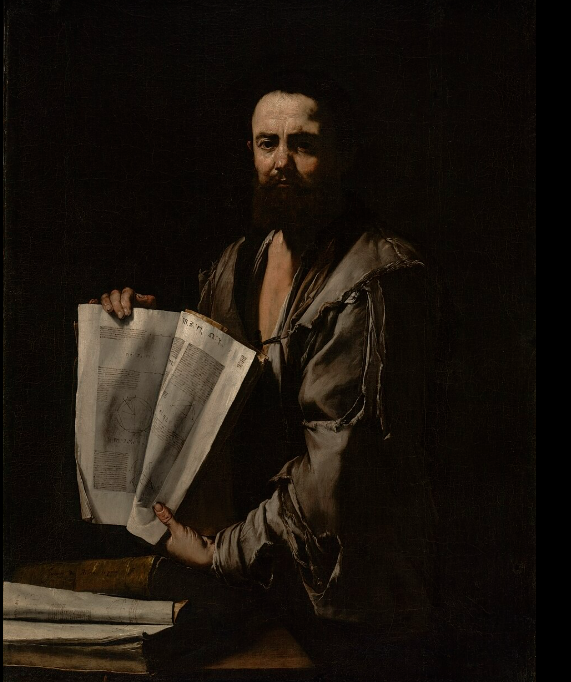
In his famous book, Euclid described five postulates (According to Encarta Dictionary, a statement that is assumed to be true but has not been proven and that is taken as the basis for a theory, line of reasoning, or hypothesis.) His theorems for these postulates are as follows:
- To draw a straight line from any point to any other.
- To produce a finite straight line continuously in a straight line continuously in a straight line.
- To describe a circle with any center and distance.
- All right angles are equal to each other.
- If a straight line falls on two straight lines making the interior angles on the same side less than two right angles, if produced indefinitely, meet on that side on which are the angles less than the two right angles (O’Conner, Robertson: 1996).
According J.J. O’Conner and E.F. Robertson, of St. Andrew Academy of the United Kingdom, the fifth postulate is “different from the other four. It did not satisfy Euclid and he tried to avoid its use as long as possible.”
Those That Challenged the Fifth Postulate
In the 19th century, several mathematicians began to challenge Euclidean geometry. In particular, they began to challenge the fifth postulate. In 1817, German mathematician Johann Carl Friedrich Gauss was one of the first to imply that the fifth postulate was independent of the other four. He began to play with the notion of having more than one line drawn through a given point parallel to a given line.
Gauss, who never published his work, conferred with his friend, Farkas Bolyai. In return, Farkas taught his son Janos about the concept (however, he told him “not to waste one hour’s time on that problem.”)
In 1823, Janos, now a mathematician, defied his father’s advice and returned to this problem, and two years later published his findings. The younger Bolyai had opened the door to a new way of thinking about geometry.
The next step in non-Euclidean Geometry came in 1829. A Russian mathematician independently published his findings on the fifth postulate. Gauss and the Bolyais were not aware of Nikoli Ivanovich Lobachevsky’s work because he had published his findings in a local university publication “Kazan Messenger.”
In 1840, Lobachevesky reached a wider audience with his ground-breaking publication, “Geometrical Investigations on the Theory of Parallels.” In this 61 page document, he replaced the fifth postulate of Euclid (‘O Conner, Robertson, 1996).
This and other concepts of his would become the basis of developing many trigonometric identities for triangles.
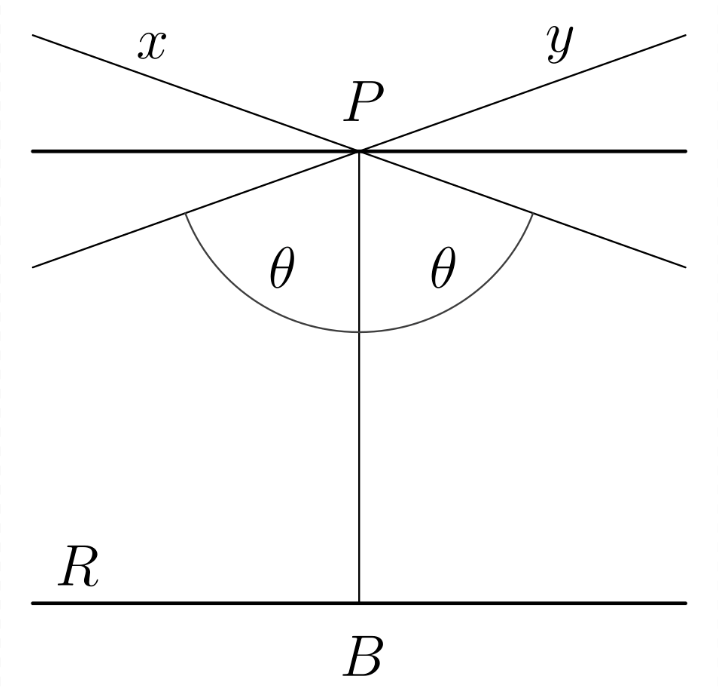
In his book, he explained the non-Euclidean geometry as “All straight lines which in a plane go out from a point can, with reference to a given straight line in the same plane, be divided into two classes – into cutting and non-cutting. The boundary lines of the one and the other class of those lines will be called parallel to the given line (O’Conner, Robertson, 1996)."
His postulate states: “There exist two lines parallel to a given line through a given point not on the line.” This and other concepts of his would become the basis of developing many trigonometric identities for triangles.
A New Theory
Later, a new theory in non-Euclidean theory would develop. This time, it came from one of Gauss’s pupils, Georg Friedrich Bernhard Riemann. As part of his doctoral dissertation on June 10, 1854, Riemann gave a lecture on his view of geometry. He said he saw the concept of geometry as a “space” with extra structures to be measured. It would be known as spherical geometry: parallels need not apply. Riemann’s work would have profound influence in the study of math and physics.
...he introduced two-dimensional and three-dimensional models based on the theories of Euclidean and non-Euclidean geometry.
Still, it would take another two mathematicians, Italy’s Eugenio Beltrami and Germany’s Felix Christian Klein, to convert non-Euclidean geometry into a major mathematical theory. In 1868, Beltrami wrote the paper, “Essay on the interpretation of non-Euclidean geometry.” In this paper, he introduced two-dimensional and three-dimensional models based on the theories of Euclidean and non-Euclidean geometry. In 1871, Klein finished what Beltrami started by incorporating Riemann’s spherical geometry into the models.
Now a Major Type of Geometry
From that point on, non-Euclidean geometry went from being a question about the five postulates of Euclid to becoming one of three major types of geometry. It would also go on to be used by noted astronomers and physicists. It also became a basis for Albert Einstein’s theory of relativity.
Evolution of numbers and shapes has reshaped the way one thinks of the world. Non-Euclidean geometry is the latest concept to create these changes.
Work Cited
- O’ Conner, Robertson (1996): “Non-Euclidean Geometry” MathTutor.com
- “Non-Euclidean Geometry (retrieved 2011)”: Answers.com:
- “Non-Euclidean Geometry (retrieved 2011)”: Wolfram Math World:
- Wikipedia staff: "Hyperbolic Geometry": Wikipedia.org (retrieved 2026)
About the Creator
Dean Traylor
* Masters in special education and degree in journalism.
*Seasoned writer for the last 30+ years (Newspapers, Magazines, Internet sites)
* Former writer at Hubpages, Helium, and Wikinut.
* Current: Medium (https://medium.com/@ds_traylor)
Enjoyed the story? Support the Creator.
Subscribe for free to receive all their stories in your feed.
Comments
There are no comments for this story
Be the first to respond and start the conversation.