
What If the Deadliest Terror Plot in History Had Actually Worked?
The forgotten plan that could have reshaped the world far beyond 9/11

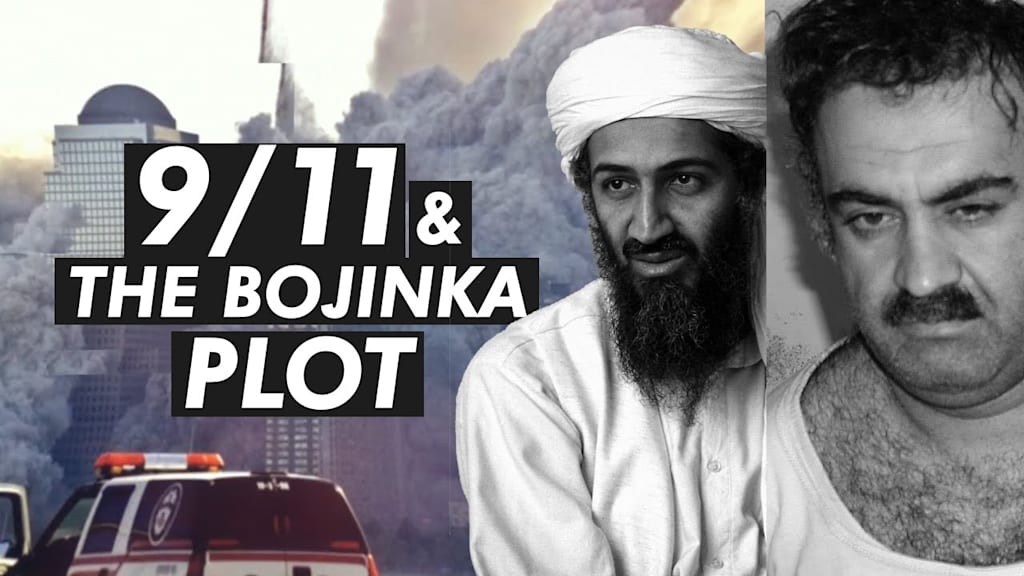
There are moments in history that feel like turning points—events so massive they redefine everything that comes after. For many Americans, the September 11 attacks stand at the center of that shift. But what if that moment wasn’t the worst-case scenario?
What if something far more devastating had already been planned… and almost happened?
Because long before 2001, there was another plot—one that, if successful, could have changed not just the United States, but the entire global order.
The Plot That Came Before 9/11
In the mid-1990s, a complex, multi-phase terrorist operation was quietly taking shape. Known as the Bojinka plot, it was orchestrated by Ramzi Yousef, one of the key figures behind the 1993 World Trade Center bombing.
This wasn’t a single attack. It was a blueprint for sustained, coordinated chaos.
The plan had three phases, each escalating in scale and brutality. The first was designed to shock the world: the assassination of Pope John Paul II during a visit to the Philippines. The goal wasn’t just to kill a global religious leader—it was to create maximum distraction.

And then, while the world mourned, the real operation would begin.
A Sky Full of Explosions
Phase two was as terrifying as it was methodical. Operatives would board multiple U.S.-bound commercial flights departing from Asia. Hidden explosives would be planted onboard, timed to detonate midair.
The result? Dozens of planes exploding almost simultaneously over the Pacific.
Thousands of people—many of them American—would be killed in a matter of hours.
And that still wasn’t the end.

The Part That Sounds Like a Nightmare
The final phase is where the plot becomes almost unthinkable.
More planes—at least ten—would be hijacked and turned into weapons. Targets included iconic landmarks and critical infrastructure: the White House, the Capitol, the Pentagon, and major skyscrapers across the country.
Even more chilling, nuclear facilities were reportedly considered as targets, raising the possibility of meltdowns and long-term environmental disaster.

The projected death toll? Tens of thousands—possibly far more if nuclear contamination came into play.
In other words, everything that happened on 9/11… but multiplied.
The Collapse That Could Have Followed
It’s not just about the immediate destruction. It’s about what comes next.
A coordinated attack on that scale would have shaken the United States to its core. The economy, already vulnerable to shock, could have spiraled into a deep crisis. Global markets would likely follow.
Politically, things get even more unstable. If key leaders were killed in the attacks, the chain of command could fracture. There’s a real possibility that emergency powers—or even martial law—might have been invoked to stabilize the country.
And socially? That’s where things get even more complicated.
Fear, Anger, and Division
After 9/11, there was already a noticeable rise in suspicion and hostility toward Muslim communities in the U.S. Now imagine that same reaction—but amplified by a tragedy ten times worse.
Public anger wouldn’t just simmer—it would boil over.
Riots, retaliation, and widespread unrest could have erupted across major cities. States with larger Muslim populations or direct ties to the attacks would likely feel the brunt of it.
At the same time, the government would be under immense pressure to act—fast and aggressively. Immigration policies would tighten. Surveillance would expand. National security would become the defining issue of the era.
A War on Terror… on Steroids
The real-world response to 9/11 led to wars in Afghanistan and Iraq. But in this alternate scenario, the scope of military action could have been far broader.
Countries like Iran, Libya, Syria, and Yemen might have found themselves in the crosshairs. The U.S. could have taken a far more interventionist stance across the Middle East, aiming not just to eliminate terrorist networks but to reshape entire governments.
And it wouldn’t just be the United States.
The assassination of the Pope could have galvanized Catholic-majority nations around the world. Countries in Europe and Latin America might have joined the fight with a sense of religious urgency, turning the conflict into something that feels less like geopolitics—and more like a global ideological battle.
A World That Never Was
Here’s the thing: this didn’t happen.
The Bojinka plot was uncovered before it could be carried out. The key figures were tracked down. The plan collapsed before it ever reached execution.
But the blueprint didn’t disappear.
Some elements—particularly the idea of using planes as weapons—would later resurface in the planning of the September 11 attacks.
And that’s what makes this so unsettling.
Because when you look at it closely, 9/11 wasn’t the most extreme version of what was imagined. It was, in some ways, a scaled-down version of something even more catastrophic.
The Thin Line Between History and “What If”
It’s easy to look at history as something fixed, something inevitable. But stories like this remind you how fragile that idea really is.
One uncovered plot. One disrupted plan. One moment where things went differently.
And suddenly, the world we know looks completely different.
The question isn’t just what happened.
It’s how close we came to something far worse.
About the Creator
Lawrence Lease
Alaska born and bred, Washington DC is my home. I'm also a freelance writer. Love politics and history.
Enjoyed the story? Support the Creator.
Subscribe for free to receive all their stories in your feed.
Comments
There are no comments for this story
Be the first to respond and start the conversation.