
UEFA Champions League Final Match Analysis
Analyzing Pep's Tactical Adaptations for Champions League Final Victory
Analyzing Pep's Tactical Adaptations for Champions League Final Victory
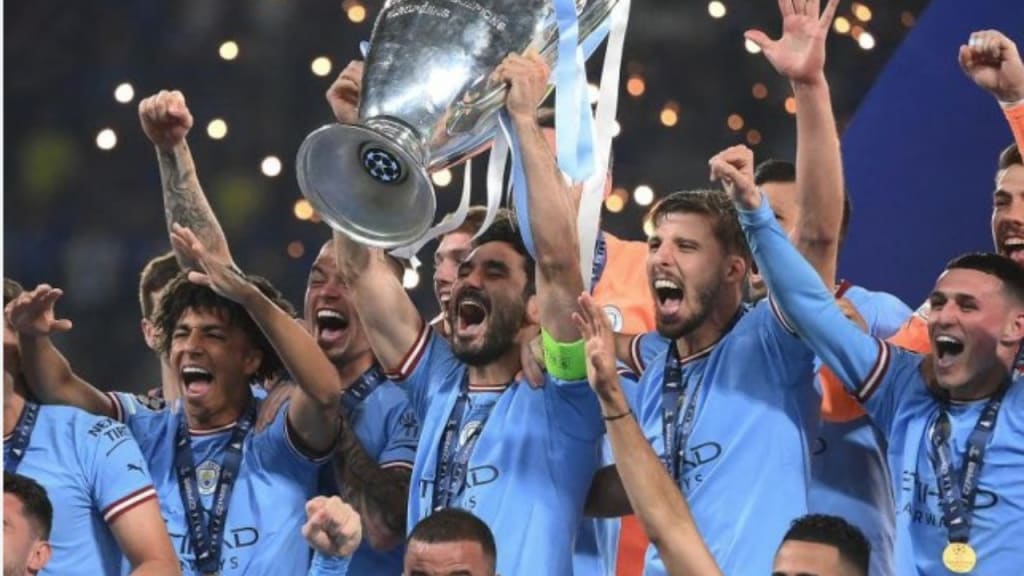
The match witnessed a tightly contested final with the Rodri deciding matters. Pep Guardiola displayed his tactical prowess by making critical adjustments to secure victory in the Champions League Final match. The match witnessed a swing in expected goals in favor of the opposing team, with several close-range shots miraculously staying out of City’s goal post. Let's delve into the tactics employed by both managers to gain a better understanding.
City's Tactical Adjustments
City's 3-2 shape during the build-up had been a subject of much discussion in recent months. The 3-2's deep central possession complicates the opponent's press. If the opponent commits too many men forward to press, they risk being exposed on defense. However, Guardiola recognized that this formation played into the hands of the opposition's defensive strategy. To counter this, Guardiola made slight changes to the shape, maintaining the back three but adjusting the positioning of players. Rodri transitioned to a single pivot role, while De Bruyne operated wider on the left, and Stones took up an advanced position on the right. This adjustment resulted in City playing with a 3-4-3 diamond formation, reminiscent of Johan Cruyff's style of play.
The purpose behind this tactical change was to counter Inter's focus on occupying central areas and neutralizing City's central overload. With De Bruyne and Stones operating wider, they could potentially exploit the spaces left by Inter's defensive structure. However, Inter's disciplined defense, particularly Barella and Acerbi, thwarted many of City's attempts to create scoring opportunities.
Inter's Tactical Strategy
Inter Milan deserves credit for their aggressive pressing throughout the match. Instead of sitting deeper, their front two, Dzeko and Martinez, actively pressed City's defenders. Barella, an energetic midfielder, had the task of shifting up and down the pitch to press City's center-backs whenever Ake received the ball. Inter's pressing tempo forced City's defenders to play hurriedly without much time to orchestrate attacks.
Despite City's attempts to exploit the spaces created by Inter's defensive shape, Inter's defense remained steadfast. Darmian, operating as a free center-back, ensured City's midfielders had limited opportunities to drive forward. Inter's defensive discipline prevented City from generating many chances, although Foden's introduction provided some solutions by exploiting gaps with his deep runs.
City's Defensive Vulnerabilities
City's modified shape had its vulnerabilities, particularly when Inter's wide center-backs progressed past the first line of pressing. This created situations where City would have numerical advantages, leading to potential 2 vs 1 situations or overloads against Inter. In rare instances, the wider center-backs also caused defensive gaps, allowing City to exploit those spaces.
Inter's Offensive Approach
In the build-up phase, Inter Milan had the option of playing longer balls with Dzeko and Lukaku upfront. However, Anano's excellent distribution allowed them to play short and build from the back. City responded with their pressing shape, similar to their previous Champions League matches they won. The front three, consisting of Foden, Harland, and Grealish, pressed Inter's wider center-backs, while Silva and Grealish aimed to prevent progression and passing lanes.
Inter's Exploitation of City's Weakness
Inter quickly identified City's vulnerability in defending against the switch of play. They deliberately shifted Barella wider, creating a 2 vs 1 situation against Ake. This caused problems for City as they had to constantly adjust their defensive shape. By isolating Ake, Inter found opportunities to create dangerous situations.
City’s In-Game Adaptations
Guardiola's prowess as a tactician shone through his in-game adjustments during the Champions League Final game. His masterful use of substitutions, tactical tweaks, and positional changes to influence the flow of matches, exploited the opponent’s weaknesses.
Conclusion
Both Pep Guardiola and the Inter Milan manager, Simone Inzaghi, showcased tactical prowess in the Champions League final match in Istanbul, Turkey. Guardiola's adjustments aimed to counter Inter's defensive strategy, while Inter's aggressive pressing and exploitation of defensive weaknesses made them a formidable opponent.
Ultimately, City emerged victorious, securing their place in history.
About the Creator
Oscar Mbira
A passionate project manager, researcher and entrepreneur focusing on information dissemination and effective communication through article writing and summarization to reach all the corners of the global village without any limitations.
Enjoyed the story? Support the Creator.
Subscribe for free to receive all their stories in your feed.
Comments
There are no comments for this story
Be the first to respond and start the conversation.