
The Real Story of the Pied Piper
From historical mystery to timeless tale.

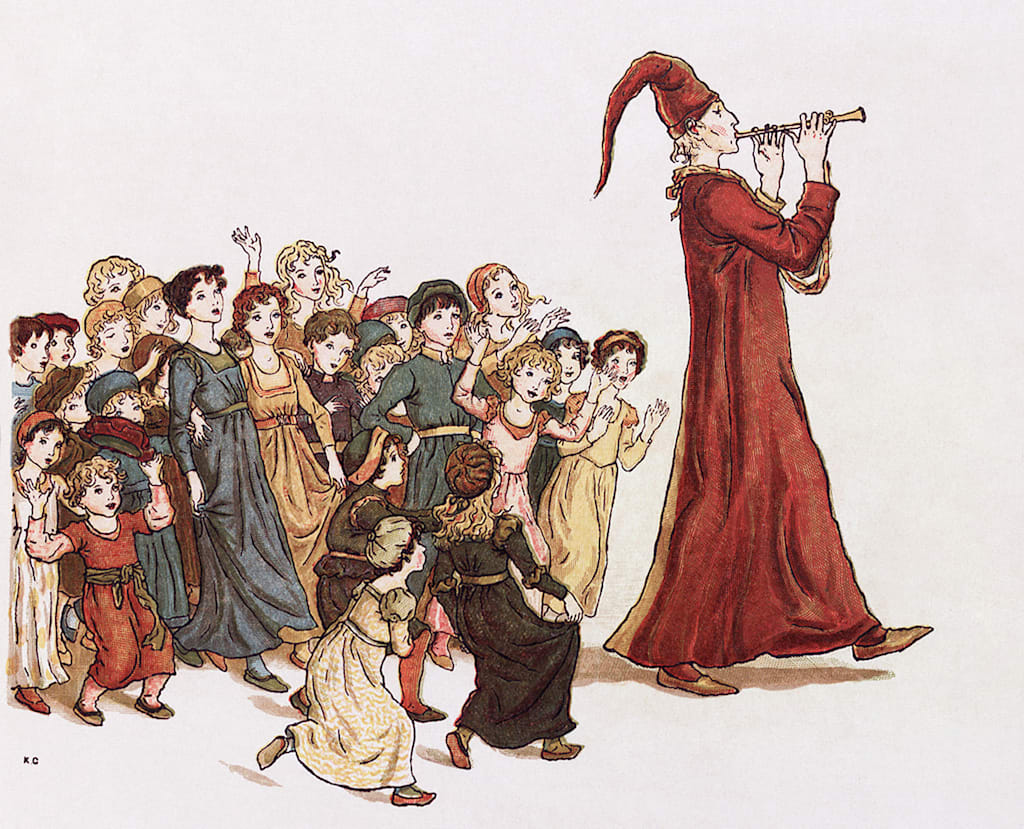
One of my favourite fables is the Pied Piper. To me, the story has always felt too real to be just a story; after all, isn’t that what life is, just a story? I think most of us are familiar with the tale of the Pied Piper, but not many of us are aware that there is, sadly, some truth in it.
The Brothers Grimm and Robert Browning popularised the version we know today, but if you are somehow unfamiliar with the story, let me take you to 13th-century Germany, to the village of Hamelin.
The Patchwork Stranger
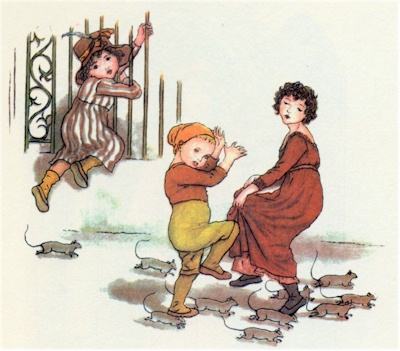
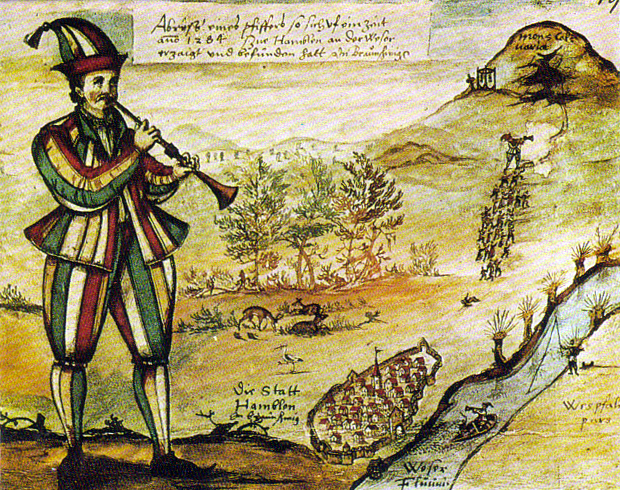
The village was suffering from a terrible rat infestation; they bit babies, ate crops, carried the plague and successfully avoided all traps. The village was at its wits’ end when one day a strange man in multicoloured clothing appeared, introducing himself as a ratcatcher with a magical silver flute. Relieved by the piper’s arrival, the burgermeister agreed to pay the piper 1000 guilders once the job was complete.
The piper agreed and set about playing his magical flute, hypnotising the rats and escorting them into the Weser River, where they drowned. However, the burgermeister retracted his deal, claiming the piper had brought the rats into the village so that he could play the role of hero.
Enraged by this accusation, the pied piper left, and the village was at peace.
But not for long!
The piper returned to the village, this time dressed in green like a hunter. When all the adults were attending church on Saint John and Paul’s Day, he executed his revenge. Playing a different tune, the Pied Piper enchanted the children and led them away, some say up the mountains, others say into the river where the rats had met their fate.
130 children followed the Piper into the woods, leaving behind only three children. One was disabled and couldn’t keep up with the others. Another was deaf and couldn’t hear the piper's song. The third was blind and could not see where they were going. Once the adults left the church, the three children informed them of what had happened.
And that’s it. That’s the story.
The Chronicles
However, the chronicles give us an insight into the tragic inspiration behind the fable. Unlike fairy tales that begin with “once upon a time,” the tale of the Pied Piper actually has a time and a place. Historians mark the event occurring on 26th June 1284. Records from the 14th and 15th centuries mention a stained-glass window of the three children left behind in the Church of Hamelin, dating to around 1300. Unfortunately, the window broke in 1660, so we are only left with descriptions.
Another account from 1384 in the Town’s Chronicle states:
“It has been 100 years since our children left.”
Decan Lude had a chorus book in which he described the event directly, as if he were an eyewitness. Clearly, this mysterious event occurred because it had a profound impact on the area that is still felt today.
In 1440-50, the Luneburg manuscript provides a detailed account of the day the children vanished. It is a polished version of the tattered remains of The Golden Chronicle, written by a monk in 1370. It describes the piper with his magical instrument, said to be thirty years of age, a marvellous wonder who dressed well. The description also provides details on which side he entered the village and which side he left, as well as the number 130.
The town gate is believed to be one of the oldest sculptural references to the event, dating to 1556. It reads:
“In the year 1556,
272 years after the magician
stole 130 children from the city,
This gate was founded.”
Now we are beginning to see how a real-life event slowly morphs into a myth. The co-stars of the tale, the rats, were a later addition to the story, dating to 1559. For this reason, historians say this is just an embellishment and not true. Every great story needs exposition, and given the centuries during which the myth formed, adding rats makes perfect sense, as it gives the piper a reason to be in town in the first place and a motive for his actions.
I think this was done to give people an explanation of the mystery. A mysterious tale with even more mysterious details can be irritating to the recipient, so providing a reason helps us understand better, just as we use theory to explain situations or human behaviour. It helps us accept the reality we desperately wish to understand.
The Theories
Historians rarely agree with one another, especially when it comes to theories. They do, however, mostly agree that Hamelin definitely experienced a loss. They only argue over the role of the Pied Piper.
The first theory suggests the piper is a symbolic figure, a personification of death. Supporters of this theory suggest that the children died of natural causes, either disease or starvation. Some claim their deaths were a result of a landslide that occurred, to which they all drowned in the Weser River, which is why, in some variations of the tale, we get that detail, and while in others, we get the detail that they went over the Kopp Hills or mountains. One of the hills was called Calvary, also known as execution hill, which is why the piper in this theory is death personified.
Another theory implies the Piper was a Lokator, a recruiter of sorts, and had to children emigrate to Eastern Europe, modern-day Poland and Romania. On the official website for the town of Hamelin, the theory is as follows:
“…colonisation of Eastern Europe starting from Lower Germany is the most plausible one: The ‘Children of Hameln’ would have been in those days citizens willing to emigrate, being recruited by landowners to settle in Moravia, East Prussia, Pomerania or in the Teutonic Land. It is assumed that in the past, all people in a town were referred to as "children of the town" or "town children," as is frequently done today. The "Legend of the children's Exodus" was later connected to the "Legend of expelling the rats".
Linguistics professor Jürgen Udolph entered all the known family names in the village at that time and then started searching for matches elsewhere. He found that the same surnames occur in the regions of Prignitz and Uckermark, both north of Berlin. He also found the same surnames in the former Pomeranian region, which is now a part of Poland. He theorises that the piper wasn’t a piper but a recruitment agent.
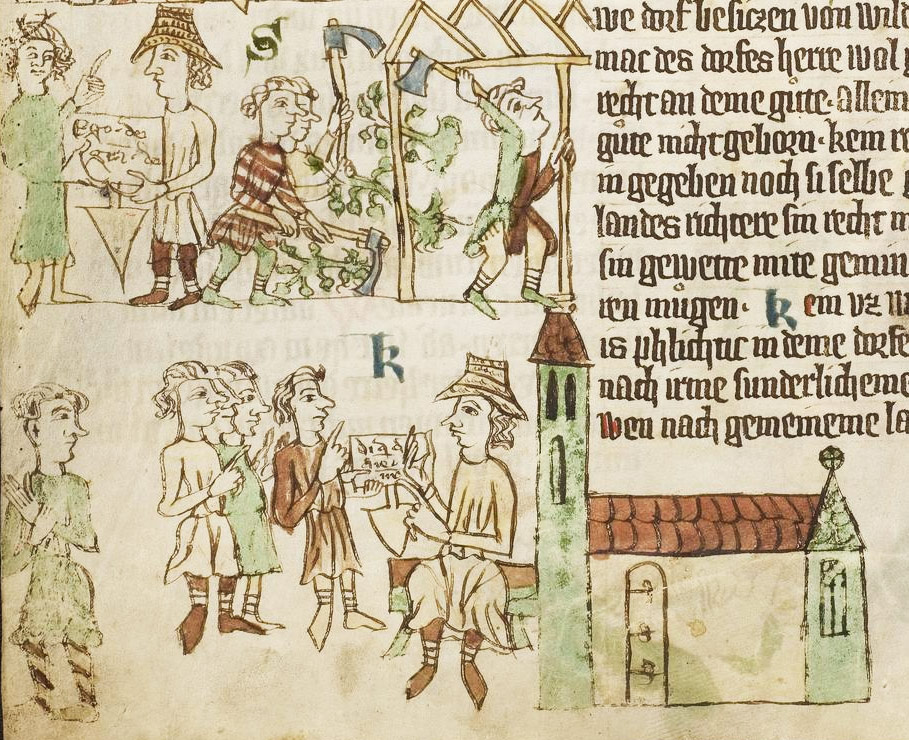
A Lokator, the hat was associated with the recruiter’s profession.
Other supporters of the theory suggest this was a military campaign, since crusades involving children weren’t unheard of; one did occur in 1212. The grandsons of Genghis Khan attempted to invade Transylvania, a German colony, after the Battle of Bornhöved in 1227, which broke the Danish hold on Eastern Europe. So this gives weight to the theory part of the theory.
However, some say there was an overcrowding problem in the village, and people left.
Other theories imply it was the dancing mania, a psychogenic illness, where people could not stop dancing and died of exhaustion, which was strangely common during the 13th century. One account says that in 1237, a large group of children travelled 12 miles, jumping and dancing along the way.
And finally, the last theory suggests it was a pilgrimage led by a charismatic leader, and that the children never returned home. Or he led them straight into the landslide, as mentioned earlier, that sent them to their deaths, unintentionally, of course.
Of all the theories, none mentions the three children that were left behind. Even though the story tells us it is because of these children that we know what happened.
Hamelin Today
Modern Hamelin keeps the tale of the Pied Pier alive; there is a street called the Street Without Drums. This is the street where the children were last seen. It’s actually illegal to dance or play music on this street. Any parade that goes through the street falls silent as it passes. Every Sunday during the summer season, the town reenacts the event, attracting tourists from all over the world.
So there you have it, the true story behind the infamous Pied Piper. What do you think? Was he a personification of death? Did the children emigrate? Or did they go on a dance to get away? We will never know what happened, but the tale lives on.
What other myths, fables or tales do you think have some truth hidden in them? Let me know.
________________________________________________
Thank you for taking some time out of your day to read my work. If you like what I do, don't forget to like, leave a comment and subscribe.
I hope to see you around. Take care.
Originally posted on Substack:
Find me on threads and youtube!
About the Creator
Enjoyed the story? Support the Creator.
Subscribe for free to receive all their stories in your feed.
Comments
There are no comments for this story
Be the first to respond and start the conversation.