
The Eclipse That Ended A Battle
A Power Like No Other...

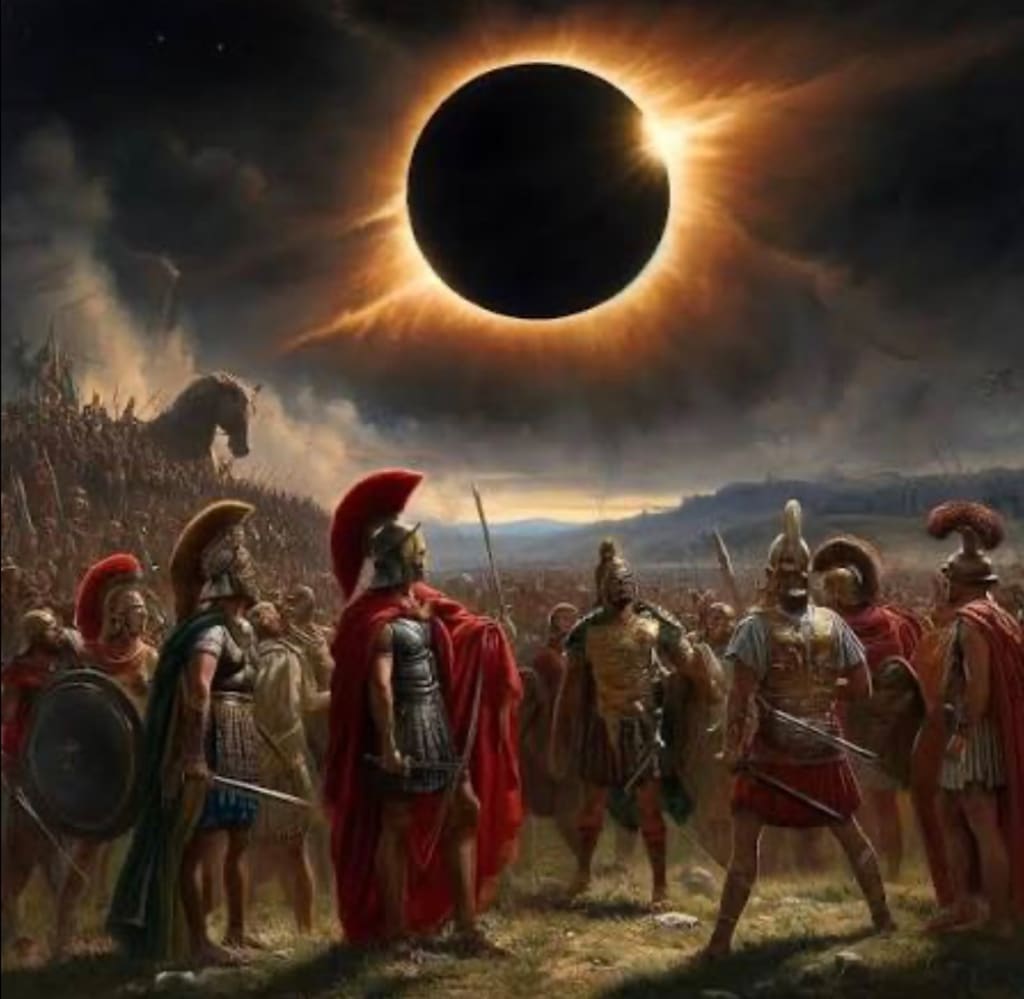
The solar eclipse has enchanted our species for thousands of years, with every culture explaining why the sun grows dark.
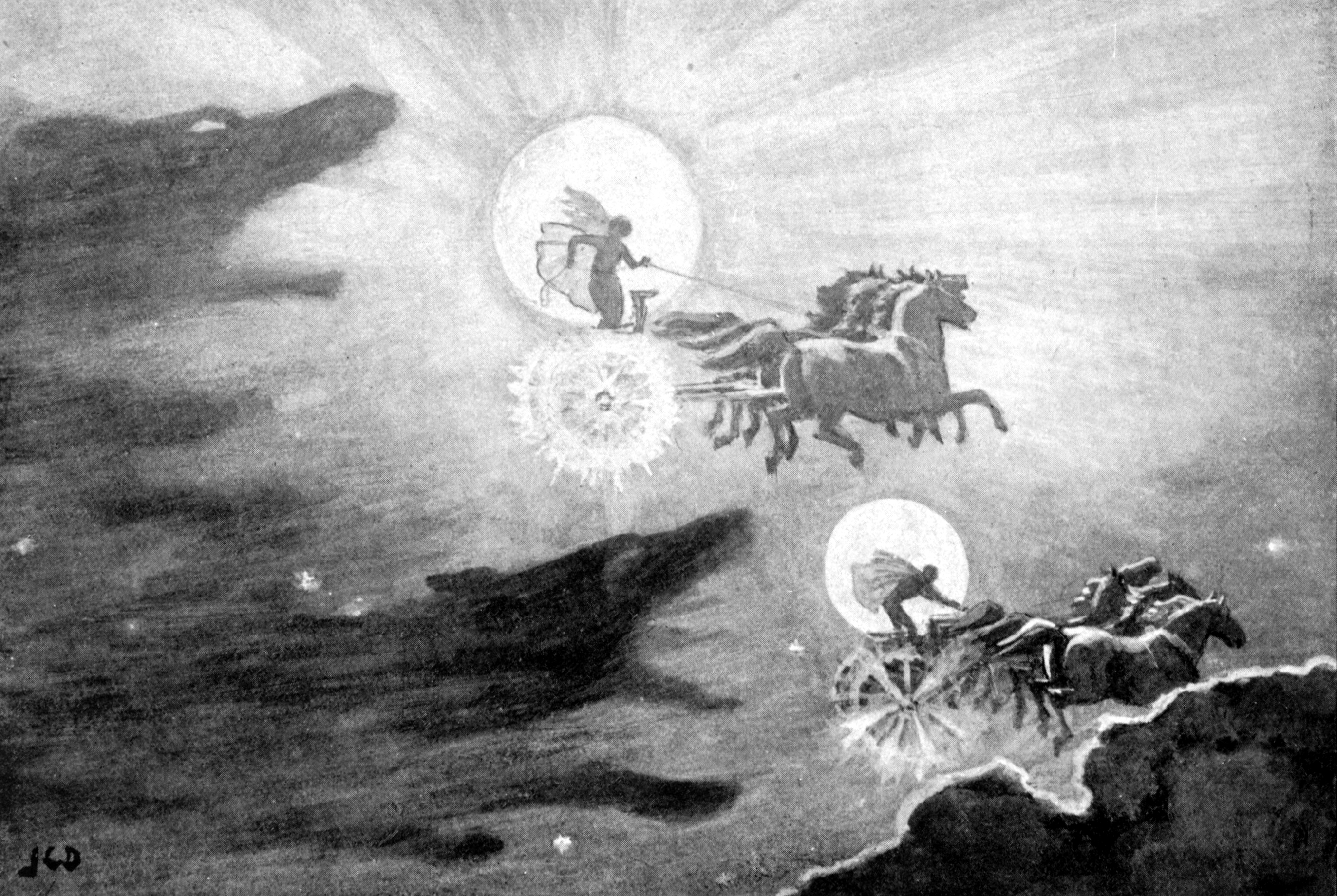
Whether it’s the Celts, who believed that the veil between worlds had thinned, or the Nordic wolves Sköll and Hati catching their prey. Or maybe even a celestial dragon devouring the sun in China, or the Indian demon Rahu taking revenge on Vishnu.
To our ancestors, the eclipse was an omen, catching the unwilling spectators off guard. Today, we understand an eclipse as the sunlight being blocked by the moon passing between the Earth and the Sun, plunging the world into temporary darkness that leaves us in awe rather than fear.
But in the ancient world, an eclipse was also a sign of kings meeting their end, a warning of famine and even war. No one could have suspected that a celestial event could wield the power of peace.
Let me tell you about the Eclipse of Thales, also known as the Battle of the Eclipse.
After six years of war between the Medes and the Lydians, both suffered losses and victories. On the 28th May 585 BCE, swords and steel met shields and armour on the battlefield for what they didn’t know was the last time.
Almost at sunset, the battle reached a cataclysm. Suddenly, the world was plunged into ominous darkness. Fearless warriors stood in terror, watching the sunlight disappear, halting the conflict in its tracks. Seeing this as a terrible omen, both sides put down their weapons and sued for peace.
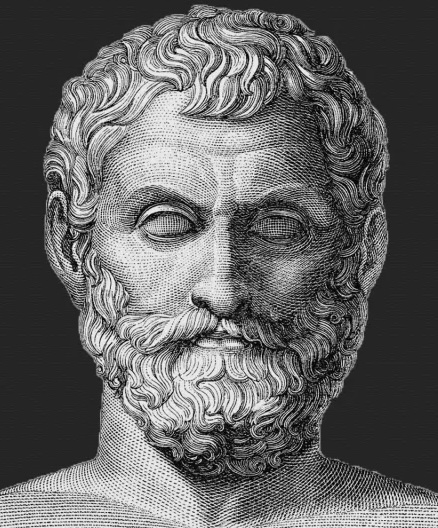
Why this story still has historians scratching their heads is down to Greek philosopher Thales of Miletus, who had predicted the eclipse. We have no idea how he managed to do so.
Another reason is that the account of the battle was written 150 years later by Greek historian Herodotus. As such, we are unsure if he was accurate in his description or whether his account is simply an interpretation of the celestial event.
Because of this, many people argue about the date, whether month or year, and what actually occurred on the battlefield. What we do know is that both sides did end the war through marriage. Herodotus must have interpreted this as an eclipse of peace, and that’s how we get the idea that people in the ancient Western world saw eclipses as an omen.
But how did Thales predict this? That's the real mystery. He didn’t have the privilege of the technology we have today, so how?
A few theories suggest he used Babylonian astrology to predict the eclipse. Many classical civilisations had an interest in astrology, weaving its lore into everyday life. We see it more today as a hobbyist interest, rather than concrete fact. Yet, Thales did predict this eclipse, and accurately.
Another theory suggests he used the Saros, which can still be used to predict eclipses. The Saros is a form of astronomy rather than astrology, and people say that if Thales did use this, then he helped give birth to science.
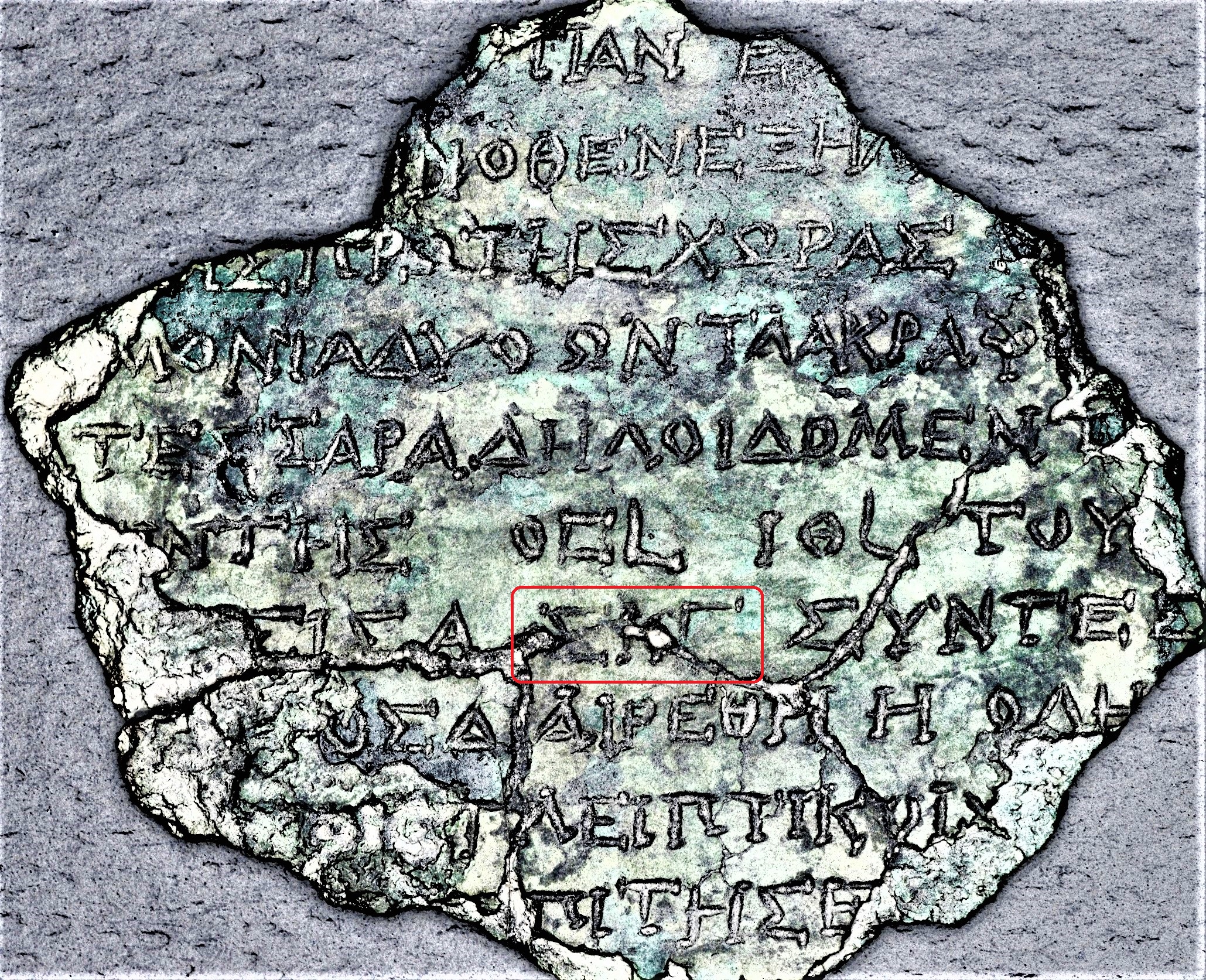
A saros is a length of time of approximately 223 synodic months, roughly 18 years. This is calculated through the synchronisation between lunar phases, nodal precession, and apsidal precession.
For example: after one saros, the Moon will have completed roughly an integer number of synodic, draconic, and anomalistic periods (223, 242, and 239 months), and the Earth-Sun-Moon geometry will be nearly identical: the Moon will have the same phase, be at the same node and be at the same distance from the Earth.
There is a lot of maths involved, and for someone who doesn’t get on well with maths, it took some time for me to wrap my head around it. Either way, this can accurately predict celestial events. In my opinion, Thales likely used this method to predict the Battle of the Eclipse.
And that’s pretty much all we have. It is a fascinating short story, one that I am sure historians and curious writers like myself will never truly find the answers to.
What do you think about the Battle of the Eclipse?
Thank you for taking the time out of your day to read my work.
SubscribeAbout the Creator
Enjoyed the story? Support the Creator.
Subscribe for free to receive all their stories in your feed.
Comments
There are no comments for this story
Be the first to respond and start the conversation.