
The Cruise That Turned Silent: A Virus No One Saw Coming
A rare virus, a remote ocean, and a crisis that forced the world to pay attention.

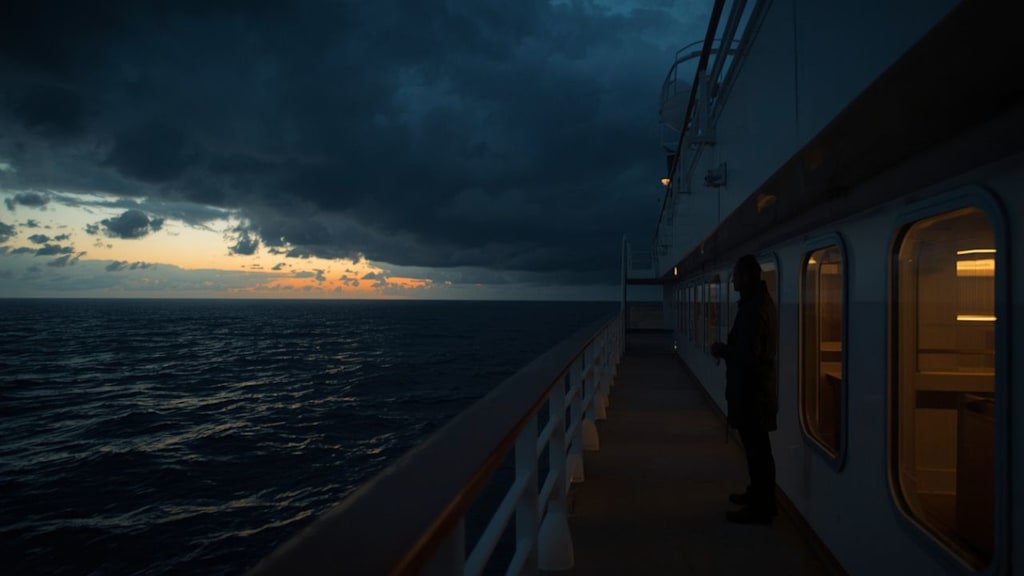
The Cruise That Turned Silent
At first, it was just another dream voyage.
Passengers boarded the MV Hondius expecting glaciers, open skies, and stories worth telling for a lifetime. They came for adventure—for the kind of quiet beauty that only the ocean can offer.
But somewhere between continents, something changed.
The laughter faded. The hallways grew quiet. Doors began to close.
And then came the word no one expected: hantavirus.
________________________________________
When the Ocean Becomes a Border
The ship didn’t dock.
That alone was enough to make people uneasy.
Off the coast of Cape Verde, authorities made a decision that would define the crisis—they refused entry. No passengers stepping onto land. No normal disembarkation. Just a ship, hovering in uncertainty.
Inside, around 150 people waited.
Some were sick. Some were afraid. Most didn’t know what was happening.
Medical teams were sent aboard instead. Protective gear. Careful steps. Quiet urgency.
The world outside watched from a distance.
And inside, time slowed down.
________________________________________
A Virus Few Truly Understand
Hantavirus isn’t the kind of illness most people think about.
It doesn’t dominate headlines like global pandemics. It isn’t commonly discussed in everyday life.
But it’s dangerous.
Typically spread through contact with infected rodents, it can lead to severe respiratory illness. In some cases, it turns deadly fast.
What made this situation different—what made experts pause—was the possibility that this wasn’t a typical case.
There were signs it could involve a rare strain, one capable of human-to-human transmission.
That possibility changed everything.
Even the World Health Organization began closely monitoring the situation, treating it not just as an outbreak—but as an investigation.
________________________________________
Life Inside the Unknown
Imagine being there.
You wake up in your cabin. You check for updates. There are none.
You hear whispers through the hallway. Someone else is sick. Someone didn’t make it.
Meals are delivered, not shared. Conversations happen through doors, not across tables.
The ocean stretches endlessly outside—but you’re not free to move.
Isolation doesn’t just affect the body. It creeps into the mind.
People start asking questions no one can answer:
How did this start?
Who’s next?
Will we get home?
________________________________________
The Human Cost
At least three lives were lost.
Not numbers. Not statistics.
People.
A couple. A traveler. Individuals who boarded the ship with plans, with excitement, with futures that never unfolded.
Their story became part of something much bigger—a global headline, a health investigation, a warning.
But beneath all of that is something simpler, and harder to process:
They didn’t know this would happen.
No one did.
________________________________________
Science, Uncertainty, and Fear
As samples were collected and tests conducted, scientists raced to understand what they were dealing with.
Was this a known strain?
Did it behave differently?
Could it spread more easily than expected?
The answers didn’t come immediately.
And that uncertainty—that gap between what we know and what we fear—can be more unsettling than the virus itself.
Because uncertainty spreads faster than infection.
________________________________________
Why This Story Matters
It’s easy to see this as an isolated event.
A ship. A virus. A rare situation.
But it raises bigger questions.
In a world where travel connects us more than ever, how prepared are we for the unexpected?
How quickly can something contained become something global?
And how do we balance caution with panic?
Health officials emphasized that the risk to the wider public remains low. There were no calls for widespread restrictions. No global emergency declared.
But the incident still matters.
Because it reminds us how fragile certainty really is.
________________________________________
The Quiet Lessons We Don’t Talk About
There’s something deeply human about this story.
It’s not just about illness—it’s about control.
Or the lack of it.
We plan trips. We map out experiences. We assume safety in systems designed to protect us.
And most of the time, those systems work.
But sometimes, something slips through.
And when it does, we’re left with questions we can’t immediately answer.
________________________________________
What Happens Next?
The ship will eventually dock.
Passengers will return home.
Investigations will conclude.
Reports will be written.
But the story won’t end there.
Because events like this don’t just disappear—they linger. In policies. In preparedness plans. In the quiet awareness that even rare things can happen.
________________________________________
A Final Thought
Somewhere out there, right now, another ship is sailing.
People are laughing. Taking photos. Watching the horizon stretch endlessly forward.
Just like before.
And maybe that’s the point.
Life continues. Travel continues. Hope continues.
But so does uncertainty.
So the question isn’t whether we should stop exploring the world.
It’s this:
How do we keep moving forward—knowing that even the most beautiful journeys can change in ways we never expect?
About the Creator
Enjoyed the story? Support the Creator.
Subscribe for free to receive all their stories in your feed.
Comments
There are no comments for this story
Be the first to respond and start the conversation.