Vocal
Managing Remote Chaos? Tips to Handle Virtual Employees. AI-Generated.
I’ll never forget the first time I managed a completely remote team. It was 2020. The world had flipped overnight, and suddenly, I found myself staring at a screen filled with tiny square faces frozen mid-sentence, dogs barking in the background, and at least one person who forgot they weren’t on mute. Sound familiar?
By Anjelina Jonesabout a year ago in FYI
Must-Have Marketing Automation Platforms for Scaling Brands
As someone who's watched countless brands struggle with manual marketing tasks, I can tell you that the difference between companies that scale successfully and those that plateau often comes down to one thing: automation.
By Vasyl Popovychabout a year ago in FYI
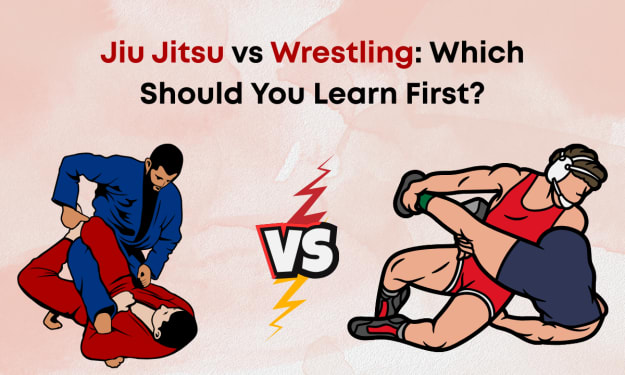
Jiu Jitsu vs Wrestling: Which Should You Learn First?. AI-Generated.
I still remember walking into my first grappling class. It wasn’t a jiu jitsu class or a wrestling session, but some sort of hybrid where everyone was just... rolling. I was completely out of my element. Guys in rash guards. Slams echoing off the mats. Chokes I’d never heard of. Someone shouted, “Double leg!” while another whispered, “Pull guard.”
By Angela R. Taylorabout a year ago in FYI
Support Groups and Resources for Ketamine Patients. AI-Generated.
When I went through my first few ketamine infusions, I didn’t quite know what to expect. I’d read the studies, watched the testimonials, and even had a solid treatment team backing me. But what I didn’t realize was how lonely the process could feel once the clinic visits ended and I was left alone with my thoughts-raw, open, and sometimes overwhelming.
By Adrienne D. Mullinsabout a year ago in FYI
5 Advanced Google My Business Optimisation Strategies for Sydney Businesses
Sydney businesses aiming to enhance their local visibility must embrace Google My Business (GMB) optimisation. With 46% of all Google searches looking for local information, having an optimised GMB profile can significantly impact your search engine ranking and visibility. It's not just about filling out your business details – it's about using every feature GMB offers to its full potential. Without effective GMB optimisation, you risk being buried in search results, where customers might never find you.
By Digitalzoopabout a year ago in FYI
Top 10 Damp Solutions for Basement Moisture Problems. AI-Generated.
Basements are notorious for one thing-moisture. Whether it's the musty smell, peeling paint, or mysterious wet patches on the wall, basement dampness is a silent intruder that can damage your home and your health. If you’ve ever walked downstairs and felt that unmistakable clammy air or noticed a suspicious water stain, you're not alone. The good news? There are plenty of damp solutions that can help you reclaim your space and keep it dry year-round.
By Ananya Singhabout a year ago in FYI
Why Miami Is the Best Place to Find Boats for Sale
Miami, often referred to as the boating capital of the world, is a paradise for anyone looking to buy a boat. Whether you're a first-time buyer or a seasoned yachting enthusiast, Miami offers a diverse range of vessels and opportunities that are hard to match anywhere else. From luxury yachts to sport fishing boats and family cruisers, the market for Miami boats for sale is vast, vibrant, and full of potential.
By Robert Lamaabout a year ago in FYI
Preventing Prediabetes from Progressing to Type 2 Diabetes: A Complete Guide
Note: This report is about prediabetes, which is the stage that comes before type 2 diabetes. It includes information and advice about rapid weight loss, which may be distressing for some readers. Therefore, please follow this guidance only under the supervision and advice of a doctor or medical expert.
By Ikram Ullahabout a year ago in FYI
The Quiet Wars We Fight Alone
I was thirteen when I first learned that silence could be deafening. It was a Tuesday. My father had come home late again. The house didn’t shake with yelling, as it sometimes did. No doors slammed. No dishes broke. Instead, it was eerily still so still that even the sound of my heartbeat in my ears felt too loud. I remember sitting in the hallway, knees pressed against my chest, trying to become invisible. There wasn’t a war that night. At least, not one with noise.
By Rameez Khanabout a year ago in FYI
Taiwan Flexes HIMARS Power in War Drills Aimed at Countering China
Taiwan has showcased its most advanced missile systems in a large-scale military exercise designed to strengthen its defenses against growing threats from China. Among the most notable developments in this year’s drills is the active deployment of High Mobility Artillery Rocket Systems (HIMARS), a long-range precision strike system supplied by the United States. The military exercise, known as Han Kuang, is Taiwan’s largest annual defense drill and serves as a key indicator of the island's combat readiness. The latest iteration features a range of scenarios including simulated invasions, surprise attacks, and counterstrikes, aimed at preparing the country for the worst-case military confrontations. Over the course of ten days, Taiwan's military forces are engaging in intensive training that includes live-fire artillery, amphibious landing simulations, urban warfare practice, and cyber defense. The fourth day of the exercise drew particular attention as HIMARS vehicles were seen actively maneuvering through the streets of Taichung, a major city along Taiwan's central western coastline. Military officials emphasized the strategic value of HIMARS, especially its ability to deliver rapid, high-precision strikes at distances of up to 300 kilometers. This range allows Taiwanese forces to potentially target military installations across the Taiwan Strait, particularly in China's southeastern Fujian province. The missiles are not only fast and powerful, but also mobile—mounted on armored trucks that can quickly relocate after firing, making them difficult targets for enemy retaliation. A senior spokesperson for Taiwan's military highlighted the importance of maintaining the secrecy and positioning of these systems, noting that HIMARS must be hidden from aerial surveillance, satellite imagery, and potential enemy agents operating within Taiwan’s territory. The element of surprise and concealment, military planners say, is crucial for maintaining the tactical advantage in any conflict. The unveiling of HIMARS in such a high-profile setting sends a powerful message to both domestic and international audiences. It reflects Taiwan’s determination to bolster its self-defense capabilities in the face of growing Chinese pressure. Over recent years, the Chinese military has significantly intensified its activities around the island, conducting large-scale naval and aerial patrols, often breaching the island’s air defense identification zone (ADIZ). China maintains that Taiwan is a breakaway province that must be reunified with the mainland, by force if necessary. In response to Taiwan’s increasing military preparations and its deepening security ties with the United States, Beijing has issued repeated warnings and condemned the drills as provocative. Chinese officials described Taiwan’s military exercises as "self-deceptive" and accused the island's leadership of creating unnecessary tensions. Despite these criticisms, Taiwan’s government continues to stress the defensive nature of its military build-up. The latest drills are framed as a necessary precaution to ensure the island’s survival in the event of an invasion. Taiwan’s leadership has also pointed out that these exercises are conducted in accordance with international laws and within the nation’s territorial boundaries. The deployment of HIMARS marks a significant upgrade in Taiwan’s military arsenal. Last year, the island received the first batch of 11 HIMARS units out of an expected 29. These rocket systems were field-tested in May and are now being fully integrated into Taiwan’s military strategy. The use of such advanced weaponry in unscripted drills has been praised by analysts who note the importance of realism in military training. According to senior defense officials, this year's Han Kuang drills are intentionally designed without predetermined outcomes. Instead, they are structured around a dynamic flow of simulated enemy attacks, infiltration scenarios, and response tactics that aim to simulate actual battlefield conditions as closely as possible. The broader strategic context of Taiwan’s military posture is shaped by its increasingly close cooperation with the United States. Though Washington has maintained a policy of "strategic ambiguity" regarding direct intervention in a Taiwan-China conflict, American law requires it to provide Taiwan with the means to defend itself. Over the years, the U.S. has supplied a range of defensive systems, including air defense missiles, drones, tanks, and radar equipment. The addition of HIMARS marks a turning point in the level of firepower available to Taiwan's military. However, questions remain about the extent of U.S. support in the event of an all-out war. While Taiwan continues to receive arms and political backing from Washington, actual military intervention remains uncertain. This uncertainty underlines the urgency of Taiwan's own defense preparations, as the island cannot rely solely on external support. Observers have noted that Taiwan’s strategy is increasingly focused on asymmetric warfare. Instead of matching China’s vast military power weapon-for-weapon, Taiwan aims to deploy mobile, lethal, and resilient systems that can outlast and outmaneuver a much larger force. The HIMARS units, with their agility, precision, and destructive capability, are a centerpiece of this evolving doctrine. Beyond the immediate military implications, these drills carry symbolic weight. They are meant to reassure Taiwan's population that the government is prepared to defend the country’s sovereignty. At the same time, they serve as a message to the international community—especially key partners like Japan, Australia, and European nations—that Taiwan remains steadfast in its commitment to democracy and self-determination, even under pressure. In parallel with the military exercises, Taiwan continues to invest in cyber defense, satellite communication, and drone technology. Modern conflict, officials warn, is no longer limited to the physical battlefield. Electronic warfare, psychological operations, and economic sabotage are also tools that a hostile power could employ. With tensions in the Taiwan Strait remaining high, Taiwan’s multi-dimensional defense efforts—bolstered by sophisticated U.S.-made systems like HIMARS—are expected to continue evolving. While no one desires conflict, the reality of modern geopolitics requires constant vigilance and readiness. Taiwan's defense leadership maintains that its ultimate goal is to preserve peace and stability in the region. But to achieve that, they say, the island must remain strong, prepared, and resolute in the face of any threat.
By Ikram Ullahabout a year ago in FYI
The Vanishing Hour: The True Story Behind the Cold Lake Disappearance
Cold Lake, Alberta, is the kind of place where people leave their doors unlocked and greet each other with a nod. Tucked away near the edge of a sprawling forest, the lake glistens like a hidden gem, peaceful and pristine. Nothing ever happened there—until the spring of 2016, when Jeremy Cole disappeared without a trace. Jeremy was 34, a quiet, lanky mechanic known for his love of fishing, plaid shirts, and beat-up red Ford pickup. He lived in a log cabin by the water’s edge, inherited from his grandfather. He wasn't flashy, didn’t have many enemies, and mostly kept to himself. On April 9th, 2016, Jeremy texted his sister Rachel: “Heading out to the lake. Might be late.” That was the last time anyone heard from him. When he didn’t show up for work the next morning at the auto shop, no one panicked. Jeremy was known to go off-grid for a night or two. But when Monday came and went with no calls, no texts, and no posts on his usually active Instagram, Rachel got worried. She drove to the lake, found his truck parked near his favorite fishing spot—keys still in the ignition, phone left inside. His tackle box was open, one fishing rod propped up and forgotten. It looked like he had just stepped away. But Jeremy was gone. --- The local police launched a search within 24 hours. Volunteers combed through the forest. Drones scanned the lake. Divers spent three days in the frigid waters. Nothing. No signs of struggle. No signs of life. Until Tanya Sharp, a nearby cabin owner, came forward. She claimed that around 3:00 AM on the night Jeremy disappeared, she heard shouting coming from the woods. She thought it was teenagers messing around until she saw headlights flashing between the trees. But by the time she stepped outside, everything had gone still. At the time, the report didn’t lead anywhere. Tanya hadn’t seen a vehicle or a person—just lights. And Cold Lake was often a quiet playground for late-night partiers. Still, it lingered in the background. --- Two months later, a hiker found Jeremy’s fishing knife two kilometers into the dense forest. It was wiped clean, no blood, no prints. Just lying on a mossy log as if someone had placed it there. The RCMP reclassified the case from a missing person to a possible homicide. Jeremy’s cabin was re-searched, and his life scrutinized. What they found shocked even his closest friends. A man named Kyle Jensen—Jeremy’s former coworker—had a bitter falling out with him a year before. The two had co-owned the auto shop briefly until Kyle was allegedly forced out due to mismanaged funds. Friends reported several heated arguments and even a restraining order filed but later dropped. Kyle had a rock-solid alibi: he was in Edmonton attending a wedding with 100 guests and dozens of photos as evidence. Still, the rumors spread like wildfire. Rachel, however, wasn’t convinced. She started her own investigation. She found Jeremy’s journal, hidden in a toolbox beneath the cabin’s floorboards. In it were scribbled pages of paranoia: > “I feel watched. Not just at night—always. I know it’s him. I just can’t prove it.” > “If anything happens to me, don’t let them say it was an accident.” He never mentioned Kyle by name—but it was clear something had spooked him. --- By 2017, the case had gone cold. But Rachel kept the memory alive. She contacted podcasts, bloggers, and Reddit communities. One particular Reddit thread titled “Cold Lake: The Disappearance of Jeremy Cole” gained traction. The community uncovered something shocking: A user, claiming to be from the Cold Lake area, posted anonymously: > “I saw a man screaming near the trees that night. I was camping nearby. I thought he was drunk. I didn’t know until now.” The user never posted again. The account was deleted within hours. Still, the story made headlines. A true-crime documentary, “Frozen Echoes,” aired in 2020, recounting the timeline and introducing the public to Jeremy’s case. That’s when the police got a tip that changed everything. A former poacher named Brad Lang claimed to have seen a confrontation near the lake in early April 2016. He described a man in a gray hoodie arguing with another near a parked truck. Brad didn’t report it then—he had illegal traps nearby and feared prosecution. When shown photos, he identified Jeremy. He hesitated over the second man but thought it looked “a lot like Kyle.” Kyle was brought in again. No charges were filed. But public suspicion had returned. --- In 2023, another strange clue surfaced. A local girl, 11-year-old Emma, found a burned journal in the forest while on a school trip. Pages were mostly gone—but one remained intact: > “He won’t stop. I’ve seen the truck twice this week. Same place, same time. I’m afraid.” Handwriting analysts confirmed it matched Jeremy’s. --- Still, no body. No murder weapon. No confession. Today, the story haunts the residents of Cold Lake. Tourists ask about it. Locals speak in hushed tones. Rachel still visits the lake every April, placing a bouquet near the log where Jeremy’s knife was found. She swears she still hears him in the wind. She keeps a voice mail he left her two days before he vanished: > “You’re all I’ve got. Promise you won’t forget me, okay?” And she hasn’t.
By Muhammad Usamaabout a year ago in FYI