Vocal
What Situations Are Appropriate to Use Telemedicine Oklahoma?
Telemedicine has transformed how healthcare is delivered, making it easier than ever to connect with medical professionals without leaving your home. In Oklahoma, telemedicine leverages advanced telecommunications technology to provide remote healthcare services, ranging from simple phone consultations to video visits with specialists. This convenient and efficient method is ideal for managing minor illnesses and non-emergency conditions, especially for those with limited access to in-person care. By reducing travel, wait times, and overall costs, telemedicine Oklahoma enhances healthcare accessibility for everyone.
By np2go submissionsabout a year ago in FYI
Where to Find Website Developers Near Me
When it’s time to build a new website or redesign an existing one, a business owner's first instinct is often to search for “website developers near me.” This crucial first step leads to an important question: how do you find the right partner—a team that not only has the technical skills but also truly understands your business goals?
By myheartcreativeabout a year ago in FYI
What Does Dyslexia Look Like?
Dyslexia is a learning difference tied to language that can make reading, spelling, writing, and sometimes speaking more difficult. It isn’t connected to intelligence or how hard someone tries—it has to do with how the brain processes written and spoken language.
By Educational Inspirationabout a year ago in FYI
How Donation Pick Up OKC Services Can Help Your Community
A donation pick up OKC makes it simple for people to donate items. By doing so, we support local organizations, which in turn help create a better, more robust community. By picking up donations directly from your home, we ensure valuable items find a new purpose. This supports local charities, brings people together, and empowers you to make a positive impact with minimal effort.
By donationpickupabout a year ago in FYI
What Should I Donate to a Donation Center?
Clearing out your home is a rewarding process, and you can give your unwanted items a new purpose by using a donation pickup service to clear out space. Before you begin, a common question arises: "What should I donate to a donation center? Providing items that are clean and in good, usable condition is the best way to ensure your contributions make a positive impact. By being thoughtful about your donations, you help charities efficiently sort and distribute items, turning your old goods into a vital resource for someone else.
By donationpickupabout a year ago in FYI
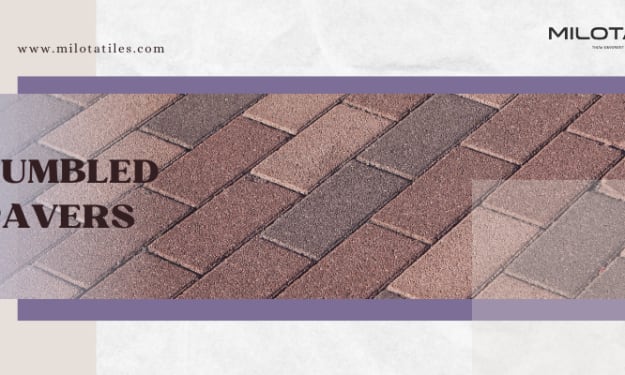
Top Color and Pattern Ideas for Tumbled Pavers in 2025
Outdoor design trends are evolving faster than ever, and tumbled pavers remain one of the most timeless and versatile materials for patios, driveways, walkways, and pool decks. Their softened edges, weathered finish, and natural aesthetic have made them a favorite choice for homeowners, architects, and landscape designers looking to create warm, inviting spaces that feel effortlessly elegant.
By Milota Tilesabout a year ago in FYI
The Secret Life of Everyday Objects
M Mehran Every morning, Liam made the same routine mistake. He poured cereal into a bowl, reached for the carton of milk—and discovered it was empty. Not because someone else had drunk it, but because he had forgotten, again, that yesterday’s carton was the last one. It was a small irritation, but it made him think: how often do we overlook the everyday objects that keep our lives moving? We pass them, touch them, depend on them—but rarely stop to ask where they came from, how they work, or why they matter. So, for the sake of curiosity (and breakfast sanity), here are some fascinating “FYI” stories behind the things you use every day. --- 1. The Spoon That Shaped Civilization Liam reached for a spoon to eat his dry cereal. A spoon: so simple, so ordinary. Yet FYI—spoons are among humanity’s oldest tools. Archaeologists have found spoons made from bone and wood dating back over 20,000 years. Why a spoon? Because early humans figured out that scooping food meant less waste, less mess, and easier sharing. Over time, spoons became symbols of wealth and culture. In medieval Europe, silver spoons were prized gifts. In Japan, the flat-bottomed rice spoon is still revered, passed down through families. That humble utensil on Liam’s counter? It carried millennia of human habit and tradition. --- 2. The Clock That Owns Your Day Annoyed, Liam checked the time. 7:43 a.m. Already late. He glared at his wall clock, as if it had betrayed him. FYI: clocks haven’t always been this strict. Before mechanical clocks, people measured time with sundials, water dripping through bowls, or even candles marked with lines. It wasn’t until the 14th century that towns began installing large mechanical clocks in towers—giant gears that chimed to regulate markets, prayers, and work hours. In short, the clock wasn’t invented to keep you punctual—it was created to control entire communities. Your daily rush to catch the bus or clock into work is the echo of a medieval bell tower. --- 3. The Lightbulb That Stole the Night As Liam hurried through his dim apartment, he flicked a switch. Light bloomed. He didn’t even think about it. But FYI: the lightbulb didn’t just brighten homes—it rewired human society. Before electricity, evenings revolved around candles or oil lamps. Work ended with sunset. People slept in two phases—first sleep, then a period of quiet wakefulness, then second sleep. When Edison and others popularized electric light, they didn’t just change how we saw—they changed how we slept, worked, and lived. The bulb in Liam’s hallway wasn’t just plastic and glass. It was the reason he stayed up late watching shows, the reason cities never truly sleep. --- 4. The Pen That Holds Your Voice On the counter sat a ballpoint pen, half-chewed, probably forgotten after jotting down a grocery list. Liam almost tossed it aside. FYI: pens are tiny time machines. Ancient Egyptians wrote with reed pens dipped in ink. Quills scratched across medieval manuscripts. But the ballpoint—cheap, reliable, and portable—transformed literacy itself. By the mid-20th century, pens were everywhere, empowering ordinary people to leave written marks on the world. Every signature on a contract, every doodle in a notebook, every note to yourself at 3 a.m.—all part of the story of human expression. That pen wasn’t just plastic. It was freedom in your pocket. --- 5. The Chair That Controls Your Body Rushing to tie his shoes, Liam collapsed into his chair. It creaked under his weight. Chairs, after all, are boring. Or are they? FYI: for most of human history, chairs were symbols of power. Thrones were chairs. Ordinary people sat on the ground, stools, or benches. It wasn’t until the 16th and 17th centuries that chairs became common household furniture. Today, we sit more than any generation before—at desks, in cars, on couches. Chairs shape our posture, our health, even our psychology. That office chair you grumble about? It has more influence over your daily life than you realize. --- 6. The Door That Frames Your World Finally, Liam grabbed his bag and left. He paused at the door. FYI: a door isn’t just a slab of wood. It’s a symbol that appears in myths, religions, and stories across cultures. Doors are thresholds—between safety and danger, between private and public, between past and future. Every time you open a door, you’re reenacting a ritual humans have performed for thousands of years: choosing to leave one world and step into another. --- Why It Matters By the time Liam made it to the corner store for more milk, he realized something odd. His morning hadn’t changed—but he had. Every spoonful, every tick of the clock, every light switch, pen stroke, chair creak, and door slam carried hidden histories. He wasn’t just living through objects. He was part of their ongoing story. And that’s the real point of FYI: everyday life is extraordinary if you look closely enough. So tomorrow morning, when you sip your coffee, glance at your watch, or sit at your desk, remember—behind every object lies a secret life. And sometimes, knowing the story makes even cereal taste better.
By Muhammad Mehranabout a year ago in FYI
The Hidden Power of Small Habits
M Mehran We’ve all heard the saying, “Big things start small,” but most people underestimate just how true it is—especially when it comes to daily habits. Small, consistent actions, when done right, can transform your health, productivity, and even your mindset. And yet, most of us ignore them. Here’s an FYI you won’t want to skip: it’s the tiny things that create massive results over time. Take Emily Martinez, for example. A few years ago, Emily worked a stressful corporate job, averaging twelve-hour days and surviving on coffee and vending machine snacks. She felt tired, unmotivated, and overwhelmed. Then, a simple idea changed her life: she decided to walk for just ten minutes after lunch each day. Ten minutes. That’s it. At first, it seemed almost pointless. Could such a small action really make a difference? But Emily stuck to it. Within a month, she noticed subtle changes—more energy in the afternoons, slightly clearer focus, and even a calmer mindset. Encouraged, she added a few more micro-habits: drinking a glass of water before every meal, writing down three things she was grateful for each night, and setting her phone aside for the first hour of the morning. By the end of six months, these tiny habits had compounded. Emily lost weight without dieting, she slept better, and her productivity at work skyrocketed. What had seemed like insignificant actions were actually creating a ripple effect across her entire life. Here’s the FYI part: this isn’t just anecdotal. Science confirms it. According to research published in the European Journal of Social Psychology, habits form when actions are repeated in the same context consistently. Small behaviors, practiced daily, are easier to maintain and eventually become automatic. Over time, these behaviors can produce monumental changes. But why do so many people struggle with this? The problem is often perfectionism and all-or-nothing thinking. People set grand goals—like running five miles every morning or completely eliminating sugar—but when life inevitably interrupts, they give up entirely. In contrast, micro-habits are flexible and forgiving. A ten-minute walk, a single glass of water, or writing one sentence in a journal can fit into almost any schedule. Another key FYI: it’s not just physical habits that matter. Mental and emotional micro-habits are equally powerful. Practices like deep breathing for one minute during stress, sending a quick note of appreciation to a colleague, or pausing to notice three positive moments in a day can rewire your brain for optimism, focus, and resilience. Consider David Li, a high school teacher juggling online classes and family responsibilities. Feeling burnt out, he started a “one-minute pause” habit: whenever a class ended, he would stand by the window, close his eyes, and take three deep breaths. It took less than a minute. Yet over months, he reported feeling less stress, better patience with students, and more creativity in lesson planning. One tiny habit, multiplied across hundreds of class sessions, transformed his professional and personal life. Here’s an important FYI for implementation: the secret isn’t intensity—it’s consistency. Make the habit ridiculously easy, tie it to a cue in your existing routine, and track it visually if possible. Small checkmarks on a calendar, a sticky note on your fridge, or a reminder on your phone can reinforce the behavior. The feeling of accomplishment, even for a tiny task, triggers dopamine, motivating you to repeat it. And don’t underestimate the compound effect. James Clear, author of Atomic Habits, explains that a 1% improvement every day leads to a 37% improvement in a year. That tiny step might seem negligible in the moment, but over weeks, months, and years, it accumulates into extraordinary results. So, here’s the practical FYI takeaway: don’t wait for the perfect time, or the perfect plan. Start small. Start tiny. Pick one habit today—ten minutes of walking, one glass of water, or even a short meditation—and commit to repeating it consistently. Track it. Celebrate it. Watch how the ripple effect transforms your energy, focus, and confidence. In fact, Emily and David both attest that these micro-habits didn’t just improve their routines—they reshaped their lives. Emily now runs her own wellness blog and helps others incorporate small habits for big change. David mentors new teachers on stress management, sharing his one-minute pause strategy. Both prove that the most impactful changes don’t always come from grand gestures—they come from steady, incremental steps. FYI, the message is simple but powerful: your future self is built on what you do today, even if it feels tiny or insignificant. Micro-habits are not shortcuts—they’re the foundation. Every glass of water, every moment of mindfulness, every ten-minute walk is a deposit in your bank account of well-being, productivity, and happiness. The next time you feel overwhelmed by a big goal, remember this FYI: you don’t need to conquer everything at once. Start small. Repeat. Let the compound effect work its magic. In time, those tiny beats of consistent action become the rhythm that drives your life. And that’s a fact worth sharing.
By Muhammad Mehranabout a year ago in FYI
Why Damp Proofing is Essential for Protecting Your Home in 2025. AI-Generated.
There’s something deeply reassuring about walking into a dry, warm home after a long day-a place that wraps you in comfort rather than chilly dampness. I’ve been there, stepping into a corner of my house only to sense that unmistakable, musty smell creeping up, a silent warning sign. It’s the kind of subtle discomfort that can quickly snowball into health worries and costly repairs. That’s why understanding the importance of damp proofing your home feels more urgent than ever, especially as we move through 2025 and face new climate challenges.
By Ananya Singhabout a year ago in FYI