Vocal
Rachael Carpani Dies at 45: Well-Loved Actress from 'McLeod's Daughters' Leaves Lasting Imp
Rachael Carpani, a popular face on Australian television and known affectionately for her work on "McLeod’s Daughters" and "Home and Away," has died suddenly but peacefully at the age of just 45. Carpani has been met with tributes not only for her work on screen, where she will always be remembered for her passion and dedication to her craft, but for the love and positivity that her presence brought into the world. Carpani died peacefully on the 7th December after a long struggle with a chronic illness.
By iftikhar Ahmad10 months ago in FYI
Retail 2026: Key Trends Shaping the Future of Commerce in Latin America. AI-Generated.
As we approach 2026, the retail sector faces a dynamic environment shaped by innovation, shifting consumer expectations, and the continuous push for operational efficiency. After a 2025 marked by profitability challenges, omnichannel consolidation, and the rise of automation, leading retailers in Latin America are preparing for a year where technology, intelligence, and customer-centric strategies will define competitiveness.
By Farrukh Iftikhar10 months ago in FYI
How to Choose the Best Sports Betting Software Development Company?. AI-Generated.
Selecting the right Sports betting software development company is one of the most critical decisions for operators looking to launch or scale their sportsbook business. With the rapid evolution of online betting, real-time data, player engagement tools, and compliance requirements, the partner you choose directly impacts your platform’s performance, user satisfaction, and long-term profitability. Understanding what to look for can save you from costly mistakes and help you build a competitive, future-ready betting ecosystem.
By James Miller10 months ago in FYI
Best Places to Visit in Switzerland: A Practical Guide for Every Kind of Traveller
Switzerland tends to stay with people long after the trip ends. The mix of calm lakes, narrow valleys, and mountain peaks makes the country feel both peaceful and lively at the same time. Even short walks can surprise you with sudden views or small villages tucked into the hills.
By All 4 Season10 months ago in FYI
I Learned Who I Really Am After Saying ‘No’ for 30 Days
M Mehran FYI: I used to be a “yes” person. Not because I liked helping everyone, but because I was terrified of disappointing people—or worse, being alone. Every invitation, every favor, every last-minute plan—I said yes. Always yes. Until I realized yes was exhausting me. So, I made a decision: for 30 days, I would say nothing but no. No to social obligations. No to work tasks that weren’t mine. No to anything that drained me. FYI: I had no idea how hard it would be. The first day, my phone buzzed with a friend asking for help moving a couch. Normally, I would have dropped everything and sprinted over. But this time, I replied: “No, I can’t.” The silence that followed my message felt deafening. My heart raced. My stomach ached. I imagined them hating me, thinking I had changed, that I was selfish. FYI: It was terrifying. But then something incredible happened. Nothing exploded. My friend didn’t call me a monster. They just… managed. They survived without me. And so did I. Over the next week, I started noticing things I hadn’t before. The mornings were quieter. My energy returned. I had time to read, to write, to think without distractions. I even found myself smiling more. FYI: Saying no gave me space to hear myself. By the second week, I faced the hardest challenges. My boss asked me to take on a project that wasn’t mine. Family members asked for favors I normally would have done without complaint. Old friends invited me to events I didn’t want to attend. Every time, I repeated it in my head: No. And every time, a tiny part of me felt lighter, freer, more… me. Then something unexpected happened. People started noticing. My boss asked me why I seemed calmer and more focused. A friend said, “You seem happier lately.” And another friend admitted that my saying no inspired them to set boundaries too. FYI: I didn’t just gain time. I gained respect—for myself and from others. By week three, I stopped feeling guilty. I stopped over-explaining. I stopped trying to justify my choices. I realized that my worth wasn’t tied to how many yeses I could pile onto my plate. My worth was intrinsic. My happiness was not negotiable. And the best part? I started noticing things I had been missing. Long walks without checking my phone. Meals without distractions. Conversations that were real, deep, and intentional. My creativity returned, bubbling up from corners of my mind I had long ignored. FYI: I didn’t just say no. I said yes—to myself. On day 30, I reflected on the month. I realized something: my life had not become smaller. It had become richer. Fuller. More vibrant. I had stopped living to please others and started living to honor myself. FYI: Boundaries aren’t just rules. They’re declarations of self-respect. After the challenge, I didn’t go back to saying yes to everything. I chose selectively, deliberately, intentionally. Some yeses are still part of my life—but they are meaningful. And every no is a reminder of the freedom I discovered. Now, I approach life differently. I focus on things that matter. I invest in people who value me, not just take from me. I spend my energy wisely. I live deliberately. FYI: Saying no for 30 days didn’t make me selfish. It made me whole. So here’s my advice if you feel drained, overcommitted, or invisible: try saying no. Protect your energy. Prioritize yourself. You don’t have to justify it, and you don’t have to apologize. FYI: Saying no might feel scary at first—but it will show you who you really are. And honestly? Who you really are is worth discovering
By Muhammad Mehran10 months ago in FYI
The Memory Merchant
M Mehran Most people in the city walked past the narrow brick storefront without ever seeing it. The sign over the door was small, hand-painted in fading silver letters: FYI: Curiosities & Corrections. Corrections, in this sense, meant memories. I found it on a cold afternoon when my phone died right as I needed directions. I ducked inside hoping for an outlet. Instead, I stepped into a room that smelled like cinnamon and old paper. Shelves overflowed with jars—small ones, tall ones, squat ones shaped like teapots, each containing something glowing faintly inside. “Careful with those,” a voice said. A man emerged from behind the counter. Tall, thin, hair silver as frost. “They’re memories.” I blinked. “You mean… metaphors? Like journals?” “No, no,” he said with a patient smile. “Actual memories. People trade them. People buy them. People let them go.” I was too tired to laugh. Too curious to leave. “FYI,” he continued, gesturing to the shelves, “memory is far less reliable than most believe. Your brain rewrites events every time you recall them. These”—he tapped a jar—“are first drafts. The originals.” Inside the jar, a tiny swirl of gold shivered, like a firefly trapped in syrup. “You’re kidding.” He shrugged. “Try one.” --- He handed me a jar labeled Copenhagen, 1971 – First Snowfall. “Open it. Just a crack.” The moment the lid loosened, something slipped into me—a cold breath of air, a child’s gasp, the fluttering brightness of flakes landing on eyelashes. For three seconds, I was a kid in Denmark, snow soaking through my mittens, my heart ballooning with awe. I snapped the lid shut, trembling. “What—how—” “Neuroscience plus a little craftsmanship,” he said. “Long story.” He watched me with the polite distance of someone waiting for a reaction he had seen a thousand times. “That was incredible,” I whispered. “As it should be. First memories are the purest.” Then he leaned forward. “Would you like to trade one of yours?” --- I should have walked away. I should have thanked him and left and blamed the strange experience on exhaustion and low blood sugar. But curiosity has always been my worst habit. “What kind of memory do you want?” I asked. “Something you don’t mind losing,” he said. “Preferably something personal. But not essential. Nothing foundational, unless you want side effects. FYI: remove a core memory and your personality shifts.” “Side effects?” “Confusion. Emotional dissonance. In extreme cases, feeling like a stranger to yourself.” He said it as calmly as a doctor describing mild dizziness. I thought about the memories I held. There were bad ones. The night my brother left. The argument with my father that still woke me sometimes. But the idea of losing them felt like cheating, like tearing chapters out of a book because I didn’t like the plot. “I’ll trade a small one,” I said finally. “Something harmless.” He nodded approvingly. “Good. Harmless is always safer.” I closed my eyes. “I have one—learning to ride my bike when I was six. The moment I realized my dad had let go.” “Oh,” he said softly. “That one matters.” “Does it?” “Do you want to forget your father’s faith in you?” That made me pause. Memories, I realized, weren’t isolated. They linked to everything else. “Okay… what about the time I learned to whistle?” He smiled. “Perfect.” He asked me to place my fingertips on a small copper bowl. It warmed under my hands. I felt something tug—more emotional than physical—and then the faintest pop, like a bubble bursting deep inside my mind. He handed me a new jar filled with pale blue light. First Whistle – Age 8. “Keep it,” he said. “Your first trade is free.” I waited for some sense of loss, but there was nothing. I knew I had learned to whistle once, but the memory of it sat behind a translucent curtain. More idea than experience. It didn’t hurt. “Why do people do this?” I asked. “Because people want to feel again,” he said. “Not just think. FYI: emotions fade faster than facts. I sell the feeling of first times.”
By Muhammad Mehran10 months ago in FYI
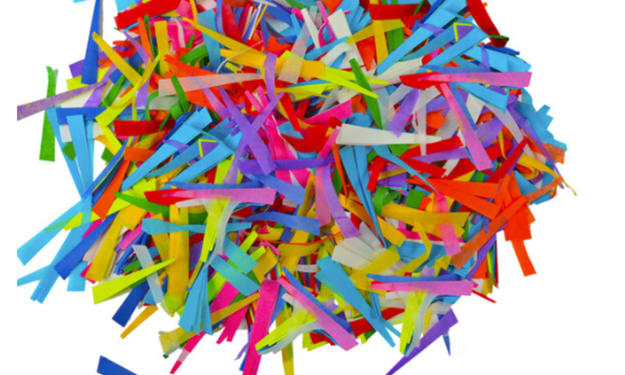
Flutter Fetti – Confetti, Streamers & Gender Reveal Supplies. AI-Generated.
Everyone loves to create exciting moments, be it a birthday, opening of a store or a special family event. Flutter Fetti has been known to assist individuals to make these occasions brighter, noisier and memorable. They bring instant happiness to any party with their fun confetti products, colourful streamers and convenient reveal tools. This is the reason why most individuals rely on Flutter Fetti as their preferred birthday confetti supplier whenever they are about to celebrate a special occasion full of joy.
By Flutter Fetti10 months ago in FYI
Corporate Travel Management in 2026: What Companies Expect From a Modern Travel Partner
Business travel has always shifted with the times, but the pace of change over the last few years has been hard to ignore. Remote work, tighter budgets, scattered teams, and short-notice meetings have turned travel into a moving target. What once felt like a predictable routine now requires sharper planning and quicker reactions. As we step into 2026, companies are taking a closer look at how travel fits into their day-to-day work, and what kind of help they want from the people who guide them through it.
By All 4 Season10 months ago in FYI
Why Data Readiness and Data Quality Are Critical When Applying AI in Life Sciences
AI promises breakthroughs in drug discovery, diagnostics, genomics, and lab automation. Yet in Life Sciences, the effectiveness of AI has very little to do with the model and everything to do with the data feeding it.
By Vipul Gupta10 months ago in FYI
Why Brick Skip Bins Are Essential for Construction and Renovation Projects?
Construction and renovation projects generate an enormous amount of heavy waste. Whether you are tearing down walls, replacing floors, or rebuilding sections of a property, materials like bricks, concrete, tiles, rubble, and stone quickly accumulate. Without the right disposal system, managing this type of waste can be overwhelming, messy, and even hazardous. This is where brick skip bins come in. These purpose-built, durable bins make handling construction debris easier, safer, and far more efficient for both small home renovations and large-scale building projects.
By Sydney Skip Bins10 months ago in FYI
The Science Behind Cupping: Why This Ancient Therapy Still Works Today
Cupping therapy is often seen as an ancient wellness ritual, but there’s a good reason it has survived for thousands of years and continues to gain popularity today. From athletes to office workers and people dealing with chronic pain, many rely on cupping as a natural, non-invasive way to reduce discomfort and support recovery. While the technique itself is simple, the science behind why cupping works is surprisingly fascinating. Understanding how it affects your muscles, circulation, and overall well-being can help you decide whether it’s the right therapy for you.
By Revivers Home Spa10 months ago in FYI