Science
Science
Unraveling the Mystery of the World's First Civilization
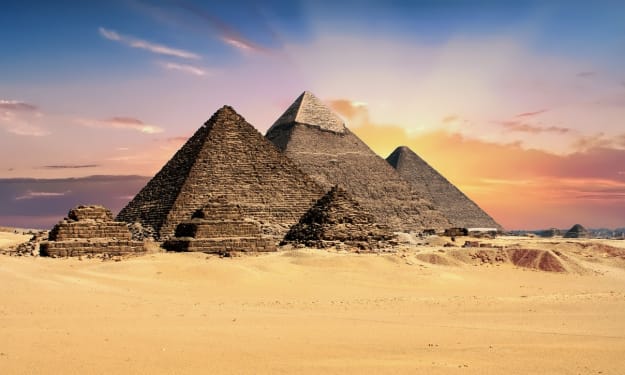
For decades, researchers have debated which civilization can lay claim to being the world’s first. The long-held belief was that the Sumerians of Mesopotamia, known for their early development of writing, were the earliest civilization. However, recent discoveries have challenged this narrative, suggesting that Egyptian and Indus Valley cultures may have an equally strong claim to this title. The Egyptian Discovery: A New Contender One of the most intriguing findings comes from Yale researchers, who recently unearthed a panel of four signs believed to have been written around 3,250 BCE in Egypt. This discovery suggests that the Egyptians may have developed their writing system at around the same time as, or even earlier than, the Sumerians. Additionally, another significant find in the region includes a rock drawing depicting a pregnant elephant that dates as far back as 4,000 BCE. These artifacts hint at an advanced and expressive culture that predates many long-held assumptions about the timeline of human civilization. The Overlooked Indus Valley Civilization While the focus often falls on Mesopotamia and Egypt, the Indus Valley Civilization, which flourished around the areas of modern-day Pakistan and India, is also a strong contender for the title of the oldest civilization. This advanced society thrived around 3,000 BCE, with evidence suggesting they were already trading with Mesopotamians as early as 3,500 BCE. But how is this possible? Could the Indus Valley have developed such advanced urban systems and trade networks so early? The answer lies in the agricultural settlements of the region, which began to grow into larger urban centers like Harappa and Mohenjo-daro. These cities were incredibly sophisticated for their time, featuring baked-brick homes laid out in grid patterns—a design that wouldn’t become standard in other civilizations for centuries. One of the most impressive aspects of these ancient cities was their drainage and sewage systems. Most homes were connected to a network of drains that used gravity to carry waste out of the city. This level of infrastructure rivaled that of later civilizations and underscores the ingenuity of the Indus Valley people. A Religious but Practical Society Religion played a central role in the Indus Valley Civilization, with Hindu beliefs deeply embedded in their practices. However, unlike Mesopotamian or Egyptian cities, their urban centers were not dominated by grand spiritual structures. Mohenjo-daro, for instance, had a notable public bath that appeared to serve as the most important building in the city. This structure, known as the "Great Bath," is believed to have been used for religious or ritualistic purposes, reflecting the culture's emphasis on cleanliness and spiritual purification. The origins of Hinduism in the region also bring up fascinating questions about the timeline of this civilization. The Upanishads, a collection of texts central to Hindu philosophy, are thought to contain knowledge that dates back to well before the civilization’s peak. However, Hindu traditions involved passing down this wisdom orally for generations, delaying the emergence of a written record. While some historians suggest the Indus Valley people may date back as far as 5,000 BCE, this remains speculative due to a lack of concrete evidence. Comparing the Contenders Mesopotamia, Egypt, and the Indus Valley represent three of the most advanced civilizations of the ancient world, but determining which came first is no easy task. The Sumerians of Mesopotamia are often credited with developing the earliest known writing system—cuneiform—around 3,100 BCE. Their cities, such as Uruk and Ur, featured monumental architecture, complex irrigation systems, and a well-organized social structure. The Egyptians, on the other hand, were developing their own writing system, hieroglyphs, around the same time. Recent discoveries like the 3,250 BCE panel and the 4,000 BCE rock drawing indicate that Egyptian culture may have been thriving earlier than previously believed. Their society was highly centralized, with the construction of massive monuments like the pyramids reflecting their advanced engineering and administrative capabilities. Meanwhile, the Indus Valley Civilization stands out for its urban planning and advanced infrastructure. Its cities lacked the grand temples and ziggurats seen in Mesopotamia and Egypt, but they compensated with practical innovations like the Great Bath and an efficient sewage system. Their trade networks also highlight their connection to other civilizations, making them a pivotal player in the ancient world. Why the Mystery Remains Despite the wealth of evidence from all three civilizations, historians remain divided on which was truly the first. One reason is the lack of concrete, written records for certain periods. For instance, while the Sumerians left behind extensive cuneiform tablets, much of the Indus Valley script remains undeciphered, and the oral tradition of the Upanishads delays our understanding of their early history. Another challenge is the difficulty of dating ancient artifacts with absolute precision. While carbon dating and other methods provide estimates, they cannot definitively establish the timeline of a civilization’s rise and fall. The Future of Discovery The debate over the world’s first civilization may never be resolved definitively, but it is far from over. As archaeologists continue to uncover new evidence, our understanding of ancient history is constantly evolving. Who knows what future discoveries might reveal? What remains clear is that these ancient societies, whether Sumerian, Egyptian, or Indus Valley, were far more advanced than previously imagined. Their innovations in writing, architecture, and urban planning laid the foundation for human civilization as we know it today. Rather than focusing on which came first, perhaps the more important takeaway is the shared ingenuity and creativity of humanity’s earliest cultures.
By Lisa Ann Bastiaan2 years ago in FYI
Emus- The Other Side of the Australian Emblem
Last month, I wrote a story about Australians' love-hate relationship with kangaroos. I covered the feelings of farmers whose crops are ruined by kangaroos. I also covered the views of "Aussies" who like to eat kangaroos.
By Calvin London2 years ago in FYI
7 Healthcare Advancements You Might Not Know About
Photo from Pexels With discoveries nearly like science fiction becoming commonplace in our daily lives, healthcare is changing at an incredible speed. These developments are redefining our approach to health from innovative medicines that once appeared unachievable to artificial intelligence replacing diagnostic chores. Despite all the buzz about the major players in the field—including artificial intelligence, gene editing, and robotic surgeries—there is a lot of fascinating progress silently changing the medical scene.
By Sierra Powell2 years ago in FYI
Beyond Belief: The Most Astonishing Discoveries in Exoplanet Science
A Universe of Extremes: Unveiling the Wonders of Exoplanets The cosmos, a vast and awe-inspiring expanse, is teeming with worlds that defy our wildest imaginations. Beyond the familiar confines of our solar system, a breathtaking array of exoplanets – planets orbiting stars other than our Sun – awaits discovery. These celestial bodies, each a unique testament to the universe's boundless creativity, challenge our understanding of planetary formation and the potential for life beyond Earth. One such enigmatic world is TrES-2b, a planet shrouded in perpetual darkness. Located a staggering 750 light-years away, TrES-2b reflects less than 1% of the starlight that falls upon it, earning it the dubious title of the darkest planet known. Its inky blackness, likely caused by a veil of light-absorbing gases in its atmosphere, casts an eerie glow, reminiscent of a smoldering ember, as it emits heat from its scorching surface, reaching temperatures exceeding 1,100 degrees Celsius. In stark contrast to TrES-2b's somber hue, 55 Cancri e, a planet 40 light-years away, shimmers with an otherworldly brilliance. This super-Earth, twice the size of our own planet, is composed primarily of carbon, compressed under immense pressure into a dazzling form of solid diamond. While the prospect of a diamond planet may evoke dreams of unimaginable wealth, its immense distance renders its riches inaccessible, a celestial treasure forever beyond human reach. Gliese 436 b, a planet orbiting a red dwarf star, presents a truly paradoxical reality. Despite surface temperatures exceeding 439 degrees Celsius, water on this planet exists in a solid state, compressed by the planet's immense gravity into a form of "hot ice." This defies the conventional understanding of physical states, where heat typically leads to melting and evaporation. The weather on HD 189773b is nothing short of terrifying. Winds, reaching speeds of over 4,000 miles per hour, whip across its surface, unleashing torrential downpours of molten glass. Despite its stunning blue hue, caused by silicon particles suspended in its atmosphere, this planet is a crucible of extreme conditions, a testament to the universe's capacity for both beauty and brutality. WASP-12b, a gas giant orbiting a star much closer than Mercury orbits our Sun, is locked in a cosmic death spiral. The intense heat from its star is causing the planet to lose mass at an alarming rate, shedding a staggering 6 billion metric tons of material every second. This relentless stellar bombardment has distorted the planet's shape, transforming it into an elongated, football-like form, a stark reminder of the immense power of its parent star. Gliese 581 c, a planet orbiting a red dwarf star, has captivated the imaginations of scientists and astronomers alike. While one side of the planet is perpetually scorched, and the other eternally frozen, a narrow habitable zone may exist between these extremes, offering a potential haven for life. In 2008, a message from Earth was transmitted towards this distant world, a beacon of hope and curiosity, destined to arrive in 2029. WASP-17b, a gas giant larger than Jupiter yet surprisingly low in density, defies conventional planetary models. This "puffy planet" exhibits an unusual retrograde orbit, circling its star in the opposite direction of the star's rotation, further emphasizing its enigmatic nature. HD 188753 Ab, a planet orbiting a triple-star system, offers a breathtaking celestial spectacle. As the three stars dance across its sky, the planet experiences multiple shadows and frequent eclipses, creating a mesmerizing interplay of light and darkness. GJ 1214b, an oceanic world completely enveloped by a vast ocean, harbors secrets deep within its depths. Beneath its watery surface lies a core of ice VII, a unique form of ice that only exists under extreme pressure, further highlighting the extraordinary diversity of planetary compositions. Kepler-438b, a rocky planet residing in its star's habitable zone, has emerged as the most Earth-like exoplanet discovered to date. With an Earth Similarity Index of 0.88, this planet offers a tantalizing glimpse into the possibility of life beyond our own solar system. The presence of liquid water, a crucial ingredient for life as we know it, makes Kepler-438b a prime target for future research and exploration. These incredible worlds, each a unique testament to the universe's boundless creativity, serve as a reminder of the vastness and complexity of the cosmos. From the inky blackness of TrES-2b to the diamond brilliance of 55 Cancri e, these exoplanets challenge our understanding of planetary formation and the potential for life beyond Earth. As our exploration of the cosmos continues, we can expect to encounter even more extraordinary worlds, pushing the boundaries of our imagination and deepening our understanding of our place within the grand tapestry of the universe. Conclusion: The study of exoplanets has opened a new chapter in our understanding of the universe. These distant worlds, each a unique testament to the universe's boundless creativity, not only expand our knowledge of planetary formation but also fuel our hopes for discovering life beyond Earth. As technology advances and our exploration of the cosmos deepens, we can anticipate a future where the discoveries of today will pale in comparison to the wonders that await us tomorrow. The universe, it seems, is far more imaginative than we could ever have imagined.
By Lisa Ann Bastiaan2 years ago in FYI
Why Real-Time Updates Matter for Dynamic Websites? Check Out Here!
The Importance of Real-Time Data for Modern Websites Real-time updates allow websites to deliver the latest information to users instantly, enhancing user engagement and satisfaction. Whether it’s breaking news or live e-commerce data, staying updated is no longer optional—it’s essential.
By Andrew Zemo2 years ago in FYI
Professor Ahmed: Over 75% of APMD Platform Budget Dedicated to Implementation Phase
The African Union Inter-African Bureau for Animal Resources (AU-IBAR), with funding from the Bill & Melinda Gates Foundation, has invested $5.28 million in the development and implementation of the African Pastoral Management and Development (APMD) Platform.
By Suleiman Mbatiah2 years ago in FYI
Ever Had deja vu? This is why!
The film "Groundhog Day" was delivered in 1998. It is set in the town of Woodstock, not the well known live performance area. The story follows Phil Connors, played by Bill Murray. Phil over and over remembers February second. Many individuals, as Phil Connors, experience a peculiar impression of commonality. This sensation is known as this feels familiar. It happens when somebody feels they have encountered a circumstance, regardless of whether they haven't. Somewhere in the range of 60 and 80% of people will encounter a sensation that this has happened before sooner or later in their lives.
By Tafara Sibotshiwe2 years ago in FYI
Event Planners Guide For Screens. AI-Generated.
Screens have become ubiquitous at events of all sizes, from small conferences to large-scale music festivals 1. They serve a variety of purposes, from displaying presentations and videos to providing live feeds and creating immersive experiences
By Anju Saini (Rcon)2 years ago in FYI