Pop Culture
Pop Culture
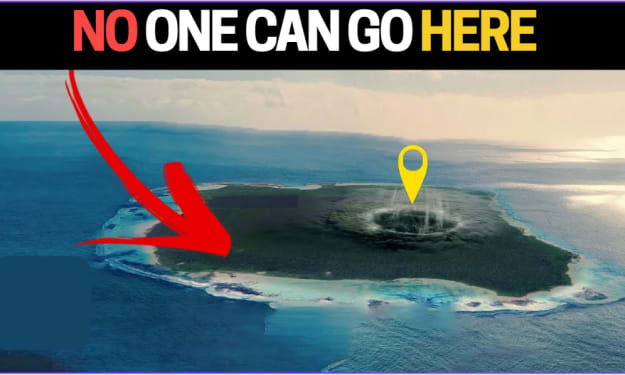
Why no one can visit this Dangerous Island ?
The National Geographic team was preparing to shoot a documentary for the first time on a remote island from where no one had ever returned alive. As they approached the shore, strange, unclothed figures emerged from the jungle and launched a rain of arrows at the National Geographic ship. The director’s leg was injured in the attack, and the crew was forced to retreat in panic. But what is this island, and why, despite all our advanced technology, have we humans never been able to truly reach it?
By Chronicle of Powerabout a year ago in FYI
Extremist Thinking and Its Negative Effects
Extremist Thinking and Its Negative Effects One day, Iblees (Satan) said to his companion, “Come, let me show you a spectacle.” He pointed to a small town and said, “It has been decreed that this town must be destroyed today.” In the marketplace, a sweet-maker had placed a large cauldron on a stove, in which sugar syrup was boiling. Iblees dipped his finger into the syrup and smeared a bit of it onto a wall. Before long, flies arrived. Seeing the flies, a lizard took position to catch them. A cat, sitting nearby, pounced on the lizard. Just then, a soldier passed by with his hunting dog. The dog lunged at the cat. The cat, startled, lost balance and fell into the cauldron of syrup. Angered by the disruption, the sweet-maker threw a heavy blow at the dog, killing it instantly. The soldier, furious at his dog's death, attacked the sweet-maker and left him badly injured. The locals, seeing the sweet-maker being beaten, attacked the soldier. When news of this reached the army, the soldiers, driven by revenge, launched a full assault on the town. Within a few hours, the entire town was reduced to rubble—all because of a single act of extremism. This fictional story reflects the reality of our current society. We live in a world where narrow-mindedness, prejudice, and intolerance are on the rise. People are unwilling to give space to others. Even minor disagreements can spark lifelong feuds. This rigid mindset is growing day by day. The reason is that many of us view people and situations only in black and white—right or wrong—with no room for in-between. But people are complex. Every person goes through different circumstances that shape their behavior. If someone reacts angrily in a certain moment, there may be a reason behind it. It doesn’t mean they are always rude or harsh. They could be kind and gentle but temporarily overwhelmed by a particular situation. Often, extremist thinking begins at home, when parents teach their children that certain relatives are "not good." In the neighborhood, we hear people say, “That family isn’t good.” In institutions, one group says another party or organization isn’t good—without explaining why. These vague judgments are passed down from one generation to the next, without question. Such extremism grows to the point that we admire even the flaws of someone we love, but view even the beauty of someone we dislike as dull or dark. We see this when families reject marriage proposals simply because the suitor is from a different clan. For example, a Syed family may reject a wonderful proposal just because the other party isn't Syed. This shows how we reduce people and choices to just black or white, while life is mostly lived in the grey area—a space where clear judgments cannot always be made. The grey area means not everything is absolutely right or wrong. We need to allow space for different perspectives. Life is never static. It’s complicated and filled with highs and lows. Sometimes it’s dark, sometimes dazzlingly bright. With time, people evolve. What once seemed wrong may now seem right. Different people, cultures, and experiences shape our views. A custom praised in one culture may be frowned upon in another. This diversity is the beauty of the universe—one that the Creator Himself has embedded in nature. If He wished, He could have created us all the same. But instead, the world holds seven billion unique individuals. This means we must learn to tolerate, accept, and respect differences, rather than jumping to conclusions. Sometimes, people become fanatical followers of their favorite personalities. This blind devotion can be very dangerous. When people stop thinking critically and follow blindly, they lose their freedom of thought. They consider everything their role model does as right—even when it’s wrong. They base their life decisions on that person’s opinions and start to hate everyone who disagrees. This blind imitation stunts personal growth. The person becomes closed to new ideas, assuming that only their leader's views are correct. Their life becomes hollow, lacking purpose. The leader, in turn, feels powerful and may exploit followers for personal gain, filling their minds with negativity. This leads to widespread division and chaos in society. Such followers often join groups where no dissent is allowed. Only those who agree blindly are accepted. Those who think differently are rejected or labeled enemies. There are also people who carry deep hatred for others—another form of extremism. This, too, brings great harm. Extreme hatred shuts down the mind. It makes a person unwilling to listen to others, even if they are right. Hatred breeds false assumptions, and the person refuses to see any good in the one they dislike. They isolate themselves, while most of society prefers love and peace. Such hatred brings mental stress, anger, and anxiety. It damages mental health, weakens both the individual and the community, and increases the chances of conflict. People start making rash decisions without proof, harming even innocent lives. Worst of all, hatred kills constructive dialogue. When ideas cannot be shared, solutions cannot be found. Now let us look at the general harms of extremist thinking: A person who thinks in absolutes faces many challenges. Such people lack flexibility, making it hard to adapt to new places or people. They always want to impose their ideas. They are unwilling to compromise or consider other viewpoints, preventing harmony and progress. They also struggle to build teams or connect with others, believing only their view is right. Their divisive words break societies apart. They promote an “us vs. them” mindset, which fuels sectarianism and conflict. Extremists fear new knowledge or experiences because they feel threatened by ideas that challenge them. They fail to realize that embracing change could help them grow and improve. Looking at everything through an extreme lens is mentally exhausting. It can lead to stress, depression, rage, and hopelessness. In the end, such a person becomes ineffective. They fail to solve problems, spread hatred instead of peace, and contribute little to society. If you want a peaceful, successful, and meaningful life, you must cleanse your mind of extremism. Don’t reduce life to just “right or wrong.” Embrace the grey area. This will develop flexibility—a vital trait that helps you navigate all kinds of challenges. You’ll learn to accept others, make room for different ideas, and encourage growth in yourself and others. This attitude opens the door to endless opportunities. The Sufi or wanderer is always traveling. He meets people of all kinds, visits many cultures and regions. This broadens his vision and deepens his insight, bringing him closer to the Creator. His gentle and flexible attitude draws people in, and through him, they are guided to God. A person who lives in the grey area has countless opportunities to grow. Such people accept others, stay humble, and value different opinions. They live in peace. Imagine needing to enter a room, but to reach it, you must first pass through a ten-foot door, then a four-foot door, and finally, crawl through a tunnel. You can only reach the room if you bend for the small door and lie low for the tunnel. Prayer (salah) teaches us the same principle. First we stand, then bow, then prostrate. The real purpose of prayer is to conquer the ego. It teaches us that in life, we must know when to stand, when to bend, and when to lower ourselves completely. Stand firm for truth, admit your faults, and seek forgiveness when needed. Life isn’t confined or limited. It’s a vast field. To succeed, we must broaden our minds, reject extremism, and develop flexibility within ourselves. Only then can we become useful and impactful human beings. Otherwise, we’ll live our whole lives as nothing more than frogs in a well.
By Ikram Ullahabout a year ago in FYI
How KFC Was Born After 65: The Real Story Behind Colonel Sanders
The man seen on the logo of the world’s most famous fast-food chain, KFC, is named Colonel Harland Sanders. He worked hard his entire life and faced many hardships. But what happened at the age of 65 that changed his destiny? What struggles did he go through on his journey to success, and why did his own company, KFC Corporation, file a court case against him?
By Chronicle of Powerabout a year ago in FYI
Creator Platform Wars: Why 90% Revenue Share Changes Everything. AI-Generated.
Pop quiz: What would you do if the platform you depend on suddenly took a bigger slice of your earnings—without warning? A year ago, this happened to a buddy of mine; her side hustle went from lifeline to liability almost overnight due to a so-called 'modest fee update.' It was the spark that got me obsessed with revenue share. Enter MiraSpaces, a platform boasting a 90% slice for creators. Numbers aside, it comes down to who you trust with your paychecks and passion projects. Let’s crack open how MiraSpaces is turning the creator economy on its head, and why that matters to you.
By MiraSpacesabout a year ago in FYI
Why the Bee give large amount of Honey
It was the third day of summer when Ayaan first asked his grandfather, "Why do bees make so much honey?" They were sitting under the old neem tree, where golden sunlight filtered through the leaves, casting warm patterns on the dusty courtyard. The air smelled of mangoes and rain-soaked earth. Ayaan had just watched a bee dance in circles over a nearby flower before disappearing toward its hive tucked in a hollow branch.
By MIne Story Nestabout a year ago in FYI
YouTube’s New Monetization Policy: What Does It Mean for Creators?
YouTube, the world’s largest video streaming platform, has introduced a major update to its monetization policy under the YouTube Partner Program (YPP). The new rules, which came into effect on July 15, 2025, focus primarily on ensuring the platform is filled with original, high-quality, and authentic content—and not repetitively generated or inauthentic videos. This move is expected to directly impact creators who rely on AI-generated, recycled, or mass-produced content for monetization. Here’s a detailed breakdown of the key updates and their implications. --- ✅ What’s New in YouTube’s Policy? The most notable change is a terminology update. YouTube has renamed the category previously referred to as "Reused Content" to a more descriptive term: "Inauthentic Content." This isn't just a name change—it reflects a stronger emphasis on content quality. YouTube now defines "inauthentic content" as videos that are: Mass-produced using minimal effort, Heavily repetitive, with little variation in script or visuals, Or generated through automation or templates without meaningful human input.
By Ikram Ullahabout a year ago in FYI
TikTok Creator “clip.tick” Breaks Rose-Sending Record in Livestream Watched by Just 30 Viewers
IIn one of the most unexpected record-breaking moments in TikTok’s chaotic history, creator clip.tick quietly made digital history by receiving an astonishing 20,139 roses during a single livestream—breaking the previous known record of 20,016.
By William Blaylockabout a year ago in FYI
Unlocking Worldwide Earnings: How to Make Going Global Irresistibly Easy for Creators. AI-Generated.
Here's a confession: I once thought internationalizing your creator business meant slogging through endless translation apps and getting lost in payment nightmares. But after hearing from creators who tripled their income by simply posting in new languages, I had to see what the hype was about. Turns out, with platforms like MiraSpaces, the "global hustle" is less about hustle and more about working smart. Let's get honest about what it really takes to make your digital hustle international—and why language, money, and compliance shouldn’t scare you off.
By MiraSpacesabout a year ago in FYI
Inside the CIA’s Bizarre Secrets
Beneath the surface of global politics, in sealed vaults and redacted files, lie the shadows of the CIA’s strangest operations. These aren’t the sleek espionage tales of James Bond. No, these are stories so outlandish, so surreal, they read more like pulp fiction—except they’re terrifyingly real.
By Kristen Orkoshneliabout a year ago in FYI
How Dubai Ruler built Dubai in a Desert
Before 1980, Dubai was just a barren desert town, a forgotten face on the map of the Middle East. Life was simple, infrastructure was limited, and the world hardly noticed it. But in just four decades, something extraordinary happened. Under the visionary leadership of Sheikh Mohammed bin Rashid Al Maktoum, Dubai transformed itself from a lifeless stretch of sand into one of the most dazzling and futuristic cities on Earth. It was a transformation so dramatic, it left the world in awe.
By Chronicle of Powerabout a year ago in FYI
Doppelgänger: What is it and what does it mean?. Content Warning.
The term doppelgänger, originating from the European Nordic tradition, refers to a spectral double or sosias of a living person. Derived from German‘ 'doppel' means 'double’ and 'gänger' translates as 'walker'. Unlike a ghost, which represents someone deceased, the doppelgänger is a manifestation of the person himself. Jean Paul, a German writer, described him in 1796 as "the one who walks next door," suggesting the idea of an evil twin or a supernatural phenomenon in which an individual's body or spirit can coexist in two places simultaneously. Recent research has shown that this mythical figure has not only permeated literature, cinema and television in genres such as horror and science fiction, but could also have a real basis from a statistical and biological perspective, stripping away any fantastic or malevolent connotations.
By Ninfa Galeanoabout a year ago in FYI