Mystery
The Concept of Lucifer: A Comparative Analysis of Christian and Islamic Perspectives
*The Concept of Lucifer: A Comparative Analysis of Christian and Islamic Perspectives* The concept of Lucifer, also known as Satan or Iblis, is a complex and multifaceted figure that has been interpreted in various ways across different cultures and religions. In Christianity, Lucifer is often depicted as a fallen angel who defied God's authority and was cast out of heaven. In Islam, Iblis is considered a jinn who disobeyed God's command to prostrate before Adam. This article will explore the differences and similarities between the Christian and Islamic perspectives on Lucifer, examining the biblical and Quranic accounts, as well as the cultural and artistic representations of this figure. *The Christian Perspective: Lucifer as a Fallen Angel* In Christian theology, Lucifer is often seen as a beautiful and powerful angel who was cast out of heaven due to his pride and rebellion against God. The biblical account of Lucifer's fall is found in the book of Isaiah, which describes how the morning star, Lucifer, fell from heaven due to his pride and ambition (Isaiah 14:12). This passage is often interpreted as a reference to the fall of Satan, who is seen as the embodiment of evil and opposition to God. The concept of Lucifer as a fallen angel has been influential in Western art and literature, with many depictions of Satan as a beautiful and charismatic figure who embodies the qualities of pride, ambition, and rebellion. John Milton's epic poem "Paradise Lost" is a classic example of this tradition, portraying Satan as a complex and nuanced character who is both beautiful and terrifying. *The Islamic Perspective: Iblis as a Jinn* In Islamic theology, Iblis is considered a jinn who disobeyed God's command to prostrate before Adam. According to the Quran, Iblis was not an angel, but a jinn who was given the choice to obey or disobey God's command (18:50). Iblis's disobedience was due to his pride and arrogance, and he was punished by God for his actions. The Islamic perspective on Iblis highlights the importance of obedience and submission to God's will. Iblis's story serves as a warning against the dangers of pride and arrogance, and the importance of humility and obedience. *Comparison of Christian and Islamic Perspectives* While both Christianity and Islam recognize the figure of Lucifer or Iblis as a symbol of evil and disobedience, there are significant differences in the way this figure is understood and depicted in each tradition. In Christianity, Lucifer is often depicted as a beautiful and powerful angel who embodies the qualities of pride and rebellion. In Islam, Iblis is considered a jinn who disobeyed God's command, and his story serves as a warning against the dangers of pride and arrogance. The artistic representations of Lucifer in Western culture also reflect the differences in the way this figure is understood. In many Western artworks, Lucifer is depicted as a beautiful and charismatic figure, often with wings and a handsome appearance. In contrast, Islamic art often depicts Iblis as a monstrous or ugly figure, symbolizing his evil nature. *Cultural Significance of Lucifer* The concept of Lucifer has had a significant impact on Western culture, influencing art, literature, and popular culture. From John Milton's "Paradise Lost" to the modern-day depictions of Satan in popular culture, the figure of Lucifer continues to fascinate and inspire artists and writers. In recent years, the concept of Lucifer has also been reinterpreted in various ways, with some seeing him as a symbol of rebellion and nonconformity. This reinterpretation reflects the complex and multifaceted nature of the Lucifer myth, which continues to evolve and adapt to changing cultural and social contexts. *Conclusion* The concept of Lucifer is a complex and multifaceted figure that has been interpreted in various ways across different cultures and religions. While both Christianity and Islam recognize the figure of Lucifer or Iblis as a symbol of evil and disobedience, there are significant differences in the way this figure is understood and depicted in each tradition. By examining the biblical and Quranic accounts, as well as the cultural and artistic representations of Lucifer, we can gain a deeper understanding of the significance and impact of this figure on Western culture and beyond. In conclusion, the concept of Lucifer serves as a reminder of the importance of humility and obedience to God's will. Whether depicted as a fallen angel or a disobedient jinn, Lucifer's story highlights the dangers of pride and arrogance, and the importance of submission to a higher authority. *The Impact of Lucifer on Art and Literature* The concept of Lucifer has had a profound impact on art and literature, inspiring countless works of art and literature throughout history. From the iconic depictions of Satan in John Milton's "Paradise Lost" to the modern-day reinterpretations of Lucifer in popular culture, this figure continues to fascinate and inspire artists and writers. The artistic
By Ikram Ullahabout a year ago in FYI
Abraham Accord or Abraham Betrayed? Unmasking the Politics of Peace
They call it peace. We see it as a betrayal. In 2020, the world witnessed a moment portrayed as historic: the signing of the Abraham Accords by Israel, the United Arab Emirates, and Bahrain, with full support from the United States. Media outlets celebrated it as a breakthrough for Middle East peace, claiming it to be rooted in the shared heritage of Prophet Abraham — known in Arabic as Ibrahim (A.S.).
By Leah Brookeabout a year ago in FYI
The Curse of Tamerlane’s Tomb – Did Opening It Unleash World War II’s Fury?
A Tomb That Whispers Nestled in Samarkand’s azure-lit Gur‑e‑Amir Mausoleum lies the tomb of Timur—known as Tamerlane—the 14th-century conqueror whose empire stretched from Persia to Delhi. In
By DRE Explainsabout a year ago in FYI
When the Sky Turned Orange
In the summer of 2023, residents of New York City woke up to a sight that seemed straight out of a dystopian film. The sky had turned a hazy, unnatural orange. It wasn’t a cinematic filter or a social media hoax. It was real—and terrifying. The cause? Smoke drifting in from unprecedented wildfires raging in Canada. For days, people walked the streets in masks, not because of a pandemic, but to protect themselves from the hazardous air. Flights were delayed, schools closed, and health advisories warned vulnerable groups to stay indoors. The Big Apple, known for its bustling energy, slowed to a tense, smog-covered crawl. This wasn't an isolated event. From California to Australia, from the Amazon to Siberia, wildfires have been increasing in intensity, frequency, and destructiveness over the past decade. What used to be considered "once in a generation" fires are now annual occurrences. The Science Behind the Fire So why is this happening? Scientists are clear: climate change is the accelerant. Rising global temperatures dry out forests, turning them into tinderboxes. Changes in precipitation patterns leave some areas in prolonged droughts. Add lightning strikes or human negligence into the mix, and you've got a recipe for catastrophe. A study by the National Oceanic and Atmospheric Administration (NOAA) found that the U.S. is experiencing larger and more frequent wildfires than ever before. Satellite data shows that the average wildfire season is now nearly 80 days longer than it was in the 1980s. It’s Not Just About Trees The impact of wildfires extends far beyond the burning of trees. The carbon dioxide released during these fires accelerates global warming, creating a vicious feedback loop. The smoke contains fine particulate matter (PM2.5), which can penetrate deep into human lungs, causing respiratory and cardiovascular issues. Studies have linked wildfire smoke exposure to increased emergency room visits and even premature deaths. Ecosystems are disrupted, species lose their habitats, and indigenous communities are often the first to suffer. The economic toll is staggering: billions of dollars in damages, lost productivity, and long-term health costs. The Political Flame Despite the clear science, wildfire policy remains mired in politics. Debates rage over forest management, prescribed burns, and fire suppression funding. In some cases, misinformation campaigns downplay the role of climate change, focusing instead on short-term fixes rather than addressing root causes. Environmental advocates argue that we need systemic changes: aggressive carbon reduction targets, investment in renewable energy, and reforestation programs. Others focus on adapting to the new reality by building fire-resistant infrastructure and updating emergency response systems. Personal Stories Amid the Smoke Take Emily, a 29-year-old school teacher in Oregon. In 2021, a wildfire razed her neighborhood. "We had minutes to leave. The smoke was so thick I couldn’t see my own hands," she recalls. Her home, her school, her childhood memories—gone in hours. "But the worst part," she says, "was the feeling that this won't be the last time." Or consider the case of José, a firefighter in California who has battled flames for over a decade. "These aren’t the fires I used to fight," he says. "They move faster, burn hotter, and last longer. It’s like we’re fighting a dragon with a garden hose." What Can We Do? While the scale of the problem may seem overwhelming, action is possible. On a personal level, individuals can: Reduce their carbon footprint Support sustainable forestry products Donate to wildfire relief organizations Stay informed and vote for climate-conscious policies On a broader scale, governments and corporations must: Enforce stricter emissions regulations Fund climate research and adaptation strategies Protect and restore natural fire buffers like wetlands Prioritize marginalized communities in disaster planning A Glimpse of What’s to Come The orange sky over New York was not just an eerie anomaly—it was a glimpse of a potential future. If current trends continue, experts warn that megafires will become the norm rather than the exception. Entire regions may become uninhabitable during fire seasons, leading to climate migration and new geopolitical challenges. But with awareness comes the power to act. By understanding the roots and impacts of wildfires, we are better equipped to face them—not just as isolated disasters, but as part of a broader, systemic crisis that demands urgent, collective response. Because the sky turning orange should never feel normal.
By Muhammad Usamaabout a year ago in FYI
"Viral Hacks 2025: Dominate TikTok, Reels & Shorts.
✍️ By Aman Ullah --- 🌟 Introduction: Why short videos rule the internet Short videos have completely taken over our screens. Whether it’s TikTok, Instagram Reels, or YouTube Shorts, billions of people watch these snappy clips every single day. They’re quick, fun, and arguably the easiest way to get your content seen by millions.
By Aman Ullahabout a year ago in FYI
USS Gerald R. Ford: The World’s Largest Warship That Can Shift the Tide of War
In the vast expanse of the world's oceans, there sails a vessel unlike any other — not just a warship, but a floating fortress, a symbol of military dominance, and a strategic game-changer in modern naval warfare. This colossal marvel is known as the USS Gerald R. Ford (CVN-78) — the most advanced and largest aircraft carrier ever built. Currently deployed in the Pacific Ocean, the ship is participating in routine naval exercises conducted by the United States Navy. However, when tensions rise or full-scale military operations begin, this warship is often the first to enter the battlefield — a statement of power, readiness, and technological superiority. --- ⚓ What Is the USS Gerald R. Ford? The USS Gerald R. Ford is the lead ship of the Ford-class aircraft carriers and represents the next generation of U.S. Navy warships. It is the successor to the famous Nimitz-class carriers, bringing with it enhanced capability, higher efficiency, and revolutionary technologies. Key Specifications: Length: 1,106 feet (approx. 340 meters) Beam (Width): 78 meters (flight deck) Draft: 34 feet (10.5 meters) Displacement: Around 100,000 tons Height from waterline to top of the structure: 244 feet — roughly equivalent to a 24-story building This sheer size makes it long enough to fit four full-sized football fields on its deck! --- 🛡️ What Can It Carry? The USS Gerald R. Ford is not just a ship — it is a complete mobile airbase at sea. It is designed to carry over 75 aircraft, including: F/A-18 Super Hornet multirole fighters F-35C Lightning II — the latest fifth-generation stealth fighters E-2D Hawkeye early warning aircraft MH-60R/S Seahawk helicopters Combat drones and unmanned aerial vehicles (UAVs) These aircraft enable the ship to conduct air-to-air combat, launch precision strikes, conduct surveillance, perform anti-submarine operations, and transport troops or rescue personnel. The ship also accommodates over 4,500 naval personnel, including sailors, airmen, engineers, and marines, making it a small city on water, complete with its own command centers, living quarters, cafeterias, clinics, and flight operations. --- 🛰️ Cutting-Edge Technology Onboard The Gerald R. Ford-class carriers are the most technologically advanced warships ever created. Key Features Include: Dual Band Radar (DBR): Automatically detects and tracks multiple aerial and sea threats. Electromagnetic Aircraft Launch System (EMALS): Replaces traditional steam catapults and allows faster, more efficient aircraft launches. Advanced Arresting Gear (AAG): Enables safe landing of aircraft with improved safety and efficiency. Automated weapons elevators: Reduces crew workload and speeds up rearming processes. Nuclear Propulsion System: Powered by two A1B nuclear reactors, the ship can operate for 25 years without refueling. These systems make the Gerald R. Ford not only more lethal and capable than any previous aircraft carrier but also far more cost-efficient in the long run. --- 🌍 A Strategic Presence: Near Iran, a Potential Flashpoint As of now, the USS Gerald R. Ford is positioned in international waters near the southern coast of Iran, observing regional developments. Tensions in the Middle East often dictate U.S. military movements, especially in scenarios involving Iran and Israel. If conflict escalates — particularly with U.S. support for Israel during rising hostilities — this carrier could be deployed near the Strait of Hormuz or Bandar Abbas, putting it within strategic striking range of sensitive Iranian targets. Such a move would place immense pressure on Iran, forcing it to confront the combined air and sea might of both the U.S. and Israeli forces. Given the Gerald R. Ford’s advanced defense and offensive systems, it would serve as an intimidating front-line deterrent. --- 🧠 Why Is It So Important? Aircraft carriers are the crown jewels of naval power. They allow nations to project power far from home shores without needing a permanent military base. With its air fleet, radar systems, and nuclear propulsion, the USS Gerald R. Ford can: Launch strikes anywhere within thousands of kilometers Provide humanitarian aid during natural disasters Enforce naval blockades Secure international shipping routes Act as command centers for coalition forces during joint operations It represents mobile sovereignty, extending America’s military reach into virtually any ocean on Earth. --- 🛠️ How Was It Built? The construction of the USS Gerald R. Ford began in 2005 and cost over $13 billion, making it the most expensive warship in history. It was commissioned in 2017 and named after President Gerald R. Ford, the 38th President of the United States and a former naval officer who served during World War II. Its construction involved: Thousands of engineers and shipbuilders Over 200,000 separate components Advanced materials designed to resist corrosion and extend durability Innovations that reduce the crew size by about 600 personnel compared to previous carriers --- ⚔️ The Future of Naval Warfare The USS Gerald R. Ford is just the first of a new class of carriers. The U.S. Navy plans to build at least four more Ford-class ships, ensuring that American naval dominance remains unchallenged for decades. But more than size and weaponry, this ship reflects a changing philosophy in naval warfare—one that is more precise, automated, and responsive. Its presence in global conflict zones acts as a warning and a reminder: power can arrive silently, swiftly, and devastatingly from the sea. --- Conclusion: The Floating Fortress of Modern Warfare The USS Gerald R. Ford is not just a machine — it is a message. A message that signals to the world America's unwavering commitment to global security, technological supremacy, and strategic dominance. As it silently cruises the ocean’s vastness — sometimes visible, often hidden — it reminds allies and adversaries alike: warfare has changed, and those who command the seas can influence the outcome of any global conflict. It is, in every sense, the world’s most powerful warship, capable of altering the tide of war — one mission, one launch, one presence at a time.
By Ikram Ullahabout a year ago in FYI
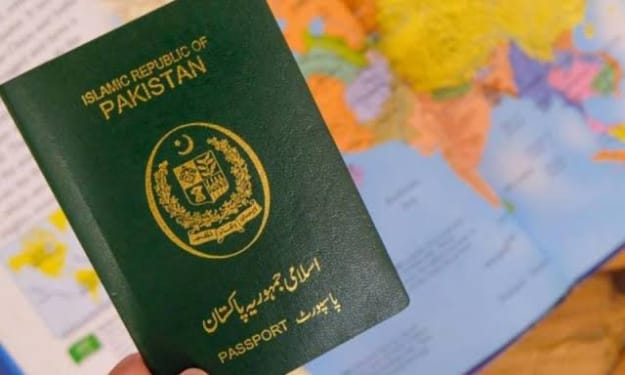
Pakistani Passport Makes It to Top 100 in Global Rankings
In a promising development for international mobility and national pride, Pakistan's passport has officially entered the list of the Top 100 most powerful passports in the world, according to the 2025 Passport Index rankings. This marks a steady and significant improvement in the standing of the Pakistani passport, which had long been categorized among the lowest in global rankings. According to the Director General of Immigration and Passports, Mr. Mustafa Jamal Qazi, this development is a direct result of systematic reforms, technological advancements, and improved international diplomatic relations. He congratulated the Pakistani nation on this achievement and assured that even more improvements are on the way. Visa-Free Access to 32 Countries As per the latest index, holders of Pakistani passports can now enjoy visa-free travel to 32 countries across different regions of the world. This includes some destinations in Asia, Africa, the Caribbean, and Oceania, giving Pakistani citizens more freedom and ease of movement than ever before. In past years, the number of visa-free or visa-on-arrival destinations was significantly lower, and this increase reflects Pakistan's growing engagement with the international community. E-Gates and Modern Passport Technology Mr. Mustafa Jamal Qazi further revealed that modern security features have been integrated into the new Pakistani passports, including those issued as part of the e-passport initiative. These passports come embedded with advanced biometric data and digital encryption, making them highly secure and compliant with international standards. To enhance convenience for travelers, E-Gate facilities will soon be introduced at all major airports across Pakistan. These automated gates will allow e-passport holders to clear immigration faster through self-service kiosks, reducing wait times and making the travel experience smoother. This move brings Pakistan in line with practices already in place at leading international airports. Passport Application App – A Revolutionary Step Another groundbreaking development announced by the DG Passports is the upcoming launch of a dedicated mobile application that will allow Pakistani citizens to apply for, renew, and track their passports from the comfort of their homes. The initiative, which will be part of Pakistan’s broader digital transformation agenda, is expected to significantly reduce the need for in-person visits to passport offices, streamline application processes, and eliminate unnecessary delays. Once launched, the passport app will provide a user-friendly interface for document submission, fee payments, photo uploads, appointment bookings, and delivery tracking. This step is seen as a major leap toward e-governance and citizen facilitation in Pakistan. Zero Bag Lock Rate Worldwide DG Passports also proudly stated that Pakistan now maintains a zero bag lock rate for passports both domestically and internationally. This means that there are no pending cases of passport non-delivery or document holding due to technical issues, mismanagement, or security concerns — a significant achievement in terms of service reliability and efficiency. In the past, applicants would often face delays and complaints regarding passport issuance, especially for overseas Pakistanis. The present administration has apparently overhauled the internal systems, digitized records, trained staff, and ensured quality assurance at every level to ensure fast and secure processing. International Recognition and Diplomatic Progress The improvement in passport ranking is also a reflection of Pakistan's growing credibility on the world stage. It points to strengthened bilateral relations, enhanced global cooperation, and trust-building measures that the country has taken in recent years. Countries offering visa-free access usually base their decision on risk assessment, diplomatic reciprocity, and the reliability of documentation standards. Pakistan's advancement suggests that these countries now view Pakistani travelers more favorably, signaling increased confidence in the state’s ability to track, identify, and verify its passport holders. Public Reaction and National Pride This progress has been warmly welcomed by the public, especially by overseas Pakistanis, who often face challenges due to passport limitations. Social media platforms have been flooded with messages of congratulations, pride, and renewed hope for a brighter and more connected future. Travel agents, business leaders, and academics alike see this as a step toward globalization, which will not only improve tourism and student mobility but also attract more investment and cultural exchange opportunities. It will also encourage more youth to explore educational and career options abroad, backed by stronger documentation and international recognition. Looking Forward – Vision for Future Improvements DG Mustafa Jamal Qazi emphasized that while this milestone is commendable, it is just the beginning. His department is working tirelessly to reach even higher ranks, further enhance services, and bring Pakistan's passport quality and accessibility up to global standards. There are also plans to expand visa agreements with more countries, possibly increasing the number of visa-free destinations in the coming years. Special attention is also being given to facilitating overseas Pakistanis by opening new passport centers in foreign missions and providing real-time assistance. --- Conclusion The inclusion of the Pakistani passport in the Top 100 globally is a proud achievement for the nation. It symbolizes the success of national reforms, technological modernization, and strategic diplomacy. With more conveniences being introduced — such as the mobile passport application, e-passports, e-gates, and visa-free access — Pakistani citizens can now look forward to a more empowered future on the global stage. While challenges still exist, this development shows that positive change is possible, and that with continued reforms and smart governance, Pakistan can continue to rise in global rankings — not only in passports but in many other areas that matter to its people and its global image.
By Ikram Ullahabout a year ago in FYI
Armies of Power: Fighter Jets, Tanks & Troops That Shape the World
Introduction: Steel, Strategy & Sovereignty In a world where borders define identities and conflicts demand strength, every nation invests in the muscle of its military power. Behind every soldier is a system of high-end tanks, roaring fighter jets, and elite training programs — together forming the backbone of national defense. Let’s explore some of the most prominent and powerful armies in the world, with a special spotlight on Pakistan, a force that continues to rise in influence and technology. --- 1. United States 🇺🇸 Active Personnel: 1.3 million Main Battle Tank: M1A2 Abrams Fighter Jets: F-22 Raptor, F-35 Lightning II, F-16 Fighting Falcon The United States has the most advanced and well-funded military in the world. The M1A2 Abrams tank is heavily armored and battle-proven, while its fighter jets like the F-22 Raptor and F-35 Lightning II offer unmatched stealth and strike capabilities. With a global presence, the U.S. remains the dominant military superpower. --- 2. Russia 🇷🇺 Active Personnel: 1 million Main Battle Tank: T-90M, Armata T-14 Fighter Jets: Su-57, Su-35, MiG-35 Russia’s military legacy is one of raw power and endurance. The T-90M and the futuristic T-14 Armata tanks offer high firepower and mobility. Its Su-series jets are agile and powerful, built for dominance in air combat. --- 3. China 🇨🇳 Active Personnel: Over 2 million Main Battle Tank: Type 99, Type 96A Fighter Jets: J-20 Mighty Dragon, J-10C With the largest active military force in the world, China is rapidly advancing in technology and weapons development. The stealth J-20 fighter and the modern Type 99 tank reflect its ambitions to become a global military leader. --- 4. Pakistan 🇵🇰 Active Personnel: Around 650,000 Main Battle Tank: Al-Khalid, Al-Zarrar, T-80UD Fighter Jets: JF-17 Thunder, F-16 Fighting Falcon Pakistan is a rising military power with a focus on indigenous defense production and strong battlefield strategy. The JF-17 Thunder, co-developed with China, is known for its performance and affordability, and has even been exported to other countries. On land, the Al-Khalid tank is custom-built for regional warfare, combining mobility, firepower, and armor. What makes Pakistan unique is not just its equipment, but the training, courage, and resilience of its soldiers. It also remains one of the few nations with nuclear capability, ensuring a strong defense posture in the region. --- 5. India 🇮🇳 Active Personnel: Over 1.4 million Main Battle Tank: T-90 Bhishma, Arjun Mk.1 Fighter Jets: Rafale, Su-30MKI, Tejas India’s armed forces are among the largest in the world. The Su-30MKI provides strong aerial capabilities, while the Rafale has added significant firepower. Ground support comes from domestically produced Arjun tanks and imported T-90 Bhishma tanks, offering both range and accuracy. --- 6. Turkey 🇹🇷 Active Personnel: 400,000+ Main Battle Tank: M60T Sabra, Altay (in production) Fighter Jets: F-16 Fighting Falcon, drones (Bayraktar TB2) Turkey has emerged as a leader in drone warfare and domestic defense manufacturing. The Bayraktar TB2 drones have changed modern combat strategy, while its Altay main battle tank symbolizes national engineering progress. --- 7. United Kingdom 🇬🇧 Active Personnel: 150,000 Main Battle Tank: Challenger 2 Fighter Jets: Eurofighter Typhoon, F-35B Lightning II Though smaller in size, the British military maintains high standards of training and technology. The Challenger 2 tank and Eurofighter Typhoon offer reliability and versatility in joint NATO operations. --- 8. France 🇫🇷 Active Personnel: 200,000+ Main Battle Tank: Leclerc Fighter Jets: Rafale France’s Rafale jet is a world-class multirole aircraft known for its precision and speed. The Leclerc tank is fast and digitally advanced, making France a key player in European defense. --- 9. Germany 🇩🇪 Active Personnel: 180,000 Main Battle Tank: Leopard 2A7 Fighter Jets: Eurofighter Typhoon The Leopard 2A7 is widely considered one of the most powerful and reliable tanks in the world. Combined with high-tech air capabilities, Germany remains a strategic force in Europe and NATO. --- Conclusion: War Machines, Warrior Hearts Military strength is not just about the number of tanks or jets — it’s about strategy, discipline, and national willpower. Countries like Pakistan continue to prove that with dedication and innovation, a nation can stand tall on the global stage. Whether it's a fighter jet in the sky or a tank on the battlefield, these tools serve one goal: to defend sovereignty and preserve peace.
By James World about a year ago in FYI
How Old Is the Water You Drink?
Water is life. It flows through our bodies, sustains every ecosystem, and covers nearly 71% of the Earth’s surface. Yet, despite its vital role, most people rarely pause to wonder about one simple but profound question: how old is the water you drink? The answer is far from straightforward, revealing a fascinating story about Earth’s water cycle, ancient reserves, and the interconnectedness of our planet’s natural systems.
By Muhammad Asimabout a year ago in FYI
Glitches in the Matrix: What are they? How to identify them?
In recent years, the term Matrix glitches has become popular. These glitches could be described as signs of unreality. Glitches in the Matrix are unexpected events that occur at any time and place, and which don't fit with logic. These errors make us question the nature of physical reality, which leads us to want to discover what is true and what is false about what we perceive with our five senses, which, by the way, are quite limited.
By Ninfa Galeanoabout a year ago in FYI
10 Weird Facts You Won’t Believe Are True
The world is full of strange, surprising, and downright bizarre facts that make you question reality. Just when you think you’ve heard it all, something comes along that stretches the limits of belief. From nature’s oddities to human quirks and mind-boggling science, these weird facts you won’t believe are not only true—they’re utterly fascinating. Ready to have your mind blown? Let’s dive into ten weird facts that sound fake but are 100% real.
By Muhammad Asimabout a year ago in FYI
Europe on Fire
Not only is summer 2025 hot, but it's also sweltering, lethal, and transformative. A relentless heatwave that has lasted for weeks across Europe has broken records, set off wildfires, overburdened healthcare systems, and compelled governments to enact emergency measures. Millions of Westerners are currently battling climate change from northern Spain to the UK.
By Tousif Arafatabout a year ago in FYI