Mystery
5 Hidden Human Senses You Didn’t Know You Had, And Why They’re Way Cooler Than the “Sixth Sense
We usually think of a “sixth sense” as something mystical, you know, sensing ghosts, predicting doom, or having psychic Spider-Man tingle moments. But the truth is far more interesting: humans actually have more than just five senses, and many of them work quietly in the background without us ever noticing.
By Areeba Umair11 months ago in FYI
I'd Rather Have a Kiss than an Arrow
If you've been following me for a while, you know it's my niche to ask questions about why things are the way they are—whether it's what the ancients thought of the Aurora Borealis or why we knock on wood when we say uncertain things.
By Rosie J. Sargent11 months ago in FYI
The Crow’s Natural Pharmacy: How “Anting” Reveals One of Nature’s Smartest Healing Secrets
When a crow falls ill, it does not search for food, shelter, or even shade. Instead, it goes to a place that might seem strange at first glance: an ant nest. What happens next is one of the most remarkable examples of natural self-medication ever discovered in the animal kingdom. This behavior, observed not only in crows but in more than 200 species of birds, is known as “Anting.” It is nature’s own pharmacy—simple, instinctive, effective, and astonishingly intelligent. What Is Anting? The Mysterious Healing Ritual of Birds Anting is a unique and scientifically fascinating behavior in which birds deliberately use ants to clean, disinfect, and medicate their feathers and skin. It occurs in two primary forms: 1. Passive Anting In passive anting, a bird—often a crow—finds an active ant hill and positions itself right on top of it. It spreads its wings wide, lowers its tail, fluffs its feathers, and remains almost motionless. This posture allows ants to crawl deep into its feathers. As they move between the layers of plumage, they encounter the bird’s skin and the small parasites hiding there. 2. Active Anting In active anting, the bird picks up individual ants in its beak, crushes them gently, and rubs them along its feathers. This deliberate smearing of ant body fluids is not accidental—it is medicinal. Both methods serve the same purpose: to apply the ant’s natural chemicals to the bird’s feathers and skin. Why Ants? The Power of Formic Acid But why ants? And not just any ants—birds choose specific species from the Formicinae subfamily. These ants produce formic acid, a potent natural antiseptic and insecticide that they release as a defense mechanism. When the ants feel threatened—such as when a crow fluffs its feathers over their nest—they spray formic acid from their bodies. The crow welcomes this. The Benefits of Formic Acid Formic acid plays several important roles: ✔ 1. Killing Parasites Birds often suffer from: lice mites fleas fungal infections These tiny organisms hide deep inside feathers, especially in warm and moist areas. Formic acid either kills these parasites or irritates them enough that they crawl out of hiding, allowing the bird to remove them easily. ✔ 2. Cleaning and Conditioning Feathers Scientists believe formic acid also helps: soften and condition feathers maintain sheen and smoothness preserve the waterproofing ability of plumage Healthy feathers are essential for flight, insulation, and survival. ✔ 3. Neutralizing Harmful Microbes Because formic acid is a strong antiseptic, it helps eliminate harmful bacteria and fungi that can grow in dirty or damaged feathers. ✔ 4. Preparing Ants as Food (Optional Benefit) Some birds seem to use anting to remove the bitter defensive chemicals from ants before eating them. Once the ant has released its formic acid, it becomes a safer and tastier snack. Crows Know Exactly What They’re Doing Crows are known for their intelligence—they can solve puzzles, remember faces, use tools, and even hold grudges. Anting is yet another proof of their cognitive abilities. In the wild, a crow: recognizes it is sick or irritated identifies the correct species of ant deliberately exposes its body to them knows how long the process should last repeats the behavior whenever necessary No one teaches a crow how to do this. It is pure instinct, refined through generations of evolutionary wisdom. A Natural Doctor Without a Clinic When humans fall sick, we go to doctors, swallow medicines, or apply ointments. A crow, on the other hand, has no pharmaceutical companies, no hospitals, and no laboratories—but it still understands chemistry better than most people do. It knows that: ants release a healing chemical that chemical kills harmful parasites exposing its feathers to ants brings relief This is nature’s version of natural medicine. It may look simple, but the science behind it is complex. How Scientists Discovered Anting The behavior perplexed biologists for decades. Early naturalists who observed birds rolling in ant hills did not understand the purpose and assumed it was some sort of unusual grooming ritual. Only later, through careful experiments and chemical analysis, did researchers confirm: the role of formic acid its antimicrobial effects its ability to kill or irritate parasites Today, anting is considered one of the most remarkable examples of zoopharmacognosy—the study of animals using natural substances to heal themselves. More Than 200 Birds Use Anting While crows are the iconic example, they’re not alone. Anting has been documented in: Blue Jays Robins Starlings Thrushes Woodpeckers Sparrows Cuckoos The widespread nature of this behavior suggests that birds discovered this secret thousands—if not millions—of years ago. What Anting Teaches Us About Nature Anting reveals profound truths about the natural world: 🌍 1. Animals Understand Medicine Better Than We Think Birds don’t need human teachers or scientific research. Their bodies and instincts guide them to the right remedy. 🌿 2. Healing Is Everywhere in Nature Even a tiny insect like an ant can provide powerful chemical tools for survival. 🧠 3. Intelligence in Animals Goes Beyond Survival Crows don’t just survive—they innovate. They find solutions, adapt, and even treat their own symptoms. 🦠 4. Nature Has Its Own Pharmacy The natural world is full of hidden cures and biological strategies humans have yet to fully understand. A Beautiful Reminder from a Humble Crow When a crow stands over an ant nest, wings open, feathers fluffed, allowing ants to swarm over its body, it is not a meaningless act. It is a silent moment of healing—an instinctive communion between two species where one unknowingly provides medicine to the other. It teaches us that: healing doesn’t always require complexity intelligence exists everywhere in nature even the smallest creature can play a role in the well-being of another In a world obsessed with high-tech solutions, the crow quietly reminds us that sometimes nature already knows the cure.
By Ikram Ullah11 months ago in FYI
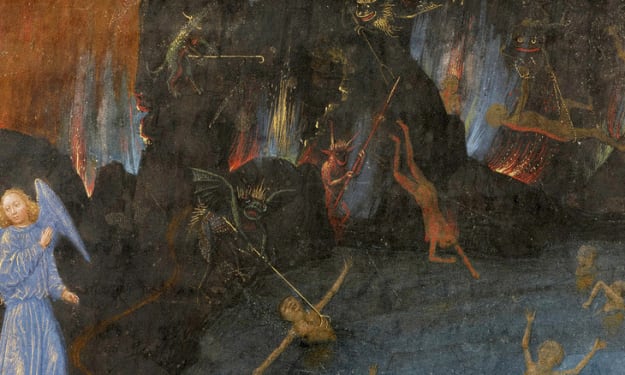
Near-Death Experience: The Hellish Side. Content Warning.
A near-death experience (NDE) is a profound personal encounter that occurs when an individual is close to death or has temporarily experienced clinical death. These experiences can happen during life-threatening situations such as cardiac arrest, severe trauma, or other critical medical emergencies.
By Ninfa Galeano11 months ago in FYI
The Nazca Lines: A Mystery That Remains Unsolved
The Nazca Lines, which are located in the desert of southern Peru, have intrigued archaeologists, scientists and travelers for many years. These huge figures drawn on the ground, representing animals, plants and geometric shapes, are only visible from the air, which has given rise to numerous theories about their function and meaning.
By Ninfa Galeano11 months ago in FYI
The Logical Mindset- Your Compass to Truth in an Age of Misinformation
Discover how a logical ideology serves as a guiding principle, from personal dilemmas to societal challenges. This in-depth article explores the profound importance, construction, and far-reaching benefits of rational thought.
By Arjun. S. Gaikwad11 months ago in FYI
10 Strange Facts About Reality That Scientists Still Can’t Explain. AI-Generated.
Reality is supposed to be simple. Solid. Predictable. Something we can explain with science, logic, and the rules we’ve built around the world we live in. But the more scientists study our bodies, our planet, and the universe itself, the more it becomes clear that we understand far less than we think.
By خالد العجيل12 months ago in FYI
Unlocking the Potential of VR Franchises: A Blueprint for Location-Based VR Success. Content Warning. AI-Generated.
The VR market is currently experiencing a significant boom, creating tangible opportunities for entrepreneurs looking to enter the immersive entertainment space. However, establishing a successful location-based VR (LBVR) Park requires more than just high-end headsets and engaging games. Success hinges on smart design, efficient operations, and delivering a customer experience that encourages repeat visits.
By Sofia VR ARENA12 months ago in FYI